
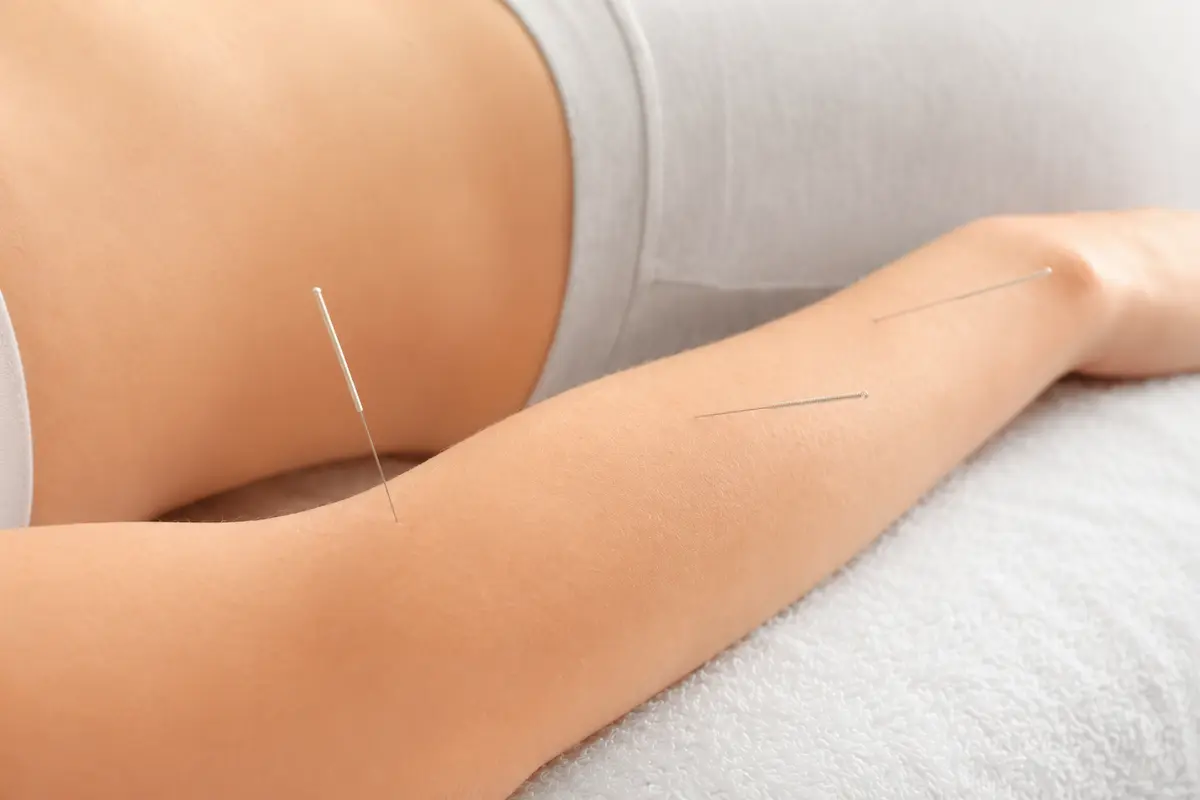
Sports Injuries & Orthopedic Acupuncture
Runners, swimmers, cyclists, lifters, golfers, tennis and pickleball players, recreational athletes, and competitive athletes all deal with pain differently. Acupuncture and dry needling may help manage certain musculoskeletal symptoms, but sports recovery is not simply a matter of placing needles near an injury and waiting for the tissue to repair itself.
Can Acupuncture Help With Sports Injuries?
Acupuncture may help reduce pain or improve function in some musculoskeletal conditions, and athlete-specific research suggests possible benefits for soreness and selected recovery measures.
Dry needling may also help some athletes with pain, muscle stiffness, trigger-point sensitivity, or related movement limitations.
What these techniques have not been proven to do is automatically repair a torn tendon, clear a hematoma, realign damaged fibers, eliminate swelling, prevent an injury from becoming chronic, or guarantee a faster return to sport.
Diagnosis, progressive loading, strength, mobility, rehabilitation, training modification, sleep, nutrition, and return-to-sport planning may all matter depending on the injury.
“Sports Injury” Is Not One Diagnosis
One of the biggest problems with generic sports-recovery advice is treating every painful athlete as though the same process is happening underneath the skin.
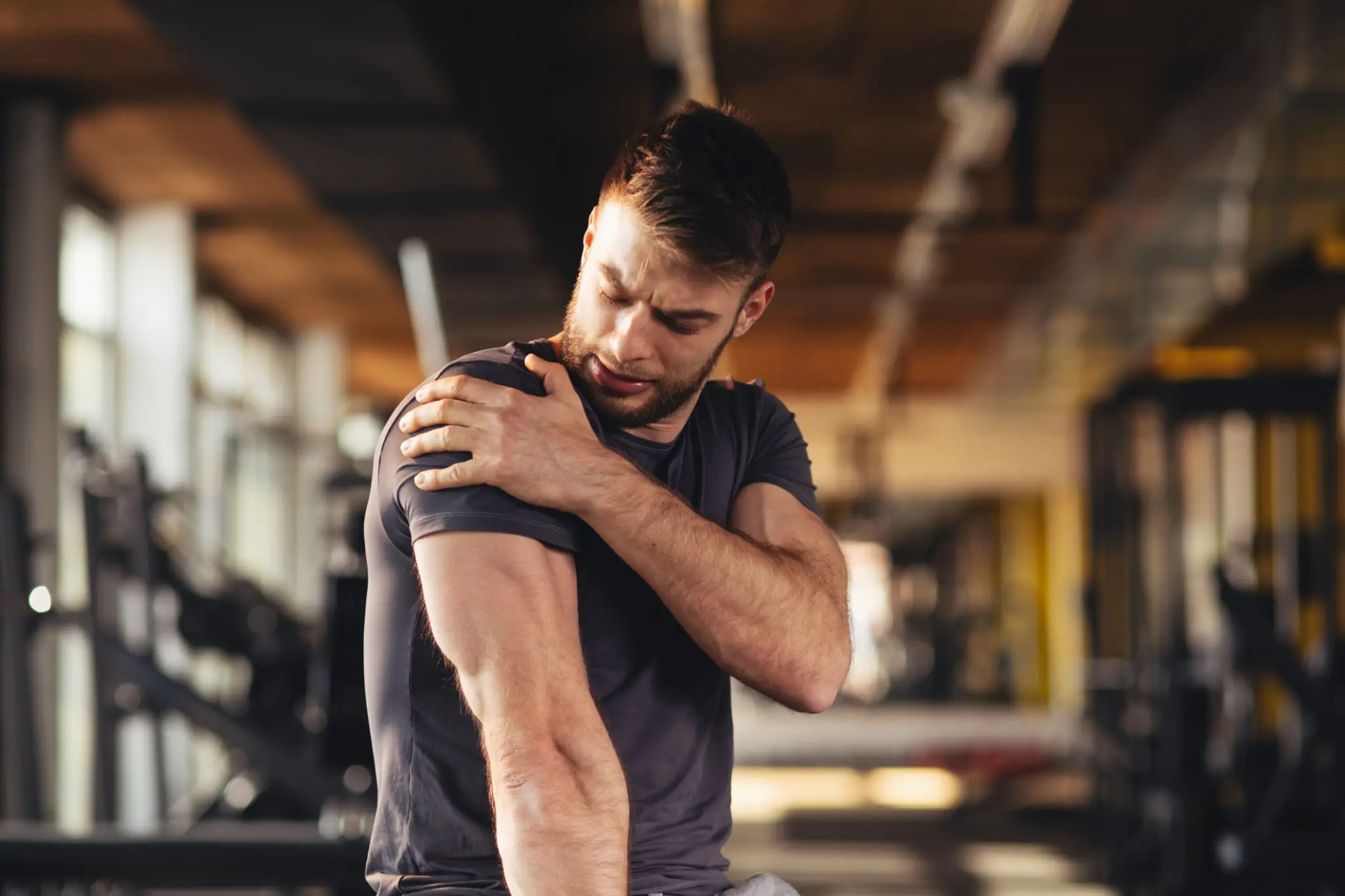
A sore quadriceps after a hard training session, patellofemoral pain, Achilles tendinopathy, an ankle sprain, a rotator cuff tear, a stress fracture, and a lumbar nerve problem can all interfere with sport. They should not receive the same treatment plan.
Delayed-Onset Muscle Soreness
DOMS typically follows unfamiliar or demanding exercise. Acupuncture has been studied for DOMS, with mixed but sometimes encouraging results.
DOMS should not be confused with an acute strain, tendon injury, or stress fracture.
Tendon and Load-Related Pain
Tennis elbow, Achilles tendinopathy, patellar tendon pain, rotator cuff-related pain, and other overuse conditions usually require attention to load tolerance as well as pain.
Strains and Sprains
Minor muscle strains and ligament sprains may be managed conservatively, but severity matters.
Significant trauma, major swelling, instability, deformity, or loss of normal function changes the care pathway.
Stress Injuries and Fractures
Focal bone pain during running or jumping can represent a bone stress injury. These conditions require appropriate medical evaluation and unloading rather than simply needling through the pain.
What Does the Research Actually Say?
There is real sports-medicine research on acupuncture, but “acupuncture for sports injuries” includes many different injuries, interventions, outcome measures, and athlete populations.
A review by Pujalte and colleagues examined acupuncture across sports medicine, preparation, performance, and recovery.
The literature included favorable findings involving pain, DOMS, mobility, swelling, force production, and selected physiological measures.
Because the underlying studies vary widely, the review should not be interpreted as proof that acupuncture accelerates healing for every athletic injury.
One meta-analysis of six randomized trials reported improvements in muscle soreness, creatine kinase, and maximal isometric force after strenuous exercise.
Another review of 15 studies published the same year found mostly small effects and limited differences from sham or control conditions.
That makes “may help soreness” more appropriate than “speeds muscle recovery.”
A 2025 systematic review found that dry needling research in athletes was generally more favorable for pain and muscle stiffness than for athletic performance.
The authors also identified significant evidence gaps, particularly for long-term outcomes, elite athletes, and some muscle groups.
Symptom Improvement Is Different From Tissue Repair
An athlete can experience less pain, less muscle stiffness, improved range of motion, or greater comfort after treatment without that proving that an injured tendon, ligament, muscle, or bone has structurally healed.
That distinction matters when deciding whether someone is ready to sprint, lift, throw, swim, jump, cut, or return to competition.
How Acupuncture May Fit Into Sports Care
NCCIH notes that acupuncture may be helpful for several pain conditions, including back or neck pain, knee osteoarthritis, and some myofascial pain patterns. Research also continues into sport-specific applications.
Acupuncture’s mechanisms are not fully understood. Research suggests possible effects involving the nervous system, tissues where needles are inserted, pain processing, and nonspecific treatment effects.
That is a more accurate explanation than saying acupuncture flushes inflammation, clears damaged tissue, restores perfect blood flow, or forces the body into “repair mode.”
Review NCCIH’s acupuncture evidence and safety overview
Acupuncture, Dry Needling and Electroacupuncture Are Different Tools
Acupuncture
Acupuncture uses fine, sterile, single-use needles placed at selected local or distal points.
For an athlete, it may be considered for pain or associated muscular tension when the presentation is appropriate.
Dry Needling
Dry needling focuses more directly on myofascial trigger points, tender muscle tissue, and local neuromuscular patterns.
A twitch response can occur, but treatment success does not require a muscle to visibly twitch, and needling does not literally “reset” the muscle.
Electroacupuncture
Electroacupuncture applies gentle electrical stimulation through selected acupuncture needles.
It may be used selectively, but it should not be described as a tissue-regeneration tool for every tendinopathy or chronic joint problem.
Common Athletic Pain Patterns
Runner’s Knee and Knee Pain
Pain around the kneecap can involve patellofemoral load, strength, running volume, movement tolerance, biomechanics, and other factors.
Dry needling or acupuncture may help associated pain or muscle sensitivity, but should not be promised to “rebalance patellar tracking.”
Plantar Heel Pain
Plantar heel pain may involve the plantar fascia, load changes, calf capacity, footwear, training volume, and other factors.
Needling may be considered as an adjunct, but treatment should not be described as increasing microcirculation at the heel insertion in a way that repairs the fascia.
Swimmer’s and Overhead Shoulder Pain
Shoulder pain in swimmers, throwers, lifters, and racquet athletes can involve rotator cuff-related pain, strength, endurance, mobility, instability, training load, or another condition.
Tennis and Golfer’s Elbow
Lateral and medial elbow pain commonly affects athletes who grip, lift, throw, swing, or perform repetitive wrist work.
Acupuncture has some condition-specific evidence for lateral elbow pain, while progressive strengthening remains an important part of rehabilitation.
Hamstring, Calf and Muscle Strains
A minor strain and a significant muscle tear are different injuries. Needling may address pain or surrounding muscle guarding, but it does not “clear” a hematoma or reconnect torn muscle fibers.
Ankle Sprains
Mild ankle sprains often require progressive restoration of motion, strength, balance, and sport-specific function.
Significant instability, inability to bear weight, major swelling, deformity, or suspected fracture needs appropriate medical assessment.
Pain Relief Does Not Replace Rehabilitation
Returning to Sport Requires Capacity, Not Just Less Pain
A runner needs the leg to tolerate repeated impact. A swimmer needs shoulder strength and endurance. A tennis player needs grip, rotation, acceleration, deceleration, and repeated arm loading.
Rehabilitation may involve strength training, mobility work, balance, progressive loading, sport-specific drills, technique changes, and gradual return to training.
AAOS rehabilitation guidance emphasizes strengthening, flexibility, and structured conditioning as part of returning to sport after injury.
Acupuncture or dry needling may help reduce the symptom barrier for some athletes, but they do not replace the work required to rebuild sport-specific capacity.
Does Acupuncture Speed Up Healing?
That phrase needs to be used carefully.
Some research reports improvements in soreness, pain, mobility, and selected recovery measures. Laboratory research also explores local tissue responses, nervous-system effects, inflammatory signaling, and other possible mechanisms.
Those findings do not establish that acupuncture consistently accelerates biological healing of muscles, tendons, ligaments, cartilage, or bone in injured athletes.
Less Pain Does Not Prove the Tissue Is Ready for Competition
Feeling better after treatment can be useful, but athletes should not use symptom relief as the sole test for returning to full training.
Strength, function, sport-specific movement, load tolerance, stability, and the underlying diagnosis also matter.
What About Delayed-Onset Muscle Soreness?
DOMS is one of the more frequently studied sport-recovery applications of acupuncture.
A 2020 meta-analysis of six randomized trials found reductions in soreness and creatine kinase along with improvement in maximal isometric force after strenuous exercise.
Another 2020 review of 15 studies, however, reported very small to moderate effects and found no significant difference between acupuncture and sham or control in many of the comparisons.
Taken together, acupuncture may help DOMS for some athletes, but the evidence does not justify promising faster physiological recovery after every workout.
When Should You Schedule Acupuncture Around Training?
There is no universal “24 to 72-hour sweet spot” after every sports injury.
The best timing depends on whether you are dealing with ordinary training soreness, an acute injury, chronic overuse pain, a competition, or a significant orthopedic problem.
Avoid Surprises
Trying a new or unusually aggressive needle-based treatment immediately before an important race or competition may not be ideal because temporary soreness can occur.
Athletes should know how they normally respond before scheduling treatment close to an event.
There Is No Mandatory 24-Hour Shutdown
Not every athlete needs to avoid exercise for exactly 24 hours after acupuncture.
Training decisions should depend on the condition treated, treatment intensity, temporary soreness, and the planned workout.
Diagnose Before You Chase Recovery
A traumatic injury with substantial swelling, major weakness, loss of function, or suspected fracture may need orthopedic evaluation before acupuncture.
Treatment Frequency Is Individual
There is no evidence-based rule that every athlete needs acupuncture once or twice weekly during training or every two weeks for maintenance.
What Happens at an Orthopedic Sports Visit?
Understand the Injury and Training History
We discuss when symptoms began, whether there was a traumatic event, changes in training volume or intensity, movements that provoke symptoms, prior injuries, imaging, diagnoses, and treatments already tried.
Assess Movement and Function
Depending on the complaint, assessment may include range of motion, strength, gait, grip, muscle guarding, trigger points, or movement related to the athlete’s sport.
Decide Which Tool Fits
The plan might involve acupuncture, dry needling, electroacupuncture, medical massage, or another approach.
Some injuries belong with physical therapy, sports medicine, orthopedics, imaging, or another medical provider instead.
Reassess What Matters for the Athlete
Useful outcomes may include pain during the sport, strength, range of motion, running or walking tolerance, grip, ability to sleep comfortably, and response to progressive training.
When Sports Pain Needs Medical Evaluation First
Some Injuries Should Not Start With Acupuncture
Seek appropriate medical, urgent-care, emergency, or orthopedic evaluation when an injury suggests fracture, significant tendon or ligament damage, neurological injury, infection, or another serious problem.
- Visible deformity after trauma.
- Inability to bear weight or use the limb normally.
- A sudden pop followed by major weakness or loss of function.
- Rapid or substantial swelling or bruising.
- Focal bone pain that worsens with running, jumping, or impact.
- Persistent or progressive numbness, tingling, or weakness.
- Foot drop or another major neurological change.
- Loss of bowel or bladder control with new back or neurological symptoms.
- Increasing redness, warmth, swelling, or fever.
- Pain that is becoming worse rather than following an expected recovery pattern.
Do Not Miss a Bone Stress Injury
Athletes sometimes assume that gradually increasing foot, ankle, shin, hip, or other focal pain is simply a tight muscle.
AAOS notes that bone stress injuries often follow repetitive overload or rapid increases in activity. As the injury progresses, pain may occur during exercise, ordinary walking, daily activities, or even at night.
Continuing to train through a bone stress injury can make it worse. That is a medical evaluation, not an area to repeatedly needle because the athlete has an upcoming race.
Review AAOS guidance on bone stress injuries
How Many Acupuncture Sessions Does a Sports Injury Need?
There is no reliable rule that acute injuries improve within two to four sessions or chronic injuries require six to ten visits.
A mild muscle soreness pattern, chronic tennis elbow, stress fracture, rotator cuff pain, nerve irritation, and ankle sprain do not share the same timeline.
Treatment recommendations should depend on the working diagnosis, how long symptoms have been present, functional limitations, training demands, other rehabilitation, and whether measurable improvement occurs.
If the athlete is not improving, simply scheduling more acupuncture should not replace reconsidering the diagnosis or referring for appropriate care.
Can You Keep Training During Acupuncture Treatment?
Often, but not always.
The better question is whether the injured structure can safely tolerate the planned load.
Some athletes may continue modified training while rehabilitating an overuse condition. Others need a period of unloading because continued impact, sprinting, throwing, lifting, or cutting could aggravate the injury.
Acupuncture should not be used to mute pain simply so an athlete can ignore a restriction that a physician or rehabilitation professional has given them.
Use Function, Not Just Pain, to Judge Progress
An athlete may feel better before strength, endurance, coordination, tissue capacity, or sport-specific tolerance has fully returned.
Return to sport should be based on the diagnosis and the physical requirements of the activity, not simply on whether a treatment made the area hurt less that afternoon.
Sports Injuries and Insurance at Messina
Verify Your Individual Acupuncture Benefits
Messina Acupuncture PC accepts many major plans that may include acupuncture benefits, including NYSHIP, United Healthcare, Oxford, Blue Cross Blue Shield, Cigna, Magnacare, and Aetna.
Coverage varies by individual plan, diagnosis, deductible, visit limits, and other policy terms. The front desk can help verify your benefits before your first visit.
Messina Acupuncture PC does not currently accept Workers’ Compensation, No-Fault, Medicaid, or New York State disability.
Call 631-403-0504 if you would like the office to verify your plan.
Messina Acupuncture PC is an orthopedic-focused acupuncture practice in East Setauket serving Stony Brook, Port Jefferson, Three Village, and communities throughout Long Island’s North Shore.
Care is led by Daniel Messina, MSOM, L.Ac., a New York State Licensed Acupuncturist and NCCAOM Board-Certified Diplomate. The practice has served the local community since 2016.
Learn more about services at Messina Acupuncture PC or explore the orthopedic conditions we commonly evaluate .
Frequently Asked Questions About Acupuncture for Sports Injuries
Does acupuncture help sports injuries?
Acupuncture may help manage pain or improve function in selected musculoskeletal conditions, and some athlete-specific research is encouraging. Evidence varies by injury, and acupuncture should not be assumed to accelerate structural healing.
Does acupuncture speed up recovery?
Some studies report improvements in pain, soreness, mobility, or selected recovery measures. Current evidence does not establish that acupuncture consistently speeds biological healing of muscles, tendons, ligaments, or bone across sports injuries.
Is dry needling helpful for athletes?
A 2025 systematic review of 24 studies involving 580 athletes found generally more favorable results for pain and muscle stiffness than for athletic performance. The authors also identified important long-term evidence gaps.
Does acupuncture help post-workout soreness?
Research on delayed-onset muscle soreness is mixed. Some studies and meta-analyses report improvements, while others show small effects or limited differences from sham or control.
Can acupuncture repair a torn tendon or muscle?
Current clinical evidence does not establish that acupuncture reconnects torn fibers, repairs a tendon tear, clears hematomas, or restores damaged tissue structure by itself.
Can I work out after acupuncture?
There is no universal rule requiring everyone to avoid exercise for exactly 24 hours. The answer depends on what was treated, treatment intensity, current soreness, the underlying injury, and the workout you plan to perform.
How many sessions will a sports injury need?
There is no fixed number that applies to every athlete. Recommendations should depend on the diagnosis, symptom duration, functional limitations, training demands, other rehabilitation, and measurable response to care.
When should I see an orthopedist or sports medicine doctor first?
Seek medical evaluation after significant trauma, suspected fracture, major swelling, deformity, inability to bear weight, sudden major weakness, progressive neurological symptoms, suspected tendon rupture, or symptoms suggesting a bone stress injury.
Does Messina accept No-Fault for sports injuries?
No. Messina Acupuncture PC does not currently accept Workers’ Compensation, No-Fault, Medicaid, or New York State disability. Commercial acupuncture coverage varies by plan, and the office can help verify benefits.
Get the Injury Pattern Assessed Before You Chase a Faster Recovery
If running, swimming, lifting, cycling, golf, tennis, pickleball, or another activity is bringing on recurring pain, stiffness, or muscle guarding, Messina Acupuncture PC can assess the pattern and discuss whether acupuncture, dry needling, medical massage, rehabilitation, or another care pathway may be appropriate.
Sources and Further Reading
- National Center for Complementary and Integrative Health: Acupuncture Effectiveness and Safety
- Pujalte et al.: Acupuncture in Sports Medicine
- Sports Medicine: Dry Needling in Sports and Sport Recovery
- Frontiers in Physiology: Acupuncture and Delayed-Onset Muscle Soreness
- Systematic Review: Effects of Acupuncture on Delayed-Onset Muscle Soreness
- American Academy of Orthopaedic Surgeons: Bone Stress Injuries and Stress Fractures