
Acupuncture for Neck Pain in East Setauket, NY
Neck pain can involve stiffness, muscle guarding, headaches, shoulder discomfort or symptoms that travel into an arm or hand. At Messina Acupuncture PC, care begins by understanding the cervical pain pattern before deciding whether acupuncture, dry needling or another service may be appropriate.
100 N Country Road, East Setauket, NY 11733
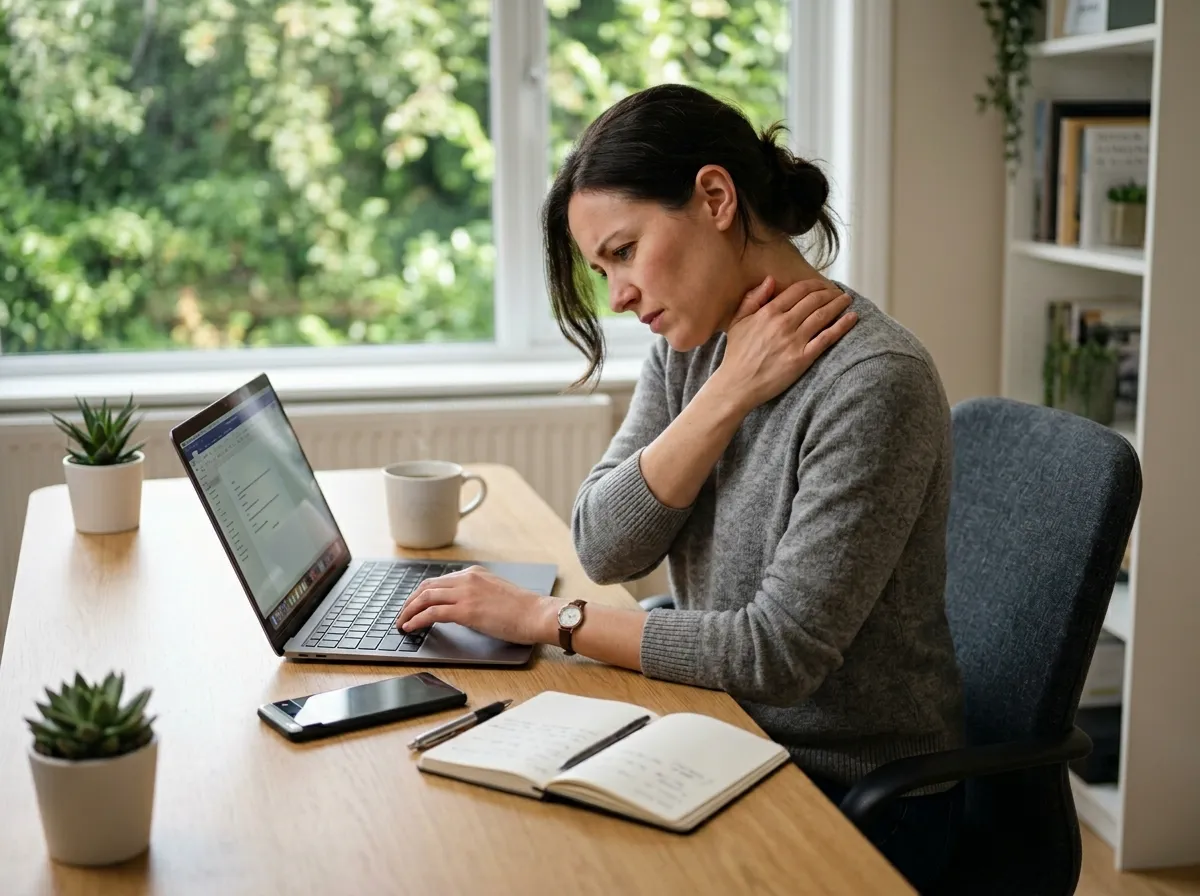
Neck Pain Is a Symptom, Not One Diagnosis
The neck contains muscles, joints, vertebrae, discs, ligaments and nerves. Pain may come from one or more of these structures or may be referred from another region.
The Location of Pain Does Not Always Reveal the Source
A stiff, sore neck after prolonged computer work may involve muscle strain and movement sensitivity. Neck pain that travels into the arm with numbness, tingling or weakness raises different questions.
Headache, shoulder symptoms and jaw pain can also overlap with cervical complaints, which is why treatment should follow the broader pattern rather than one tender spot.
MedlinePlus notes that neck pain can involve muscles, nerves, bones, joints and spinal discs. Common contributors range from muscle strain and prolonged desk work to arthritis, disc problems, spinal stenosis, injury and other medical conditions.
“Tech Neck” Is a Description, Not a Medical Diagnosis
Long periods at a laptop, phone or workstation can contribute to neck symptoms in some people.
Posture, however, should not be treated as the single root cause of every neck problem. Symptoms, movement tolerance, workload, injury history and neurological findings all matter.
Neck Pain Can Behave in Very Different Ways
Different symptom patterns may require different treatment decisions or another healthcare pathway.
Restricted Neck Movement
- Difficulty turning the head
- Pain looking up or down
- Morning stiffness
- Guarded movement
- Symptoms after sustained positions
Work-Related Neck Pain
- Symptoms after laptop use
- Upper-back soreness
- Shoulder tension
- Neck fatigue later in the day
- Reduced movement after prolonged sitting
Neck Pain With Headache
- Base-of-skull discomfort
- Neck stiffness during headache
- Limited cervical rotation
- Shoulder and upper-back symptoms
Pain, Numbness or Tingling
- Pain traveling into the shoulder or arm
- Numbness or tingling
- Changes in sensation
- Grip or arm weakness
- Symptoms affected by neck movement
New or progressive weakness deserves medical evaluation.
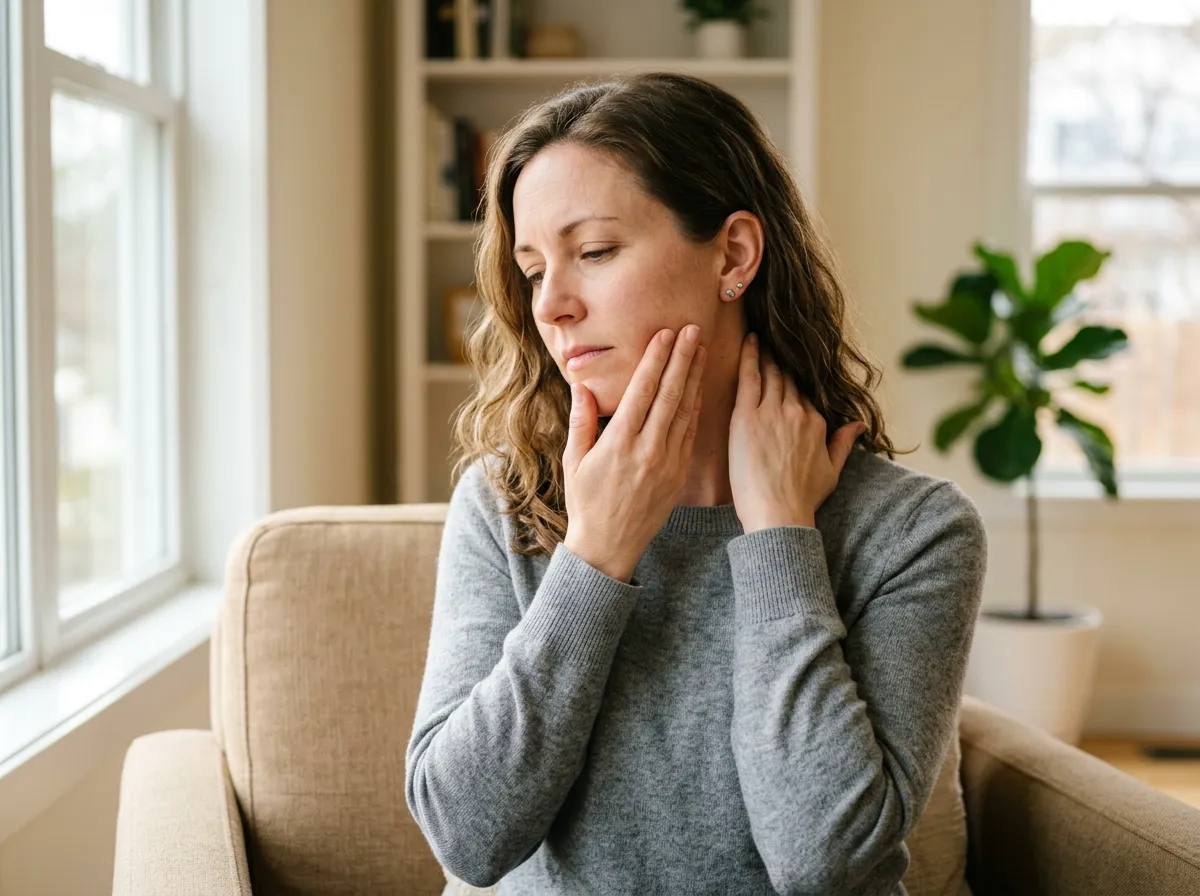
Neck and TMJ Symptoms
- Jaw clenching
- Temple pain
- Jaw and neck tenderness
- Headache with jaw symptoms
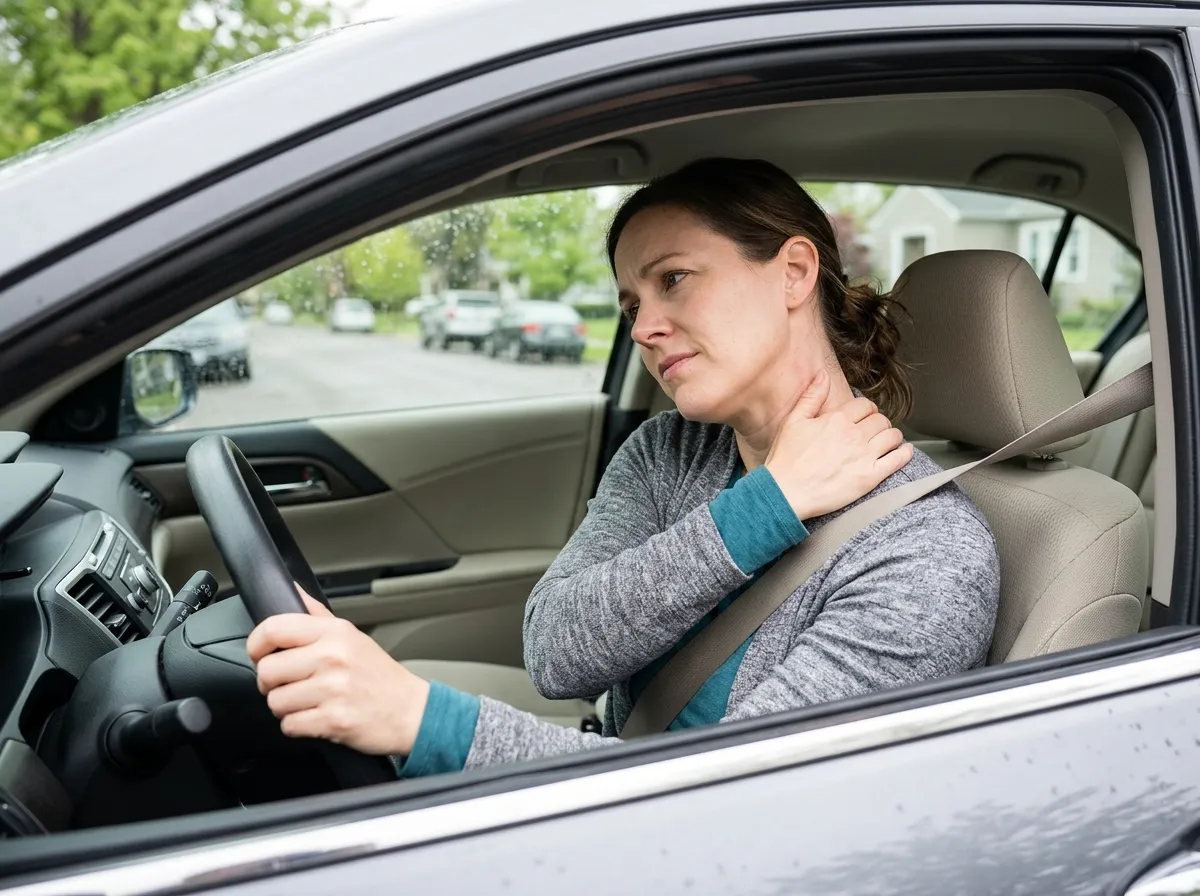
Neck Pain Following Trauma
- Car accident
- Sports injury
- Fall
- Sudden forceful neck movement
- New headache or dizziness after injury
Significant new symptoms after trauma should be medically evaluated before being treated as ordinary muscle tension.
The Daily Limitation Often Matters More Than the Pain Number
Neck symptoms can interfere with driving, work, sleep, exercise, reading, screen use and normal head movement.
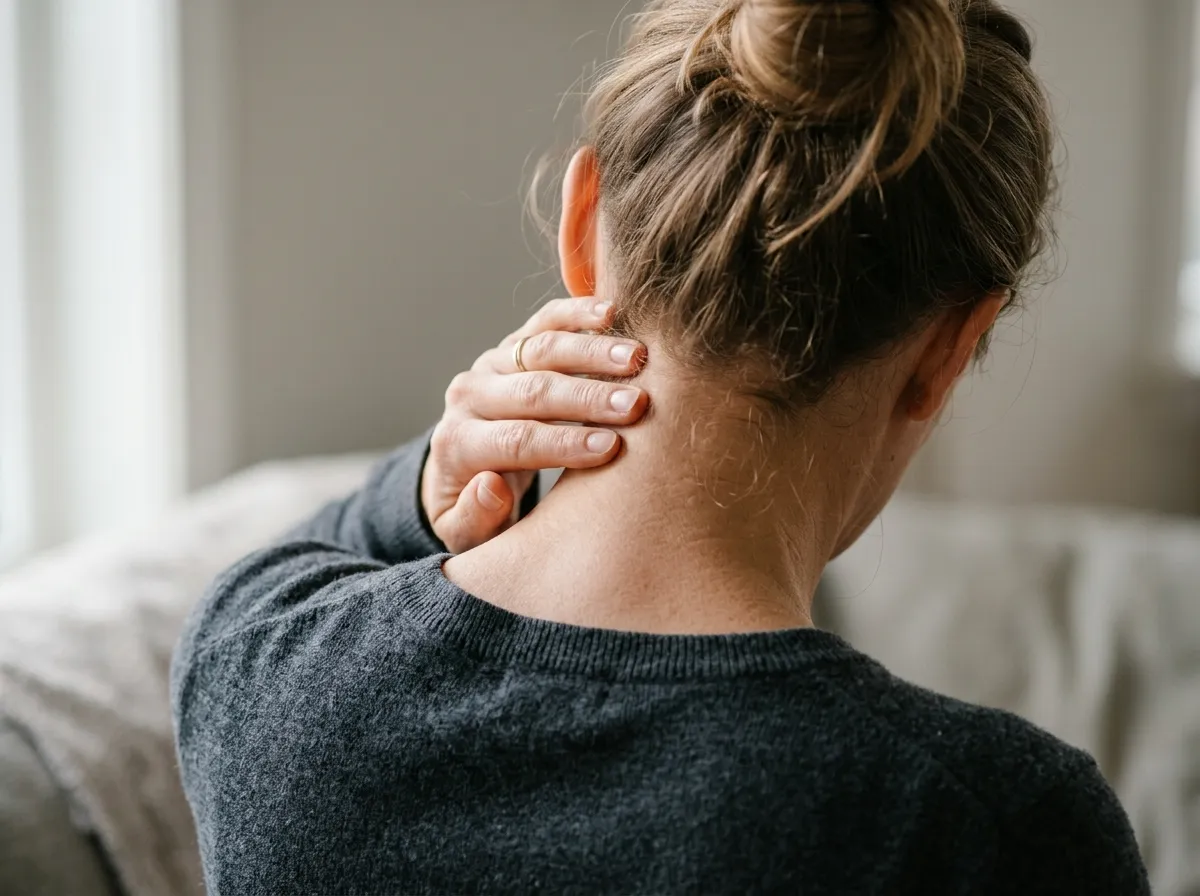
Several Structures Can Contribute to Neck Pain
Neck pain is not always a muscle problem. Understanding which structures may be involved helps determine what should happen next.
Muscle & Soft Tissue
Muscle strain, guarding, tenderness and myofascial pain can contribute to stiffness and movement-related discomfort.
Joints & Discs
Cervical joints, age-related changes, disc-related problems and other structural conditions may contribute depending on the presentation.
Nerves
Nerve-root irritation or compression can produce radiating pain, numbness, tingling or weakness into the shoulder, arm or hand.
A Tender Muscle Is a Finding, Not the Entire Diagnosis
Sensitive areas in the upper trapezius, levator scapulae, scalenes, cervical paraspinals or suboccipital muscles may reproduce local or referred discomfort.
That can be useful information, but finding a tender spot does not prove that the muscle is the root cause of every neck symptom.
Where Acupuncture May Fit
Acupuncture is one conservative treatment option for selected neck-pain presentations. It should be used according to the patient's symptoms, safety considerations and treatment goals.
Research Supports Acupuncture as a Reasonable Option for Neck Pain
NCCIH reports that acupuncture may provide better neck-pain relief than no treatment. Reviews also suggest some benefit compared with sham acupuncture, although the difference between acupuncture and no treatment tends to be larger.
A 2024 systematic review evaluating longer-term outcomes found that acupuncture may provide durable benefit for chronic neck pain when used as an adjunct, although the authors also noted limitations in the available evidence.
Local and Distal Needling
Acupuncture may use local cervical points together with distal points selected according to the broader pain pattern.
Selected Muscle Findings
Dry needling may be considered when muscle tenderness, guarding or myofascial findings appear relevant.
Controlled Electrical Stimulation
Selected acupuncture needles may be paired with controlled electrical stimulation when appropriate for the patient and treatment plan.
Surrounding Soft Tissue
Hands-on treatment may be considered for selected neck, shoulder and upper-back soft-tissue symptoms.
Local Suction Therapy
Cupping may be used for selected surrounding muscle discomfort. Cupping marks do not diagnose the source of neck pain.
Needle-Free Manual Pressure
Acupressure may be incorporated when manual, needle-free stimulation fits the patient's plan.
Acupuncture Does Not Mechanically “Unpinch” a Nerve
Acupuncture should not be presented as permanently realigning the cervical spine, repairing a damaged disc, removing bone spurs or mechanically decompressing a nerve root.
It may be considered for pain and associated symptoms in selected patients while appropriate medical, physical therapy or orthopedic care addresses conditions requiring those services.
Similar Neck Symptoms Can Point to Different Next Steps
These examples are not diagnoses. They show why treatment should follow the clinical pattern.
| What You Notice | What May Need Consideration | Why It Matters |
|---|---|---|
| Stiffness after desk work | Muscle strain, sustained loading, joint sensitivity and movement habits. | Conservative care and realistic movement changes may be appropriate. |
| Local muscle tenderness | Muscle guarding or myofascial findings. | Acupuncture, dry needling or manual care may be considered when clinically relevant. |
| Pain traveling into the arm | Cervical nerve-root irritation or another neurological source. | Nerve symptoms require more specific screening. |
| Numbness or tingling | Cervical nerve involvement or a peripheral nerve condition. | Arm and hand symptoms should not automatically be blamed on a tight neck muscle. |
| Headache with neck stiffness | Cervical involvement may be part of the broader headache pattern. | The headache itself still needs to be appropriately characterized. |
| Severe pain after trauma | Fracture, significant soft-tissue injury, neurological injury or other structural damage. | Medical evaluation may need to come before acupuncture. |
What to Expect During a Neck Pain Visit
Your first visit is 75 minutes. The starting point is understanding the pain pattern before selecting a treatment technique.
Review the History
We discuss when the pain began, previous injuries, surgery, imaging, treatment, work demands, exercise and what activities are currently difficult.
Review Neurological Symptoms
Arm pain, numbness, tingling, weakness, balance changes and other neurological symptoms are important to identify before treatment.
Evaluate Relevant Movement
Depending on the complaint, we may consider cervical rotation, flexion, extension, side bending, muscle guarding, tenderness and relevant functional movements.
Choose the Treatment Tool
Acupuncture, dry needling, electroacupuncture, medical massage or another approach may be selected when it fits the presentation and safety findings.
Reassess
Pain, range of motion, movement tolerance or another relevant measure may be rechecked to determine whether treatment produced a useful change.
There Is No Universal Number of Neck Pain Visits
Follow-up visits are generally 45 to 60 minutes. Treatment frequency depends on the diagnosis, duration of symptoms, neurological findings, functional limitation, other care being used and response.
A fixed schedule should not be promised simply because someone has acute strain, desk-related neck pain or a history of whiplash.
Daily Habits May Be Part of the Plan Without Blaming Posture
Workstation setup and prolonged positions can influence neck comfort, but there is no single perfect posture that prevents every neck problem.
Make the Setup More Tolerable
- Keep frequently used screens easy to view.
- Avoid holding one uncomfortable position for long stretches.
- Use a chair and desk height that allow comfortable arm support.
- Adjust the setup if symptoms consistently increase during work.
Change Position Regularly
Short movement breaks may be more practical than trying to maintain one rigid “correct” posture all day.
The appropriate amount and type of exercise depend on the underlying condition and symptoms.
Prioritize Comfort Over a Perfect Pillow Rule
Sleep position and pillow height can influence symptoms for some people, but there is no one universal pillow or sleep position appropriate for every neck.
Exercise and Strengthening Still Matter
Acupuncture does not replace appropriate strengthening, exercise-based rehabilitation or physical therapy when those approaches are indicated.
Some Neck Pain Needs Medical Evaluation First
Most neck pain is not caused by a dangerous condition, but certain symptoms should not be managed as routine muscular tension.
Seek Appropriate Medical Care for Concerning Symptoms
Medical evaluation is important when neck pain is associated with:
- significant trauma such as a collision, fall or diving injury,
- new or progressive weakness in an arm or leg,
- significant numbness or tingling,
- difficulty walking, balance problems or loss of coordination,
- new bowel or bladder control problems,
- high fever with severe neck pain or stiffness,
- difficulty swallowing or breathing, or
- rapidly worsening or otherwise unusual symptoms.
New Neck Pain After Significant Trauma Should Be Evaluated
Mayo Clinic recommends medical evaluation for neck pain following a car accident, sports injury, fall or other significant trauma so fractures and other injuries can be ruled out.
Acupuncture may sometimes be considered later as part of a broader recovery plan, but it should not delay necessary diagnostic care.
Neck Pain Often Overlaps With Other Symptoms
These pages provide more detail when the complaint extends beyond the cervical region.
Have Questions About Insurance?
Acupuncture benefits vary by individual plan, diagnosis and available coverage. Contact the office with your insurance information and the team can help verify available benefits.
Questions Patients Ask Before Scheduling
Can acupuncture help neck pain?
It may help selected patients. NCCIH reports that available evidence suggests acupuncture can provide better neck-pain relief than no treatment. The appropriate treatment plan still depends on the cause, symptoms, safety considerations and response.
Can acupuncture help neck pain that causes headaches?
Neck symptoms can overlap with certain headache patterns. If headache and cervical symptoms appear related, the neck may be included in the evaluation. Not every migraine or headache, however, is caused by cervical muscle tension.
Can acupuncture help a pinched nerve in the neck?
Acupuncture may sometimes be used for pain associated with selected cervical conditions, but it should not be described as mechanically unpinching a nerve. Progressive weakness, significant numbness or other concerning neurological symptoms require appropriate medical evaluation.
Does neck pain cause carpal tunnel syndrome?
No, not in the usual sense. Carpal tunnel syndrome involves compression of the median nerve at the wrist. Cervical nerve irritation can also produce numbness, tingling or pain in an arm or hand, so the symptoms sometimes need to be distinguished.
Do I need an MRI before acupuncture?
Not everyone does. Mayo Clinic notes that imaging findings should be interpreted together with a history and physical examination because structural changes can appear on imaging even in people without neck pain. Imaging may be appropriate when symptoms or medical history suggest a more serious condition.
Can I receive acupuncture after cervical fusion or neck surgery?
Previous cervical surgery does not automatically mean acupuncture is inappropriate, but surgical history, hardware, neurological symptoms, healing status and surgeon recommendations need to be considered. Treatment should not involve unsupported claims about changing or correcting surgical hardware.
Is needling around the neck safe?
Acupuncture and dry needling are generally considered safe when performed by appropriately trained practitioners, but they are not risk-free. Treatment location, anatomy, depth, technique and patient health history all matter.
How many neck pain visits will I need?
There is no fixed treatment count that applies to everyone. Frequency depends on the diagnosis, duration, neurological findings, functional limitations, other treatment and whether meaningful improvement is occurring.
Can I use acupuncture while doing physical therapy?
Often, yes. Acupuncture can be used alongside physical therapy, strengthening, exercise-based rehabilitation, medication or other appropriate care. It does not need to replace the rest of the treatment plan.
When should neck pain be medically evaluated promptly?
Seek appropriate medical care for severe neck pain after significant trauma, new or progressive weakness, significant numbness, trouble walking, loss of coordination, new bowel or bladder symptoms, high fever with severe neck stiffness or rapidly worsening symptoms.
Start With What Your Neck Is Keeping You From Doing
If neck pain, stiffness, headaches, muscle guarding or restricted movement is interfering with work, driving, exercise, sleep or everyday life, Messina Acupuncture PC can evaluate the pattern and determine whether acupuncture, dry needling, medical massage or another healthcare pathway may be appropriate.
Sources and Further Reading
- National Center for Complementary and Integrative Health: Acupuncture Effectiveness and Safety
- NCCIH: Chronic Pain and Complementary Health Approaches
- 2024 Systematic Review and Meta-Analysis: Durable Effect of Acupuncture for Chronic Neck Pain
- Systematic Review and Meta-Analysis: Effectiveness of Acupuncture for Neck Pain
- MedlinePlus: Neck Pain
- Mayo Clinic: Neck Pain Symptoms and Causes
- Mayo Clinic: Neck Pain Diagnosis and Treatment