
Acupuncture for TMJ Disorders & Jaw Pain in East Setauket, NY
Jaw pain, clenching, temple tension, painful clicking and limited mouth opening can involve the temporomandibular joint, the muscles used for chewing, the neck or more than one structure at the same time. At Messina Acupuncture PC, care begins by understanding the pattern before deciding whether acupuncture or another treatment option may be appropriate.
100 N Country Road, East Setauket, NY 11733
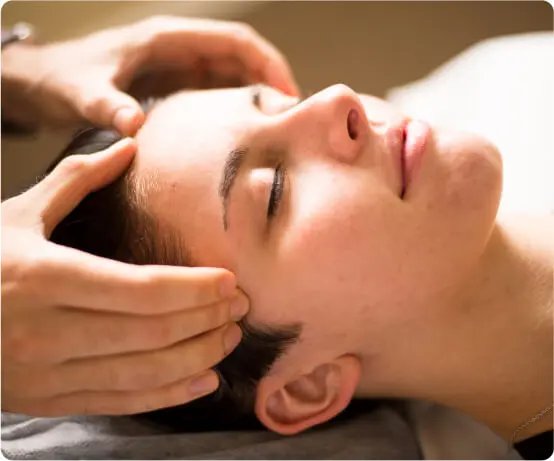
What Are TMJ Disorders?
The temporomandibular joint, or TMJ, connects the lower jaw to the skull just in front of each ear. You have one TMJ on each side.
TMJ Is the Joint. TMD Is the Disorder.
The term temporomandibular disorders, or TMDs, refers to a group of conditions that can cause pain or dysfunction involving the jaw joints, the muscles used for chewing and related structures.
People commonly say “I have TMJ,” but technically everyone has temporomandibular joints. The clinical question is what type of TMD or other jaw-related problem may be producing the symptoms.
According to the National Institute of Dental and Craniofacial Research, TMDs include more than 30 conditions. They can involve the joint itself, the muscles that move the jaw, TMD-associated headache or overlapping problems.
Some TMD symptoms are temporary and improve with conservative care. Others become persistent and can interfere with eating, speaking, sleeping or normal jaw movement.
Clicking Without Pain Does Not Automatically Need Treatment
Jaw clicking or popping is common. NIDCR notes that joint sounds without pain or movement limitation are generally considered normal and do not require treatment.
Painful clicking, repeated locking, restricted opening or changes in jaw function deserve a different evaluation.
Symptoms That Can Occur With TMD
TMD does not look the same in every patient. Symptoms can involve the joint, chewing muscles, face, temples, ears or neck.
Jaw or Joint Tenderness
- Pain in front of the ear
- Jaw soreness after chewing
- Morning jaw discomfort
- Tender chewing muscles
Limited or Painful Opening
- Difficulty opening wide
- Pain with chewing
- Jaw stiffness
- Episodes of locking
Painful Clicking or Popping
- Clicking associated with pain
- Grinding or grating sensations
- Changing movement pattern
- Jaw catching during motion
Facial and Temple Pain
- Temple aching
- Cheek or masseter soreness
- Facial muscle tenderness
- Headache associated with jaw use
Neck and Jaw Symptoms Together
- Upper-neck tension
- Restricted neck movement
- Headache with jaw tension
- Shoulder and jaw guarding
Jaw Clenching or Grinding
- Daytime clenching
- Nighttime bruxism
- Morning muscle soreness
- Jaw fatigue
Clenching may contribute to some pain patterns, but it should not automatically be assumed to explain every TMD symptom.
Where TMJ-Related Pain May Come From
TMD is an umbrella term. The same complaint of “jaw pain” can reflect very different clinical patterns.
The Jaw Joint
The TMJ itself may be involved in joint pain, disc-related problems, degenerative changes, trauma or other joint disorders.
Chewing Muscles
The masseter, temporalis and other muscles used to move the jaw can become painful or tender and may refer discomfort into the face, temple or teeth.
Head and Neck Overlap
TMD may occur alongside headaches, neck pain and other pain conditions. The jaw should therefore be evaluated in context, not in isolation.
Stress or a “Bad Bite” Should Not Be Blamed Automatically
Stress, clenching, injury and other factors may contribute in selected patients, but the cause of TMD is often not clear and may involve several interacting factors.
NIDCR specifically notes that current research does not support the belief that a bad bite or orthodontic treatment is a general cause of TMD.
Similar Jaw Symptoms Can Need Different Care
These examples are not diagnoses. They show why jaw symptoms should be evaluated before selecting a treatment tool.
| What You Notice | What May Need Consideration | Why It Matters |
|---|---|---|
| Cheek or temple muscle soreness | Masticatory muscle pain, clenching or other myofascial findings. | Muscle-focused conservative care may be relevant when the evaluation supports it. |
| Pain directly at the jaw joint | Joint pain, disc-related symptoms, arthritis or injury. | Joint symptoms may require dental, medical or imaging evaluation depending on the presentation. |
| Clicking without pain | A common, often normal joint sound. | Clicking alone generally does not require treatment. |
| Painful clicking or locking | Joint or disc-related dysfunction may need consideration. | Repeated locking or restricted opening deserves appropriate evaluation. |
| Jaw pain with temple headache | TMD-associated headache, muscle tenderness or overlapping headache conditions. | The headache pattern should be identified rather than assuming every headache is caused by the jaw. |
| Tooth pain or facial swelling | Dental, infectious or other non-TMD causes may need to be ruled out. | Acupuncture should not delay necessary dental or medical care. |
Can Acupuncture Help TMJ-Related Pain?
Acupuncture can be considered as a complementary option for selected patients with TMD-related pain, particularly when a muscular or chronic pain component is present.
Research Is Promising, but Acupuncture Is Not a Cure for Every TMD
A 2024 systematic review and meta-analysis of randomized trials reported short-term improvement in pain severity, particularly for TMD pain of muscular origin. The authors also emphasized that the overall evidence remains limited and stronger trials are needed.
NIDCR similarly describes the evidence for acupuncture in TMD as limited. A BMJ clinical practice guideline for chronic TMD pain gives acupuncture a conditional recommendation rather than a strong recommendation.
Pain Modulation
Acupuncture provides sensory stimulation that may influence pain processing and pain sensitivity in selected patients.
Jaw Muscle Findings
When muscle tenderness or myofascial findings around the jaw appear clinically relevant, targeted needle-based care may be considered.
Cervical and Shoulder Tension
Some patients have jaw symptoms together with neck pain, upper-trapezius guarding or headache patterns.
Acupuncture Does Not Reposition a Disc or Permanently Correct the Bite
Acupuncture should not be presented as mechanically realigning the jaw joint, restoring a displaced disc, changing the bite or repairing damaged joint structures.
When dental disease, significant joint dysfunction, trauma or another condition needs evaluation, acupuncture is best considered alongside rather than instead of appropriate dental or medical care.
What to Expect During a Visit for Jaw Pain
Your first visit is 75 minutes. The starting point is understanding the symptoms, jaw function and surrounding pain pattern, not automatically placing needles into the jaw muscles.
Review Your Symptoms
We discuss where the pain is located, when it began, whether the jaw clicks or locks, chewing difficulty, clenching or grinding, headaches, dental history and other relevant symptoms.
Look at Jaw Function
Depending on the presentation, we may consider mouth opening, jaw movement, tenderness and which movements reproduce the complaint.
Consider the Neck and Surrounding Muscles
Jaw pain often overlaps with the temporalis, masseter, upper neck and shoulder region, so relevant surrounding findings may also be assessed.
Decide Whether Acupuncture Fits
If acupuncture, dry needling, acupressure or medical massage appears appropriate, the treatment is selected according to the findings, safety considerations and patient preference.
Reassess
Pain, jaw opening, muscle tenderness or another relevant functional measure may be reassessed to determine whether the treatment produced a useful change.
There Is No Fixed TMJ Treatment Count
Follow-up appointments are generally 45 to 60 minutes. Treatment frequency should reflect the type of TMD, symptom duration, functional limitation, other care being used and response.
A fixed promise such as six, eight or ten treatments should not be applied to every patient.
What Else May Be Part of TMD Care?
TMD is often managed with conservative, reversible approaches first. Acupuncture does not have to be the only part of the plan.
Reduce Irritating Jaw Load
- Temporarily choose softer foods during a flare when appropriate.
- Avoid repeatedly testing a painful jaw by opening as wide as possible.
- Reduce habits such as gum chewing when they aggravate symptoms.
- Become aware of repeated daytime clenching.
Jaw Exercise and Physical Therapy
Depending on the diagnosis, supervised jaw exercise, stretching, mobilization and physical therapy may be useful components of conservative care.
Dentist or Orofacial Pain Evaluation
A dentist or other clinician with TMD experience may be appropriate when symptoms suggest dental disease, joint dysfunction, bite change or another problem requiring dental assessment.
Behavioral and Pain-Management Approaches
For persistent TMD pain, education, cognitive behavioral approaches, relaxation strategies and other pain-management tools may be included in a broader plan.
Start With Reversible Care Before Permanent Procedures
NIDCR recommends beginning with simple, conservative treatments and being cautious about procedures that permanently alter the teeth, bite or jaw joint.
If an invasive or irreversible procedure is being considered, discussing alternatives and obtaining another qualified opinion can be appropriate.
When Jaw Pain Needs Dental or Medical Evaluation
Not all facial or jaw pain comes from TMD. Dental problems, infection, injury and other conditions can produce similar symptoms.
Do Not Assume Every Painful Jaw Is a Muscle-Tension Problem
Contact an appropriate dentist, physician or urgent-care service when symptoms include:
- significant facial or jaw swelling,
- fever with jaw or facial pain,
- suspected dental infection or severe tooth pain,
- significant trauma to the jaw or face,
- a sudden change in the way the teeth fit together,
- inability to open or close the mouth normally,
- a jaw that becomes locked open or closed,
- new facial numbness or significant neurological symptoms, or
- severe or rapidly worsening unexplained pain.
Jaw Pain Often Overlaps With Headache and Neck Symptoms
These pages can help when the complaint extends beyond the jaw itself.
Have Questions About Insurance?
Acupuncture coverage varies by plan, benefits, diagnosis and how care is billed. Contact the office with your insurance information and the team can help verify available benefits.
Questions Patients Ask Before Scheduling
What is the difference between TMJ and TMD?
TMJ stands for temporomandibular joint, the jaw joint itself. TMD stands for temporomandibular disorder and describes a group of conditions affecting the jaw joints, chewing muscles and related structures.
Can acupuncture help TMJ-related pain?
It may help selected patients, particularly when muscular or chronic pain is part of the presentation. Research suggests possible short-term benefit, but evidence remains limited and acupuncture should not be presented as a cure for every type of TMD.
Does jaw clicking mean I have a problem?
Not necessarily. Clicking or popping without pain or movement limitation is common and generally does not require treatment. Painful clicking, locking or reduced jaw movement deserves further evaluation.
Is teeth grinding the cause of all TMJ disorders?
No. Clenching or grinding may contribute to symptoms in some patients, but TMDs are a broad group of conditions and often do not have one simple cause.
Can stress cause TMJ pain?
Stress may contribute to clenching, muscle tension or pain sensitivity in some people, but it should not automatically be assumed to be the cause of jaw pain. Joint, muscle, dental and other factors may also need consideration.
Can acupuncture fix a displaced TMJ disc?
Acupuncture should not be presented as mechanically repositioning a displaced disc or permanently realigning the jaw joint. Joint locking, significant restriction or suspected internal joint problems may require dental or medical evaluation.
Should I keep seeing my dentist if I use acupuncture for jaw pain?
Yes. Acupuncture can often be used alongside appropriate dental, medical or physical therapy care. It should not replace evaluation of dental disease, significant joint dysfunction or other conditions that require another provider.
How many acupuncture visits will I need for TMD?
There is no fixed treatment count that applies to everyone. Frequency depends on the type of symptoms, how long they have been present, functional limitation, other care being used and whether measurable improvement is occurring.
When should jaw pain be evaluated promptly?
Seek appropriate dental or medical evaluation for major facial swelling, fever with jaw pain, significant trauma, a sudden bite change, severe tooth pain, a jaw that becomes locked, inability to open or close normally or new facial numbness.
Will insurance cover acupuncture for TMJ-related pain?
Coverage varies by insurance plan, diagnosis, available benefits and how treatment is billed. Contact Messina Acupuncture PC with your insurance information to verify available benefits.
Tell Us What Your Jaw Is Keeping You From Doing
If jaw pain, clenching, temple tension, painful clicking or restricted mouth opening is interfering with eating, sleep, work or daily comfort, Messina Acupuncture PC can evaluate the pattern and determine whether acupuncture, dry needling, manual care or another healthcare pathway may be appropriate.
Sources and Further Reading
- National Institute of Dental and Craniofacial Research: Temporomandibular Disorders
- NIDCR: Summary of Treatments for Temporomandibular Disorders
- BMJ Clinical Practice Guideline: Management of Chronic Pain Associated With TMD
- 2024 Systematic Review and Meta-Analysis: Acupuncture and Laser Acupuncture for TMD
- 2026 Meta-Analysis: Acupuncture for Pain and Mandibular Function in TMD
- Mayo Clinic: TMJ Disorders, Symptoms and Causes
- Mayo Clinic: TMJ Disorders, Diagnosis and Treatment