
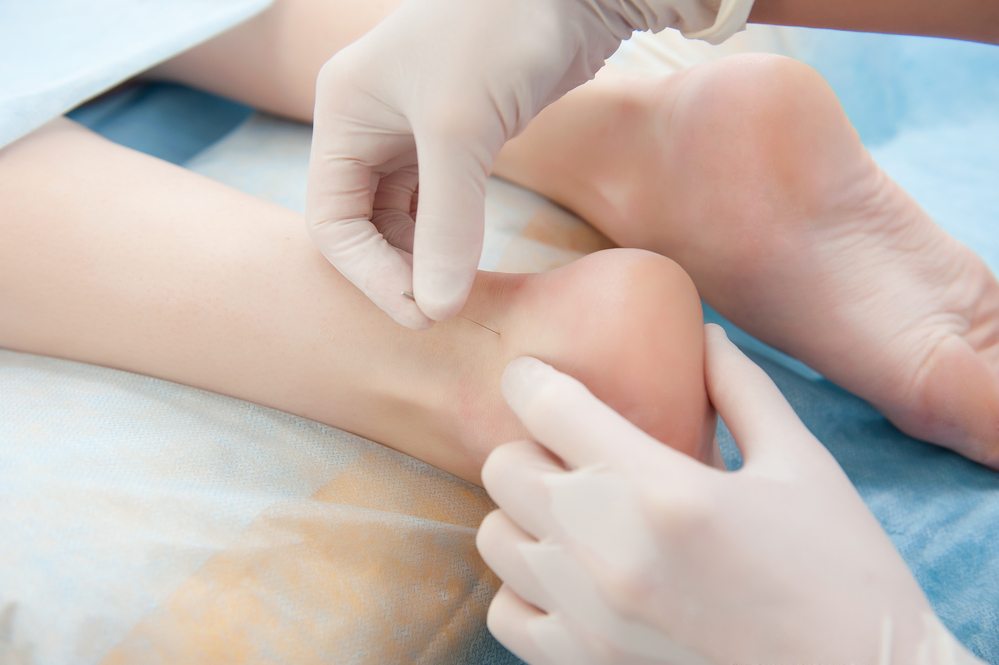
Acupuncture & Plantar Heel Pain
Plantar fasciitis often announces itself with a painful first step in the morning or heel pain after sitting for a while. Acupuncture and electroacupuncture have growing evidence as adjunctive options for selected patients, but they should not be presented as methods that rebuild collagen, restore blood supply or single-handedly repair the plantar fascia. A strong treatment plan also considers foot and calf capacity, activity load, stretching, strengthening and whether the diagnosis truly fits plantar heel pain.
Can Acupuncture Help Plantar Fasciitis?
It may. Recent research suggests acupuncture can reduce pain and improve function for some people with plantar heel pain.
A 2026 multisite randomized trial found that electroacupuncture combined with a prescribed exercise program produced greater improvements in pain and foot function over 12 weeks than exercise alone.
Other reviews also suggest acupuncture may provide short-term benefit, while dry needling has separate evidence for pain and function.
The most responsible way to use either technique is as part of an individualized plan, not as a promise that needles directly regenerate damaged plantar fascia.
What Is Plantar Fasciitis?
The plantar fascia is a strong band of connective tissue running along the bottom of the foot from the heel toward the toes.
It contributes to arch mechanics and helps the foot manage force during standing, walking and running.
Plantar fasciitis, plantar fasciopathy and plantar heel pain are terms commonly used for a clinical pattern involving pain near the plantar-medial heel.
A typical presentation may include:
- heel pain with the first steps after getting out of bed,
- pain after sitting or another period of inactivity,
- pain after prolonged weight-bearing,
- tenderness near the plantar fascia attachment at the heel, and
- symptoms aggravated by a recent increase in walking, running or standing.
Plantar Fasciitis Is Not Simply “Inflammation,” but It Is Also Not Dead Tissue
Chronic plantar heel pain can involve structural and degenerative changes within the plantar fascia, and persistent symptoms are more complex than ongoing acute inflammation alone.
That does not mean the fascia is dying because it has lost its blood supply.
Nor does changing the term to “fasciosis” identify one mechanism that must be corrected through angiogenesis or collagen stimulation.
Heel Pain Is Not Always Plantar Fasciitis
First-step pain is strongly associated with plantar fasciitis, but not every painful heel has the same diagnosis.
Other possibilities can include:
- calcaneal stress injury,
- heel fat-pad pain or atrophy,
- Achilles tendon disorders,
- nerve irritation such as tarsal tunnel or Baxter nerve involvement,
- plantar fibromatosis,
- inflammatory arthritis,
- trauma, and
- referred symptoms from farther up the leg or spine.
When the history or examination does not fit a typical plantar heel pain pattern, another evaluation may be more important than simply adding another treatment.
What Does Research Say About Acupuncture?
A multisite randomized study compared a home exercise program with the same exercise program plus local electroacupuncture.
The electroacupuncture group showed a greater decline in both pain and Foot Function Index scores over 12 weeks.
A network meta-analysis comparing nonsurgical options found acupuncture ranked favorably for pain at approximately one month.
Longer-term comparisons were less certain, and the authors called for more long-term research.
The strongest recent trial did not test acupuncture in isolation.
It tested electroacupuncture plus exercise against exercise alone, which supports a combined approach rather than abandoning rehabilitation.
Electroacupuncture Plus Exercise Outperformed Exercise Alone
The 2026 study enrolled 72 adults. Thirty-seven participants were assigned to electroacupuncture plus exercise, while 35 received exercise alone.
At 12 weeks, average pain scores had declined by 2.17 points in the acupuncture-plus-exercise group compared with 1.62 in the exercise-only group.
Foot Function Index scores improved by 19.5 points in the acupuncture group compared with 12.9 points in the exercise group.
These results support electroacupuncture as a potentially useful adjunct, but one trial does not establish that it works identically for every patient.
How Might Acupuncture Affect Heel Pain?
Acupuncture creates mechanical and sensory stimulation in skin, connective tissue and other local structures.
That sensory input can interact with peripheral nerves and pain-processing systems at spinal and brain levels.
Researchers have also studied local physiological responses to needling and electroacupuncture.
The complete mechanism for plantar heel pain remains uncertain.
Less Pain Does Not Prove the Plantar Fascia Has Healed
A patient may experience less morning pain, improved walking tolerance or easier movement before structural tissue changes would be expected.
Pain modulation and tissue repair are different outcomes.
Improvements should therefore be measured through pain and function rather than assuming a needle has already repaired the fascia.
Does Acupuncture Increase Blood Flow to Heal the Fascia?
Local circulation changes have been studied after acupuncture and electroacupuncture.
That does not establish that plantar fasciitis is caused by a critically starved blood supply, or that needling heals the condition by flooding the fascia with oxygen, red blood cells and nutrients.
Tissue remodeling involves many biological and mechanical processes.
A temporary blood-flow change is not evidence that collagen repair or structural healing has accelerated.
Does Acupuncture Stimulate Collagen or Angiogenesis?
Laboratory research has investigated connective-tissue responses to acupuncture and mechanisms involving fibroblasts, mechanical signaling and vascular responses.
Those findings are useful for understanding possible mechanisms.
They do not establish that clinical acupuncture regenerates plantar fascia through predictable collagen synthesis or angiogenesis.
Acupuncture Can Be Useful Without Being a Regenerative Procedure
We can discuss acupuncture as a treatment that may help pain and function without describing it as a procedure that rebuilds damaged fascia.
That distinction matters, especially when patients are deciding how quickly to return to running, prolonged standing or other demanding activity.
What About Dry Needling for Plantar Fasciitis?
Dry needling and acupuncture both use thin solid filament needles, but the clinical reasoning and tissue targets may differ.
The 2023 plantar heel pain clinical practice guideline includes dry needling to selected myofascial trigger points in the gastrocnemius, soleus and plantar muscles as an option for pain and function.
A 2024 systematic review included 12 randomized trials and 781 patients. Dry needling added to routine care was associated with better pain and Foot Function Index scores than routine care alone.
When dry needling was compared directly with other treatments, functional outcomes favored dry needling, while pain differences were not statistically significant.
The Research Supports Symptom and Functional Improvement
Dry needling may be useful when calf or foot muscle tenderness appears relevant to the patient's presentation.
The evidence does not require explaining the effect as a muscle being physically “released,” permanently lengthened or mechanically reset.
Are Tight Calves the Root Cause?
Calf flexibility and ankle dorsiflexion can be relevant in plantar heel pain.
The gastrocnemius and soleus are therefore reasonable structures to assess.
That does not mean tight calves are the root cause in nearly every patient.
Plantar heel pain can be influenced by several factors, including:
- recent changes in walking or running volume,
- prolonged standing,
- ankle mobility,
- foot and ankle strength,
- body-weight loading,
- footwear changes,
- previous injury, and
- individual anatomy and tissue capacity.
Is the Plantar Fascia Part of One Continuous “Back Line”?
Connective tissues throughout the lower extremity interact mechanically, and calf function can influence loading at the ankle and foot.
That does not mean plantar fasciitis is best explained by a single continuous fascial line extending from the toes to the skull.
For clinical decisions, it is more useful to examine the foot, ankle, calf, activity demands and relevant movement findings directly.
Why Stretching Still Matters
The 2023 clinical practice guideline strongly recommends both plantar fascia-specific stretching and gastrocnemius/soleus stretching for plantar heel pain.
Stretching may help reduce pain and improve function in both the short and longer term.
Treatment Should Build the Foot's Capacity, Not Just Reduce Tenderness
The same guideline recommends therapeutic exercise that includes resistance training for the foot and ankle musculature.
Depending on the presentation, a rehabilitation program may consider:
- plantar fascia-specific stretching,
- gastrocnemius and soleus stretching,
- calf strengthening,
- foot and ankle resistance exercises,
- graded return to walking or running, and
- modification of aggravating activity while capacity improves.
Exercise should be progressed according to the patient's symptoms, strength and functional goals.
What About Orthotics?
Foot orthoses can be useful for selected patients, but current guidelines do not recommend relying on orthotics alone as the entire treatment for short-term plantar heel pain.
Prefabricated or custom orthoses may be used together with other treatments to reduce pain and improve function.
The most expensive custom insert is not automatically the best option for every patient.
Can Taping Help?
Yes. The 2023 guideline supports rigid or elastic foot taping together with other rehabilitation strategies for short-term improvement in pain and function.
Taping can be useful as a temporary symptom-management tool while other parts of rehabilitation are being addressed.
What About Night Splints?
Night splints may be particularly relevant for people whose most consistent symptom is significant pain with the first steps in the morning.
The 2023 guideline recommends a one- to three-month night-splint program for patients who consistently have first-step morning pain.
They are not necessary for every person with heel discomfort.
Should You Roll Your Foot on a Golf Ball or Frozen Bottle?
There is no strong evidence that gently rolling the bottom of the foot automatically damages “fraying fibers.”
At the same time, aggressive pressure that clearly increases heel pain is not automatically beneficial.
If self-massage or rolling feels comfortable, it can be used as a symptom-management strategy.
It should not replace progressive exercise and other appropriate treatment.
Acupuncture vs. Cortisone Injection for Plantar Heel Pain
These treatments work differently and should not be framed as one being inherently good and the other harmful.
Corticosteroid injections may provide short-term pain relief for selected patients.
Plantar fascia injections also carry recognized risks, including plantar fascia rupture and heel fat-pad atrophy.
More recent injection guidance emphasizes that risks, indications and diagnosis should be considered carefully.
Acupuncture avoids corticosteroid medication exposure, but it is not established as a procedure that strengthens the fascia or makes it structurally superior to injection treatment.
| Approach | Potential Role | Important Context |
|---|---|---|
| Acupuncture / Electroacupuncture | May help pain and function as an adjunct to conservative care. | Recent evidence is promising, including a 2026 trial combined with exercise. |
| Dry Needling | May help pain and function, particularly when relevant calf or foot myofascial findings are present. | Does not prove muscle resetting or tissue regeneration. |
| Stretching | Plantar fascia and calf stretching can reduce pain and improve function. | Strongly supported in current clinical guidelines. |
| Strengthening | Builds foot and ankle capacity for standing, walking and sport. | Important for longer-term functional recovery. |
| Taping / Orthoses | May reduce symptoms or temporarily alter load. | Best considered as part of multimodal care, not the entire plan. |
| Corticosteroid Injection | May provide short-term pain reduction in selected cases. | Risks and benefits need condition-specific medical discussion. |
Does Acupuncture Lower Blood Sugar During Treatment?
Routine acupuncture should not be described as predictably lowering a patient's blood sugar during an appointment.
Some people may become lightheaded, nauseated or faint in association with needling.
Following your normal eating pattern before an appointment is generally reasonable.
Patients with diabetes should continue following their individualized nutrition, glucose-monitoring and medication plan.
Do You Need Extra Water for Acupuncture to Work?
No.
Normal hydration according to thirst and medical needs is sufficient for most patients.
Hydrated tissue has not been shown to conduct acupuncture signals in a way that makes treatment more effective.
You also do not need additional water to flush toxins or metabolic waste after acupuncture.
What Happens During a Visit?
Review the Heel-Pain Pattern
The visit begins by reviewing where the pain occurs, whether first-step pain is present, recent changes in activity and how symptoms affect walking, standing or exercise.
Assess the Foot, Ankle and Calf
Relevant findings may include heel tenderness, ankle motion, calf mobility, muscle tenderness and movements that reproduce symptoms.
Select the Appropriate Treatment
Depending on the findings, treatment may involve acupuncture, electroacupuncture, dry needling, medical massage or another approach.
Reassess the Response
Useful outcomes may include first-step pain, walking tolerance, standing tolerance and other functional movements that were difficult before treatment.
How Many Acupuncture Sessions Are Needed?
There is no fixed, evidence-based number of treatments that applies to every person with plantar heel pain.
Treatment planning may depend on:
- how long symptoms have been present,
- how much walking or standing is limited,
- morning pain severity,
- sport or occupational demands,
- what other rehabilitation is being performed, and
- whether measurable progress is occurring.
A plan should be reassessed according to response rather than promising that everyone will improve after a predetermined number of visits.
Can You Keep Running?
Not every runner needs a complete break from running, and not every runner should simply continue the same training volume.
The decision depends on symptom severity, running volume, next-day response, whether gait is substantially altered and whether a more serious diagnosis needs to be excluded.
Many patients can use temporary load modification rather than complete inactivity.
The goal is to find a level of activity that does not repeatedly overwhelm the foot's current capacity while strength and tolerance improve.
When Heel Pain Needs Medical Evaluation
Some Symptoms Need a Different Care Pathway
- Significant trauma or inability to bear weight normally.
- Severe focal heel pain after a sudden increase in running, jumping or impact activity.
- Pain that raises concern for a calcaneal stress injury.
- Persistent numbness, burning or tingling in the foot.
- Rapid swelling, redness, warmth or signs of infection.
- A sudden tearing sensation or new loss of normal foot function.
- Significant nighttime pain or symptoms that do not fit the typical plantar heel pain pattern.
- Persistent symptoms that are not improving with appropriate conservative care.
Where Acupuncture Fits at Messina Acupuncture PC
At Messina Acupuncture PC, plantar heel pain is approached as an orthopedic problem that deserves an individual assessment.
The goal is not to assume every painful heel comes from one tight calf, one trigger point or one damaged section of fascia.
Treatment is selected according to the pain pattern, movement findings, relevant muscle tenderness and functional goals.
Depending on the presentation, that may include acupuncture, electroacupuncture, dry needling, acupressure or medical massage.
Learn More About Orthopedic Treatment Options
Learn more about acupuncture in East Setauket and electroacupuncture .
If muscle tenderness is part of the presentation, visit our Dry Needling page .
For broader orthopedic care, see our Joint Pain page .
Active patients may also find our Sports Injury Recovery guide useful.
Messina Acupuncture PC is an orthopedic-focused acupuncture practice in East Setauket serving Stony Brook, Port Jefferson, the Three Village community and patients throughout Long Island's North Shore.
Care is led by Daniel Messina, MSOM, L.Ac., a New York State Licensed Acupuncturist and NCCAOM Board-Certified Diplomate. The practice has served the local community since 2016.
Treatment begins with evaluation and focuses on meaningful changes in pain, walking, standing and function.
Frequently Asked Questions About Acupuncture for Plantar Fasciitis
Does acupuncture work for plantar fasciitis?
Research suggests acupuncture may reduce pain and improve function in some patients with plantar heel pain. A 2026 randomized trial found electroacupuncture combined with exercise produced greater improvements than exercise alone over 12 weeks.
Does acupuncture heal the plantar fascia?
Clinical improvement does not prove that acupuncture structurally repairs or regenerates the plantar fascia. Acupuncture may help pain and function, while tissue recovery and load tolerance involve additional biological and mechanical processes.
Does acupuncture increase blood flow to the plantar fascia?
Local circulation responses have been studied after acupuncture. A blood-flow change does not establish that plantar heel pain is caused by inadequate circulation or that acupuncture accelerates structural healing.
Is electroacupuncture helpful for plantar fasciitis?
A 2026 multisite randomized trial found that electroacupuncture plus a prescribed exercise program improved pain and foot function more than exercise alone over 12 weeks. More research will help determine how broadly these results apply.
Can dry needling help plantar fasciitis?
Yes, it may. A 2024 meta-analysis of 12 randomized trials found improvements in pain and function with dry needling. The 2023 plantar heel pain clinical guideline also includes dry needling as a treatment option.
Are tight calves the cause of plantar fasciitis?
Calf flexibility and ankle movement can be relevant, but tight calves are not established as the single cause of plantar fasciitis. Activity load, foot and ankle capacity, footwear and other factors may also contribute.
Should I stretch my calves for plantar fasciitis?
Current clinical guidelines support gastrocnemius and soleus stretching as well as plantar fascia-specific stretching for reducing pain and improving function.
Do orthotics help plantar fasciitis?
Orthotics may help some patients when used together with other treatments. Current guidelines do not recommend orthotics as the only treatment for short-term pain relief.
Do night splints help morning heel pain?
Current plantar heel pain guidelines recommend a one- to three-month night-splint program for patients who consistently experience first-step morning pain.
How many acupuncture sessions are needed for plantar fasciitis?
There is no fixed evidence-based treatment count for every patient. Frequency should depend on symptom duration, functional limitations, rehabilitation, activity demands and whether measurable improvement is occurring.
Make the First Step of the Day Easier Again
If heel pain is affecting walking, standing, running, work or exercise, Messina Acupuncture PC can evaluate the pattern and discuss whether acupuncture, electroacupuncture, dry needling, medical massage or another care pathway may be appropriate.
Sources and Further Reading
- 2026 Multisite Randomized Clinical Trial: Electroacupuncture for Plantar Fasciopathy
- 2024 Network Meta-Analysis: Acupuncture vs. Nonsurgical Treatments for Plantar Fasciitis
- 2024 Systematic Review and Meta-Analysis: Dry Needling for Plantar Fasciitis
- 2023 Clinical Practice Guideline: Heel Pain and Plantar Fasciitis
- Academy of Orthopaedic Physical Therapy: Plantar Fasciitis Clinical Practice Guideline
- American Academy of Orthopaedic Surgeons: Plantar Fasciitis and Bone Spurs