
Electroacupuncture in East Setauket, NY
Electroacupuncture combines acupuncture with controlled, low-level electrical stimulation applied through selected needles. It may be considered when a consistent stimulation pattern fits the pain condition, treatment goal and patient's clinical presentation.
It is not automatically stronger, deeper or better than standard acupuncture. At Messina Acupuncture PC, the choice to use electrical stimulation follows the evaluation rather than a preset treatment formula.
100 N Country Road, East Setauket, NY 11733
What Is Electroacupuncture?
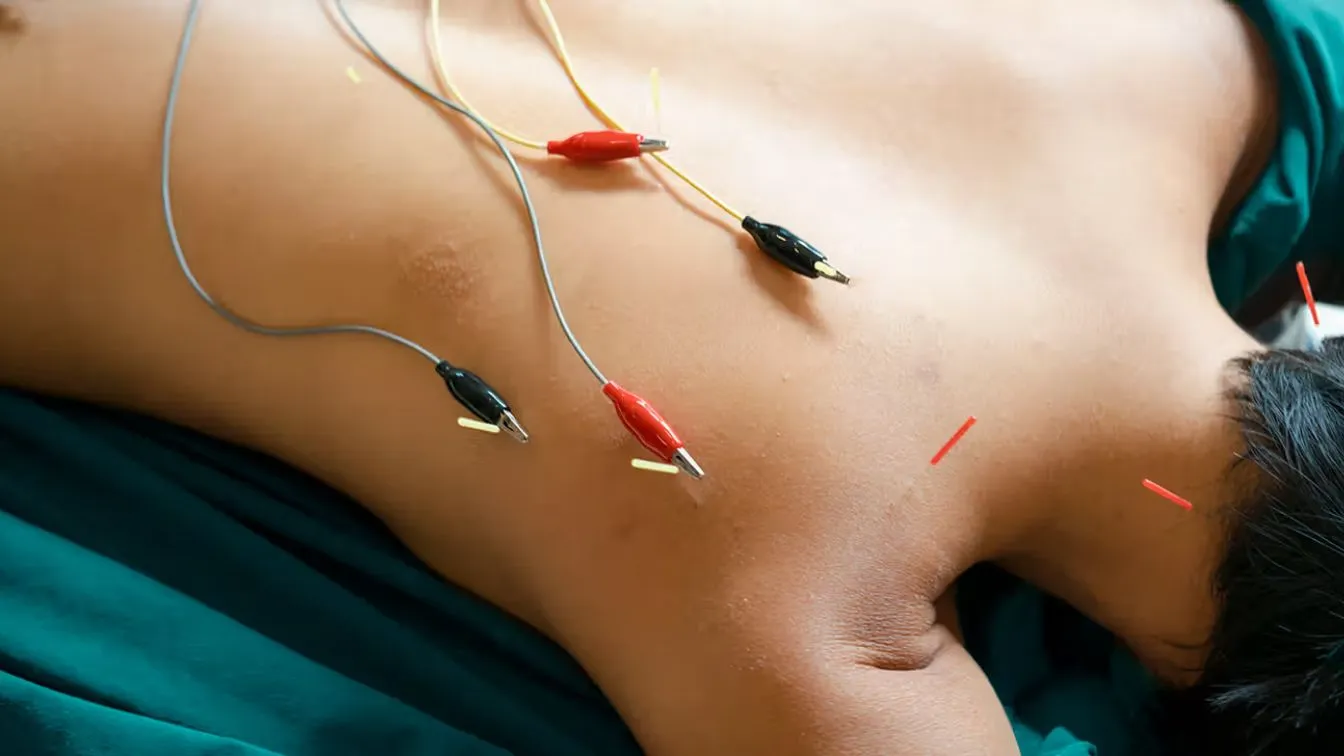
Electroacupuncture begins like a standard acupuncture treatment. Fine, sterile, single-use needles are placed at selected points.
Electrical Pulses Are Added to Selected Acupuncture Needles
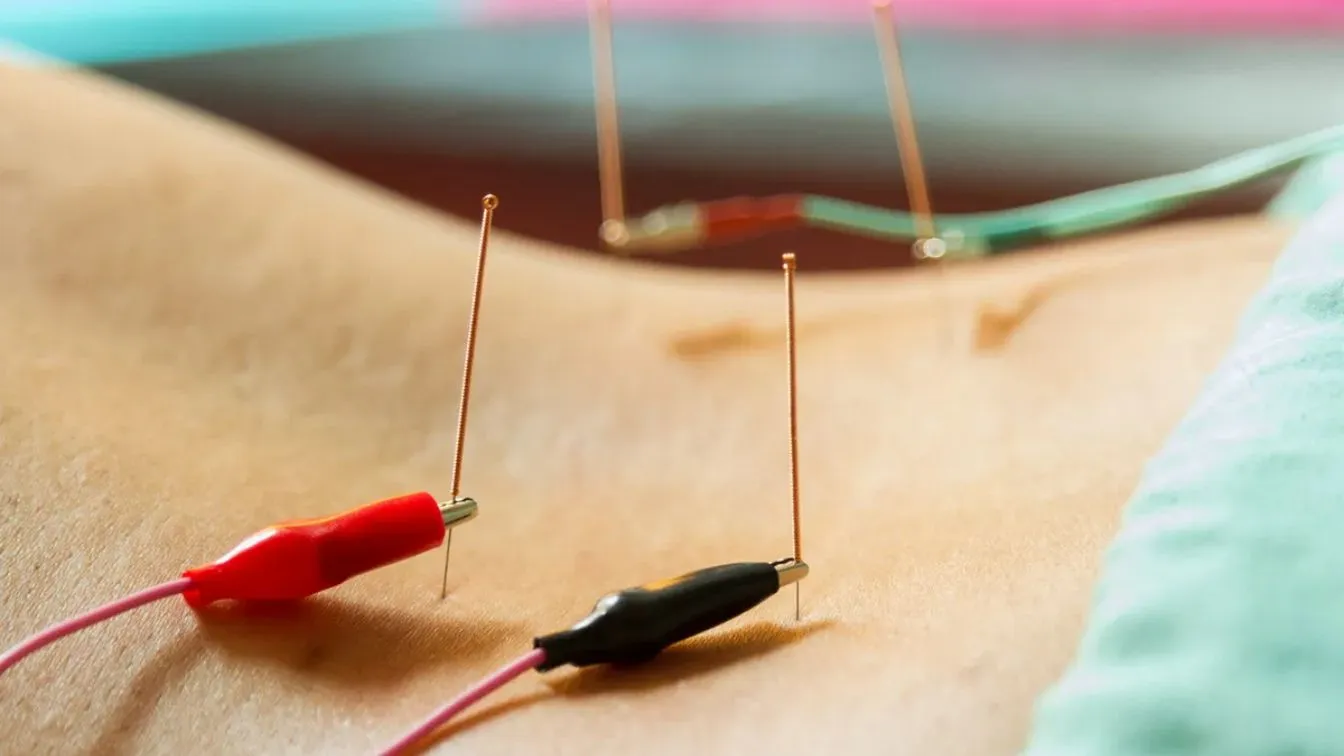
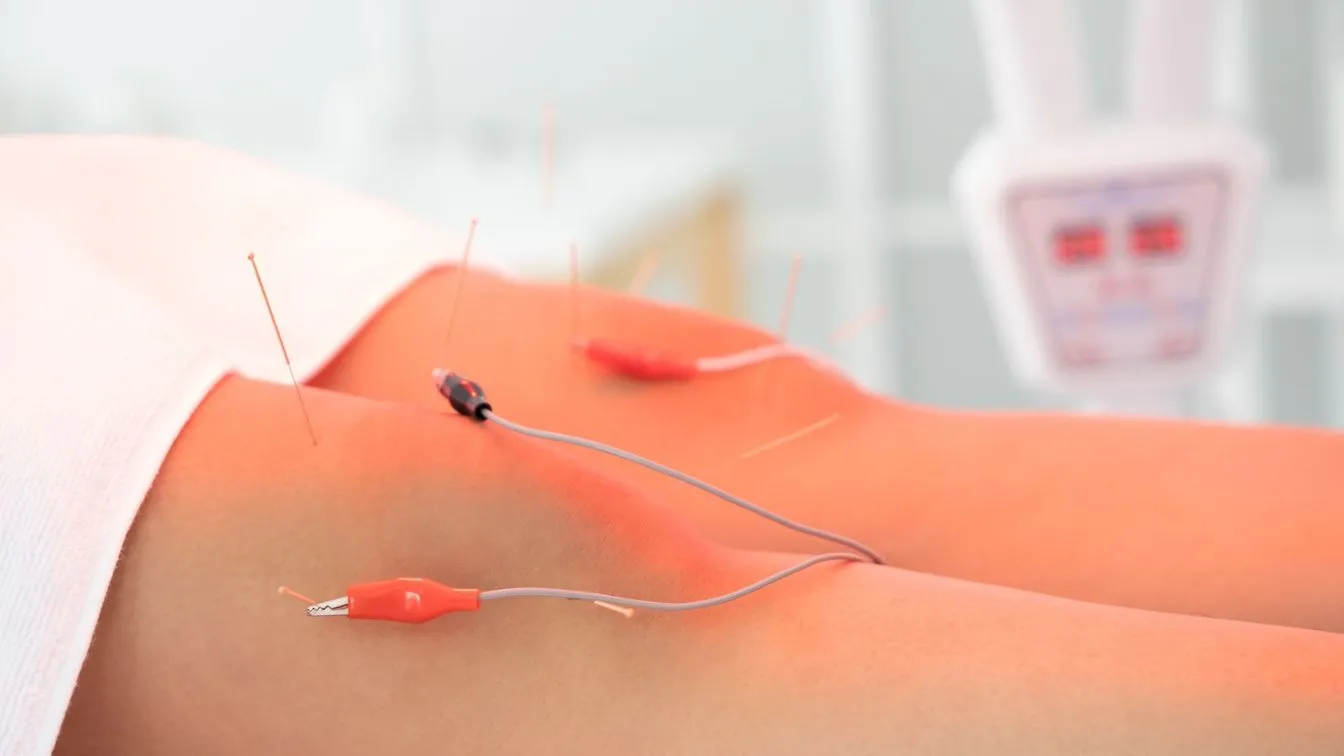
Small leads from an electroacupuncture device are attached to selected needles. The device delivers controlled electrical pulses for part of the treatment.
The stimulation is gradually adjusted. Patients commonly describe a rhythmic pulse, tapping sensation or gentle buzz.
Electroacupuncture provides a more regular pattern of stimulation than manually moving an acupuncture needle from time to time.
That difference does not mean the electrical treatment automatically reaches a deeper injury, repairs tissue faster or produces a better result for every patient.
Electrical Stimulation Does Not Mean the Treatment Is “More Powerful”
Some conditions have been specifically studied using electroacupuncture, while others have stronger evidence for acupuncture more generally.
The better treatment is the one that matches the diagnosis, patient preferences, safety considerations and clinical response.
When Might Electroacupuncture Be Considered?
The evidence for electroacupuncture is condition-specific. It should not be advertised as a universal treatment for every type of chronic pain, nerve symptom or muscle problem.
Nonspecific Low-Back Pain
Randomized trials and systematic reviews have studied electroacupuncture for nonspecific low-back pain.
It may be considered as one treatment option when the clinical presentation fits.
Knee Osteoarthritis Pain
Electroacupuncture has also been studied for knee osteoarthritis, including pain and function outcomes.
It does not reverse structural osteoarthritis or replace appropriate exercise and medical management.
Selected Pain and Muscle-Guarding Patterns
Electrical stimulation may be considered when a musculoskeletal presentation includes pain, guarded movement or selected muscle findings.
The stimulation itself does not prove that a muscle has been released or reset.
Selected Nerve-Related Presentations
Some patients with radiating pain or nerve-related symptoms may be candidates for acupuncture-based care.
Electroacupuncture should not be assumed to decompress a nerve, repair a disc or correct radiculopathy.
Selected Postoperative Pain Settings
Electroacupuncture has been studied as an adjunct for postoperative pain in several clinical settings.
Any treatment after surgery should fit the surgeon's restrictions, wound status and recovery plan.
When Standard Acupuncture Is Also Reasonable
A patient does not need electrical stimulation simply because symptoms have been present for a long time.
Standard acupuncture may remain an appropriate option depending on the presentation and patient preference.
How Might Electroacupuncture Work?
Like acupuncture generally, electroacupuncture does not have one single proven mechanism that explains every clinical response.
Repeated Sensory Input
Electrical pulses provide repeated stimulation through selected needles, creating sensory input that reaches the nervous system.
Pain Processing
Researchers study how acupuncture and electroacupuncture may influence spinal and brain-based pain-modulation pathways.
Local Muscle Response
Depending on placement and intensity, stimulation may produce a pulsing sensation or small rhythmic muscle contractions.
Endogenous Opioids Are Part of the Research, Not the Whole Explanation
Experimental acupuncture research has examined endogenous opioid pathways and other neurochemical systems involved in pain modulation.
That does not mean electroacupuncture simply “floods the body with endorphins” or that one pathway explains every treatment response.
More Consistent Stimulation Does Not Mean More Aggressive Treatment
Electroacupuncture allows the stimulation pattern to remain consistent for part of the session.
Intensity can be kept gentle. The patient should not have to tolerate painful electrical stimulation for treatment to be worthwhile.
Pain Relief Is Not Proof That an Injured Structure Has Healed
A reduction in pain or improved movement may be clinically meaningful.
It does not prove that a disc, tendon, ligament, cartilage surface or nerve has structurally healed.
Electroacupuncture vs. Standard Acupuncture
Both approaches use acupuncture needles. The main difference is how selected needles are stimulated during treatment.
| Feature | Standard Acupuncture | Electroacupuncture |
|---|---|---|
| Needles | Sterile, single-use acupuncture needles. | Sterile, single-use acupuncture needles. |
| Stimulation | Needles may be retained, gently manipulated or left unstimulated. | Selected needles receive controlled electrical pulses. |
| Sensation | May include pressure, dull ache, heaviness or little sensation. | Often includes a rhythmic pulse, tapping or buzzing sensation. |
| Better for chronic pain? | Not automatically. Evidence differs by condition, and treatment selection should be individualized. | |
| Electrical device screening | Not required for manual needle stimulation alone. | Important because electrical stimulation adds additional safety considerations. |
You Do Not Need to Request Electroacupuncture in Advance
Start by telling us what hurts, what movements or activities are difficult and what you want to get back to doing.
Standard acupuncture may be appropriate. Electroacupuncture may be appropriate. Another service may fit better.
What Does Research Say About Electroacupuncture?
Electroacupuncture research varies considerably by diagnosis, treatment protocol, stimulation settings and comparison group.
Nonspecific Low-Back Pain
A systematic review and meta-analysis examining randomized trials found evidence supporting electroacupuncture for pain outcomes in nonspecific low-back pain.
Study methods and comparisons varied, so results should not be applied to every type of back pain.
Review the researchKnee Osteoarthritis
Multiple systematic reviews have examined electroacupuncture for knee osteoarthritis, with findings suggesting potential improvements in pain and function.
Evidence quality and study design still need to be considered.
Review the meta-analysisElectrical Stimulation Is One Form of Acupuncture
NCCIH describes acupuncture as a technique in which needles may be manipulated manually or stimulated using small electrical currents.
The broader acupuncture evidence is stronger for some pain conditions than the electroacupuncture-specific evidence.
Read NCCIH guidanceResearch on Acupuncture Does Not Automatically Prove Electroacupuncture Is Better
If a study tests manual acupuncture, its result supports the treatment that was studied.
It should not automatically be used as proof that adding electrical stimulation produces a stronger or more durable effect.
What to Expect During Electroacupuncture
Electroacupuncture can be incorporated into an acupuncture visit when the technique is appropriate for the patient.
Review Your Symptoms and Health History
We review the pain pattern, relevant diagnoses, medications, implanted devices, previous treatment and your goals.
Focused Evaluation
Depending on the problem, movement, range of motion, tenderness, neurological symptoms or other relevant findings may be assessed.
Acupuncture Needle Placement
Sterile, single-use acupuncture needles are placed at selected points according to the treatment plan.
Electrical Stimulation
Leads are attached to selected needles. Stimulation begins low and is gradually adjusted to a comfortable level.
Reassessment
When useful, pain, movement or another relevant functional measure can be reassessed.
A Rhythmic Pulse Should Not Feel Sharp or Overwhelming
The sensation may feel like tapping, pulsing, buzzing or a gentle repetitive contraction.
Tell the practitioner if stimulation becomes painful, sharp, uncomfortable or produces an unexpected sensation.
Electroacupuncture Requires Additional Screening
Electroacupuncture includes the usual considerations associated with acupuncture needles, plus considerations related specifically to electrical stimulation.
Electrical Stimulation May Need to Be Avoided or Modified
Please tell the practitioner about relevant health information, including:
- a pacemaker, implanted defibrillator or other implanted electrical device,
- a history of significant heart-rhythm problems,
- seizure history,
- pregnancy or possible pregnancy,
- blood-thinning medication or a bleeding disorder,
- reduced sensation in the treatment area,
- active skin infection or open wounds,
- recent surgery, and
- other implanted medical devices.
Electrical Stimulation Does Not Remove Standard Acupuncture Risks
Minor acupuncture reactions may include temporary soreness, bruising, a small amount of bleeding or lightheadedness.
Serious complications are uncommon, but inappropriate needling can cause infection or injury to deeper structures.
Electroacupuncture Is One Treatment Tool
Depending on the diagnosis, examination and patient preference, another service may be used instead or alongside acupuncture.
Ask About Your Acupuncture Benefits
Insurance coverage depends on your individual plan, diagnosis, benefits and how treatment is billed. Contact the office and the team can help verify available acupuncture benefits.
Questions Patients Ask Before Treatment
What is electroacupuncture?
Electroacupuncture uses standard acupuncture needles with controlled low-level electrical stimulation applied through selected needles for part of the treatment.
Does electroacupuncture hurt?
The electrical stimulation should be kept within a comfortable range. Many patients describe a rhythmic pulse, tapping or gentle buzzing sensation. Sharp or overwhelming stimulation should be reported immediately.
Is electroacupuncture stronger than regular acupuncture?
It provides a different and more regular stimulation pattern, but that does not mean it is automatically stronger, better or more effective for every condition.
Is electroacupuncture the same as TENS?
No. TENS uses electrodes placed on the skin. Electroacupuncture applies electrical stimulation through selected acupuncture needles.
Can electroacupuncture help low-back pain?
Electroacupuncture has been studied in randomized trials and systematic reviews for nonspecific low-back pain. Whether it is appropriate still depends on the type of back pain and the individual evaluation.
Can electroacupuncture help knee arthritis?
Research has examined electroacupuncture for knee osteoarthritis pain and function. It may be considered as one part of a broader treatment plan, but it does not reverse structural osteoarthritis.
Can I receive electroacupuncture if I have a pacemaker?
Implanted pacemakers, defibrillators and other electrical devices require particular caution because external electrical stimulation may interfere with some devices. Tell the practitioner about any implanted device before treatment.
Is electroacupuncture safe during pregnancy?
Pregnancy should always be disclosed before treatment. The decision to use acupuncture or electrical stimulation should be individualized according to the pregnancy, treatment area and clinical situation.
How many electroacupuncture sessions will I need?
There is no fixed evidence-based visit count that applies to everyone. Treatment frequency depends on the diagnosis, symptom duration, functional limitations and whether measurable improvement is occurring.
Do I have to choose between acupuncture and electroacupuncture when I book?
No. You can book based on the problem you want evaluated. The decision to use standard acupuncture, electroacupuncture or another service can be made after reviewing the clinical presentation.
Will insurance cover electroacupuncture?
Coverage depends on the individual insurance plan, benefits, diagnosis and how treatment is billed. Contact Messina Acupuncture PC to verify available benefits.
Start With the Pain Pattern, Not the Electrical Setting
If back pain, joint pain, radiating symptoms or persistent muscle guarding is interfering with work, exercise or daily life, start with an evaluation. We can then determine whether standard acupuncture, electroacupuncture or another care option may be appropriate.
Sources and Further Reading
- National Center for Complementary and Integrative Health: Acupuncture Effectiveness and Safety
- Systematic Review and Meta-Analysis: Electroacupuncture for Nonspecific Low-Back Pain
- Meta-Analysis: Electroacupuncture and Manual Acupuncture for Knee Osteoarthritis
- Systematic Review and Meta-Analysis: Electroacupuncture for Knee Osteoarthritis
- Systematic Review: Adverse Events Related to Electroacupuncture