
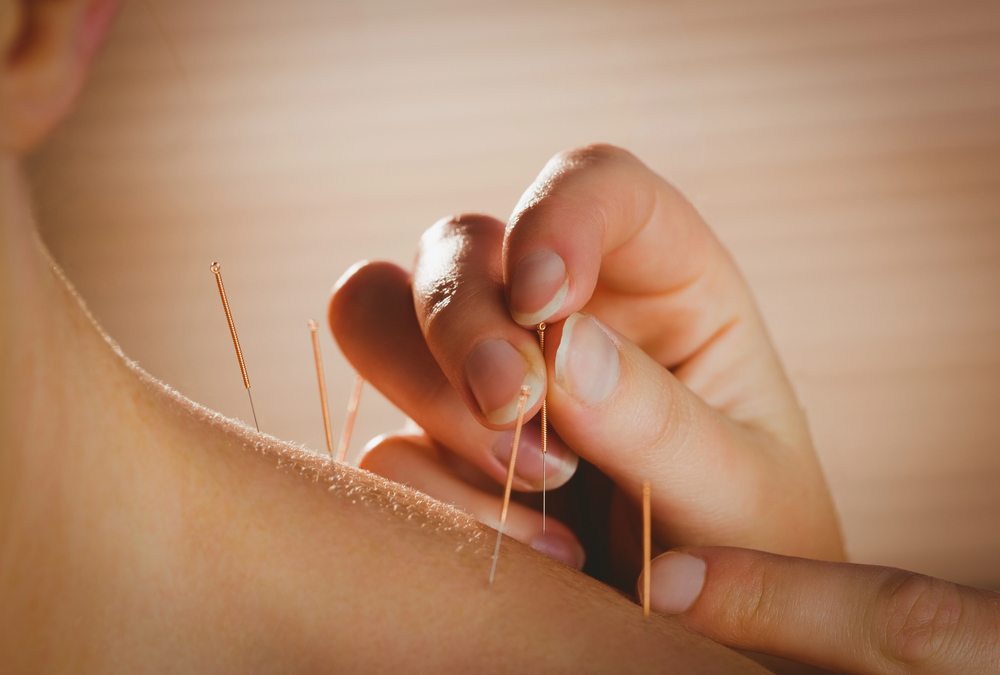
Swimmer’s Shoulder & Orthopedic Acupuncture in East Setauket
Swimming asks the shoulder to repeat an overhead movement thousands of times across practices, meets, dryland training, and an entire season. When pain starts during the catch, pull, recovery, or after a hard training block, it is tempting to look for one tight muscle or one treatment that will fix it. Swimmer’s shoulder is usually more complicated than that.
Can Acupuncture Help Swimmer’s Shoulder?
Acupuncture may help reduce shoulder pain and improve function for some patients, but the evidence is mixed and acupuncture has not been proven to repair a rotator cuff tendon, regenerate damaged tissue, or guarantee a faster return to swimming.
For swimmers, the strongest recovery plan often includes identifying the shoulder pattern, managing training load, restoring strength and endurance, improving movement tolerance, and addressing technique when appropriate.
Acupuncture, dry needling, or hands-on care may be useful adjuncts when pain or associated muscle guarding is limiting that process.
What Is Swimmer’s Shoulder?
“Swimmer’s shoulder” is an umbrella term for shoulder pain associated with swimming. It is not one single diagnosis.
Historically, swimmer’s shoulder was often explained almost entirely as subacromial impingement, with a rotator cuff tendon being physically pinched beneath the acromion.
Modern shoulder research is more cautious about that explanation. Pain during overhead activity can involve rotator cuff-related shoulder pain, tendon irritation, bursae, muscle fatigue, instability, altered shoulder-blade mechanics, load intolerance, or another shoulder or neck-related problem.
Pain Does Not Prove That a Tendon Is Being “Pinched”
Clinical examination and imaging cannot always identify one specific shoulder structure as the definitive source of symptoms. For that reason, contemporary shoulder literature increasingly uses broader terms such as rotator cuff-related shoulder pain.
This does not make anatomy irrelevant. It means a swimmer’s shoulder should be assessed as a functional system rather than assuming every painful catch phase is caused by the same mechanical impingement.
Why Do Swimmers Develop Shoulder Pain?
Swimming involves high-volume repetitive shoulder motion, but training volume alone does not explain every case of pain. Research into swimmer injury risk has found a much more complicated picture.
Changes in Volume or Intensity
Increased yardage, harder sets, sprint work, additional dryland training, or sudden changes in the training schedule can alter the demand placed on the shoulder.
The relationship between swimming load and pain is not perfectly predictable, however, so mileage alone should not be treated as the cause of every shoulder problem.
Shoulder Strength and Endurance
Research suggests posterior shoulder strength-endurance may be relevant to injury risk in competitive swimmers. Fatigue can also temporarily change shoulder strength and range of motion during demanding sessions.
Prior Shoulder Problems Matter
Previous shoulder pain or injury can influence future risk. A recurring pattern deserves more attention than repeatedly treating each flare as an isolated sore muscle.
Technique May Contribute
Stroke technique can influence shoulder loading, but there is not one universal technique error that explains every painful shoulder. Technique review is best performed with a knowledgeable swim coach and, when needed, a rehabilitation professional.
What Swimmer-Specific Research Shows
A systematic review of competitive swimmers found that the relationship between training load and pain or injury remains difficult to define because of limitations in the available studies.
More recent research examining shoulder injury risk factors suggests that training-load patterns, previous pain or injury, strength characteristics, and other athlete-specific variables may matter. Researchers continue to caution against reducing swimmer’s shoulder to one posture problem or one tight muscle.
Review the systematic review on shoulder pain and injury risk factors in competitive swimmers

What Does the Evidence Say About Acupuncture for Shoulder Pain?
There is clinical research supporting acupuncture for shoulder pain, but the results need to be presented carefully.
Some Studies Are Encouraging, but the Evidence Is Not Definitive
A 2024 meta-analysis included 13 randomized controlled trials with 1,371 participants who had rotator cuff-related conditions. The analysis reported short- and medium-term improvements in pain and shoulder function with acupuncture alone or acupuncture combined with physical therapy.
A newer systematic review published in 2025 reached a more cautious conclusion. It included 10 trials with 748 participants and found mixed results across nonspecific shoulder pain, shoulder impingement, and adhesive capsulitis.
Only three of those trials were rated at low risk of bias. The authors concluded that evidence for acupuncture as a stand-alone shoulder treatment remains limited and should be interpreted cautiously.
Those findings support discussing acupuncture as a possible complementary option for shoulder pain. They do not support promising that acupuncture reconstructs the rotator cuff or gets every swimmer back into the pool faster.
Review the recent systematic review of acupuncture for shoulder pain
Does Acupuncture Repair the Rotator Cuff?
No current human clinical evidence establishes that acupuncture directly creates new blood vessels inside an injured rotator cuff tendon, floods the tendon with platelets, realigns collagen fibers, or repairs a partial or complete tendon tear.
Laboratory research has explored local circulation, connective-tissue signaling, nervous-system effects, and other biological responses to needling. Those studies can help researchers develop theories, but they should not be converted into guaranteed human tissue-healing claims.
Acupuncture Is Not the “Anti-Ice”
It is not useful to frame acupuncture and conventional symptom management as competing treatments.
Ice may provide short-term relief after some painful shoulder episodes. Anti-inflammatory medications may also have a role for selected patients when appropriate. Neither treatment needs to be described as sabotaging tendon healing in order to explain why acupuncture might also be considered.
Medication decisions should be discussed with the appropriate healthcare professional, particularly for athletes who use NSAIDs regularly or have medical conditions that affect medication safety.
Active Rehabilitation Is a Major Part of Shoulder Recovery
Pain Relief Is Not the Same as Restoring a Swimming Shoulder
Contemporary clinical guidance for rotator cuff disorders emphasizes active rehabilitation rather than relying solely on passive treatment.
Depending on the swimmer and diagnosis, rehabilitation may address rotator cuff strength, shoulder-blade control, endurance, range of motion, progressive overhead loading, and eventually sport-specific swimming demands.
The 2025 clinical practice guideline for rotator cuff tendinopathy specifically addresses nonsurgical rehabilitation and return to function and sport for both recreational and elite athletes.
That is why acupuncture is best positioned as an adjunct when it helps a patient manage pain or associated muscle tension, not as a replacement for the rehabilitation work that restores shoulder capacity.
Review the 2025 rotator cuff tendinopathy clinical practice guideline
Acupuncture vs. Dry Needling for Swimmers
Messina Acupuncture PC offers both acupuncture and dry needling. They use similar thin needles, but they are not simply a gentle version and an aggressive version of the same treatment.
Acupuncture
Acupuncture may use local and distal points selected according to the patient’s pain pattern, physical findings, and broader presentation.
For a swimmer with shoulder pain, the goal may include pain management or reducing associated muscular guarding. It should not be described as mechanically opening the subacromial space or repairing a torn tendon.
Dry Needling
Dry needling focuses more directly on myofascial trigger points, sensitive muscle bands, referred pain, and local neuromuscular patterns.
It may be considered when surrounding shoulder, chest, upper-back, or neck muscle tension appears relevant. A twitch response is not required for treatment to be successful, and dry needling does not literally “unknot” or reset a muscle.
Medical Massage
Medical massage may address associated muscle tension, mobility restrictions, and soft-tissue discomfort.
It can complement an active rehabilitation program but does not replace rotator cuff strengthening or sport-specific progression.
Electroacupuncture
Electroacupuncture applies gentle electrical stimulation through selected needles.
It may be considered selectively for certain chronic pain, deeper muscle, or nerve-related patterns. It has not been shown to realign rotator cuff fibers.
What About the Pec Minor, Lats and Infraspinatus?
These muscles can certainly matter in a swimmer, but they should not be labeled the universal “Big 3” responsible for shoulder pain.
An individual examination may look at the rotator cuff, deltoid, pectoral muscles, latissimus dorsi, upper trapezius, lower trapezius, serratus anterior, posterior shoulder musculature, cervical spine, and other areas depending on the symptoms.
Strength and Endurance
The rotator cuff helps control the humeral head during shoulder movement. Strength and fatigue resistance may matter during repetitive swimming.
Shoulder-Blade Control
Muscles around the scapula contribute to efficient overhead movement. Assessment may examine strength, endurance, coordination, and symptom response.
Mobility and Muscle Tension
Pectoral and latissimus tightness may be relevant in some swimmers, but simply relaxing those muscles does not permanently move the shoulder joint into a corrected position.
Do Not Forget the Cervical Spine
Shoulder and arm symptoms can occasionally originate from or be influenced by the neck. Numbness, tingling, weakness, or pain traveling down the arm deserves careful assessment.

Stroke Technique Matters, but Do Not Self-Diagnose Your Stroke
Technique can influence shoulder loading, particularly when fatigue causes a swimmer’s mechanics to change. However, telling every painful swimmer to change hand entry, elbow height, or stroke path without watching them swim can create a new problem.
A coach who understands swimming mechanics can evaluate whether technique changes are appropriate. A physical therapist, sports medicine clinician, or another rehabilitation professional can help determine whether strength, endurance, mobility, or injury factors are affecting the stroke.
The Goal Is Usually Modification, Not a Universal Two-Week Shutdown
The previous version of this article suggested that conventional care simply tells swimmers to stop swimming for two weeks. That is not an accurate representation of modern sports rehabilitation.
Depending on the injury, some swimmers may temporarily reduce yardage, intensity, paddles, pulling sets, overhead dryland work, or another aggravating component while maintaining activities they can perform safely.
Other injuries require more protection. The decision depends on the diagnosis, pain behavior, strength, range of motion, training demands, and medical guidance.
There is no single kickboard, fin, or rest-day prescription that is appropriate for every painful shoulder.
Can You Swim After Acupuncture or Dry Needling?
There is no universal rule that every athlete should swim immediately after treatment or automatically take 24 hours off.
Mild temporary soreness can occur after acupuncture or dry needling. Training decisions should take into account the original shoulder problem, treatment response, the planned workout, and whether pain changes normal movement.
If a swimmer feels significantly sore, weak, lightheaded, or has increased shoulder pain after treatment, it makes sense to reduce or delay training rather than forcing a workout to stay on schedule.
What About Collagen, Vitamin C and “Tendon Repair” Supplements?
Adequate calories, protein, carbohydrates, micronutrients, and hydration matter for athletic health. That does not mean every swimmer with shoulder pain needs collagen peptides exactly 60 minutes before acupuncture.
Nutrition research examining collagen or gelatin and connective-tissue adaptation is still evolving. Supplements should not be presented as required components of acupuncture treatment or as proven ways to rebuild an injured rotator cuff.
Athletes with performance-nutrition questions, restricted diets, significant weight changes, or supplement concerns may benefit from working with a qualified sports dietitian.
Acupuncture vs. Shoulder Surgery Is the Wrong Comparison
Most shoulder pain does not automatically lead to surgery, and acupuncture should not be positioned as a regenerative alternative that must always be tried first.
Evidence-based rotator cuff care often begins with nonsurgical management, especially active rehabilitation. The appropriate pathway depends on the diagnosis, severity, traumatic history, age, strength loss, functional limitations, imaging when indicated, and response to conservative treatment.
A confirmed major rotator cuff tear, recurrent instability, fracture, dislocation, or another significant structural injury is a very different clinical situation from gradual training-related shoulder pain.
Acupuncture should complement the appropriate orthopedic plan, not be used to delay a surgical consultation when one is warranted.
What a Swimmer’s Shoulder Visit at Messina Looks Like
The goal of a first visit is not to force every swimmer through a predetermined “Messina Protocol.” It is to identify the current pain and movement pattern.
Review the History
We discuss when the shoulder started hurting, where pain is located, whether there was a traumatic event, which strokes or parts of the stroke aggravate it, recent changes in training, dryland work, prior shoulder problems, and treatment already tried.
Assess the Shoulder and Related Areas
Depending on the presentation, assessment may include shoulder range of motion, strength, movement tolerance, muscle guarding, trigger points, neck screening, and other orthopedic findings.
Decide Whether Needle-Based Care Fits
Acupuncture or dry needling may be reasonable, or the presentation may be better suited to rehabilitation, medical evaluation, imaging, or another treatment pathway.
Reassess Function
Useful outcomes may include pain during elevation, range of motion, strength, sleep comfort, ability to tolerate swimming, and response to progressive training.
How Many Acupuncture Sessions Will Swimmer’s Shoulder Need?
There is no evidence-based rule that a recent flare needs three or four visits or that chronic pain requires eight to ten visits to remodel tissue.
A mild overload episode, chronic rotator cuff-related shoulder pain, instability, a tendon tear, cervical referral, and a traumatic injury can all produce different timelines.
Treatment recommendations should depend on the working diagnosis, severity, training demands, rehabilitation plan, and whether measurable improvement actually occurs.
If the swimmer’s strength, function, or ability to tolerate appropriate training is not improving, simply scheduling more acupuncture should not be the automatic answer.
When Shoulder Pain Needs Medical Evaluation First
Some Shoulder Problems Should Not Start With Acupuncture
Seek prompt medical or orthopedic evaluation after significant trauma or when symptoms suggest a fracture, dislocation, major tendon tear, neurological problem, or infection.
- You cannot raise or normally use the arm after an injury.
- The shoulder appears visibly deformed or out of place.
- There is sudden severe pain or rapid swelling after trauma.
- You felt a significant pop followed by new weakness or loss of function.
- There is persistent numbness, tingling, weakness, or loss of normal sensation.
- The shoulder is becoming increasingly red, hot, or swollen, particularly with fever.
- Pain is worsening despite reducing the aggravating activity.
- Pain regularly wakes you at night, function continues to decline, or the problem is not progressing as expected.
Mayo Clinic also recommends immediate medical care after shoulder injury when there is deformity, severe pain, sudden swelling, or inability to raise the arm.
What About High School and Teen Swimmers?
Adolescents can develop overuse shoulder pain, but young athletes should not automatically be treated as smaller adults.
Age, skeletal maturity, training volume, parental or guardian consent, previous injury, and the possibility of conditions specific to growing athletes should all be considered.
Acupuncture can be considered when appropriate, but a young swimmer with significant trauma, persistent weakness, major loss of motion, worsening symptoms, or a suspected structural injury should receive appropriate medical evaluation.
Messina Acupuncture PC is an orthopedic-focused acupuncture practice in East Setauket serving Stony Brook, Port Jefferson, Three Village, and communities throughout Long Island’s North Shore.
Care is led by Daniel Messina, MSOM, L.Ac., a New York State Licensed Acupuncturist and NCCAOM Board-Certified Diplomate. The practice has served the local community since 2016.
Shoulder complaints may also fit within the practice’s broader joint pain and orthopedic care .
Messina Acupuncture PC
100 N Country Road, East Setauket, NY 11733
(631) 403-0504
Frequently Asked Questions About Swimmer’s Shoulder
What is swimmer’s shoulder?
Swimmer’s shoulder is a broad term for shoulder pain associated with swimming rather than one specific diagnosis. Rotator cuff-related pain, muscle fatigue, tendon irritation, instability, training load, and other factors may contribute.
Can acupuncture help swimmer’s shoulder?
Acupuncture may help reduce shoulder pain or improve function for some patients. Research on shoulder pain is mixed, and acupuncture has not been shown to reliably repair rotator cuff tissue or accelerate healing in every swimmer.
Does acupuncture repair the rotator cuff?
Current human clinical evidence does not establish that acupuncture creates new blood vessels in the rotator cuff, realigns collagen fibers, repairs a tendon tear, or regenerates damaged rotator cuff tissue.
Is dry needling better than acupuncture for swimmer’s shoulder?
Neither treatment is automatically better. Dry needling generally targets myofascial trigger points and local muscle patterns, while acupuncture may use both local and distal points. The choice should depend on the examination findings and treatment goal.
Should I stop swimming if my shoulder hurts?
Not every swimmer requires complete rest, but continuing to train through worsening pain or significant weakness is not a good default either. Training may need to be modified according to the diagnosis, symptoms, strength, range of motion, and guidance from a coach or healthcare professional.
Can I swim after acupuncture?
Some people can return to light activity comfortably after acupuncture, while others experience temporary soreness. The original shoulder condition and the planned training session matter more than a universal same-day rule.
How many acupuncture sessions will I need?
There is no fixed session count for swimmer’s shoulder. Recommendations should depend on the clinical pattern, duration of symptoms, training demands, other rehabilitation being used, and whether measurable improvement occurs.
When should a swimmer see a doctor for shoulder pain?
Seek prompt medical evaluation after significant trauma, if you cannot raise the arm, if there is visible deformity or sudden swelling, new weakness or neurological symptoms, or if pain continues to worsen rather than improve.
Start With the Shoulder Pattern, Not a Promise to Get Back Faster
If swimming is bringing on shoulder pain, loss of motion, muscle guarding, or recurring discomfort, Messina Acupuncture PC can assess the pattern and discuss whether acupuncture, dry needling, medical massage, rehabilitation, or another care pathway may be appropriate.
Messina Acupuncture PC
100 N Country Road, East Setauket, NY 11733
Sources and Further Reading
- Systematic Review: Acupuncture for Shoulder Pain and Function
- Meta-Analysis: Acupuncture for Rotator Cuff Disorders
- 2025 Rotator Cuff Tendinopathy Clinical Practice Guideline
- Shoulder Pain and Injury Risk Factors in Competitive Swimmers
- Training Load, Pain and Injury in Competitive Swimming
- Mayo Clinic: Shoulder Pain Warning Signs