
Acupuncture in East Setauket, NY
Acupuncture uses fine, sterile, single-use needles to stimulate selected points and tissues. At Messina Acupuncture PC, treatment begins with an evaluation of your pain, movement, muscle guarding and functional limitations so acupuncture can be used as part of a plan that fits the problem in front of us.
100 N Country Road, East Setauket, NY 11733
What Is Acupuncture?
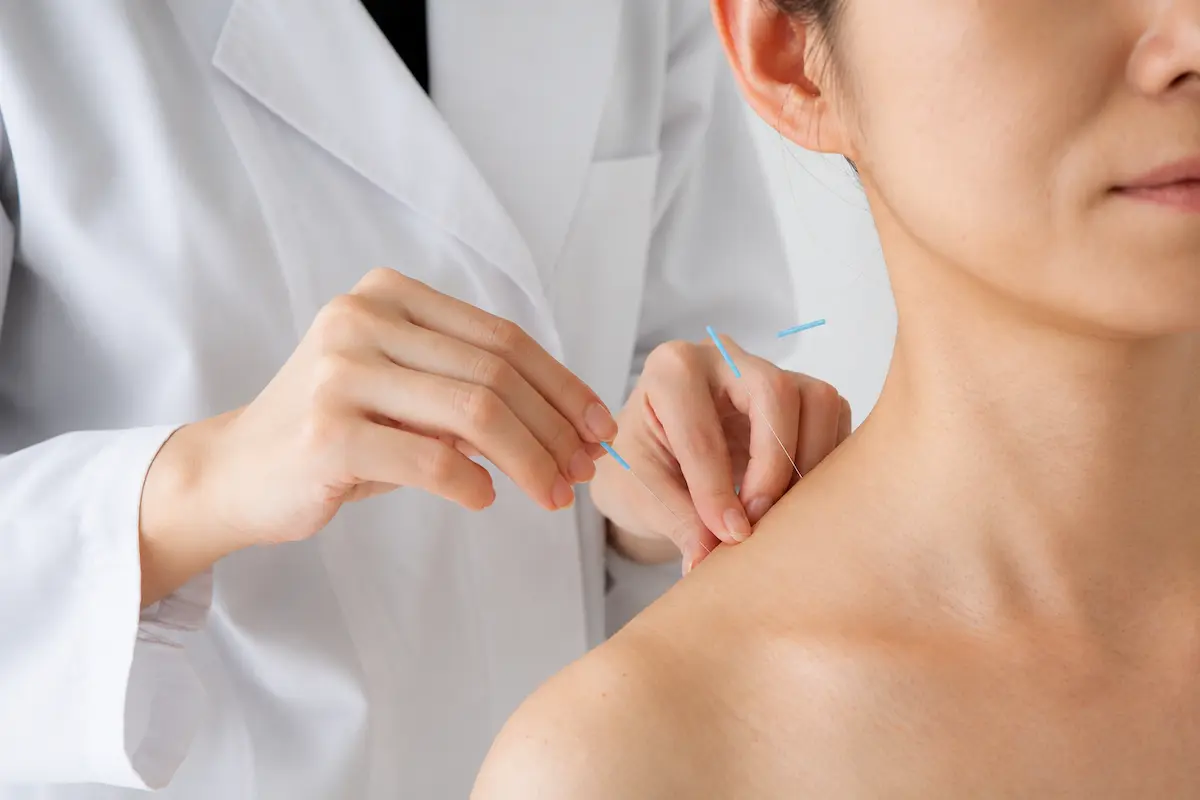
Acupuncture is a healthcare technique in which very fine needles are inserted into selected points on the body. The needles may be left in place, gently manipulated or paired with controlled electrical stimulation when electroacupuncture is appropriate.
Acupuncture Begins With the Patient, Not the Point
Two people can both arrive with neck pain, low-back pain or headaches and have very different clinical presentations.
One patient may have restricted movement and substantial muscle guarding. Another may have nerve-related symptoms. Another may need medical evaluation before acupuncture is appropriate.
The purpose of the evaluation is to identify what appears relevant and choose treatment accordingly.
Qi, Channels and Point Patterns
Traditional Chinese medicine describes acupuncture using concepts such as Qi, channels, Yin and Yang, deficiency, excess and patterns of disharmony.
These concepts are part of acupuncture's historical and clinical framework.
Nerves, Tissues and Pain Processing
Modern acupuncture research examines sensory nerves, local tissue responses, spinal pain processing, brain networks and endogenous pain-modulating systems.
Traditional channels do not have a proven one-to-one equivalence with nerves, fascia, blood vessels or another single anatomical structure.
These two frameworks do not need to be forced into an artificial translation. We can respect acupuncture's traditional origins while also being clear about what modern research has and has not established.
Measure What Changes
For orthopedic pain, the most useful outcome is usually not whether a particular needle sensation occurred.
We are more interested in whether pain, range of motion, muscle guarding, walking, grip, sleep disrupted by pain or another relevant function changes in a meaningful way.
What May Acupuncture Help?
Acupuncture research varies considerably by condition. The evidence is strongest for selected pain-related presentations, which aligns with the orthopedic focus of Messina Acupuncture PC.
Back Pain
Acupuncture is included among non-drug treatment options in major clinical guidance for low-back pain, particularly chronic low-back pain.
Neck Pain
Acupuncture may help selected patients with neck pain and related musculoskeletal symptoms. Evaluation helps distinguish muscular guarding from symptoms that need another care pathway.
Headaches and Migraines
Acupuncture has been studied for headache and migraine prevention. Headache type and warning signs still matter before treatment.
TMJ and Jaw Pain
Acupuncture may be incorporated when jaw discomfort overlaps with muscle tenderness, clenching, neck symptoms or other musculoskeletal findings.
Joint and Osteoarthritis Pain
Acupuncture has evidence for selected joint-pain conditions, including knee osteoarthritis pain. Other joint problems require diagnosis-specific assessment.
Plantar Heel Pain
Recent research suggests acupuncture and electroacupuncture may be useful adjuncts for selected patients with plantar heel pain, particularly as part of a broader rehabilitation plan.
Evaluation Still Matters
Back pain can involve muscle, joints, discs, nerve roots or other structures. Shoulder pain can involve the rotator cuff, joint capsule, cervical referral or other sources. Leg pain is not automatically sciatica.
Acupuncture should not be used as a reason to delay appropriate medical evaluation when the symptom pattern suggests something else needs attention first.
How Does Acupuncture Work?
There is no single mechanism that fully explains every acupuncture response. Current research points toward several overlapping biological and contextual processes.
Local Tissue Stimulation
A needle mechanically interacts with skin, connective tissue, muscle and local sensory structures depending on its location and depth.
Sensory Nerve Input
Needling creates sensory input that can travel through peripheral nerves toward the spinal cord and brain.
Pain Modulation
Research examines spinal, supraspinal and descending pain-modulating systems that may contribute to changes in pain.
Acupuncture Is More Complicated Than “Increasing Circulation”
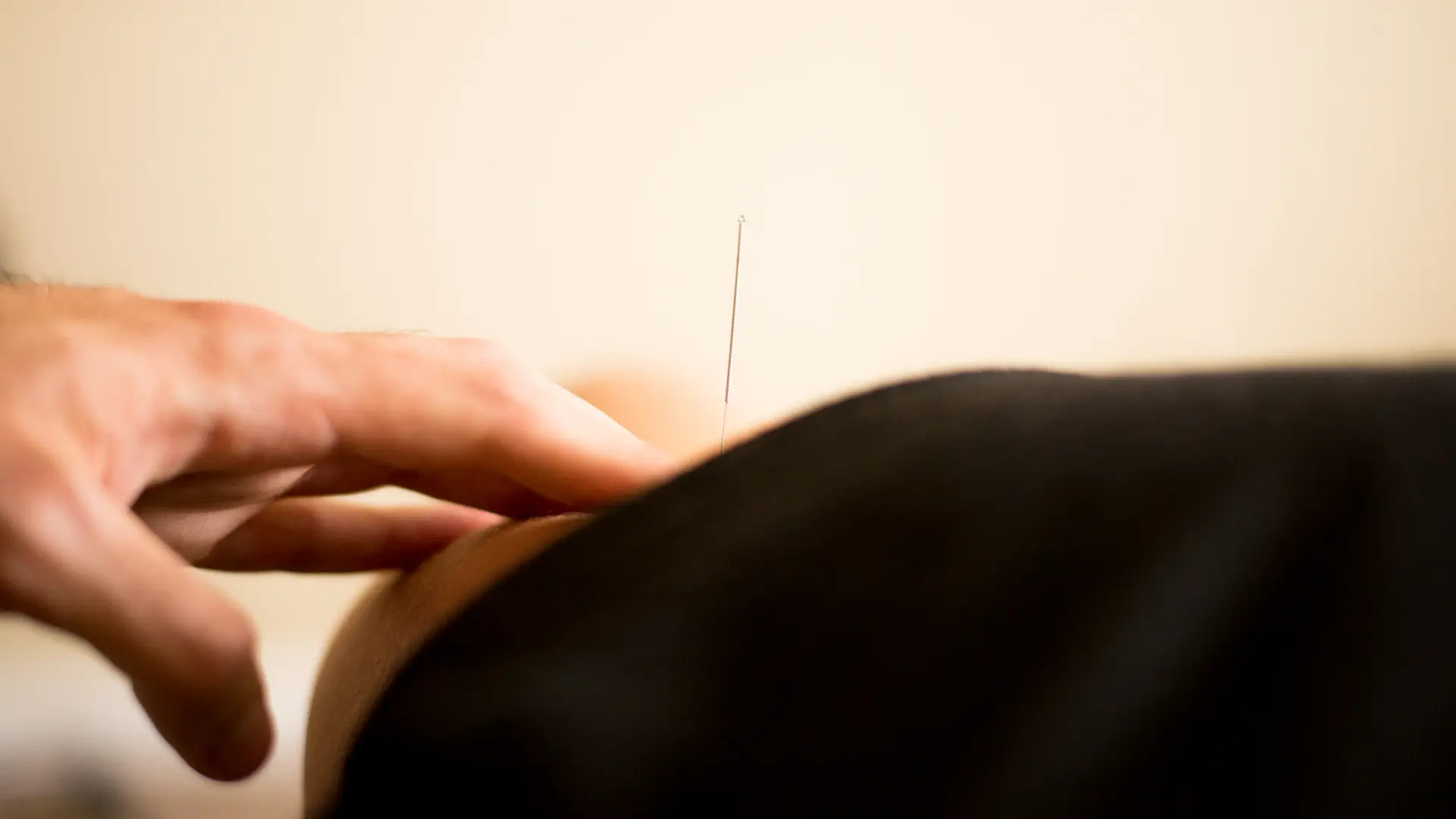
Some acupuncture studies report local circulation changes. Research also examines endogenous opioid signaling, brain networks, sensory pathways and connective-tissue responses.
None of those findings means every acupuncture treatment works through one universal mechanism.
Temporary changes in blood flow also do not prove accelerated tendon, ligament, muscle or disc healing.
For a deeper explanation, read How Does Acupuncture Work Scientifically?
Orthopedic Acupuncture Without Generic Treatment Recipes
The same diagnosis does not always produce the same pain pattern, and the same pain location does not always mean the same diagnosis.
What Is Actually Limiting You?
- Where does the pain occur?
- What movement reproduces it?
- Does it travel?
- Is range of motion restricted?
- Is muscle guarding present?
- What activity are you trying to return to?
Did Anything Meaningful Change?
- Pain during movement
- Range of motion
- Muscle guarding
- Grip or lifting tolerance
- Walking or standing tolerance
- Another symptom-specific functional measure
Acupuncture Does Not Have to Replace the Rest of Your Care
Acupuncture may be used alongside physical therapy, orthopedic care, pain management, medical treatment or another appropriate rehabilitation plan.
Depending on the findings, care at Messina Acupuncture PC may also include dry needling , electroacupuncture , acupressure , cupping or medical massage .
What to Expect During an Acupuncture Visit
You do not need to arrive knowing which points should be used or even which service is right for you. The visit begins with understanding the problem.
Health History and Symptom Review
We review your symptoms, medications, previous treatment, relevant medical history, pain triggers, movement limitations and what you want to get back to doing.
Focused Evaluation
Depending on the problem, the visit may include assessment of range of motion, muscle guarding, tenderness, relevant orthopedic findings and functional movements.
Acupuncture Point Selection
Points may be selected near the symptomatic region or elsewhere on the body based on the clinical presentation and acupuncture framework being used.
Needle Placement
Sterile, single-use needles are placed in selected locations. Depending on the treatment, they may remain in place for part of the visit.
Reassessment and Plan
When appropriate, pain, motion or another relevant measure may be reassessed. Future treatment should depend on whether care is producing meaningful benefit.
What Does Acupuncture Feel Like?
Acupuncture needles are thin solid filaments and do not inject medication.
What You May Feel
- A brief pinch
- Pressure
- A dull ache
- Heaviness
- Warmth
- A mild spreading sensation
Tell Us if Something Feels Wrong
Acupuncture does not have to be painful to be useful.
Tell the practitioner if a sensation feels unusually sharp, electrical, intense or concerning.
There Is No Universal Acupuncture Aftercare Rule
Some patients feel relaxed. Some notice temporary soreness or tiredness. Others feel essentially normal.
Routine acupuncture does not require every patient to avoid exercise, caffeine, cold drinks or other normal activities for a fixed period.
If you feel dizzy, faint, significantly tired or otherwise unwell, wait until you feel normal before driving or exercising.
What Does Research Say About Acupuncture?
Acupuncture should not be promoted as though it works equally well for every diagnosis. Research support differs depending on the condition and outcome being measured.
NCCIH summarizes evidence suggesting acupuncture may be helpful for back and neck pain.
Acupuncture has evidence for reducing pain in selected patients with knee osteoarthritis.
Acupuncture has also been studied for headache disorders and migraine prevention.
Specific Needling and Contextual Effects Can Both Matter
Large chronic-pain analyses have found acupuncture performs better than both sham acupuncture and no-acupuncture controls, although the difference compared with sham is smaller.
This is one reason acupuncture research is more nuanced than simply asking whether a needle has a purely mechanical effect.
Read our detailed review: How Does Acupuncture Work Scientifically?
Is Acupuncture Safe?
Acupuncture is generally considered low risk when appropriately performed by a trained practitioner using sterile, single-use needles.
Acupuncture Is Low Risk, Not Risk-Free
Minor reactions may include:
- temporary soreness,
- minor bruising,
- a small amount of bleeding,
- lightheadedness,
- fatigue, or
- a vasovagal reaction in susceptible patients.
Serious complications are uncommon, but improper needling can cause infection, injury to deeper structures or puncture of an organ.
Sterile, Single-Use Needles
The U.S. Food and Drug Administration regulates acupuncture needles as medical devices and requires them to be sterile and labeled for single use.
Needles at Messina Acupuncture PC are used once and disposed of appropriately after treatment.
Read our full acupuncture safety guide .
Serving East Setauket and Long Island's North Shore Since 2016
Messina Acupuncture PC serves patients from East Setauket, Stony Brook, Port Jefferson, the Three Village community and surrounding areas.
Care is led by Daniel Messina, MSOM, L.Ac., a New York State Licensed Acupuncturist and NCCAOM Board-Certified Diplomate.
The practice focuses heavily on orthopedic pain, movement limitations and helping patients understand what is being treated and what meaningful improvement should look like.
No. New York licensed acupuncturists are independent healthcare providers, and a physician referral is not required to receive acupuncture.
Other Tools May Be Added When They Fit the Presentation
Acupuncture may be the main treatment, or another service may better match a specific part of the problem.
Have Questions About Acupuncture Coverage?
Acupuncture benefits vary by insurance plan, diagnosis and individual coverage. Contact the office with your insurance information and the team can help verify available benefits.
Questions Patients Ask Before Booking
Does acupuncture hurt?
Most patients describe acupuncture sensations as mild. You may notice a brief pinch, dull ache, heaviness, warmth or pressure. Tell the practitioner if a sensation becomes unusually sharp or uncomfortable.
What conditions does acupuncture have the strongest evidence for?
Research varies by condition, but acupuncture has evidence for selected pain problems, including back and neck pain, knee osteoarthritis pain and some headache disorders. Whether it is appropriate still depends on the individual diagnosis and presentation.
How many acupuncture visits will I need?
There is no fixed evidence-based number that applies to everyone. Treatment planning depends on the condition, how long symptoms have been present, functional limitations, response to care and whether meaningful improvement is occurring.
Is acupuncture the same as dry needling?
Both use thin solid filament needles, but clinical reasoning can differ. Dry needling often focuses on selected muscles and myofascial findings, while acupuncture may use both local and distal points according to orthopedic and traditional acupuncture frameworks.
Is acupuncture safe?
Acupuncture is generally considered low risk when appropriately performed using sterile, single-use needles. Minor reactions such as temporary soreness or bruising can occur. Serious complications are uncommon but possible.
Can I exercise after acupuncture?
Often, yes. There is no universal 24-hour exercise ban. Activity should be based on how you feel and the condition being treated. Do not exercise while significantly dizzy, faint or unusually weak.
Can acupuncture be used with physical therapy or orthopedic care?
Yes. Acupuncture may be used alongside physical therapy, orthopedic treatment, pain management or other medical care when the treatments are appropriate for the same patient.
Do I need a physician referral for acupuncture in New York?
No. New York licensed acupuncturists are independent healthcare providers, and patients do not need a physician referral to receive acupuncture.
Is acupuncture covered by insurance?
Coverage depends on your individual plan, benefits and the condition being treated. Contact Messina Acupuncture PC with your insurance information to verify available benefits.
What should I wear to acupuncture?
Loose, comfortable clothing can make it easier to access areas such as the arms, legs and knees. Depending on the region being treated, appropriate draping may be used.
Start With an Evaluation of What Hurts and What You Want to Get Back To
If back pain, neck pain, headaches, joint pain, muscle guarding or another orthopedic problem is interfering with daily life, Messina Acupuncture PC can evaluate the pattern and discuss whether acupuncture or another care pathway may be appropriate.
Sources and Further Reading
- National Center for Complementary and Integrative Health: Acupuncture Effectiveness and Safety
- NCCIH: Chronic Pain and Complementary Health Approaches
- Journal of Pain: Acupuncture for Chronic Pain Individual Patient Data Meta-Analysis
- Review: Current Research on Acupuncture Pain Mechanisms
- New York State Office of the Professions: Acupuncture Consumer Information
- New York State Office of the Professions: Acupuncture License Requirements