
Motion Sickness · Prevention · East Setauket, NY
Once motion sickness takes hold, it is hard to reverse. The people who travel comfortably are usually not tougher; they are better prepared. Prevention means stacking small advantages, seat choice, meal timing, sleep, gaze habits, and calming techniques, so nausea never gets a foothold. This guide walks through a complete pre-trip plan, whether you are flying, sailing, or riding shotgun.
She flies to visit her grandchildren four times a year, and every flight follows the same script: fine at takeoff, queasy by mid-flight, miserable by landing. She has tried toughing it out and she has tried last-minute remedies. This year she wants a real plan, something she does before and during the flight instead of damage control after the nausea arrives.
A plan is exactly the right idea, and it starts days before departure. At Messina Acupuncture we help frequent travelers build practical prevention routines, and for some, discuss whether acupuncture in the weeks before travel-heavy periods fits their pattern. Below is the full playbook, from sleep to seat selection to in-the-moment rescue. Pair it with our gentle relief guide for what to do if nausea breaks through anyway.
- Prevention beats treatment: once nausea peaks, it is much harder to reverse. Stack advantages before departure.
- Sleep and food timing matter: a rested body with a lightly fueled stomach handles motion far better than an exhausted, empty, or overfull one.
- Seat and gaze strategy: stable seats, facing travel direction, eyes on the horizon, minimal reading or screens.
- Have a rescue plan: P6 acupressure and slow breathing ready to deploy at the first hint of queasiness.
- Know when it is not ordinary: new, severe, or worsening motion sensitivity deserves medical evaluation.
Start Days Before: Sleep, Hydration, and Planning
Prevention begins before travel day. Prioritize sleep for two or three nights beforehand; fatigue lowers the nausea threshold noticeably. Stay well hydrated in the days leading up to travel, and plan your route with motion in mind: the smoothest road, the larger ferry, the nonstop flight. If you are prone to anxiety about travel, a simple written plan, seat booked, snacks packed, techniques rehearsed, reduces the anticipatory stress that amplifies symptoms. People who dread the trip often feel worse before it even starts.
Choose Your Seat Like It Matters, Because It Does
Seat selection is the highest-leverage prevention decision you will make. On planes, choose over the wing where motion is least. On boats, mid-ship and on deck with a horizon view beats an enclosed cabin. In cars, the front passenger seat, facing forward, is far better than the back. On trains, face the direction of travel near the middle of the car. Book early enough to actually get these seats; it is worth the effort. Once seated, settle in before motion starts rather than scrambling mid-journey.
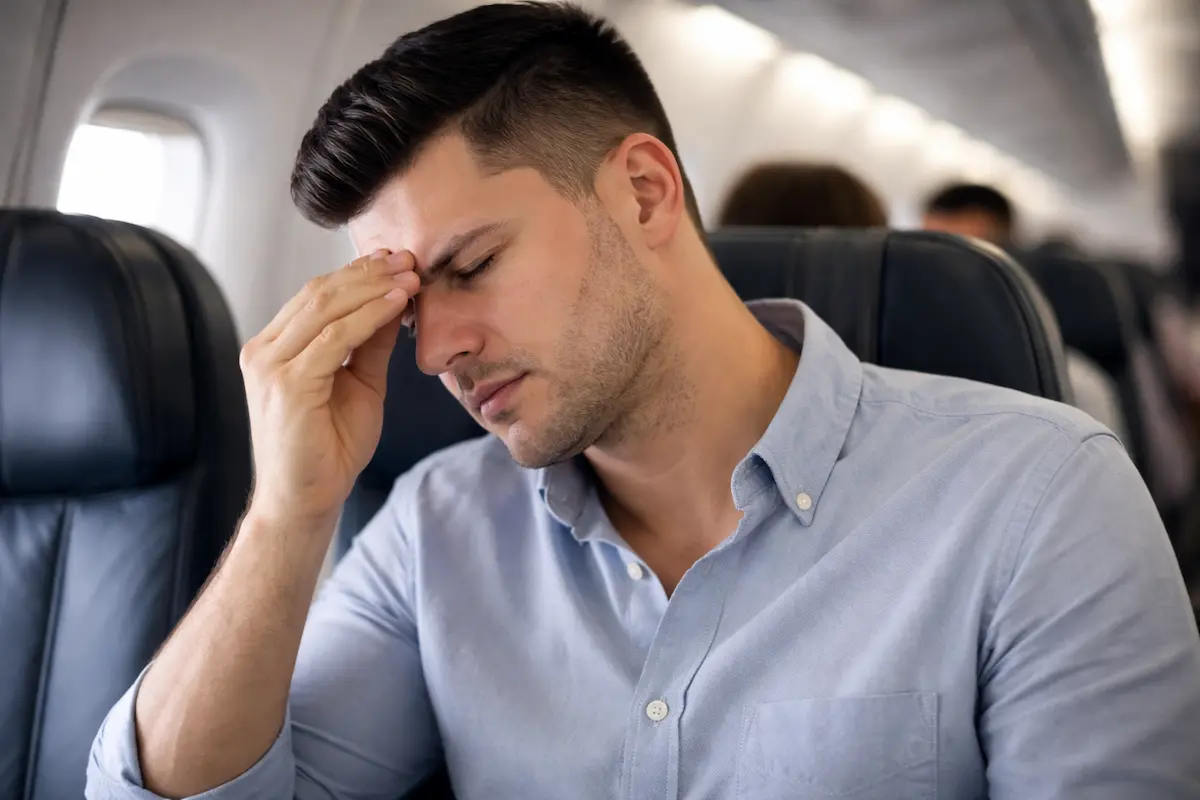
Food, Drink, and Timing on Travel Day
Eat a light, bland meal two to three hours before departure: toast, crackers, oatmeal, plain rice. Avoid greasy, spicy, or heavily seasoned food, alcohol, and excess caffeine. Bring bland snacks and water for the journey, and sip steadily. An empty stomach can be as problematic as a full one, so do not skip eating entirely in hopes of avoiding nausea. If you take any medication or supplement for travel, follow its timing instructions precisely rather than improvising at the gate.
The evidence: what prevention research actually supports
Behavioral prevention strategies rest on the sensory-conflict model of motion sickness, which is well established in vestibular research, even though large trials of each individual tip are scarce. What has modest direct support: P6 stimulation may reduce nausea in related contexts per a Cochrane review of postoperative nausea, and diaphragmatic breathing may ease nausea during simulated motion in a small 43-person study (Stromberg et al.). We present the full prevention stack as sensible, layered practice grounded in physiology, not as a guaranteed formula. Anyone considering acupuncture as a preventive measure should know the direct evidence for motion sickness is limited; we discuss it as an option, never as a promise.
Gaze, Screens, and Reading: Protect Your Eyes
Your eyes are either your best ally or your worst enemy. Fix them on the horizon or a distant stable point; this single habit does more than most remedies. Minimize reading, scrolling, and video, all of which tell your brain you are still while your body says otherwise. If you must use a screen, keep sessions short and look up frequently. Sunglasses can help on bright water by reducing glare-driven eye strain. Audiobooks and podcasts are the traveler-prone-to-nausea’s best entertainment format.
Build Your In-Transit Rescue Kit
Even the best plan needs a backup. Pack a small kit: water, bland snacks, a sealable bag just in case, any personal medication, and knowledge of two techniques you have rehearsed at home, P6 acupressure and slow diaphragmatic breathing. At the first hint of queasiness, act early: press P6 firmly for 30 to 60 seconds per side while breathing slowly, get fresh cool air on your face, and fix your gaze on the horizon. Early intervention is dramatically more effective than waiting until nausea peaks. Our pressure point guide details the technique, and the breathing guide covers the breathing side.
What to Expect at Messina Acupuncture
Assessment and first session (60 to 75 minutes)
We review your travel patterns, triggers, and what you have tried, and build a personalized prevention checklist for your specific trips, flights, ferries, or road travel.
Follow-up sessions (30 to 45 minutes)
If acupuncture fits your pattern, a short course in the weeks before a travel-heavy period is the usual approach. We rehearse P6 and breathing with you until they feel automatic.
After each visit
Test your plan on real trips and note what worked. Prevention plans improve with iteration, and we refine yours based on your notes.
Licensed and realistic guidance. Travel-health advice here is provided alongside care from a New York State licensed acupuncturist. We will not promise that any combination of strategies guarantees a nausea-free trip; we will help you stack the odds honestly and tell you when symptoms suggest something beyond ordinary motion sensitivity.
See a physician if motion sickness is new, markedly worse than it used to be, or comes with hearing loss, ringing in the ears, fainting, severe headache, or neurological symptoms. These can indicate inner-ear, cardiac, or neurological conditions that need evaluation. Do not combine sedating remedies with driving, and check with your clinician or pharmacist about any medication or supplement, natural or otherwise.
Frequently Asked Questions
What is the single best way to prevent motion sickness?
No single trick works for everyone, but stable seat choice plus horizon gazing is the highest-leverage combination. Layer food timing, fresh air, and minimal screen use on top for the best odds.
Should I eat before traveling if I get motion sick?
Yes, lightly. A small bland meal a couple of hours before departure beats both an empty and an overfull stomach. Bring bland snacks and water for the journey.
Does looking at the horizon really help?
It is one of the best-supported behavioral strategies. Fixing your gaze on a distant stable point reduces the visual-vestibular conflict at the heart of motion sickness.
Can I prevent motion sickness without medication?
Many people do, using the layered strategies in this guide. Medications help others significantly. The approaches are not mutually exclusive; talk with your physician or pharmacist about whether medication fits your situation.
How far ahead should I prepare for a trip?
Start two to three nights out with sleep and hydration, finalize seat selection when you book, and rehearse P6 and breathing at home so they are automatic. For acupuncture as a preventive option, allow several weeks before heavy travel.
When is motion sickness not just motion sickness?
When it is new, severe, worsening, or accompanied by hearing changes, fainting, severe headache, or neurological symptoms. Get evaluated rather than assuming it is ordinary travel sensitivity.
Build Your Motion Sickness Prevention Plan
If travel keeps making you miserable, stop improvising and start planning. We will help you build a personalized prevention routine, teach you in-the-moment techniques, and give you an honest read on whether acupuncture fits your pattern.
Messina Acupuncture PC
100 N Country Road, East Setauket, NY 11733
Sources and Further Reading
- Lee A, Chan SKC, Fan LTY. Stimulation of the wrist acupuncture point P6 for preventing postoperative nausea and vomiting. Cochrane Database of Systematic Reviews, 2015.
- Stromberg SE et al. Effect of diaphragmatic breathing on motion sickness. 43-participant simulated-motion study.
- National Center for Complementary and Integrative Health: Acupuncture effectiveness and safety.