
Acupressure · Pregnancy Nausea · East Setauket, NY
Nausea can shadow the joy of early pregnancy, turning mornings into something to dread and favorite foods into something to avoid. Acupressure, the practice of pressing specific points on the body, is one of the gentlest tools some expectant mothers try for relief. Here are four commonly used points, how to find them, what the research actually shows, and the pregnancy safety cautions that matter more than any technique.
She is ten weeks pregnant, teaching in a Setauket classroom, and the nausea hits hardest during her morning commute. Crackers help a little. Ginger tea helps a little. Her OB told her the nausea is normal and should ease by the second trimester, but that feels far away. A friend mentioned pressing a point on her wrist, and she is wondering whether something that simple could actually help.
We hear this question often at Messina Acupuncture. Acupressure is appealing during pregnancy precisely because it involves no medication and no needles. But pregnancy changes the safety rules: some points are traditionally avoided during pregnancy, and one of the four points below needs licensed supervision before you press it. Here is an honest guide, starting with the most important step.
- 1. Check with your OB first: before trying acupressure or acupuncture during pregnancy, confirm it is appropriate for your situation with your obstetric provider.
- 2. P6 is the most studied point: the inner-wrist point Neiguan has the most research behind it for nausea, though the evidence in pregnancy is still limited.
- 3. Not all points are equal in pregnancy: certain acupressure points are traditionally avoided during pregnancy, and SP6 should not be strongly stimulated without licensed supervision.
- 4. Technique is gentle: firm but comfortable pressure for one to three minutes, never pain, and stop if anything feels wrong.
- 5. A complement, not a replacement: acupressure may ease mild nausea for some women, but it does not replace prenatal care or medical treatment for severe vomiting.
Why Nausea Happens in Early Pregnancy
Morning sickness is a misleading name. For many women it strikes at any hour, driven largely by the rapid rise of pregnancy hormones such as hCG and estrogen, a heightened sense of smell, and a more sensitive digestive system. For most, it peaks around weeks 8 to 12 and fades by the second trimester.
A smaller number of women develop hyperemesis gravidarum, a severe form involving persistent vomiting, dehydration, and weight loss. That is a medical condition that needs prompt treatment, and no amount of wrist pressure is a substitute for it. Knowing the difference is part of using acupressure responsibly.
The Four Points, and How to Find Them
Each point below comes from traditional Chinese medicine. Locations are approximate: use them as a starting guide, and consider one in-office session so a licensed practitioner can confirm you are pressing the right spots.
1. P6 (Neiguan): the inner wrist
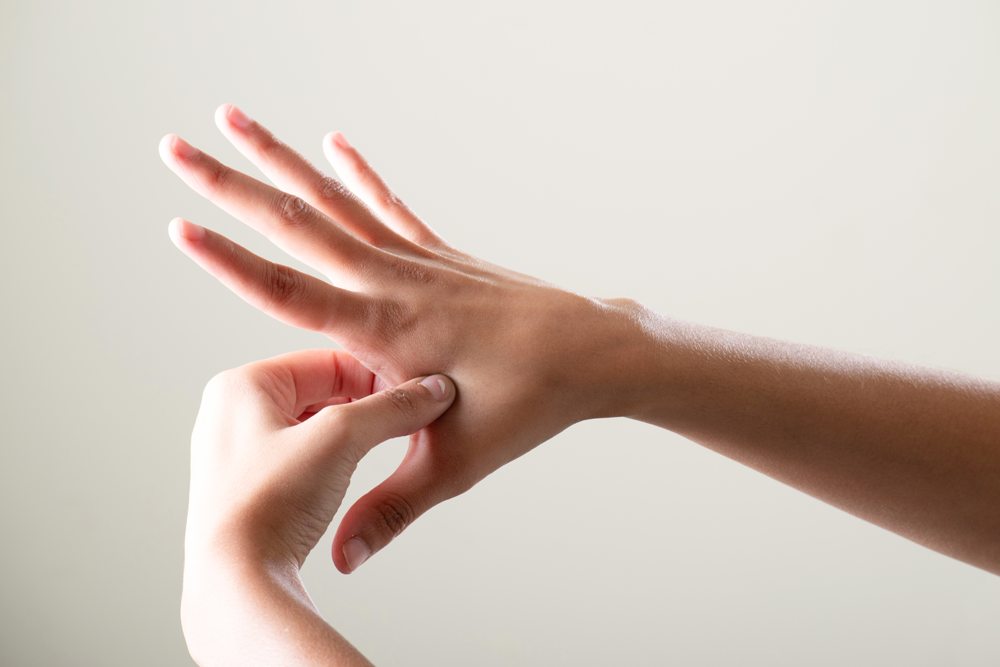
Find it on the inside of your forearm, about three finger-widths below the wrist crease, between the two central tendons. This is the point used in most nausea studies and in the elastic wristbands sold for motion sickness. Press with your thumb for one to three minutes, using firm but comfortable pressure, and breathe slowly while you do it.
2. CV17 (Danzhong): the center of the chest
Find it at the center of the breastbone, level with the nipples. Light pressure here is traditionally used to ease a sense of tightness or queasiness in the chest. Use gentle fingertip pressure for one to two minutes. This point is considered gentle and is commonly included in pregnancy-safe routines.
3. ST36 (Zusanli): below the knee
Find it about four finger-widths below the kneecap, just to the outside of the shinbone. In traditional practice this point supports digestion and settles the stomach. Press with a thumb or knuckle for one to three minutes per leg, keeping the pressure moderate and comfortable.
4. SP6 (Sanyinjiao): above the inner ankle, use with caution
Find it on the inside of the lower leg, about four finger-widths above the inner ankle bone, just behind the shinbone. This point is widely used in traditional practice, but it is also one of the points traditionally approached with caution during pregnancy. Do not stimulate SP6 strongly on your own while pregnant. If you want to include it, have a licensed acupuncturist show you whether and how it is appropriate in your case.
How to Apply Pressure Safely
Use the pad of your thumb or fingertip, not a fingernail. Pressure should feel like a firm, dull ache, never sharp pain. One to three minutes per point is enough, once or twice a day or when nausea builds. Sit comfortably, breathe slowly, and stop if you feel dizzy, unwell, or notice any unusual symptoms.
Pregnancy is not the time to experiment aggressively. Light, brief, comfortable pressure on the gentler points is the right approach, and anything beyond that deserves a conversation with your OB or a licensed practitioner first.
What the evidence says: modest and still limited
Honesty first. A 2015 Cochrane review of interventions for nausea and vomiting in early pregnancy (Matthews et al.) found that evidence for P6 acupressure was limited, and that acupuncture showed no significant benefit for nausea in the trials reviewed. Some smaller studies and many clinical reports suggest certain women feel better with acupressure, but the overall research base is thin and results are mixed.
That does not make acupressure useless. It makes it a low-risk comfort measure worth trying with realistic expectations, not a proven treatment. If it helps you, use it. If it does not, that is consistent with what the research shows, and your OB can discuss other options.
What to Expect at Messina Acupuncture
Conversation and pregnancy history (first visit)
We review how far along you are, how severe the nausea is, and what your OB has advised. If your symptoms suggest hyperemesis or anything beyond mild nausea, we will tell you to prioritize medical care.
Gentle, pregnancy-appropriate care
If acupuncture is appropriate, sessions use a limited set of points considered suitable during pregnancy, with you positioned comfortably, usually on your side or reclined. Many patients find the sessions deeply relaxing regardless of the nausea outcome.
Self-care coaching for home
We show you exactly where P6 and the other gentle points are on your own body, how much pressure to use, and which points to leave alone, so you can use acupressure confidently between visits.
Licensed and coordinated care. Before booking acupuncture anywhere during pregnancy, confirm three things: the practitioner is licensed in New York State, they use single-use sterile needles, and they are willing to coordinate with your OB. Messina Acupuncture meets all three, and we will tell you honestly if acupuncture is not the right step for your situation.
Contact your OB or seek care promptly if you cannot keep fluids down for 24 hours, show signs of dehydration such as dark urine or dizziness, are losing weight, vomit blood, have severe abdominal pain or cramping, develop a fever, or notice decreased fetal movement later in pregnancy. Severe, persistent vomiting may be hyperemesis gravidarum, which needs medical treatment.
Frequently Asked Questions
Which acupressure point is most studied for nausea?
P6 (Neiguan), on the inner wrist about three finger-widths below the wrist crease, has the most research behind it. Even so, a Cochrane review found the evidence in early pregnancy to be limited, so treat it as a comfort measure worth trying rather than a proven cure.
How do I find P6 on my wrist?
Place three fingers across the inside of your wrist starting at the wrist crease. Just below your third finger, between the two central tendons, is the spot. Press with your opposite thumb for one to three minutes using firm but comfortable pressure.
Is acupressure safe during pregnancy?
Gentle acupressure on commonly used points is considered low risk, but pregnancy changes the rules. Check with your OB first, keep pressure light, and avoid strong stimulation of points traditionally contraindicated in pregnancy, such as SP6, unless a licensed practitioner advises otherwise.
Why is SP6 treated differently from the other points?
SP6 (Sanyinjiao) is traditionally used to influence pelvic circulation, which is why practitioners approach it cautiously during pregnancy. Do not stimulate it strongly on your own while pregnant. A licensed acupuncturist can advise whether it has any place in your care.
Can acupuncture itself help with pregnancy nausea?
Some patients report feeling better, but a Cochrane review of trials found no significant benefit of acupuncture for nausea in early pregnancy. Sessions may still help with relaxation and overall comfort. Discuss it with your OB, and choose a practitioner experienced in pregnancy care.
When should I call my doctor about nausea?
Call promptly if you cannot keep fluids down for a day, feel dehydrated or dizzy, are losing weight, see blood in vomit, or have severe pain or fever. These can signal hyperemesis gravidarum or another condition that needs medical treatment, not self-care.
Nausea Stealing the Joy From Your Pregnancy?
If morning sickness is making your first trimester harder than it should be, gentle acupressure guidance and pregnancy-appropriate acupuncture may help you feel more like yourself. Dr. Daniel Messina will review your history, coordinate with your OB, and tell you honestly what is appropriate during pregnancy.
Messina Acupuncture PC
100 N Country Road, East Setauket, NY 11733