
Dry Needling · Foot Pain · East Setauket, NY
That first step out of bed in the morning tells the whole story: a sharp, stabbing pain in the heel that eases as you move, then returns after sitting. Plantar fasciitis is one of the most stubborn overuse problems we see, and dry needling is increasingly offered for it. Here is what dry needling may do for plantar fasciitis, what a 2024 research review actually found, and how it fits into a recovery plan that works.
A Setauket morning ritual. Feet hit the floor, and for the first ten steps you walk like you are 90 years old. By mid-morning it loosens up. After a day on your feet at the hospital, the store, or the sidelines of a soccer game, it is back with interest. If the night splint, the frozen water bottle, and the new shoes have only taken the edge off, here is an honest look at dry needling.
- Plantar fasciitis is an overuse problem of the plantar fascia and surrounding foot and calf tissue, famous: for first-step morning pain.
- Dry needling targets calf and foot muscle trigger points: it does not directly heal the plantar fascia.
- A 2024 meta-analysis of 12 trials found dry needling plus usual care improved pain and function, but dry: needling was not clearly superior to other treatments for pain.
- Best results come from combining needling with stretching, strengthening, footwear changes, and load: management.
- Trauma, inability to bear weight, marked swelling, numbness, or diabetes-related foot concerns need medical: evaluation first.
What Plantar Fasciitis Actually Is
The plantar fascia is a thick band of tissue running along the bottom of the foot from heel to toes, supporting the arch. Plantar fasciitis (often now called plantar fasciopathy) develops when this tissue and the surrounding structures are overloaded: prolonged standing, sudden increases in walking or running, unsupportive footwear, tight calves, and foot mechanics that concentrate load at the heel. The classic sign is sharp heel pain with the first steps in the morning or after rest, easing with gentle movement and worsening again after long periods on your feet.
Most cases improve with conservative care over months, but “conservative care” needs to be the right combination, consistently applied. Single interventions, used alone, often disappoint.
How Dry Needling Approaches It
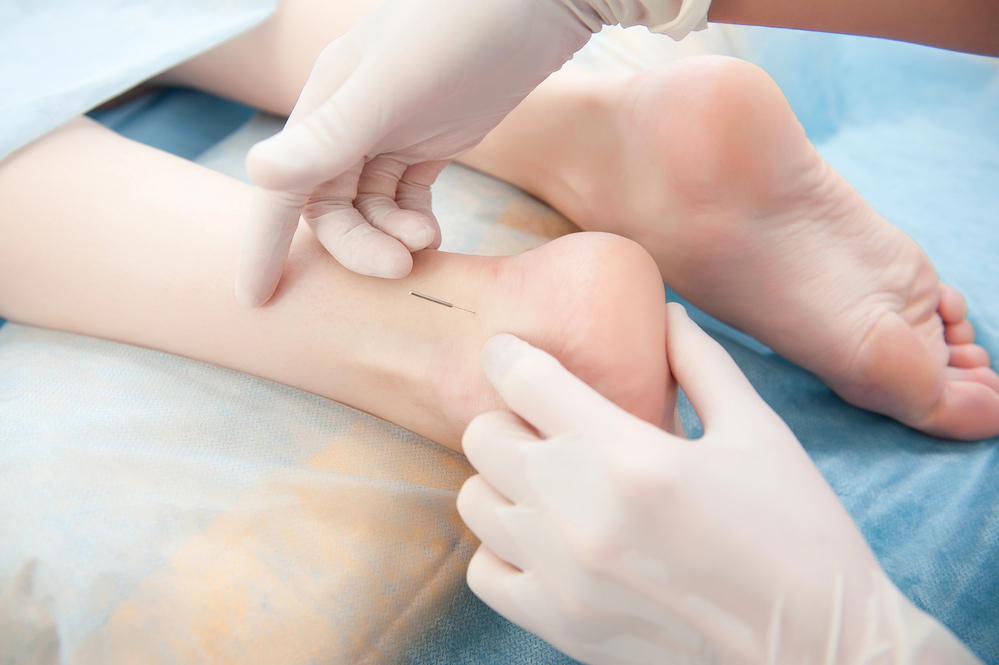
Dry needling for plantar fasciitis focuses on the muscular contributors: trigger points in the calf (gastrocnemius and soleus), the tibialis posterior, and the small intrinsic muscles of the foot. Tight, irritable calf muscles increase the pulling load on the plantar fascia with every step, so calming them can reduce the ongoing overload.
The needles do not go into the plantar fascia itself to “fix” it. The goal is to reduce muscular hypertonicity and local pain sensitivity around the problem, creating a window in which stretching, strengthening, and load management can do their work. Sessions may also include the lower leg more broadly, since foot pain rarely involves only the foot. For background on the technique, see our dry needling page, and for the acupuncture perspective on heel pain, our article on acupuncture for plantar fasciitis.
What the Research Actually Shows
A 2024 systematic review and meta-analysis (Chen et al., 12 randomized trials, 781 patients) found that dry needling combined with routine care reduced pain and improved foot function compared with routine care alone. However, when dry needling was compared directly with other treatments, it improved function but was not significantly better for pain. An earlier meta-analysis (He and Ma, 2017) similarly found dry needling effective for plantar fasciitis pain in the short term.
The honest read: dry needling appears to be a useful addition to a plantar fasciitis plan, particularly for pain and function in the short term, but the evidence does not show it outperforming other good conservative treatments. It is a reasonable tool, not a miracle.
What a Sensible Recovery Plan Looks Like
The patients who get better tend to do several things consistently:
- Calf and plantar fascia stretching: Daily, especially before the first steps in the morning.
- Progressive strengthening: Foot intrinsic exercises and gradual loading (such as heel raises) build the tissue’s capacity over time.
- Footwear and load changes: Supportive shoes, avoiding barefoot walking on hard floors during flares, and managing standing and walking volume.
- Dry needling or manual therapy: To address calf and foot trigger points and reduce pain sensitivity while the rest of the plan takes effect.
- Time: Most cases resolve over 3 to 12 months with consistent care. Patience is part of the treatment.
Your First Visit: What to Expect at Messina
Step 1: Foot and Gait Assessment
We take a history of the onset and behavior of the pain, examine the foot and calf, check ankle mobility, and watch how you stand and walk. We also screen for other causes of heel pain, such as nerve entrapment or stress injury. See our services for how we practice.
Step 2: Targeted Dry Needling
If your presentation fits, we needle the involved calf and foot musculature. The calf can be sensitive; we adjust intensity to your tolerance. Most patients walk out normally afterward.
Step 3: Plan and Reassess
We outline the stretching, strengthening, and footwear pieces alongside needling, then reassess first-step pain and function at defined checkpoints. If progress stalls, we change the approach or refer for further evaluation.
Seek prompt medical evaluation for: heel pain after trauma, inability to bear weight, marked swelling, redness, or warmth, fever, numbness or tingling in the foot, pain that wakes you at night, or any foot concern if you have diabetes or circulation problems. Tell us about blood thinners, bleeding disorders, and skin infections before any needling session.
Licensed, Qualified Hands. Dry needling of the foot and calf involves working near nerves, blood vessels, and thin tissue planes. In New York, it should be performed by a licensed professional with specific training. Messina Acupuncture’s practitioners are New York State licensed acupuncturists (L.Ac.) with extensive needling training, practicing under New York State Education Department oversight, using sterile single-use needles.
Frequently Asked Questions
Does dry needling hurt for plantar fasciitis?
The calf muscles can be tender during needling, and you may feel a brief cramp or twitch as a trigger point releases. The foot itself is usually needled gently. Most patients describe the sensation as a deep ache that fades quickly, with mild soreness possible for a day.
How many sessions will I need?
Many patients do a trial of 4 to 6 sessions alongside stretching and strengthening. Plantar fasciitis typically improves over months, so we set checkpoints based on first-step pain and function rather than selling a fixed package.
Can I still walk and exercise during treatment?
Usually yes, with sensible load management. Complete rest is rarely required, but the activities that overload the fascia may need temporary modification. We discuss your specific routine at your visit.
Do I need special shoes or orthotics too?
Supportive footwear matters during recovery: avoid barefoot walking on hard floors and worn-out shoes during flares. Custom orthotics help some people but are not mandatory for everyone. We discuss what makes sense for your feet and budget.
What is the difference between dry needling and a cortisone shot?
Cortisone injections deliver anti-inflammatory medication near the fascia and can give short-term relief, but repeated injections carry risks including tissue weakening. Dry needling uses no medication and targets the surrounding musculature. They are different tools; your physician can advise on whether an injection is appropriate for your case.
What if my heel pain does not improve?
Then we change course. Persistent cases may need physical therapy with a structured loading program, imaging, or medical evaluation for other causes of heel pain. A treatment that is not working should be questioned, not repeated. Call (631) 403-0504 to discuss your situation.
Dreading Those First Morning Steps?
Book an assessment and we will determine whether dry needling fits your heel pain, and build a plan that includes the stretching, strengthening, and footwear work that actually resolves plantar fasciitis.
Messina Acupuncture PC
100 N Country Road, East Setauket, NY 11733
Sources and Further Reading
- Chen Y, et al. Dry needling for plantar fasciitis: systematic review and meta-analysis. Journal of Foot and Ankle Research, 2024. PubMed 39744103
- He C, Ma Y. Effectiveness of trigger point dry needling for plantar heel pain: meta-analysis. Journal of Physical Therapy Science, 2017. PubMed 28860848