
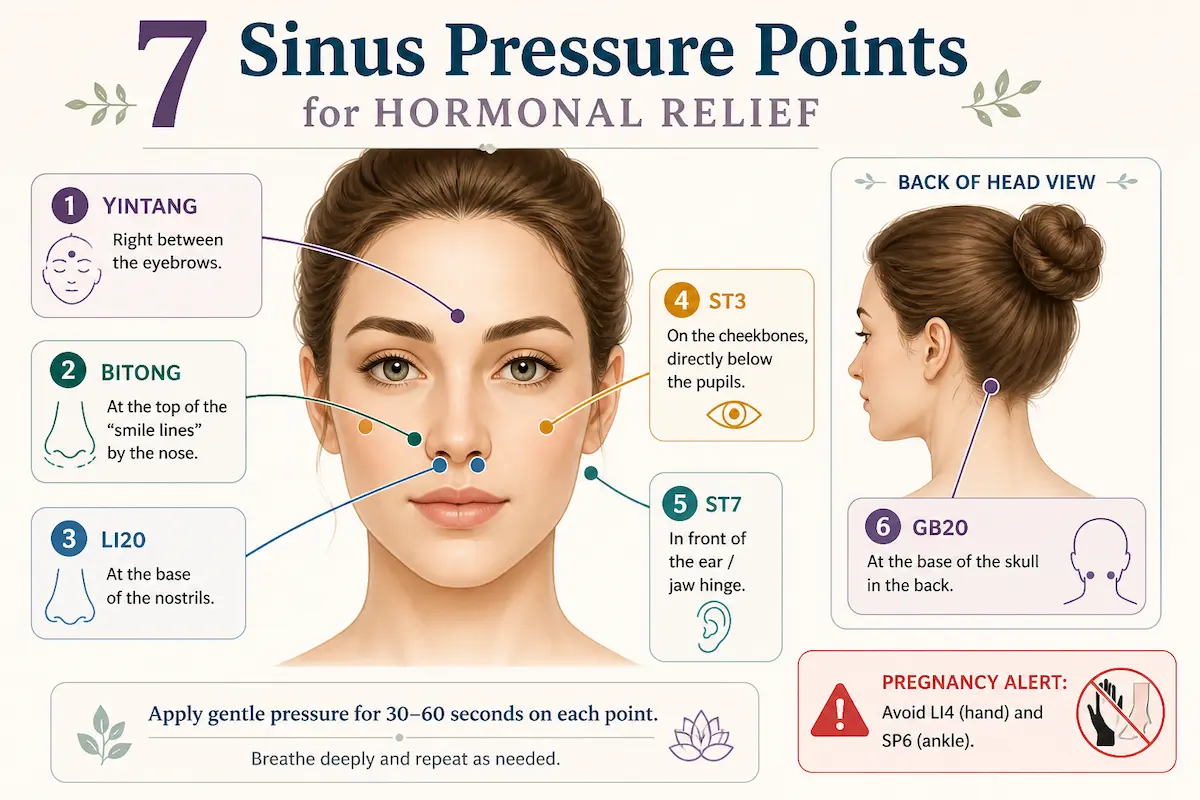
Many women notice a puzzling pattern with their sinus pressure points: congestion that flares the week before a period, pregnancy “colds” that never quite resolve, or new facial pressure that starts somewhere in perimenopause. These shifts are rarely coincidental. The lining of the nose is unusually sensitive to circulating hormones, and changes across the menstrual cycle, pregnancy, and menopause can all reshape how the sinuses feel and drain. This guide explains the biology behind hormonal sinus symptoms and the safest, most practical acupressure points to use at each life stage.
Key Takeaways
- Estrogen increases blood flow and swelling in the nasal lining, so sinus symptoms often track predictably with menstrual cycles, pregnancy, and perimenopause.
- Menstrual migraines and sinus pressure can overlap in ways that complicate diagnosis; the two are often treated together.
- LI20, Yintang, Bitong, and GB20 are generally safe across life stages; ST3 and ST7 are useful additions for cheek and jaw involvement.
- Pregnancy requires extra caution SP6 and LI4 are traditionally avoided because of their association with uterine activity.
- Persistent congestion, severe headache, facial swelling, or vision changes always warrant evaluation by an OB-GYN, primary care provider, or ENT.
How Hormones Impact Your Sinus Pressure Points:
The nasal mucosa is one of the most vascular tissues in the body, and it is richly populated with estrogen and progesterone receptors. When estrogen levels rise, blood flow to the nasal lining increases and local tissues retain more fluid, leading to swelling and congestion. When hormones drop, the opposite can happen dryness, crusting, and reflex congestion. This biological responsiveness is why many women notice sinus changes alongside other hormonal shifts, not in isolation.
The umbrella term for hormonally driven nasal symptoms is hormonal rhinitis. It is a recognized pattern in the medical literature, and broad overviews from trusted women’s health resources such as womenshealth.gov and the American College of Obstetricians and Gynecologists describe how the nasal and respiratory systems can be sensitive to reproductive-hormone fluctuations. Understanding that the symptoms are “real” and hormonally mediated is often a relief to women who have been told their congestion is “just allergies.”
Hormonal Sinus Triggers Across the Life Stages
The Menstrual Cycle
Many women experience a predictable cluster of sinus symptoms in the days leading up to their period, when progesterone is high and estrogen is fluctuating. Congestion, facial pressure, and a heavier feeling in the cheeks are common, and they often arrive alongside cycle-related headaches. Tracking symptoms across two or three cycles often reveals a clear pattern.
Pregnancy
Pregnancy rhinitis affects a meaningful minority of pregnant women and is classically defined as nasal congestion lasting six or more weeks during pregnancy without another identifiable cause. The increased blood volume and estrogen surge both contribute. Symptoms often begin in the second trimester and resolve within a week or two after delivery. Our companion guide on pregnancy acupressure discusses the closely related picture of nausea during pregnancy, and many of the same safety considerations apply.
Perimenopause and Menopause
As cycles become irregular and estrogen levels drop unevenly, many women develop new sinus symptoms: a sense of dryness, reflex congestion, or increased sensitivity to environmental allergens. Some report the emergence of new “sinus headaches” in their forties and fifties. Hormone replacement therapy (HRT), when used, can modulate these symptoms either direction depending on the individual worth noting and discussing with your prescribing clinician.
Hormonal Contraceptives and HRT
Because estrogen-containing contraceptives and hormone replacement therapies raise circulating estrogen, they can mimic or amplify the nasal changes of pregnancy or the luteal phase. If sinus symptoms began within a few months of starting or changing a hormonal medication, that timeline is a meaningful clue and worth raising with the prescriber.
Menstrual Migraines and Sinus Overlap
One of the most common diagnostic traps in women’s health is the overlap between menstrual migraine and sinus pressure. Migraines can produce facial pain, tearing, and nasal congestion that look exactly like a sinus infection, while sinus congestion can trigger or amplify migraine in women who are already predisposed. The Cleveland Clinic’s overview of menstrual migraines explains this pattern and its typical timing around menstruation. If you experience recurring cycle-linked head pain, our headache and migraine care page outlines how we approach these cases in Setauket.
7 Effective Sinus Pressure Points for Women at Every Stage
The sinus pressure points below are generally well tolerated across life stages, with a few important caveats for pregnancy. A broader systematic review suggests that stimulating specific sinus pressure points through acupuncture-based interventions can support relief from chronic congestion, and a published acupressure protocol for allergic rhinitis has shown encouraging outcomes for related nasal symptoms.For additional variety, our guide on sinus pressure points for relief covers several more options.
LI20 (Yingxiang) – The Primary Sinus Pressure Point
LI20 is one of the classic sinus pressure points for nostril congestion, located in the small groove where the outer edge of the nostril meets the cheek.
Yintang – Forehead Sinus Pressure Point
Yintang is the “third eye” is one of the sinus pressure points at the midpoint between the eyebrows. Gentle pressure here eases forehead congestion and reduces the “foggy head” feeling.
Bitong Upper Nasal Groove
Bitong sits just above LI20, at the top of the smile line where nasal cartilage meets bone. Light pressure on both sides for thirty to sixty seconds helps open the upper maxillary sinuses and is safe across life stages.
GB20 (Fengchi) Base of the Skull
GB20 is tucked into the hollows at the base of the skull, just outside the central neck muscles. It is one of the most valuable points for sinus-related headaches and for the muscular tension that often accompanies cycle-linked head pain. Hook your thumbs into the hollows and press upward for ninety seconds to two minutes.
ST3 and ST7 Cheek and Jaw
ST3 sits on the cheekbone directly below the pupil, and ST7 sits in the small depression just in front of the ear. These are useful additions when cheek pressure or jaw clenching is part of the picture a common pattern in menstrual migraine and perimenopausal tension. Light pressure for sixty seconds at each is plenty.
Safety Cautions for Sinus Pressure Points During Pregnancy
Pregnancy is the life stage that calls for the most careful selection of acupressure points. Two commonly discussed points are traditionally avoided during pregnancy:
- SP6 (Sanyinjiao) located above the inner ankle, associated in TCM with uterine activity.
- LI4 (Hegu) located in the webbing between thumb and index finger, also classically avoided in pregnancy.
The points discussed above LI20, Yintang, Bitong, GB20, ST3, and ST7 are generally considered safe during pregnancy for sinus symptoms, though any new health routine should be reviewed with your obstetric provider. If you are uncertain, a licensed acupuncturist with prenatal experience is the right resource; our acupressure services page describes how we work with pregnant patients.
Adjunct Care Tailored for Women
A few additional strategies often make a meaningful difference for hormonal sinus symptoms:
- Symptom tracking: Note sinus symptoms alongside your cycle for two or three months; patterns usually emerge.
- Hydration: Particularly important in pregnancy and during hot flashes in perimenopause.
- Sleep posture: Elevating the head of the bed helps nighttime congestion regardless of life stage.
- Saline rinses: Safe and often recommended, with the appropriate water preparation.
- Stress regulation: Breath-based practices pair naturally with Yintang and GB20 acupressure.
Who to See First: OB-GYN, ENT, or Acupuncturist
Because hormonal sinus symptoms sit at the intersection of several specialties, the right first visit depends on the pattern. If symptoms are tightly tied to your cycle or emerged during pregnancy, start with your OB-GYN. If congestion is persistent, one-sided, or producing facial swelling, an ENT evaluation is in order. If you have been cleared by those specialists and are still dealing with recurring pressure, headaches, or cycle-linked flares, an acupuncturist can add another dimension of care.
At our Setauket office, we routinely work alongside women’s health providers across Long Island to integrate acupuncture and acupressure into a broader plan. Our approach is conservative, patient-centered, and always built around what your other clinicians are already doing.
When to See a Licensed Acupuncturist
If you have been cycling through decongestants without lasting relief, or if your sinus pattern seems to move with your cycle, pregnancy, or menopause, a licensed acupuncturist can help you map the drivers and build a short plan. Women who come to Messina Acupuncture PC with these concerns often describe their first session as the first time someone connected the dots between their cycle, their headaches, and their sinus pressure. We are happy to do that work with you.
Frequently Asked Questions
Is it really my hormones causing sinus symptoms?
It can be. Estrogen and progesterone both affect the nasal lining, and many women notice predictable shifts with their cycle, pregnancy, or perimenopause. Tracking symptoms for a few cycles usually reveals the pattern, which your OB-GYN or primary care provider can help you interpret.
Are sinus headaches and menstrual migraines the same thing?
They are not, though they overlap significantly. A true migraine has specific features throbbing pain, sensitivity to light or sound, sometimes nausea while a sinus headache is driven by pressure and congestion. Many women experience both, and treatment plans often address them together.
Which sinus pressure points should I absolutely avoid during pregnancy?
While most sinus pressure points like LI20 and Yintang are safe, points like SP6 and LI4 (web between thumb and index finger) are traditionally avoided in pregnancy because of historical concerns about uterine activity. The sinus points discussed here LI20, Yintang, Bitong, GB20, ST3, and ST7 are generally considered safe, but confirm with your provider if you are unsure.
Will using sinus pressure points replace my medication?
No. While sinus pressure points are a powerful complementary tool, medication decisions should always be made with your clinician.
How quickly will I feel a change?
Many women notice some relief of pressure within a single session, but sustained improvement usually comes from daily practice over several weeks, especially when symptoms are tied to hormonal cycles.
Ready to Book Your Appointment?
If your sinus symptoms seem to follow your hormones, we would love to help you connect the pieces and find steadier relief. Call 631-403-0504 or request an appointment online and our team will get you scheduled. Our Setauket office is at 100 N Country Road, Setauket, NY 11733, and we welcome women at every life stage from across Long Island.