
Nausea Relief · Home Care · East Setauket, NY
Nausea at home is its own special misery: you are not traveling, there is no clear cause, and the kitchen you need to stand in is the last place you want to be. Most bouts are brief and manageable with simple measures. This guide walks through a practical home routine, fluids, food, rest, air, and calming techniques, and draws a clear line where home care ends and medical care begins.
He woke up queasy on a Saturday with no obvious reason, no bad food he could name, no illness going around. The thought of making breakfast made it worse, lying still helped a little, and he spent the morning wondering what he was supposed to actually do besides wait it out. By afternoon he was sipping water and feeling sorry for himself, unsure when waiting stops being the right call.
Waiting is sometimes the right call, but there is plenty you can do while you wait. At Messina Acupuncture we teach patients simple home strategies for nausea alongside clinical care for recurrent patterns. Here is the routine we recommend: what to sip, what to eat, how to rest, which techniques may help, and the red flags that mean it is time to call your doctor. For technique detail, see our breathing and acupuncture guide and P6 guide.
- Start with fluids: small frequent sips of water or oral rehydration fluids; avoid gulping and sugary or acidic drinks.
- Eat bland and small: crackers, toast, plain rice, bananas, only when you feel able, and stop if eating worsens things.
- Rest smart: a cool, quiet, dim room, lying still or propped up; fresh air helps many people.
- Try calming techniques: slow breathing and P6 acupressure are safe first-line tools, not guaranteed fixes.
- Know the line: persistent vomiting, dehydration signs, severe pain, or blood mean medical care, not more home remedies.
First Steps: Fluids, Position, and Air
When nausea hits at home, start with the basics. Sip water or an oral rehydration solution in small, frequent sips; gulping can worsen things. Avoid sugary sodas, acidic juices, alcohol, and caffeine. Lie still or prop yourself up slightly, sudden movement often intensifies nausea. Make the room cool, quiet, and dim, and get fresh air if you can, an open window or a short step onto the porch helps many people. These simple measures resolve a surprising number of mild bouts on their own.
What to Eat, and When to Wait
Eat only when you feel able, and keep it bland and small: crackers, dry toast, plain rice, bananas, applesauce. The old BRAT-style approach (bananas, rice, applesauce, toast) persists because bland, low-fat, low-fiber foods are genuinely easier to tolerate. Avoid greasy, spicy, or heavily seasoned food until you have been symptom-free for several hours. If eating triggers vomiting, stop and return to fluids; the stomach is telling you it needs more time. There is no prize for forcing food early.

Calming Techniques: Breathing and P6
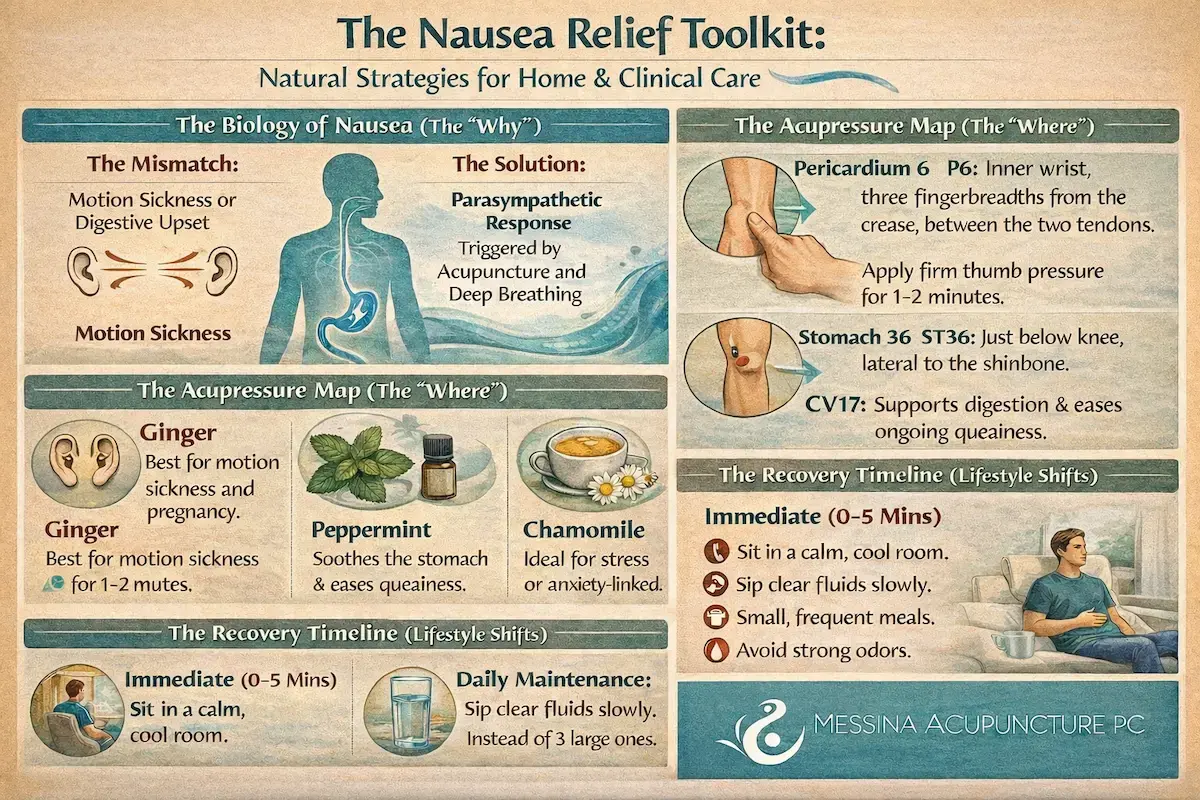
Two low-risk techniques are worth trying while you rest. First, slow diaphragmatic breathing: in through the nose for four counts, out through the mouth for six, belly rising on the inhale, for several minutes. Second, P6 acupressure: firm thumb pressure on the inner forearm, about three finger-widths below the wrist crease between the two central tendons, 30 to 60 seconds per side. Neither is proven to work quickly or consistently for home nausea; both are safe, free, and may help, which makes them reasonable additions to rest and fluids. Avoid presenting them to yourself as cures; think of them as comfort measures.
The evidence: modest, and home nausea is under-studied
Direct trials of home nausea remedies are sparse, so honest guidance leans on adjacent evidence. P6 stimulation may reduce postoperative nausea per a Cochrane review; diaphragmatic breathing may ease nausea in a small simulated-motion study (Stromberg et al., 43 people). Neither studied ordinary at-home nausea directly, so we describe both as worth trying rather than proven. The dietary advice here, bland foods, small sips, avoiding irritants, rests on clinical consensus and physiology rather than trials. What we will not do is promise that any home technique works quickly or consistently; anyone who does is selling something.
Common Triggers to Avoid While You Recover
While queasy, steer clear of strong food smells, cooking odors, perfume, and smoke. Skip screens if they worsen things; many people find scrolling intensifies nausea. Avoid lying completely flat right after sipping fluids if reflux is part of the picture, a slight incline is often better. And resist the urge to “test” yourself with a normal meal too soon; reintroduce regular food gradually once you have been symptom-free for a few hours.
When Home Care Is Not Enough
Most home bouts pass within hours. Seek medical care if you cannot keep fluids down, show dehydration signs (very dark urine, dizziness on standing, dry mouth, confusion), vomit blood or material like coffee grounds, have severe abdominal pain, high fever, severe headache, or neurological symptoms. If nausea persists beyond a day or two without a clear cause, or keeps recurring, see your physician to look for an underlying reason rather than managing it indefinitely at home.
What to Expect at Messina Acupuncture
Assessment and first session (60 to 75 minutes)
For recurrent nausea, we review your history, triggers, medications, and related patterns like migraine or anxiety, and build a plan that may include acupuncture alongside home strategies.
Follow-up sessions (30 to 45 minutes)
We track episode frequency and severity, refine your home toolkit based on what helped, and adjust clinical care to your response.
After each visit
Keep a simple log: when nausea occurs, what preceded it, what helped. Patterns emerge from notes, not memory.
Licensed and straightforward. Care for recurrent nausea is provided by a New York State licensed acupuncturist. We teach home strategies freely because they are safe, and we are direct about their limits: if your nausea keeps returning, the goal is finding why, not just soothing each episode.
Get medical care for vomiting blood or coffee-ground material, severe abdominal pain, dehydration signs, high fever, severe headache, chest pain, or neurological symptoms. If you cannot keep fluids down for more than several hours, or nausea persists beyond a day or two without clear cause, see your physician. Home remedies should never delay evaluation of a serious condition.
Frequently Asked Questions
What is the fastest way to ease nausea at home?
There is no guaranteed fast fix. The most reliable routine is small sips of fluid, rest in a cool quiet room, fresh air, and avoiding triggers. Breathing and P6 acupressure may add comfort but are not instant cures.
What should I eat when nauseous?
Bland, small amounts: crackers, dry toast, plain rice, bananas, applesauce. Eat only when you feel able, and avoid greasy, spicy, or heavily seasoned food until you have been symptom-free for hours.
Should I try to vomit to feel better?
Not deliberately. Vomiting sometimes brings relief on its own, but inducing it can irritate the esophagus and worsen dehydration. Focus on fluids, rest, and calming techniques instead.
Does lying down help nausea?
Lying still often helps, since movement can intensify nausea. If reflux is involved, prop yourself up slightly rather than lying flat. Find the position that feels best and stay there.
When should I call a doctor for nausea?
If you cannot keep fluids down, see dehydration signs, vomit blood, have severe pain or fever, or if nausea lasts beyond a day or two without clear cause or keeps recurring.
Can acupuncture help recurrent nausea at home?
For nausea that keeps returning, acupuncture is an option some people explore as part of a broader plan. Direct evidence is limited, so we discuss it candidly; the first step is medical evaluation to understand the underlying cause.
Nausea That Keeps Coming Back?
Occasional queasiness is part of life; recurrent nausea deserves answers. We will help you look for patterns, refine your home strategies, and give you an honest assessment of whether acupuncture fits.
Messina Acupuncture PC
100 N Country Road, East Setauket, NY 11733
Sources and Further Reading
- Lee A, Chan SKC, Fan LTY. Stimulation of the wrist acupuncture point P6 for preventing postoperative nausea and vomiting. Cochrane Database of Systematic Reviews, 2015.
- Stromberg SE et al. Effect of diaphragmatic breathing on motion sickness. 43-participant simulated-motion study.
- National Center for Complementary and Integrative Health: Acupuncture effectiveness and safety.