
Medical Massage · Relaxation Massage · East Setauket, NY
Not all massage is the same. Medical therapy massage is a clinical, goal-driven treatment for pain, injury, and limited movement, while relaxation massage is designed to calm the nervous system and ease everyday stress. Both work on muscles and soft tissue, but they are built for very different purposes. Here is how to tell which one fits your needs right now.
She is an elementary school teacher in Setauket, on her feet all day and grading at the kitchen table all evening. By Friday her lower back aches in the same spot it always does. A spa gift card sits in her drawer, and she keeps wondering: will a relaxing massage fix the nagging ache that keeps returning, or does she need something more targeted? She does not want to waste the appointment on the wrong kind of session.
We help patients answer exactly that question at Messina Acupuncture. Our clinical focus is medical therapy massage: structured, assessment-driven bodywork for pain and movement problems. This guide lays out the real differences between the two approaches, when each makes sense, and how they can work together. For our full clinical approach, see medical massage in Setauket.
- Purpose: medical massage is goal-oriented and clinical; relaxation massage is experience-oriented, built around calming the nervous system.
- Techniques: medical massage uses trigger point therapy, myofascial release, and deep tissue work on specific problem areas; relaxation massage uses lighter Swedish-style strokes across the whole body.
- Intensity: medical sessions may include focused, intense moments of “good discomfort”; relaxation sessions stay comfortable throughout.
- Best fit: choose medical massage for pain, injury, or limited movement; choose relaxation massage for stress, sleep, and general well-being.
- Together: many patients rotate between the two: clinical work during painful periods, relaxation work for maintenance and stress.
What Is Medical Therapy Massage?
Medical therapy massage, often just called medical massage, is a targeted approach to soft tissue treatment that focuses on specific health concerns. Rather than working the whole body in a general way, it zeroes in on the problem areas contributing to pain, limited movement, or chronic tension. Sessions are structured: the therapist asks about your history, symptoms, and activity level, then designs the session around the areas that need the most attention.
It is commonly used to support people dealing with joint pain and stiffness, muscle strains or overuse injuries, neck and back pain from posture or repetitive stress, tension-related headaches, restricted mobility after injury, and chronic tightness from work or sports.
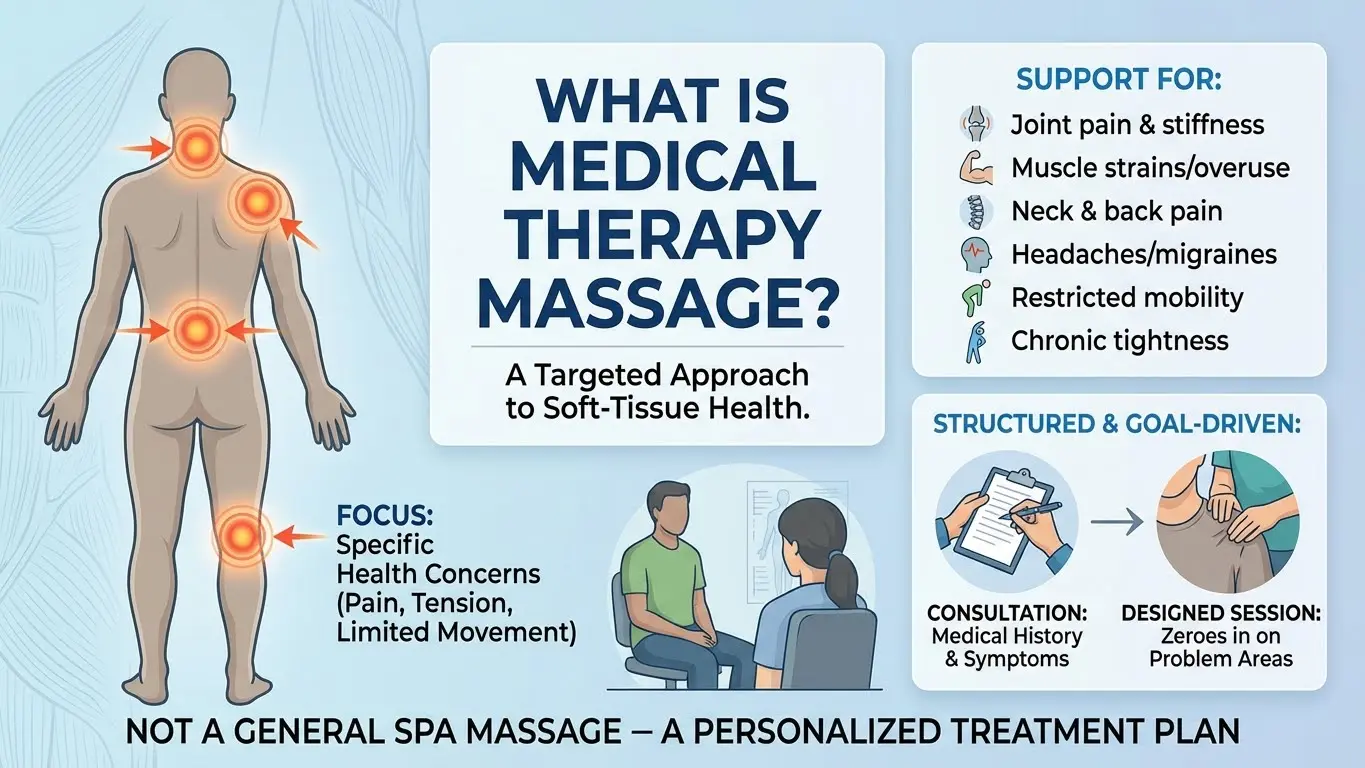
How Medical Therapy Massage Works
Medical massage draws on techniques chosen for specific soft tissue problems: deep tissue work to release long-standing tension in deeper layers, trigger point therapy for the “knots” that refer pain elsewhere (for example, a shoulder trigger point sending pain down the arm), myofascial release to restore glide in the connective tissue surrounding muscles, cross-fiber friction to address scar tissue and adhesions, and acupressure combined with massage for stubborn holding patterns.
Because the focus is clinical, pressure may be deeper and more focused in certain areas. It should always be tolerable, and communication during the session keeps the work effective and safe. At Messina Acupuncture we often pair medical massage with acupuncture or dry needling as part of a larger plan, aiming for longer-term progress rather than short-term relief alone.
What Is Relaxation Massage?
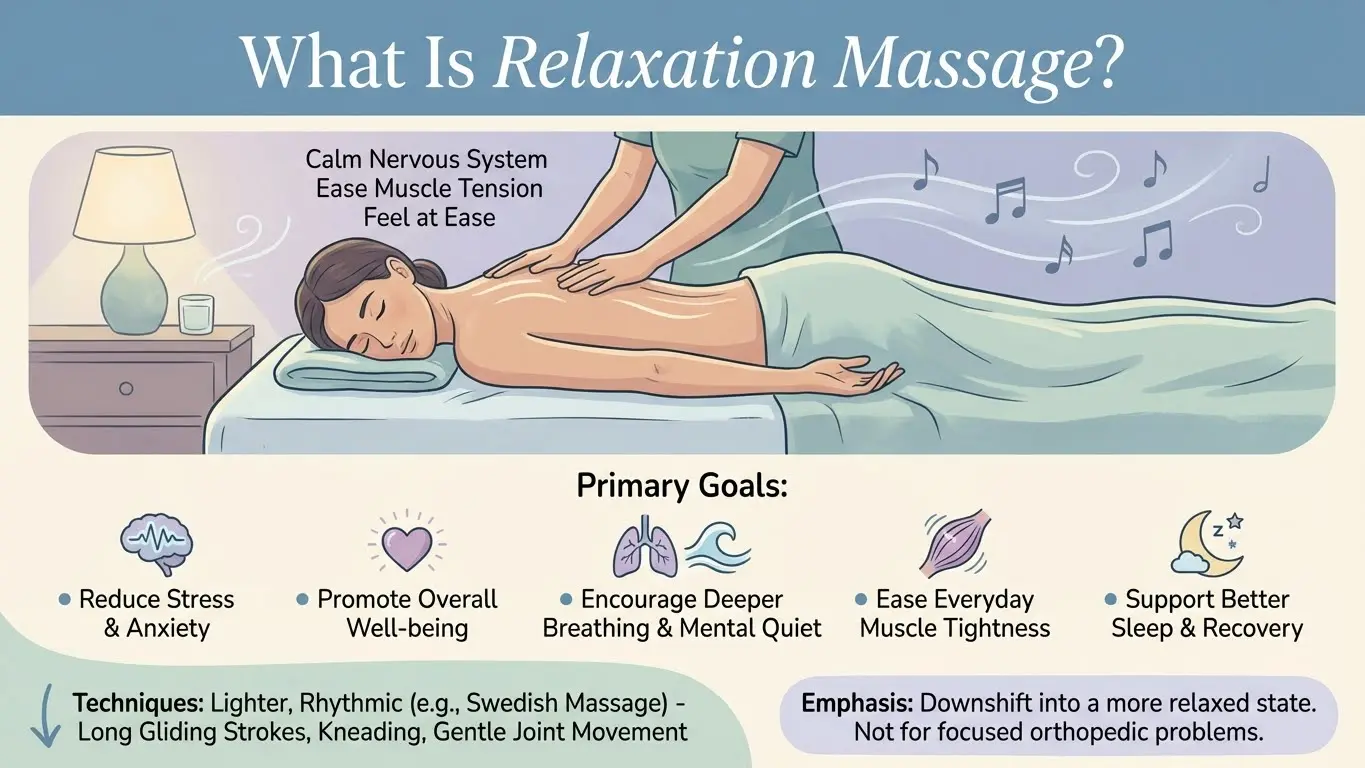
Relaxation massage is designed primarily to calm the nervous system, ease general muscle tension, and help you feel at ease in your body. It is what most people picture as a spa massage: calming setting, long flowing strokes, and a steady rhythm that helps the body and mind settle. The primary goals are reducing stress and anxiety, encouraging deeper breathing and mental quiet, easing everyday tightness from general life stress, and supporting better sleep and recovery.
Techniques are lighter and more rhythmic, often Swedish massage with long gliding strokes, kneading, and gentle joint movement. Relaxation massage can still have meaningful physical benefits: improved circulation, lower baseline muscle tightness, and better sleep all support health. But it is not usually the first choice for a focused problem like chronic joint pain, a sports injury, or a movement restriction that needs targeted work.
Medical Therapy Massage vs. Relaxation Massage: Key Differences
1. Purpose and primary goals
Medical therapy massage is goal-oriented: there is a clear problem to address, and the session is built around improving function and reducing symptoms. Relaxation massage is experience-oriented: the goal is to help you unwind and reset, with no specific clinical outcome being chased.
2. Techniques and depth of work
Medical massage uses precise, sometimes deeper techniques aimed at specific muscles, fascia, or trigger points: deep pressure into problem spots, slow focused work along a restricted muscle, cross-fiber friction to address old scar tissue, and myofascial stretching. Relaxation massage uses lighter pressure and global strokes, flowing across broader regions of the body rather than concentrating on one problem area.
3. Intensity and sensation
Because medical massage works directly on irritated, tight, or restricted tissue, parts of the session may feel intense. It should never feel unsafe or overwhelming, but a “good ache” as a muscle releases is common. Relaxation massage is gentler overall, and many people drift into light sleep as their body settles.
4. Conditions each type is best for
Medical therapy massage fits chronic neck or back pain, postural strain from desk work, sports injuries or overuse syndromes, localized joint pain, limited mobility after injury or surgery, and recurring tension headaches. Relaxation massage fits overall stress and anxiety, sleep trouble, general well-being, mild non-specific tightness, and restorative self-care.
The evidence: helpful for some pain, modest and short term
Honesty first: massage research is mixed. The National Center for Complementary and Integrative Health notes that evidence suggests massage therapy may be useful for some pain conditions such as low back pain and chronic neck pain, but in many instances the evidence is not strong, and when massage helps, effects may last only a short time. Research on massage for headaches is preliminary. That is why we frame medical massage as one part of a plan, alongside movement, posture work, and when appropriate, acupuncture, rather than a standalone cure.
Combining Acupuncture and Massage for Better Outcomes
At Messina Acupuncture, we often combine medical therapy massage with acupuncture for a more complete approach. Massage addresses muscles, fascia, and soft tissue mechanics; acupuncture influences the nervous system, circulation, and pain pathways. Together they may reduce pain more effectively for some patients, calm overactive muscle groups that keep re-tightening, and support better sleep and stress resilience. Some patients start with acupuncture and add massage as mobility improves; others begin with focused medical massage and add acupuncture for stubborn, long-standing issues. See also our comparison of dry needling vs. massage therapy.

What to Expect at Messina Acupuncture
Assessment and first session (60 to 75 minutes)
We review your history and symptoms, test how you move, and palpate the involved tissues. Then we recommend the right starting point: targeted medical massage, a relaxation-oriented session, acupuncture, or a combination.
Follow-up sessions (30 to 45 minutes)
Clinical plans often run 4 to 6 visits with measurable goals like less pain during activity or better range of motion. Relaxation sessions can be scheduled as maintenance between clinical work or during lower-stress periods.
After each visit
Mild soreness for a day or two is normal after deeper clinical work; hydration, gentle movement, and heat help. After a relaxation session you may feel drowsy, so plan an easy evening.
Licensed and coordinated care. Our practitioners are licensed in New York State and coordinate with physicians, physical therapists, and other providers across Long Island. The NCCIH advises asking about a practitioner’s training and experience, discussing whether massage fits your condition with your health care provider, and never using massage to postpone seeing a provider about a medical problem. We follow the same standard: if your case needs a different specialty, we will tell you.
Skip massage and seek medical evaluation first for possible blood clots (a hot, swollen, painful calf), fractures or acute injuries, skin infections or open wounds, unexplained lumps, severe unrelenting pain, or fever. If you take blood thinners or have a bleeding disorder, tell your therapist: deep, forceful work may not be safe. Massage should never delay diagnosis of a serious condition.
Frequently Asked Questions
Which massage should I choose if I have back pain?
If the pain is persistent, localized, or limits how you move, medical therapy massage is usually the better starting point because it targets the specific tissues involved. If your back simply feels generally tight from a stressful week, a relaxation session may be enough. An assessment is the reliable way to decide.
Will medical massage hurt?
It should never feel unsafe or overwhelming, but you may feel focused intensity or a “good ache” as problem tissues release. Your therapist checks in throughout the session and adjusts pressure to your feedback.
Can I get both medical and relaxation massage?
Yes, and many patients do. A common pattern is clinical work during painful periods or heavy training, and relaxation sessions during quieter times for stress management and recovery.
How often should I come?
For an active pain problem, weekly sessions are common at first, spacing out as you improve. For wellness and stress, monthly relaxation sessions work well for many people. Your clinician will suggest a schedule based on your goals and progress.
Is medical massage covered by insurance?
Sometimes, when it is part of a documented treatment plan; relaxation massage is generally self-pay. Our front desk verifies your benefits before your first visit. Call (631) 403-0504 and we will check for you.
Does Messina Acupuncture offer relaxation massage?
Our clinical focus is medical, goal-oriented bodywork: assessment, targeted treatment, and measurable progress. If pure relaxation is what you need most right now, we will say so honestly and help you decide on the best next step.
Not Sure Which Massage You Need?
If pain, stiffness, or limited movement is the problem, targeted medical massage is usually the right start. If stress and tension are the problem, a calmer session may serve you better. Tell us what you are feeling and we will match the therapy to your goals, honestly.
Messina Acupuncture PC
100 N Country Road, East Setauket, NY 11733