
Dry Needling vs. Massage · East Setauket, NY
Massage calms and restores through skilled compression. Dry needling releases deep trigger points with needle precision. They solve different problems, and at our clinic we use both. This guide compares how each works, what the research shows, and how to choose.
Many East Setauket patients weigh the same two options for stubborn muscle pain: a massage, with its soothing, rhythmic pressure, or dry needling, with thin needles placed into the muscles. They can seem like opposites.
At Messina Acupuncture, we do not see them as opposites. We use both modalities because they solve different problems. Here is an honest comparison of dry needling versus massage therapy: the physics, the physiology, and how to decide which your body needs.
- The core difference: massage works through compression and friction from the outside in. Dry needling works through precise penetration, reaching deep trigger points with a hair-thin needle.
- Massage strengths: broad muscle tension, stress-driven guarding, circulation, relaxation, and fluid movement through tissue.
- Dry needling strengths: specific, stubborn trigger points, deep muscles that hands cannot easily reach, and cases where massage relief fades within hours.
- The research: both are evidence-based. A 2014 randomized trial found both improved neck pain, with larger gains in pressure pain threshold in the dry needling group.
- The secret weapon: many of our best results come from combining them: massage to warm and soften tissue, needling to reset the trigger point, massage again to ease post-treatment soreness.
The Core Difference: Compression vs. Penetration
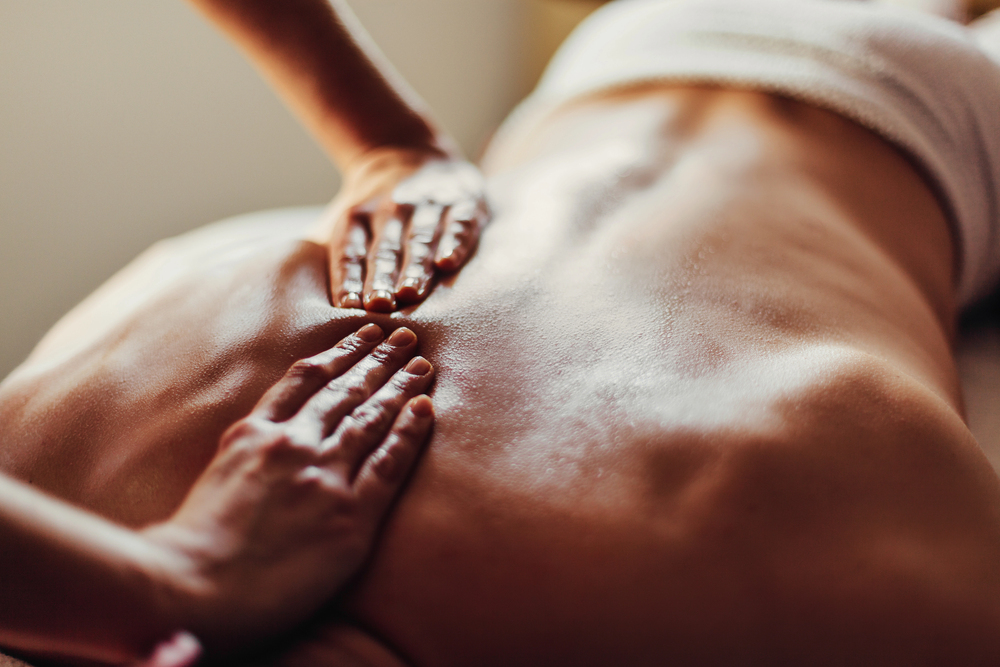
Both therapies treat muscle and fascia, but they approach tissue from opposite directions. Massage therapy works via compression and friction: the therapist’s hands, elbows, or tools press layers of tissue against each other or against bone, creating a pumping effect that moves fluid through the tissue.
Dry needling works via precision. A monofilament needle thinner than a human hair slides between superficial muscle fibers to reach deep layers directly. Think of an itch under several layers of clothing: massage presses through all the layers to reach it, while the needle slips between them to the exact spot. Neither approach is “better” in the abstract. They are different tools.
How Massage Therapy Helps
We are talking about medical massage and manual therapy, not a spa-day rubdown. Here is the physiology:
- Circulation and fluid movement: tight muscles act like a wrung-out sponge. Massage mechanically pumps fluid through the tissue, hydrating the fascia and supporting the movement of blood and lymph. This is one reason you may feel thirsty after a session.
- Calming the nervous system: skilled touch can shift the body toward its rest-and-digest state. A review of massage research (Field et al., International Journal of Neuroscience, 2005) reported average reductions in cortisol of 31 percent alongside increases in serotonin and dopamine of 28 and 31 percent. If your pain is driven by stress, anxiety, or protective guarding, massage is often the superior choice for calming the system.
- Freeing stuck tissue: fascia, the web wrapping your muscles, can develop adhesions that keep muscles from gliding past each other. Slow, sustained techniques like myofascial release help restore that glide.
How Dry Needling Helps
Dry needling is less about relaxation and more about resetting a muscle’s dysfunctional pattern:
- Breaking the trigger point cycle: a trigger point is a group of muscle fibers stuck in sustained contraction, creating a low-oxygen, acidic environment. When the needle enters the point, it elicits a local twitch response, an involuntary reflex that briefly contracts and then releases the fibers, which is thought to interrupt the spasm cycle.
- Reaching unreachable muscles: some muscles sit deep behind bone or beneath thick muscle layers, where hands cannot effectively reach. A fine needle can access these spots in seconds.
- Precision over pressure: because the needle targets the exact point of dysfunction, surrounding tissue is largely undisturbed.
The evidence: both work, with different strengths
A 2017 systematic review (Gattie et al.) found dry needling reduced musculoskeletal pain more than sham needling in the short term. Head-to-head, a 2014 randomized clinical trial (Llamas-Ramos et al., Journal of Orthopaedic and Sports Physical Therapy) compared trigger point dry needling with trigger point manual therapy for chronic mechanical neck pain: both groups improved in pain, function, and range of motion, while the dry needling group showed larger gains in pressure pain threshold. For massage, a widely cited research review (Field et al., 2005) summarized biochemical and clinical findings supporting its effects on stress hormones and mood-related neurochemistry. Our read: hands relax the general area; needles desensitize the specific knot.
Decision Guide: Which One Do You Need?
- Consider massage first if: your pain is generalized (“my whole back feels tight”), stress is a major driver, you have swelling or sluggish-feeling tissue, or you are needle-phobic (fear causes tensing, which works against needling).
- Consider dry needling first if: your pain is specific (“a sharp pain right here when I turn my head”), massage relief fades within hours, the problem sits in a deep muscle, or you want a focused, shorter session.
- Consider both if: you want the most complete result. Our combination protocol warms the tissue with massage or heat, resets the trigger points with needling, then uses massage strokes to ease post-treatment soreness.
Safety and Side Effects
Both therapies are safe in trained hands, with different risk profiles. Massage risks are mainly soreness or bruising from excessive pressure. Dry needling risks include minor bleeding, bruising, and post-treatment soreness; in very rare cases, pneumothorax is a risk near the lungs when performed by undertrained providers. This is why seeing a licensed acupuncturist with thousands of hours of needle training matters for your safety.
What to Expect at Messina Acupuncture
Assessment and recommendation
We examine your pain pattern, palpate the involved tissue, and recommend massage, dry needling, or a combination. You are never forced into one box.
Your treatment session
Massage sessions focus on the specific regions driving your symptoms. Dry needling sessions target the mapped trigger points, often followed by gentle manual work to ease soreness.
Aftercare and follow-up
Mild soreness for 24 to 48 hours is normal after either therapy. Hydration, gentle movement, and heat help. We reassess at each visit and adjust the plan.
Licensed and coordinated care. Before booking either therapy, confirm three things: the practitioner is licensed in New York State, they use single-use sterile needles for any needling, and they will communicate with your physician or physical therapist if needed. Messina Acupuncture meets all three, and we are happy to coordinate with your physician or physical therapist when it helps your care.
Contact your physician promptly for new or worsening numbness or weakness, severe or unrelenting pain, chest symptoms, signs of infection at a needle site (increasing redness, warmth, swelling, or fever), or any symptom that feels wrong to you. These therapies should never delay evaluation of a potentially serious condition.
Frequently Asked Questions
Is dry needling the same as acupuncture?
No. Acupuncture follows Traditional Chinese Medicine and addresses broader patterns of health. Dry needling follows Western anatomy and specifically targets muscle trigger points for pain.
Does dry needling hurt more than deep tissue massage?
It is different, not necessarily worse. Massage is a sustained “good hurt.” Dry needling insertion is usually mild, but the twitch can feel like a sudden deep cramp that lasts only a second or two.
How many sessions will I need?
For massage, many patients settle into a maintenance rhythm. For dry needling, a typical course is 3 to 6 sessions, though how quickly you notice change varies. Once a trigger point is deactivated and the muscle relearns how to relax, that specific issue may not need ongoing visits.
Can I combine massage and dry needling?
Yes. Our combination protocol uses massage or heat to warm and soften tissue, dry needling to reset stubborn trigger points, then massage strokes to ease post-treatment soreness. Many patients find this the most effective approach.
Which is better for stress-related tension?
Massage is usually the better first choice when stress, anxiety, or protective guarding drives the pain, because skilled touch helps shift the nervous system toward rest. Dry needling can then address any specific knots that remain.
Are both safe?
Yes, in trained hands. Massage risks are mainly temporary soreness or bruising. Dry needling risks include minor bleeding, bruising, and post-treatment soreness. Choose a licensed provider and discuss any medical conditions beforehand. Call (631) 403-0504 with questions.
Not Sure Which One You Need? Start With an Assessment.
Choosing between dry needling and massage is about choosing the right tool for your specific pain. We will examine your symptoms, explain your options honestly, and build a plan around what your body actually needs.
Messina Acupuncture PC
100 N Country Road, East Setauket, NY 11733
Sources and Further Reading
- Gattie E et al. The effectiveness of trigger point dry needling for musculoskeletal conditions by physical therapists: a systematic review and meta-analysis. Journal of Orthopaedic and Sports Physical Therapy, 2017.
- Field T et al. Cortisol decreases and serotonin and dopamine increase following massage therapy. International Journal of Neuroscience, 2005.
- Llamas-Ramos R et al. Comparison of the short-term outcomes between trigger point dry needling and trigger point manual therapy for the management of chronic mechanical neck pain: a randomized clinical trial. Journal of Orthopaedic and Sports Physical Therapy, 2014.
- National Center for Complementary and Integrative Health: Acupuncture effectiveness and safety.