

Medical Massage · Sports Recovery · East Setauket, NY
Athletes at every level look for an edge against injury, and medical massage is often sold as prevention in a bottle. The honest story is more nuanced: massage may reduce soreness, support short-term flexibility, and help you notice problems early, but direct evidence that it prevents injuries is limited. Here is what massage can and cannot do for athletes, and what injury prevention really requires.
He plays in a weekend soccer league in Setauket and coaches his daughter’s team, which means his hamstrings never fully recover between games. Last spring a pulled calf cost him six weeks. This season he added a monthly sports massage, hoping it would keep him on the field, and so far he feels looser and more aware of when to back off.
His experience matches what we see at Messina Acupuncture: massage helps athletes feel and move better, which has real value. But no honest practitioner will promise that massage prevents injuries. Here is a clear-eyed look at the three problems massage addresses and the limits of the evidence.
- 1. No honest prevention promise: massage may ease soreness and support flexibility, but direct evidence that it prevents sports injuries is limited.
- 2. Three contributors to injury: repetitive micro-strain, muscle imbalances, and movement dysfunction raise injury risk, and these are the areas massage may influence.
- 3. Soreness relief is real: research supports massage for reducing delayed-onset muscle soreness and perceived fatigue after hard efforts.
- 4. Flexibility gains are short-term: massage may temporarily improve range of motion, which can support better movement during training.
- 5. Prevention is broader: real injury prevention rests on smart training load, strength work, sleep, and addressing pain early, with massage as one supporting piece.
What Medical Massage Actually Is
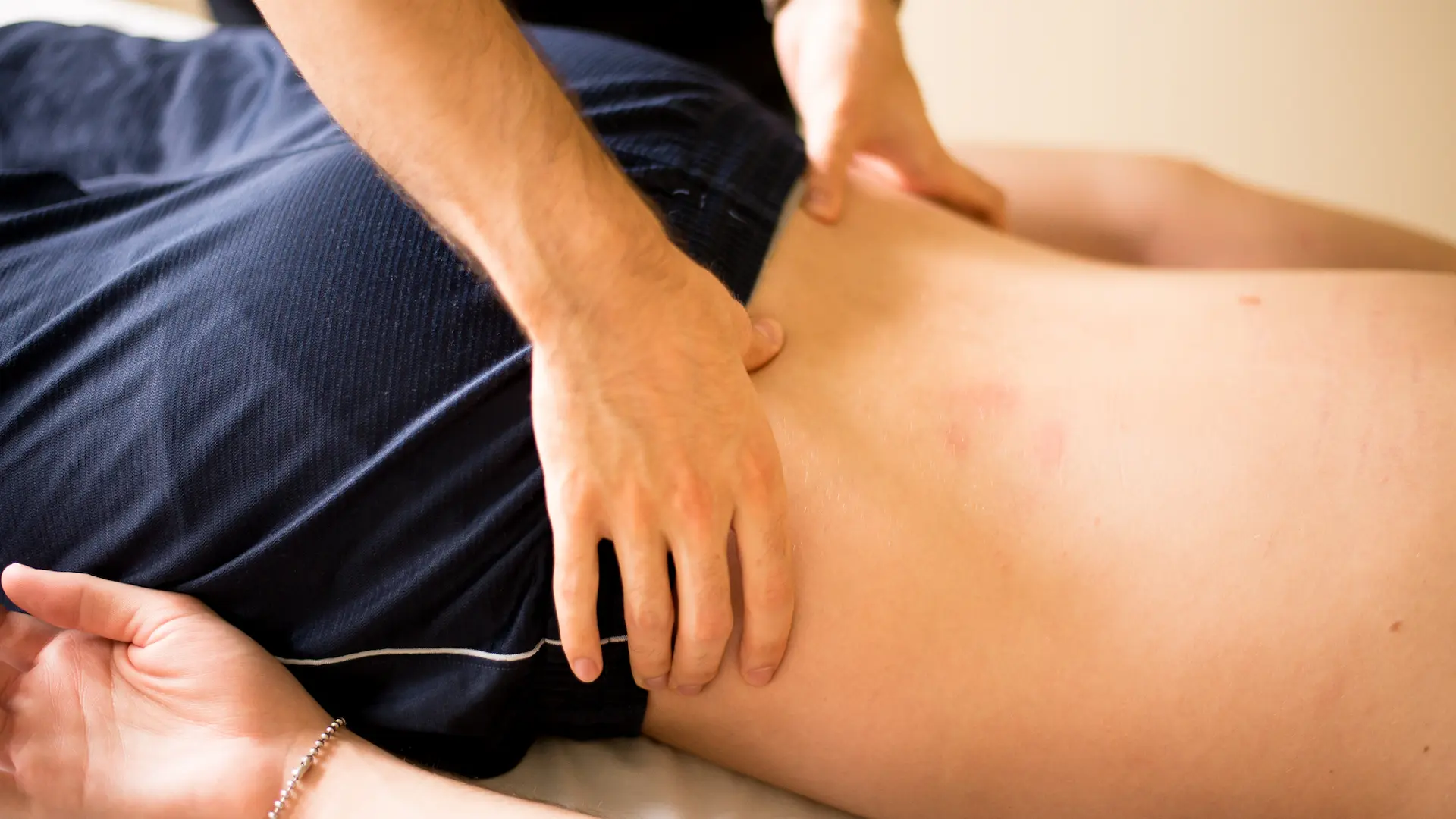
Medical massage differs from spa massage in intent: it targets specific muscles, movement restrictions, and problem areas identified through assessment, rather than aiming for general relaxation. Sessions may include deep tissue work, trigger point therapy, and assisted stretching, focused on the demands of your sport.
Three Problems Massage May Help Address
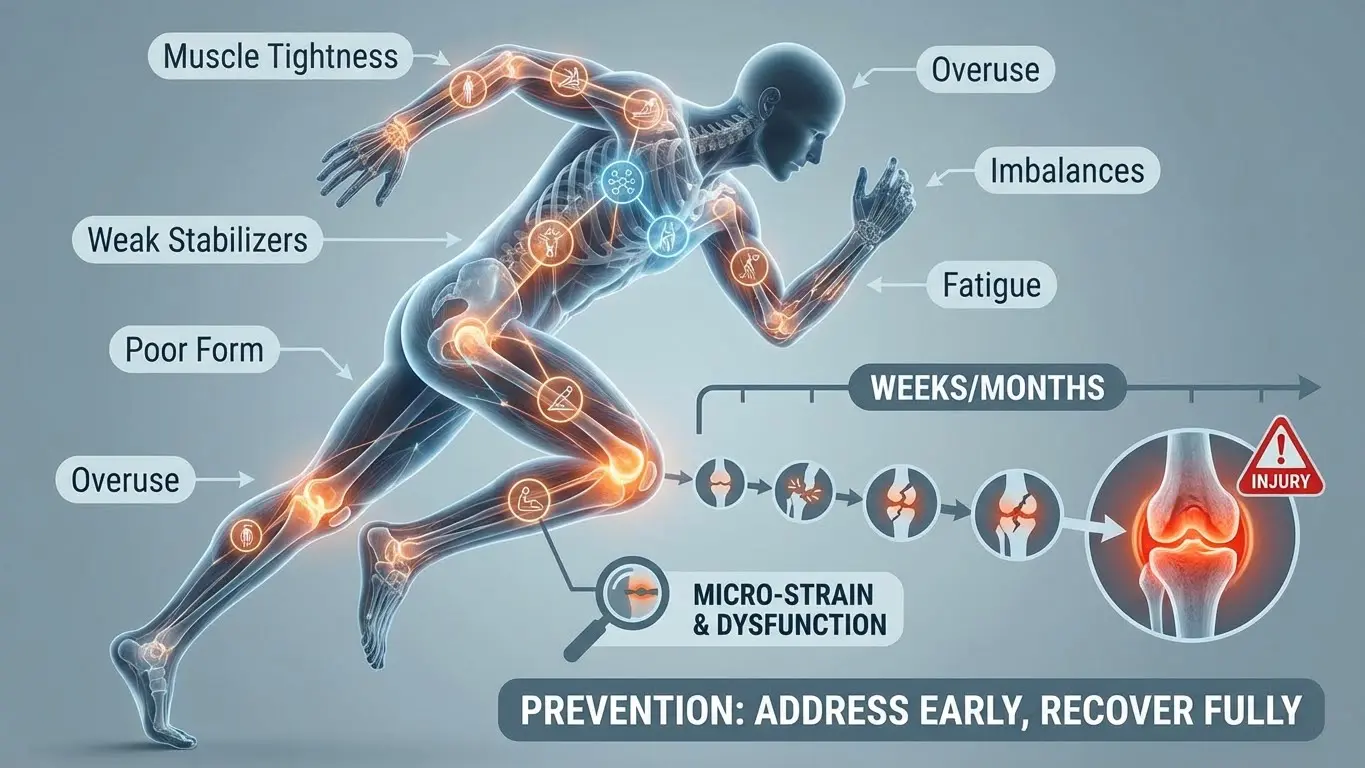
Sports injuries rarely come from nowhere. Three underlying contributors show up again and again, and these are where massage has the most plausible role.
1. Repetitive micro-strain
Training breaks muscle fibers down in small ways, and recovery builds them back stronger, provided the load is manageable. When training outpaces recovery, micro-strain accumulates into overuse injuries such as tendinopathy or stress reactions. Massage may ease the resulting soreness and stiffness, helping you distinguish normal training fatigue from pain that signals real trouble.
2. Muscle imbalances
Most sports load the body unevenly: runners develop tight hip flexors and underused glutes, throwers overdevelop one side. Imbalances change how joints track and forces distribute. Targeted massage may reduce excessive tightness in overworked muscles, which can support more balanced movement, though lasting correction requires strength training, not massage alone.
3. Movement dysfunction
Stiff ankles, locked-up thoracic spines, and guarded hips force compensation elsewhere, and compensation is where many injuries start. Massage may temporarily improve range of motion in restricted areas, giving you a better window to train good movement patterns. The gains fade without continued mobility and strength work.
What the Honest Evidence Shows
Massage has solid support for reducing delayed-onset muscle soreness and perceived fatigue after exercise. A large 2018 meta-analysis found massage the most effective recovery technique studied for those outcomes. That matters for athletes, because less soreness can mean better training quality.
What the evidence does not show is that massage prevents injuries or improves performance directly. A widely cited 2005 Sports Medicine review (Weerapong et al.) concluded that while massage may reduce soreness and promote relaxation, direct evidence for performance enhancement and injury prevention was limited. That remains the fair summary today.
One related note: the old claim that massage flushes lactic acid from muscles does not hold up. A well-known 2012 study found massage did not change muscle lactate or glycogen levels at all, even as it altered inflammatory signaling. Soreness relief is real; the lactic acid story is a myth worth retiring.
What Injury Prevention Really Requires
If injury prevention is the goal, massage is a supporting actor. The leads are progressive training load, genuine strength work, adequate sleep, proper warm-ups, and the discipline to back off when pain appears. Regular bodywork can help you notice tightness and asymmetry early, which is valuable, but it cannot compensate for overtraining or poor mechanics.
Where Acupuncture Fits for Athletes
Many athletes pair massage with acupuncture or dry needling for stubborn trigger points and persistent tightness. Acupuncture may help with certain musculoskeletal pain, and some athletes find the combination keeps them training more consistently. As with massage, the goal is supporting your training, not guaranteeing you stay injury-free.
What the evidence says: good for soreness, limited for prevention
A 2005 Sports Medicine review (Weerapong et al.) found massage may reduce muscle soreness and promote relaxation, but direct evidence for performance gains and injury prevention was limited. A 2012 mechanistic study of 11 young men (Crane et al.) found massage altered inflammatory signaling after exhaustive exercise, but its small size means it cannot establish broad clinical claims. Massage is best understood as a recovery support with real but bounded benefits.
What to Expect at Messina Acupuncture
Sport-specific assessment (first visit)
We review your training schedule, injury history, and the areas that tighten up most. If you have an acute injury, we will tell you whether bodywork is appropriate or whether you need medical evaluation first.
Targeted treatment sessions
Massage, and optionally acupuncture or dry needling, focuses on your problem areas rather than a generic full-body routine. Sessions are scheduled around your training, not against it.
Ongoing maintenance plan
Many athletes come every two to four weeks during heavy training blocks. We reassess regularly: if a pattern keeps recurring, we look at training load and mechanics, not just the muscle.
Licensed and coordinated care. Before booking sports bodywork anywhere, confirm the practitioner is properly credentialed and experienced with athletic injuries. Messina Acupuncture coordinates with physicians, physical therapists, and coaches across Long Island, and we will refer you out whenever an injury needs more than conservative care.
Seek prompt medical care for injuries with severe swelling or bruising, inability to bear weight, visible deformity, numbness or weakness, head injuries with confusion or loss of consciousness, or pain that does not improve after a few days of rest. Playing through these signs risks turning a minor injury into a major one.
Frequently Asked Questions
Can massage really prevent sports injuries?
Not directly, based on current evidence. Massage may reduce soreness, support short-term flexibility, and help you notice developing problems early, but no quality research shows it prevents injuries on its own. Real prevention comes from training load management, strength work, and rest.
How often should athletes get sports massage?
Many athletes schedule sessions every two to four weeks during training blocks, or more often when soreness accumulates. Frequency should follow your training demands and budget, not a fixed prescription.
Does massage flush lactic acid from muscles?
No. Research has shown massage does not change muscle lactate or glycogen levels. Soreness relief after massage is real, but the lactic acid explanation is a myth. Soreness comes mainly from micro-damage to muscle fibers, not lingering acid.
Should I get massage before or after competition?
After is the safer bet for most athletes. Deep work close to competition can leave muscles temporarily sore or heavy. Light, familiar bodywork a day or two before an event is fine; save deeper sessions for recovery days.
Can massage fix muscle imbalances?
Massage may reduce excessive tightness in overworked muscles, which can help temporarily. Lasting correction of imbalances requires targeted strength training and movement work. Think of massage as opening a window that exercise then keeps open.
When should I see a doctor instead of getting massage?
See a physician for severe swelling, inability to bear weight, numbness or weakness, possible fractures or dislocations, head injuries, or pain that does not improve with rest. Massage should never delay evaluation of an acute injury.
Want to Train Harder and Recover Smarter?
If soreness, tightness, or recurring problem spots are limiting your training, targeted medical massage may help you recover better between sessions. Dr. Daniel Messina and our team will assess your needs honestly and build bodywork around your sport, not around hype.
Messina Acupuncture PC
100 N Country Road, East Setauket, NY 11733
Sources and Further Reading
- Weerapong C et al. The mechanisms of massage and effects on performance, muscle recovery and injury prevention. Sports Medicine, 2005.
- Crane JD et al. Massage therapy attenuates inflammatory signaling after exercise-induced muscle damage. Science Translational Medicine, 2012.
- National Center for Complementary and Integrative Health: Acupuncture effectiveness and safety.