
Dry Needling History · East Setauket, NY
Dry needling looks like a new technique, but its roots run deep: from ancient needle therapies, through Dr. Janet Travell’s mid-century trigger point research, to Dr. Chan Gunn’s work in the 1970s and the modern research era. This is the corrected timeline of how dry needling became a mainstream tool for muscle pain.
Dry needling invites the obvious question: where did this come from? It looks brand new, but its roots run deep. The real answer is that it is neither ancient nor modern. It is both.
At Messina Acupuncture, we like patients who ask about origins, because the history explains the technique. Here is the story of dry needling, with the dates corrected and the myths set aside.
- Ancient roots: needle-based therapies for pain date back thousands of years in China, establishing the basic idea that needles can influence pain. Dry needling itself is a modern, Western development.
- 1940s to 1950s: Dr. Janet Travell publishes pioneering papers mapping myofascial trigger points and their referral patterns. Her later service as personal physician to President John F. Kennedy gave that work a public profile it had never had.
- 1983: Travell and Dr. David Simons publish the landmark Trigger Point Manual, the definitive reference on trigger point diagnosis and treatment. (Many sources misdate this to the 1940s or 1950s; the manual itself appeared in 1983.)
- 1970s: Dr. Chan Gunn in British Columbia develops intramuscular stimulation (IMS), a system of dry needling grounded in neuropathy models and segmental anatomy.
- Today: dry needling is widely used in physical therapy, sports medicine, and pain clinics, supported by a growing but still developing research base.
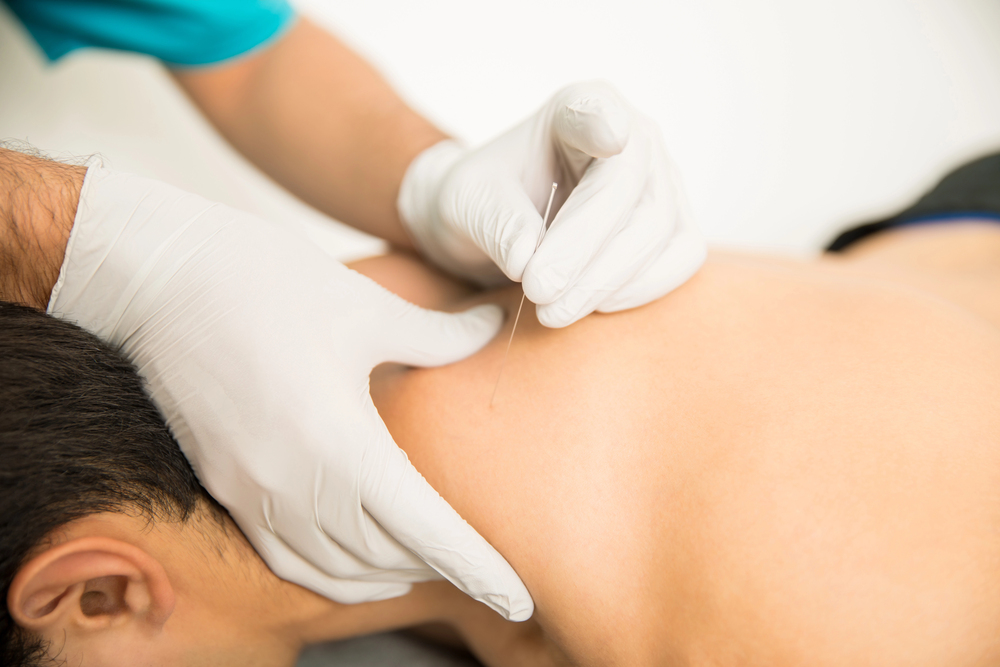
Ancient Beginnings: Needles for Pain
To understand dry needling’s origins, start with acupuncture, practiced in China for thousands of years. Early forms of needle-like instruments for treating pain date back as far as the Shang Dynasty (roughly 1600 to 1046 BCE). Over centuries, practitioners developed an extensive system of points and techniques within Traditional Chinese Medicine, based on the flow of Qi along meridians.
Dry needling does not share acupuncture’s philosophy, but it inherits the core insight: that inserting fine needles into the body can influence pain. The two techniques part ways on theory while sharing the tool.
The Mid-20th Century: Dr. Janet Travell and Trigger Points
The modern story begins with Dr. Janet Travell, an American physician and pain specialist. In the 1940s and 1950s, Travell published pioneering papers identifying myofascial trigger points: tight, hyperirritable nodules within taut bands of muscle that cause local pain and refer pain to distant sites. Her mapping of referral patterns, showing, for example, how a shoulder trigger point can produce pain behind the eye, revolutionized how clinicians understood muscle pain.
Travell’s prominence grew when she served as personal physician to President John F. Kennedy, treating his chronic back pain. Her clinical observations gave trigger point science a public profile it had never had.
Here is the correction many articles get wrong: Travell’s landmark book, Myofascial Pain and Dysfunction: The Trigger Point Manual, co-authored with Dr. David Simons, was published in 1983, not in the 1940s or 1950s. Her early papers appeared in mid-century; the definitive manual that systematized trigger point diagnosis and treatment for generations of clinicians came decades later. Getting this right matters, because the manual’s publication marks the moment trigger point science became teachable at scale.
The 1970s: Dr. Chan Gunn and Intramuscular Stimulation
While Travell’s work mapped the where of trigger points, Dr. Chan Gunn, a physician in British Columbia, developed a distinctive how. In the early 1970s, Gunn created intramuscular stimulation (IMS), a dry needling system grounded in the idea that chronic musculoskeletal pain often traces to nerve irritation and segmental dysfunction, not just local muscle knots.
Gunn’s approach needled not only the painful muscles but also the paraspinal muscles of the corresponding spinal segments, aiming to address the neurological drivers of persistent pain. IMS became particularly influential in Canada and remains a distinct school of dry needling practice today.
The 1980s Through 2000s: Research, Refinement, Adoption
Through the 1980s and 1990s, physical therapists and pain specialists increasingly adopted needling techniques, developed training programs, and refined needle handling and trigger point identification. Researchers began testing dry needling in controlled trials for back pain, neck pain, headaches, and sports injuries.
By the 2000s, systematic reviews began synthesizing the evidence. The picture that emerged was measured rather than miraculous: dry needling showed short-term benefit for musculoskeletal pain, roughly comparable to other active treatments, with more and better trials still needed. That remains a fair summary of the evidence today.
The evidence: short-term benefit, comparable to other active treatments
A 2017 meta-analysis of 13 randomized trials (Gattie et al., Journal of Orthopaedic and Sports Physical Therapy) found dry needling reduced musculoskeletal pain more than no treatment or sham needling in the short term, with results roughly comparable to other active treatments. A 2025 meta-analysis of dry needling for neck pain (Journal of Bodywork and Movement Therapies) reached a similar conclusion. Long-term evidence remains limited. For historical detail, see the reflections on Dr. Janet Travell’s career and the University of British Columbia’s overview of Gunn IMS.
Terminology and Regulation Today
A word on language: “dry needling” simply distinguishes solid-filament needling from injections (“wet needling”). The term covers several schools, including Travell/Simons-style trigger point needling and Gunn’s IMS, which differ in theory and technique. Regulation also varies: in New York, licensed acupuncturists perform dry needling within a scope backed by thousands of hours of training, while rules for other professions differ by state. When choosing a provider, ask what system they trained in and how extensive that training was.
What to Expect at Messina Acupuncture
Assessment rooted in trigger point science
We palpate the involved muscles to map active trigger points and review your history, applying the diagnostic approach Travell and Simons systematized.
Targeted treatment
Fine, sterile, single-use needles are placed into the mapped points and retained only briefly. Sessions often pair dry needling with acupuncture for broader patterns of tension.
Measured follow-up
We track what changes between visits and adjust. If needling is not moving your symptoms, we revisit the diagnosis and refer appropriately.
Licensed and coordinated care. Before booking dry needling anywhere, confirm three things: the practitioner is licensed in New York State, they use single-use sterile needles, and they will communicate with your physician or physical therapist if needed. Messina Acupuncture meets all three, and we are happy to coordinate with your physician or physical therapist when it helps your care.
Contact your physician promptly for new or worsening numbness or weakness, severe or unrelenting pain, chest symptoms, signs of infection at a needle site (increasing redness, warmth, swelling, or fever), or any symptom that feels wrong to you. Dry needling should never delay evaluation of a potentially serious condition.
Frequently Asked Questions
Who invented dry needling?
No single person did. Dr. Janet Travell’s mid-century trigger point research provided the diagnostic foundation, Dr. Chan Gunn developed intramuscular stimulation in the 1970s, and generations of clinicians and researchers have refined the technique since.
When was the Trigger Point Manual published?
The landmark manual by Travell and Simons, Myofascial Pain and Dysfunction: The Trigger Point Manual, was published in 1983. Travell’s pioneering papers appeared earlier, in the 1940s and 1950s, which is why some sources misdate the book.
Is dry needling the same as acupuncture?
No. Acupuncture follows Traditional Chinese Medicine and addresses broader patterns of health. Dry needling follows Western anatomy and targets muscle trigger points specifically. They share the tool but differ in theory.
What is the difference between dry needling and IMS?
IMS (intramuscular stimulation) is Dr. Chan Gunn’s specific system of dry needling, which emphasizes segmental anatomy and paraspinal needling. Trigger point dry needling in the Travell and Simons tradition focuses more directly on the painful muscles themselves.
Is dry needling supported by research?
Moderately. Meta-analyses support short-term pain relief for musculoskeletal conditions, with results roughly comparable to other active treatments. Evidence for long-term benefit is still limited, and better trials are needed.
Is dry needling safe?
When performed by a trained, licensed practitioner using sterile single-use needles, serious adverse events are rare. The most common effects are temporary soreness, minor bruising, or brief fatigue. Call (631) 403-0504 with questions.
Experience a Technique With Deep Roots.
Dry needling brings together decades of trigger point science and careful clinical practice. If muscle pain has been limiting your life, our licensed team will assess whether this approach fits your situation.
Messina Acupuncture PC
100 N Country Road, East Setauket, NY 11733
Sources and Further Reading
- Janet Travell, MD: Reflections (Dynamic Chiropractic).
- Travell JG, Simons DG. Myofascial Pain and Dysfunction: The Trigger Point Manual. Williams and Wilkins, 1983 (Open Library record).
- University of British Columbia: Gunn Intramuscular Stimulation (IMS).
- Gattie E et al. The effectiveness of trigger point dry needling for musculoskeletal conditions: a systematic review and meta-analysis. Journal of Orthopaedic and Sports Physical Therapy, 2017.
- National Center for Complementary and Integrative Health: Acupuncture effectiveness and safety.