
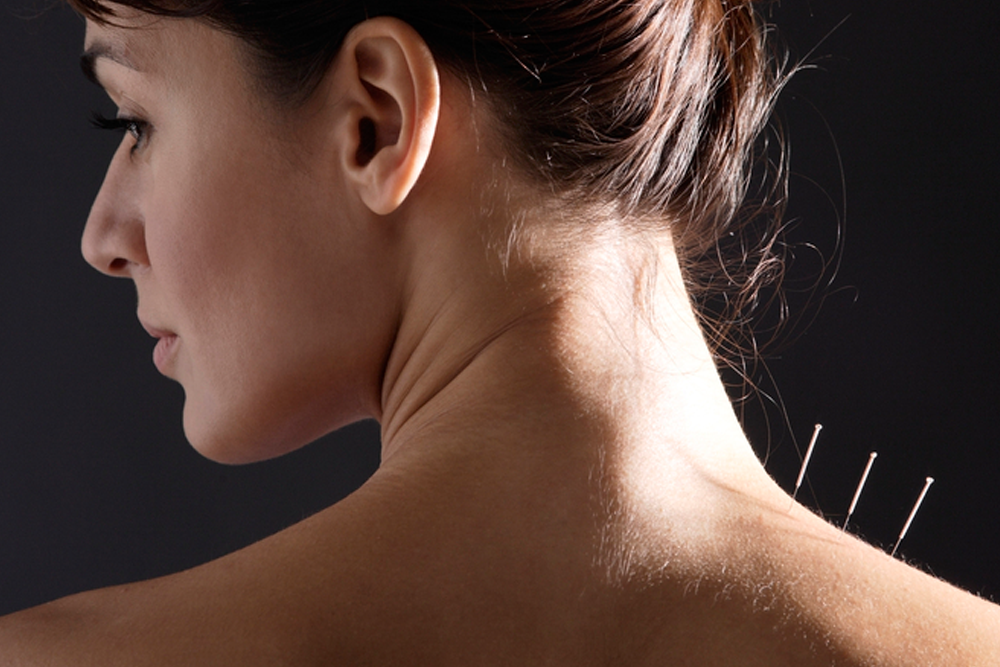
Dry Needling & Mechanical Neck Pain
Dry needling is often considered when neck pain overlaps with tender muscle bands, myofascial trigger points, muscle guarding and restricted movement. Research suggests it may reduce pain and improve selected measures of function for some people, particularly in the short term. The important first step is determining what type of neck pain is actually present and whether muscle-related symptoms are an important part of the problem.
Does Dry Needling Help Neck Pain?
Dry needling may help some people with mechanical or nonspecific neck pain, particularly when tender muscle bands and myofascial trigger points reproduce part of the patient’s symptoms.
Recent systematic reviews have reported improvements in pain sensitivity and disability, while effects on cervical range of motion have been less consistent.
Dry needling has also not consistently demonstrated superiority over physical therapy, manual therapy or other appropriate conservative care.
For that reason, it is best considered one possible tool within a broader neck-pain treatment plan rather than a universal solution for every stiff or painful neck.
Neck Pain Is Not One Diagnosis
Neck pain can come from many different patterns. Some presentations have a strong muscular or myofascial component. Others may involve joints, discs, nerves, headaches, trauma or conditions outside the neck.
Symptoms can also overlap. A patient may have muscle guarding around the neck while another structure is contributing to the original problem.
This is why evaluation matters before deciding whether dry needling is appropriate.
Muscle Guarding & Trigger Points
Tender areas within muscles such as the upper trapezius or levator scapulae may contribute to local pain, referred discomfort and restricted movement.
This is one type of presentation where dry needling may be considered.
Pain With Movement
Pain when turning the head, looking up, working at a computer or holding one position for a long period may involve several tissues at once.
Muscle sensitivity can be part of the pattern without necessarily being the only source of symptoms.
Arm Pain, Numbness or Tingling
Symptoms traveling from the neck into the shoulder, arm or hand may involve cervical nerve irritation or another neurological condition.
Significant or progressive neurological symptoms need appropriate evaluation.
Neck Pain With Headaches
Cervicogenic headache, migraine, tension-type headache and occipital neuralgia are different diagnoses.
Neck muscle tenderness can accompany several headache patterns, but muscle tenderness alone does not identify the cause of a headache.
What Does the Research Say About Dry Needling for Neck Pain?
Current evidence is supportive enough to make dry needling a reasonable option for selected neck-pain presentations, but the results also show why treatment should remain individualized.
A systematic review of mechanical neck pain found improvements in pressure-pain threshold and Neck Disability Index scores following dry needling.
Cervical flexion and right rotation improved in pooled analyses, while extension, left rotation and lateral flexion did not show significant differences.
Another systematic review compared dry needling with other physical modalities for trigger-point-related neck pain.
The review found no statistically or clinically significant differences in pain, pressure-pain threshold or neck disability between the approaches.
A randomized placebo-controlled trial added two dry-needling sessions to education, exercise and electrotherapy.
Dry needling did not outperform standard care or sham needling for most measured outcomes.
Short-Term Symptom Relief May Be Useful
Research across chronic and mechanical neck-pain populations suggests dry needling may reduce pain and improve some functional measures.
At the same time, the evidence does not establish that dry needling is inherently better than exercise, physical therapy, manual therapy or every other conservative option.
A patient’s examination, goals and response to treatment are therefore more important than assuming one technique is best for everyone.
What Is a Myofascial Trigger Point?
A myofascial trigger point is generally described as a sensitive area within a taut band of skeletal muscle that may be associated with local pain, referred pain and tenderness.
Trigger points remain an active area of research. Researchers continue to investigate their mechanical, neurological and biochemical characteristics.
Trigger Points Are More Complex Than a Simple “Muscle Knot”
Local biochemical, metabolic and blood-flow differences have been studied around myofascial trigger points.
Current evidence does not establish that every trigger point is a muscle contraction that has become so tight it completely cuts off its own blood supply.
Clinically, tenderness, muscle guarding and reproduction of familiar symptoms can still provide useful information without requiring that simplified explanation.
What Happens During Dry Needling?
Dry needling uses a thin, sterile, single-use solid filament needle placed into selected muscle or soft tissue.
Depending on the technique and target, a muscle may briefly contract or twitch. A patient may feel pressure, a deep ache, a quick twitch, a brief cramp-like sensation or very little at all.
The exact mechanisms responsible for symptom improvement are still being studied. Needling creates both mechanical and sensory stimulation, and research has examined possible effects on pain sensitivity, sensory processing and muscle behavior.
A Twitch Is a Response, Not Proof of a “Reset”
A local twitch response can occur when a needle stimulates a sensitive part of a muscle.
The presence of a twitch does not prove that individual muscle fibers have been mechanically unlocked, that a knot has been permanently released or that treatment will necessarily be successful.
The more useful question is what changes afterward: pain, movement, tenderness and function.
Does Dry Needling Improve Blood Flow?
Some experimental studies have reported changes in local circulation following needling.
Trigger-point research has also identified differences in local biochemical environments around some active myofascial trigger points.
These findings are useful for understanding how needling may interact with tissue, but they do not prove that dry needling works by flushing trapped chemicals, removing toxins or restoring oxygen to a muscle that had lost its blood supply.
Less Pain Does Not Automatically Mean Faster Tissue Repair
A patient may experience reduced pain or improved movement shortly after dry needling.
Those changes do not demonstrate that a tendon, ligament, muscle or other structure has healed faster.
Symptom modulation and structural tissue healing are different outcomes.
How Might Dry Needling Affect Pain?
Modern pain science recognizes that pain is influenced by information processed across several levels of the nervous system.
Sensory input from tissues interacts with peripheral nerves, spinal processing, brain pathways and descending systems that can amplify or reduce pain.
Dry needling provides a distinct sensory stimulus that may affect some of these processes.
Attention, expectations, prior experience and the broader treatment context may also influence how pain is experienced.
This more complete model is more useful than imagining a single pain “gate” that the needle simply switches off.
Which Neck Muscles May Be Evaluated?
The appropriate muscle targets depend on the patient’s examination and the pattern of symptoms.
Upper Trapezius
Tenderness in the upper trapezius can overlap with neck-to-shoulder pain and referred discomfort toward the head.
It is one common muscle considered in myofascial neck-pain treatment, but it is not automatically the source of every case of neck tension.
Levator Scapulae
The levator scapulae connects the cervical spine with the shoulder blade and may become tender in people with painful or restricted rotation.
Examination helps determine whether the muscle appears relevant to the patient’s symptoms.
Suboccipital Muscles
These small muscles can be tender in patients with neck pain and some headache patterns.
Their tenderness alone does not diagnose occipital neuralgia or prove that a nerve is being compressed.
Sternocleidomastoid
The SCM may contribute to local tenderness and referred head or facial discomfort in some patients.
Dizziness, tinnitus, ear symptoms and nausea have many possible causes and should not automatically be attributed to an SCM trigger point.
What About “Tech Neck” and Posture?
Screen time, sustained positions, repetitive work and limited movement throughout the day can contribute to neck discomfort for some people.
Posture alone, however, is not a diagnosis.
People naturally use many different positions throughout the day, and there is no single perfect posture that guarantees a pain-free neck.
More useful factors to consider can include:
- how long one position is held,
- how often the person changes position,
- workstation demands,
- overall movement during the day,
- exercise and training load,
- sleep,
- previous neck injury,
- muscle endurance,
- jaw clenching or stress-related guarding, and
- the underlying neck-pain diagnosis.
Dry needling may help a muscular component of the problem, but long-term management may also involve movement, strength, endurance or changes in how physical load is managed.
Dry Needling vs. Acupuncture for Neck Pain
Dry needling and acupuncture both use thin solid filament needles, but the clinical reasoning and treatment approach can differ.
| Approach | Typical Focus | How It May Fit Neck Pain |
|---|---|---|
| Dry Needling | Tender muscle bands, myofascial trigger points, local guarding and movement-related muscular symptoms. | May be considered when a specific muscle pattern closely reproduces part of the patient’s complaint. |
| Acupuncture | Local and distal acupuncture points selected using traditional and contemporary clinical reasoning. | May be used for a broader pain presentation, including neck pain with associated headaches or shoulder symptoms when clinically appropriate. |
| Medical Massage | Hands-on soft-tissue work across a broader muscular region. | May support comfort, mobility and management of generalized muscle tension. |
| Exercise / Rehabilitation | Strength, endurance, mobility and movement capacity. | Often important when recurring neck pain is influenced by physical capacity or repeated loading. |
Is Dry Needling Better Than Massage?
Not necessarily.
Dry needling and medical massage provide different forms of sensory and mechanical input.
Dry needling can target selected muscle tissue with a thin needle, while massage provides broader hands-on soft-tissue treatment.
Current evidence does not establish that dry needling is universally superior to manual or other physical therapies for neck pain.
The better choice depends on the person’s presentation, goals, tolerance and response to treatment.
Dry Needling and Pain Medication
Medication and dry needling should not be framed as one treatment merely masking symptoms while the other fixes the true cause.
Medications have different purposes, indications, benefits and risks. Dry needling also has potential benefits, limitations and risks.
A patient should not stop prescription medication because dry needling has been started unless the healthcare professional managing that medication recommends the change.
Can Dry Needling Help Neck-Related Headaches?
Dry needling has been studied in patients with headache and cervical myofascial pain, and addressing symptomatic neck muscles may help some people.
The headache diagnosis still matters.
Migraine, tension-type headache, cervicogenic headache and occipital neuralgia are different conditions and may require different approaches.
Tender suboccipital or upper-trapezius muscles may be relevant to a patient’s symptoms without necessarily being the sole cause of the headache.
Learn more about headaches and migraines .
What About Whiplash?
Muscle guarding can develop after a motor-vehicle collision or another traumatic neck injury.
Dry needling may eventually be considered for selected muscular symptoms, but whiplash can involve more than muscle tightness.
Trauma may affect joints, discs, ligaments, nerves and other structures.
Significant dizziness, neurological symptoms, severe headache, substantial loss of function or other concerning symptoms may need medical assessment before needling is considered.
Can Dry Needling Help a Pinched Nerve?
Cervical radiculopathy can cause pain, numbness, tingling or weakness traveling from the neck into an arm or hand.
Dry needling may sometimes be used for associated muscle guarding or myofascial pain.
It has not been established as a method for decompressing a cervical nerve root, enlarging the neural foramen or correcting structural nerve compression.
Progressive weakness, worsening numbness, loss of dexterity or other significant neurological symptoms deserve appropriate medical evaluation.
Does a Muscle Twitch Mean Dry Needling Worked?
A local twitch response can occur during dry needling, and some techniques intentionally seek it.
Other approaches use less aggressive stimulation.
A twitch alone does not prove that a trigger point has been permanently released or that treatment will produce a meaningful clinical result.
Reassessment is more useful. Depending on the patient’s complaint, this might include changes in:
- pain during neck movement,
- cervical rotation,
- muscle tenderness,
- headache symptoms,
- sleep disrupted by neck pain, or
- the activity that originally reproduced symptoms.
What Happens During a Dry Needling Visit?
Review the Neck-Pain Pattern
The visit begins by reviewing where the pain is, which movements provoke it, whether symptoms travel into the arm or head, how long the problem has been present and whether trauma or another diagnosis is involved.
Assess Movement and Relevant Tissue
Depending on the complaint, assessment may include cervical rotation, flexion, extension, side bending, muscle guarding, tender areas and neurological screening when indicated.
Choose the Appropriate Treatment
If a myofascial pattern appears relevant to the complaint, dry needling may be considered. Other presentations may be better suited to acupuncture, acupressure, medical massage or a different healthcare pathway.
Reassess the Response
Pain, range of motion, tenderness and relevant functional movements can be reassessed after treatment to determine whether the intervention produced a useful change.
How Quickly Can Dry Needling Help?
Some patients notice short-term changes in pain or neck movement after treatment.
This is consistent with research showing that the clearest benefits tend to be short-term symptom improvements.
An immediate change in pain does not prove that an injured structure has healed.
Likewise, not experiencing a dramatic change after one treatment does not by itself tell us whether future treatment will or will not help.
The treatment plan should be guided by measurable progress over time.
How Many Dry Needling Sessions Are Needed for Neck Pain?
There is no fixed evidence-based number of dry needling sessions that applies to every patient.
Treatment frequency and duration may depend on:
- the type of neck pain,
- how long symptoms have been present,
- whether symptoms are primarily muscular,
- whether headaches or arm symptoms are involved,
- other rehabilitation or medical care,
- activity and work demands, and
- whether treatment is producing measurable improvement.
Treatment should be reassessed rather than continued automatically because a muscle still feels tight.
Is Dry Needling Around the Neck Safe?
Most Reported Reactions Are Minor, but Serious Complications Are Possible
A 2026 systematic review of dry-needling adverse events found that minor effects such as bleeding, bruising and soreness can occur.
Major adverse events were uncommon, but serious complications have been documented.
The neck, shoulder and upper thoracic region require careful anatomical knowledge because nerves, blood vessels and the upper lung fields are nearby.
Pneumothorax is a rare but recognized complication of needling around portions of the shoulder and thoracic region.
Appropriate needle depth, direction, patient positioning, anatomical knowledge and clinical judgment are important parts of reducing risk.
Careful Technique Reduces Risk but Does Not Make Risk Zero
Anatomy-based techniques are used to help avoid vulnerable structures when treating the neck, shoulder and upper back.
Individual anatomy varies, which is one reason appropriate training and clinical judgment remain important.
Patients should also tell the practitioner about medications, bleeding disorders, pregnancy, implanted medical devices, immune-system concerns and other relevant health conditions.
What Can You Expect After Dry Needling?
Mild local soreness, tenderness, minor bruising or a small amount of bleeding can occur after dry needling.
How much activity is appropriate afterward depends on the treatment, how the person feels and the underlying neck condition.
There is no universal rule requiring every treated muscle to remain unused for exactly 24 hours.
If the area feels temporarily sore, lighter activity may simply be more comfortable.
More information is available in our guide to exercise after acupuncture and dry needling .
When Neck Pain Needs Medical Evaluation
Some Symptoms Need a Different Care Pathway First
- Significant trauma with severe neck pain or inability to move normally.
- Progressive arm or hand weakness.
- New loss of hand coordination or dexterity.
- Increasing numbness or neurological symptoms.
- Difficulty walking, new balance problems or unexplained leg weakness.
- New bowel or bladder changes accompanied by neurological symptoms.
- Fever, severe illness or signs of infection.
- A sudden, unusual or severe headache.
- New facial weakness, speech changes, vision changes or another acute neurological symptom.
- Unexplained weight loss, known cancer or another systemic concern with new persistent neck pain.
Chest Pain or Shortness of Breath Needs Prompt Evaluation
New chest pain, chest tightness, difficulty breathing or unexplained shortness of breath after needling around the shoulder, upper back or thoracic region warrants prompt medical evaluation.
Pneumothorax is uncommon, but breathing symptoms should not be dismissed as ordinary post-treatment soreness.
Where Dry Needling Fits at Messina Acupuncture PC
Dry needling is one treatment option, not a diagnosis by itself.
At Messina Acupuncture PC, the decision to use dry needling follows evaluation of the patient’s neck-pain pattern, movement and relevant clinical findings.
Someone whose familiar symptoms are closely reproduced by a tender upper-trapezius or levator scapulae pattern may be a very different candidate from someone with progressive neurological symptoms, significant trauma or another condition requiring medical evaluation.
The treatment should follow the assessment, not the other way around.
Explore Neck Pain Treatment at Messina Acupuncture PC
For broader information about the condition, visit our Neck Pain page .
To learn more about the technique, visit Dry Needling in East Setauket .
If headaches overlap with the neck symptoms, see our Headaches & Migraines page .
If jaw pain, clenching or facial tension is also present, visit our TMJ / TMD page .
Messina Acupuncture PC is an orthopedic-focused acupuncture practice in East Setauket serving Stony Brook, Port Jefferson, the Three Village community and patients throughout Long Island’s North Shore.
Care is led by Daniel Messina, MSOM, L.Ac., a New York State Licensed Acupuncturist and NCCAOM Board-Certified Diplomate. The practice has served the local community since 2016.
Depending on the patient’s findings, treatment may include dry needling, acupuncture, electroacupuncture, acupressure or medical massage.
Frequently Asked Questions About Dry Needling for Neck Pain
Does dry needling work for neck pain?
Research suggests dry needling may reduce pain and improve selected functional outcomes for some people with mechanical or nonspecific neck pain, particularly in the short term. Results vary, and dry needling has not consistently proved superior to other appropriate conservative treatments.
How does dry needling work on neck muscles?
The complete mechanism is not settled. Dry needling creates mechanical and sensory stimulation in muscle and related tissues. Researchers are studying how this input may influence pain sensitivity, sensory processing and muscle behavior.
Does dry needling release muscle knots?
Dry needling is commonly used to target tender muscle bands and myofascial trigger points. Pain and tenderness may improve, but a trigger point is more complex than a physical knot that simply needs to be broken apart.
Does the muscle have to twitch for dry needling to work?
No. A local twitch response can occur, and some techniques intentionally seek it, but a twitch by itself does not prove the muscle has been reset or predict that treatment will be successful.
Can dry needling improve neck range of motion?
Some studies report improvements in selected cervical movements. A 2025 meta-analysis found improvements in flexion and right rotation, while extension, left rotation and lateral flexion did not show significant pooled differences.
Is dry needling better than massage for neck pain?
Current evidence does not establish dry needling as universally superior to massage, manual therapy or other physical treatments. The appropriate approach depends on the patient’s pain pattern, examination, goals and response to care.
Can dry needling fix a pinched nerve in the neck?
Dry needling may address associated muscle guarding or myofascial pain, but it has not been established as a method for decompressing a cervical nerve root. Progressive weakness, numbness or other neurological symptoms deserve appropriate medical evaluation.
Is dry needling safe around the neck and shoulders?
Minor reactions such as soreness, bruising and small amounts of bleeding can occur. Serious complications are uncommon but possible, making anatomical knowledge, needle depth, direction and appropriate clinical training particularly important around the neck, shoulder and upper thoracic region.
Can dry needling cause a collapsed lung?
Pneumothorax is a rare but documented complication of needling near portions of the chest, shoulder and upper thoracic region. New chest pain or shortness of breath after needling requires prompt medical evaluation.
How many dry needling sessions are needed for neck pain?
There is no fixed evidence-based number that applies to every patient. Treatment frequency should depend on the type of neck pain, symptom duration, functional limitations and whether measurable improvement occurs.
Start With the Neck Pattern, Not Just the Tight Muscle
If neck pain, upper-trapezius tension, headaches, restricted rotation or recurring muscle guarding is affecting work, driving, sleep or exercise, Messina Acupuncture PC can evaluate the pattern and discuss whether dry needling, acupuncture, medical massage or another care pathway may be appropriate.
Sources and Further Reading
- 2025 Systematic Review and Meta-Analysis: Dry Needling for Mechanical Neck Pain
- 2025 Systematic Review: Dry Needling for Chronic Nonspecific Neck Pain
- 2025 Systematic Review: Dry Needling Compared With Physical Modalities for Neck Pain
- Randomized Placebo-Controlled Trial: Dry Needling Added to Standard Care for Chronic Neck Pain
- 2026 Systematic Review and Meta-Analysis: Frequency and Severity of Dry Needling Adverse Events
- National Center for Complementary and Integrative Health: Acupuncture Effectiveness and Safety