
Cupping · Acupuncture · East Setauket, NY
Cupping and acupuncture are the two therapies most associated with traditional Chinese medicine, and patients often assume they are interchangeable. They are not. One uses suction on the skin’s surface; the other uses fine needles at specific points. They feel different, suit different problems, and are often most powerful together. Here is a clear comparison to help you choose.
The new-patient question. “Should I get cupping or acupuncture for my back?” Our answer is usually: let us assess you first, because the right choice depends on whether your problem is mostly muscular tension, a broader pain pattern, or both. Often the answer ends up being a combination.
- Cupping uses suction to lift tissue and address surface-level muscle tension: acupuncture uses fine needles to stimulate specific points.
- Cupping often leaves temporary circular marks: acupuncture rarely leaves visible marks.
- Acupuncture has the broader evidence base and the wider range of applications, including headaches and: stress-related symptoms.
- Cupping is most useful for localized muscular tightness, especially in the back, neck, and shoulders.
- The two are frequently combined in one treatment plan, and neither requires choosing exclusively.
Cupping: What It Is
Cupping applies cups to the skin to create suction, lifting the skin and superficial fascia. The main forms are dry (stationary) cupping, where cups sit in place for 5 to 15 minutes; fire cupping, where heated air creates the vacuum; and silicone sliding cupping, where the cup glides across oiled skin like a deep-tissue massage. The suction increases local blood flow and mechanically affects the tissue layers. It typically leaves temporary circular marks that fade in 3 to 10 days. For the full picture, see our guide to cupping therapy benefits and risks.
Acupuncture: What It Is
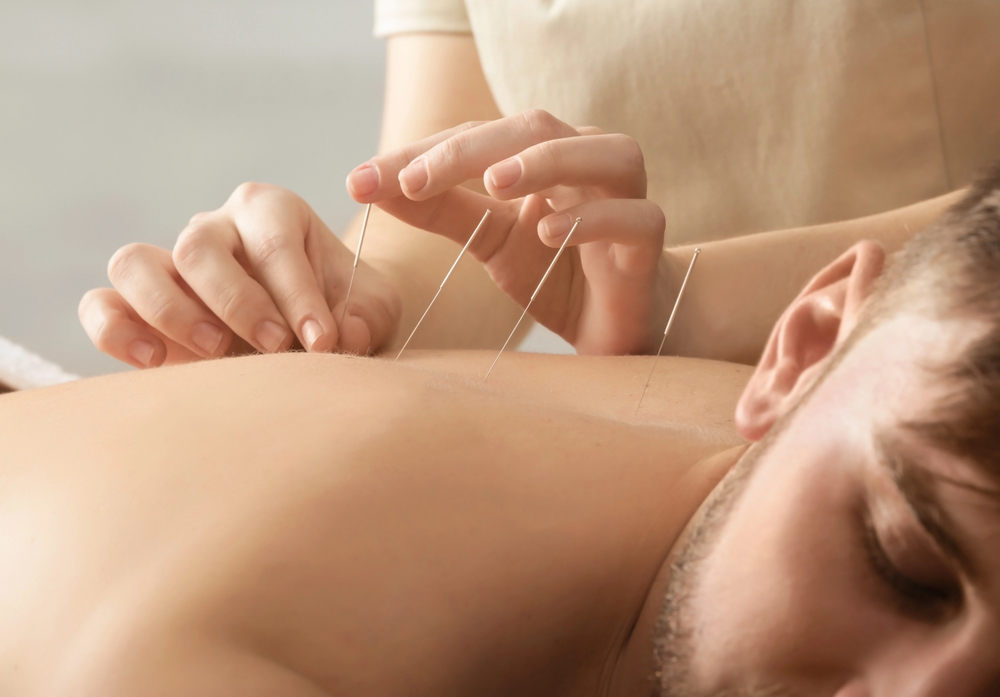
Acupuncture inserts very fine, sterile, single-use needles into specific points on the body. In traditional terms, this moves Qi and blood along meridian pathways; in modern research terms, it stimulates nerves and tissue and modulates pain signaling. Sessions are restful: after insertion, patients typically lie quietly for 20 to 30 minutes. Acupuncture rarely leaves marks, has the stronger research base of the two (particularly for chronic pain and headaches), and covers a wider range of indications, from musculoskeletal pain to stress-related tension. See our acupuncture services for how we practice.
Side-by-Side Comparison
Method
- Cupping: Suction cups on the skin surface
- Acupuncture: Fine needles at specific points
Primary target
- Cupping: Surface muscle tension, fascia, local circulation
- Acupuncture: Pain signaling, broader symptom patterns
Sensation
- Cupping: Strong pulling or stretching, then settles
- Acupuncture: Minimal; most patients relax deeply
Marks
- Cupping: Circular marks, 3 to 10 days
- Acupuncture: Rarely any; occasional minor bruise
Session feel
- Cupping: Active and physical
- Acupuncture: Quiet and restful
Evidence base
- Cupping: Low to moderate quality; short-term musculoskeletal pain signal
- Acupuncture: Stronger; chronic pain, headaches, some other indications
Best for
- Cupping: Localized back, neck, and shoulder tightness
- Acupuncture: Wider: pain, headaches, stress-related symptoms
Which Should You Choose?
Consider cupping first if your main complaint is localized muscular tightness: the classic “knots between the shoulder blades,” a stiff upper back from desk work, or post-workout soreness in large muscle groups. If you are uneasy about needles but want a physical treatment, sliding cupping is a gentle entry point.
Consider acupuncture first if your problem is broader: radiating pain, headaches, jaw tension, stress-related symptoms, or a condition where you want the stronger evidence base. If visible marks would be a problem for an upcoming event, acupuncture is the obvious choice.
Consider both if you have the classic combination: a painful condition with significant muscular guarding around it. A common pattern in our clinic is acupuncture for the overall pain picture plus cupping for the stubborn muscular tension around it. There is no rule requiring you to pick one forever.
What the Research Actually Shows
Acupuncture’s evidence base is the deeper of the two. A landmark individual-patient meta-analysis (Vickers et al., 2012) found acupuncture superior to sham and no-acupuncture controls for chronic back and neck pain, osteoarthritis, and chronic headache. For cupping, a 2020 systematic review of dry cupping for musculoskeletal pain (Moura et al., 21 trials) found pain reductions for chronic neck and low-back pain but rated the evidence low to moderate quality, and a 2022 review (Bridgett et al.) reached similar measured conclusions.
In practical terms: acupuncture has stronger evidence across more conditions, while cupping has a plausible but less certain signal for localized musculoskeletal pain. Both have favorable safety profiles in trained hands with proper screening.
Your First Visit: What to Expect at Messina
Step 1: Assessment, Not Assumption
We evaluate your problem before recommending either therapy. Sometimes the answer is clearly one; often it is a combination; occasionally it is neither, and we tell you that too. Meet our team.
Step 2: A Combined Plan When It Fits
When both suit your presentation, we may include cupping and acupuncture in the same visit or alternate them across visits, explaining the reasoning for each.
Step 3: Reassess Honestly
We track whether each component is earning its place. If cupping is not adding anything beyond acupuncture, we drop it. Your plan should contain only what works.
Both therapies need screening. Tell us about blood thinners, bleeding disorders, skin conditions, pregnancy, recent surgery, and implanted devices before treatment. Cupping is avoided over broken or infected skin. Neither therapy replaces medical evaluation for undiagnosed pain: fever with pain, unexplained weight loss, neurological symptoms, chest symptoms, or pain after trauma all need a physician first.
Licensed, Regulated Care in New York. Acupuncture in New York State is a licensed profession overseen by the New York State Education Department, and cupping performed by a licensed acupuncturist falls within that regulated scope. Messina Acupuncture’s practitioners are New York State licensed acupuncturists (L.Ac.) using sterile single-use needles and documented safety and hygiene protocols for both modalities.
Frequently Asked Questions
What is the main difference between cupping and acupuncture?
Cupping uses suction on the skin to address surface muscle tension and typically leaves temporary marks. Acupuncture uses fine needles at specific points, rarely marks the skin, and has a broader range of applications with a stronger evidence base.
Which is better for back pain?
It depends on the back pain. Localized muscular tightness often responds well to cupping; broader or radiating pain patterns usually point toward acupuncture. Many patients benefit from both combined. An assessment determines the fit.
Can I get cupping and acupuncture in the same visit?
Yes, when both suit your presentation. A common pattern is acupuncture for the overall pain picture plus cupping for stubborn muscular tension. We explain the reasoning so you know what each part is doing.
Does cupping hurt more than acupuncture?
They feel completely different. Cupping is a strong pulling sensation that most people find intense but not painful. Acupuncture is usually barely felt. Neither should be unbearable; tell your practitioner immediately if anything feels wrong.
I have an event coming up. Which should I choose?
Acupuncture. Cupping marks typically last 3 to 10 days and are visible. If you want cupping before an event, schedule it at least 10 days ahead.
How do I decide without guessing?
Book an assessment and let us recommend based on your presentation. A good clinic will explain why it suggests one, the other, or both, and will tell you if neither looks like the right fit. Call (631) 403-0504 to schedule.
Not Sure Which Therapy Fits Your Pain?
Start with an assessment. We will evaluate your problem and recommend cupping, acupuncture, or a combination, with a clear explanation of why.
Messina Acupuncture PC
100 N Country Road, East Setauket, NY 11733
Sources and Further Reading
- Vickers AJ, et al. Acupuncture for chronic pain: individual patient data meta-analysis. Archives of Internal Medicine, 2012. PubMed 22965186
- Moura CC, et al. Dry cupping therapy decreases pain in patients with musculoskeletal disorders: systematic review. Journal of Acupuncture and Meridian Studies, 2020. PubMed 33218554
- Bridgett R, et al. Effects of cupping therapy in amateur and professional athletes: systematic review. BMJ Open Sport and Exercise Medicine, 2022. PubMed 35848010