
Seasonal Allergies & Sinus Pressure in Setauket
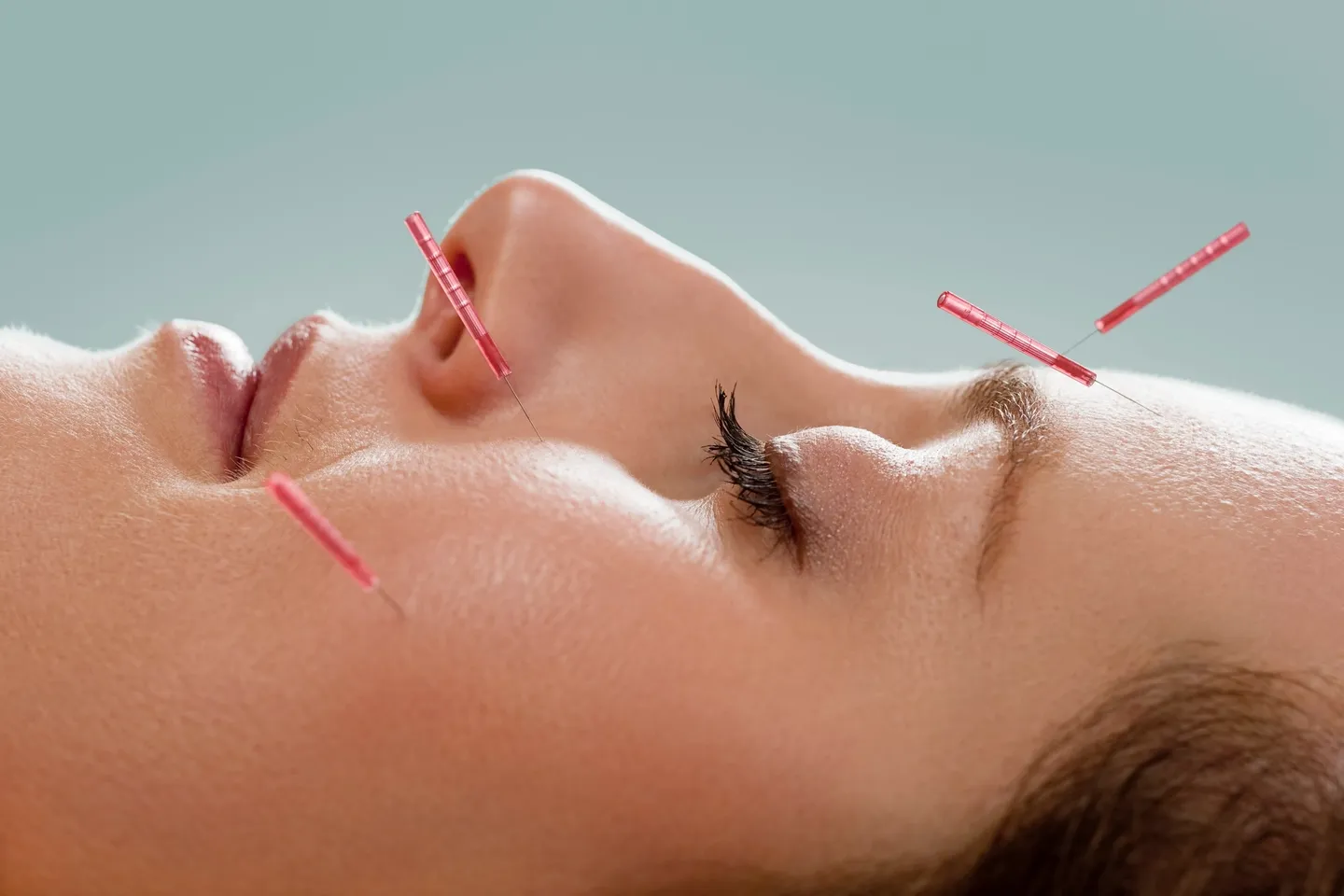
Late summer and early fall can bring a familiar combination of stuffiness, sneezing, facial pressure, watery eyes, and headaches for people sensitive to ragweed pollen. Acupuncture will not remove ragweed from the air or cure an allergy, but research suggests it may help some people manage symptoms of allergic rhinitis as part of a broader allergy-care plan.
Why Symptoms Often Flare in August and September
Ragweed is one of the major late-summer and fall pollen triggers in the United States. The Asthma and Allergy Foundation of America reports that weed pollen season commonly begins around August, with ragweed often peaking around mid-September and continuing for roughly six to ten weeks or until the first hard frost.
For people with seasonal allergic rhinitis, that exposure can contribute to nasal congestion, sneezing, a runny nose, itchy or watery eyes, and sinus pressure. That timing makes August and September a common period for patients around East Setauket, Stony Brook, Port Jefferson, and the wider Three Village area to notice familiar symptoms returning.
What Causes Allergy-Related Sinus Pressure?
Seasonal allergic rhinitis happens when the immune system reacts to an outdoor allergen such as pollen. That response can inflame the lining of the nose and contribute to congestion, stuffiness, runny nose, sneezing, and pressure around the face.
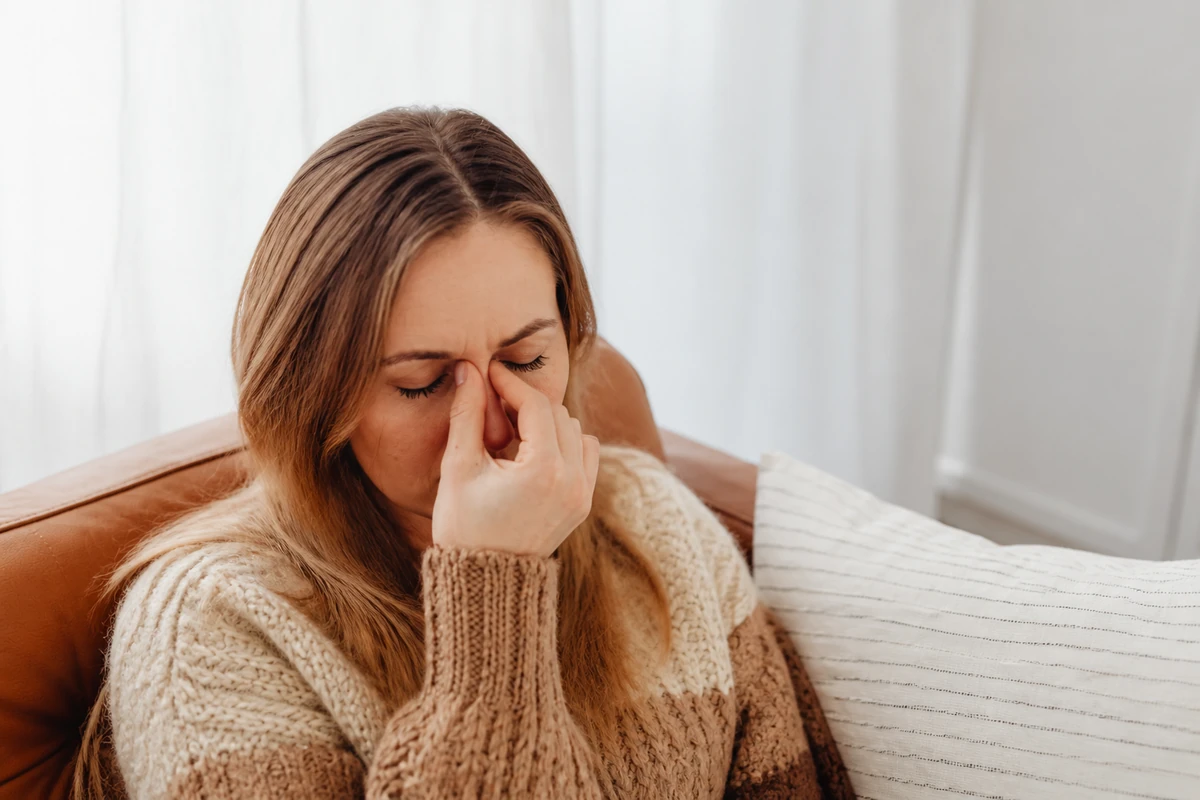
The sensation can feel as though the problem is entirely inside the sinuses, but facial pressure can overlap with several different patterns. Nasal congestion may be part of the picture, while jaw clenching, neck tension, tension-type headache, or migraine can add another layer.
- Nasal congestion: Allergic inflammation can make the nose feel blocked or stuffy.
- Facial pressure: Some people notice fullness or pressure around the forehead, cheeks, nose, or eyes.
- Headache: Facial pressure and headache can occur together, but not every headache during allergy season is actually caused by the sinuses.
- Jaw and neck tension: Clenching, altered sleep, prolonged computer work, and headache patterns can create secondary tension around the jaw, temples, upper neck, and shoulders.
Can Acupuncture Help Seasonal Allergies and Sinus Pressure?
Acupuncture has been studied as a complementary option for allergic rhinitis, also called hay fever. The evidence is not strong enough to describe acupuncture as a cure for seasonal allergies, but there is research suggesting that some patients may experience improvement in nasal symptoms and quality of life.
What the Research Actually Says
The National Center for Complementary and Integrative Health reports that randomized controlled trials suggest acupuncture may improve some symptoms of allergic rhinitis as well as quality of life.
NCCIH also points to clinical guidance stating that clinicians may offer acupuncture, or refer patients for acupuncture, when people with allergic rhinitis are interested in a non-drug option.
That does not mean acupuncture replaces antihistamines, nasal sprays, allergy testing, immunotherapy, or physician-directed allergy care. It is better viewed as one possible complementary tool for people who want additional symptom-management options.
Review NCCIH’s research summary on seasonal allergies and acupuncture
The Traditional and Modern Views of Acupuncture
Traditional Chinese Medicine
In traditional Chinese medicine, acupuncture points are organized along channels and treatment is described in terms of the movement and balance of Qi. Point selection depends on the patient’s overall pattern rather than simply needling wherever pressure is felt.
A Modern Clinical Lens
Modern research looks at acupuncture as a form of sensory stimulation involving nerves, connective tissue, local signaling, and central nervous-system responses. The complete mechanism is not fully understood, and it is more accurate to describe the research this way than to claim that a needle mechanically “drains” the sinuses.
At Messina Acupuncture PC, care bridges those two frameworks without turning either one into a guarantee. Treatment is selected according to the symptoms and physical pattern in front of the practitioner.
Learn more about acupuncture at Messina Acupuncture PC.
Sinus Pressure or Migraine? Why the Difference Matters
One of the most useful things to know about a so-called “sinus headache” is that facial pressure does not automatically mean the sinuses are causing the headache.
Mayo Clinic notes that migraine and sinus-related headaches can be easy to confuse. Migraine itself can include nasal congestion, facial pressure, and a clear watery nasal discharge. This is one reason recurring or severe headaches deserve a proper evaluation rather than being assumed to be seasonal sinus pressure.
Two Patterns That Can Feel Similar
Seasonal sneezing, itchy or watery eyes, clear nasal drainage, congestion, and symptoms that track closely with pollen exposure can point toward allergic rhinitis.
Recurrent headache with light or sound sensitivity, nausea, significant activity limitation, or a recognizable migraine pattern deserves consideration even when congestion or facial pressure is also present.
Patients who regularly experience headaches can also review our acupuncture for headaches and migraines page to better understand the different patterns we evaluate.
Acupressure for Sinus Pressure You Can Try at Home
Acupressure uses sustained manual pressure rather than needles. It does not cure allergic rhinitis or a sinus infection, but gentle self-acupressure can be a simple comfort tool when your face feels tense or congested.
Use comfortable pressure rather than forcing a tender area. Stop if pressure causes pain, dizziness, numbness, worsening symptoms, or significant discomfort.
Beside the Nose
Place a fingertip beside each nostril in the small groove where the nose meets the cheek. Use gentle, steady pressure for roughly 20 to 30 seconds, then release.
Between the Eyebrows
Place one fingertip between the eyebrows just above the bridge of the nose. Apply light, comfortable pressure for approximately 30 seconds while breathing slowly.
Temple Area
Use very gentle circular pressure at the temples. This does not treat an allergy, but some people find the technique soothing when facial pressure overlaps with temple or jaw tension.
Messina Acupuncture has a separate step-by-step guide with additional points and instructions: see the acupressure points for sinus pressure guide .
You can also learn more about professional acupressure treatment at the East Setauket office.
Another Evidence-Based Option: Saline Nasal Irrigation
NCCIH notes that saline nasal irrigation can be useful as an addition to conventional treatment for allergic rhinitis. If you use a neti pot, squeeze bottle, or another nasal-irrigation device, water safety matters.
The FDA recommends using only distilled, sterile, or previously boiled and cooled water for nasal irrigation. Untreated tap water should not be used for a sinus rinse.
What to Expect at an Acupuncture Visit
If seasonal symptoms and facial pressure are part of the reason you contact Messina Acupuncture, the first step is understanding the whole pattern rather than assuming every symptom comes from an allergy.
Review the Pattern
The practitioner may ask when symptoms started, whether they recur seasonally, what seems to trigger them, what medications or allergy treatments you already use, and whether you have been evaluated by an allergist or physician.
Look Beyond the Nose
If headaches, jaw tension, neck stiffness, or shoulder guarding accompany the facial pressure, those areas can be assessed rather than assuming congestion explains everything.
Choose Points for the Pattern
If acupuncture is appropriate, a treatment may use a combination of local and distal acupuncture points selected for the individual presentation.
Track What Actually Changes
The useful question is not whether acupuncture is supposed to work for everyone. It is whether your symptoms, function, headache pattern, or tension meaningfully change and whether continued care makes sense.

When Sinus Symptoms Need Medical Care First
Acupuncture should not delay medical evaluation when symptoms suggest an infection, complication, or another condition requiring conventional medical treatment.
Get Medical Advice if Symptoms Are Severe or Not Improving
The CDC recommends medical evaluation for severe symptoms such as a severe headache or facial pain, symptoms that worsen after initially improving, symptoms lasting more than 10 days without getting better, fever lasting longer than three to four days, or repeated sinus infections.
Seek urgent or emergency medical care for symptoms such as a sudden unusually severe headache, confusion, fainting, significant vision changes, weakness, numbness, difficulty speaking or walking, seizure, severe difficulty breathing, or another rapidly developing neurological or respiratory symptom.
Care at Messina Acupuncture PC is led by Daniel Messina, MSOM, L.Ac., a New York State Licensed Acupuncturist and NCCAOM Board-Certified Diplomate. The practice has served East Setauket and Long Island’s North Shore since 2016.
Messina Acupuncture PC
100 N Country Road, East Setauket, NY 11733
(631) 403-0504
Frequently Asked Questions
Can acupuncture help seasonal allergies?
Some research suggests acupuncture may improve certain symptoms of allergic rhinitis and quality of life for some patients. It should be viewed as a complementary option rather than a cure or replacement for physician-directed allergy treatment.
Can acupuncture help sinus pressure?
Facial pressure can occur alongside allergic rhinitis, congestion, headache, migraine, jaw tension, and neck tension. Acupuncture may be considered as part of symptom management, but persistent or severe sinus symptoms should be medically evaluated rather than assumed to be an allergy.
How many acupuncture sessions are needed for seasonal allergies?
There is no evidence-based visit number that applies to everyone. Frequency should depend on the severity and duration of symptoms, other treatment being used, and whether there is meaningful improvement after care begins.
Does acupuncture around the face hurt?
Sensation varies by patient and point. Acupuncture needles are very fine, and patients may notice a brief pinch, heaviness, tingling, warmth, or very little sensation. Tell the practitioner if you are nervous about facial needling so the approach can be adjusted.
Can I use acupressure for sinus pressure at home?
Gentle self-acupressure may be used as a comfort measure between visits. It does not cure seasonal allergies or a sinus infection. Use comfortable pressure and stop if the technique causes pain, dizziness, numbness, or worsening symptoms.
Can a migraine feel like a sinus headache?
Yes. Migraine can include facial pressure, nasal congestion, and a clear watery nasal discharge, which is why migraine and sinus-related headaches can be difficult to distinguish. Recurring or severe headaches should be properly evaluated.
When should I see a doctor for sinus symptoms?
Seek medical advice for severe headache or facial pain, symptoms that worsen after initially improving, symptoms lasting more than 10 days without improvement, prolonged fever, or repeated sinus infections. Severe or rapidly developing neurological or respiratory symptoms require urgent medical attention.
Find Out Whether Acupuncture Fits Your Pattern
If late-summer or fall allergy season brings recurring facial pressure, headaches, jaw tension, or neck guarding, contact Messina Acupuncture PC. We can help you determine whether acupuncture or acupressure may be a reasonable addition to the care you are already using.
Messina Acupuncture PC
100 N Country Road, East Setauket, NY 11733
Sources and Further Reading
- National Center for Complementary and Integrative Health: Seasonal Allergies and Complementary Health Approaches
- Asthma and Allergy Foundation of America: Ragweed Pollen Allergy
- Mayo Clinic: Sinus Headaches, Symptoms and Causes
- Centers for Disease Control and Prevention: Sinus Infection Basics
- U.S. Food and Drug Administration: Safe Nasal Irrigation