

Acupressure · Sinus Relief · East Setauket, NY
When your nose feels blocked and your head feels heavy, a few minutes of targeted acupressure may help you feel clearer. At Messina Acupuncture in East Setauket, we teach patients these ten points for sinus pressure. Each one includes simple how-to instructions, plus honest guidance on when congestion needs a clinician instead of self-care.
Allergy season on Long Island does not negotiate. The pollen counts climb, the sinuses swell shut, and suddenly you are breathing through your mouth at your desk and waking up with a headache behind your eyes. Our patients ask for something they can do at home between visits, and this ten-point routine is the answer we give most often.
At Messina Acupuncture in East Setauket, acupressure is part of how we treat sinus and facial complaints. Use firm but comfortable pressure with the pads of your fingers, 30 to 60 seconds per point, in small circles or with steady pressure, breathing slowly through your nose. If sinus pressure is also causing tooth or jaw pain, see our companion guide on sinus pressure points for tooth and jaw pain.
- What acupressure may do: ease the sensation of congestion and facial pressure for some people; it does not cure sinus infection or shrink swollen tissue on demand
- The ten points: LI20, GV26, Yintang, GV23, ST2, Taiyang, LI4, GV20, ST6, and GB20, each with a specific location and use below
- Technique matters: gentle but firm pressure for 30 to 60 seconds per point, both sides where applicable, once or twice daily
- Pregnancy caution: LI4 is traditionally contraindicated during pregnancy; skip it and consult your practitioner
- When to see a doctor: fever, severe pain, symptoms beyond ten days, or any vision changes need medical evaluation, not more pressure
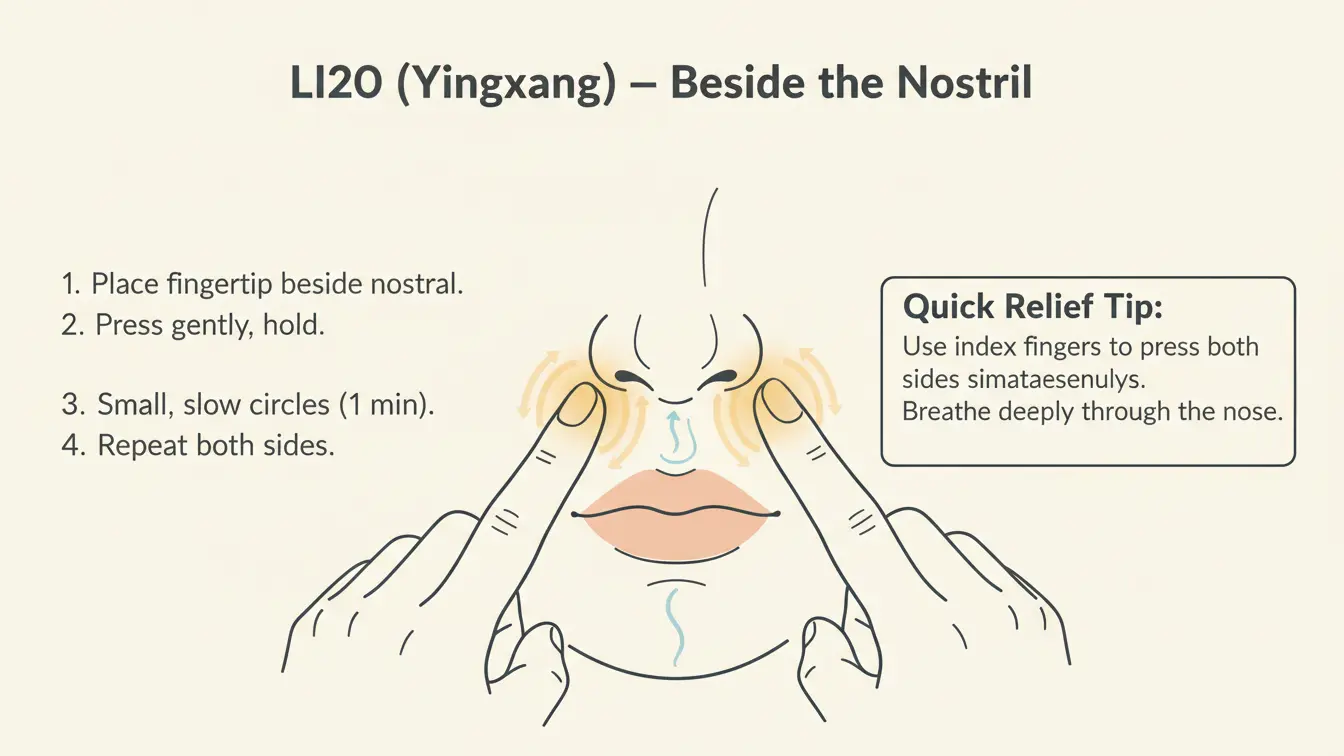
LI20 (Yingxiang): Open the Nasal Passages
LI20 sits in the grooves where the nostrils meet the cheeks. It is the best-known point for nasal congestion: press both sides while taking slow, deep breaths through your nose, and many people feel the passages begin to open within a minute. If you learn only one point from this list, make it this one.
GV26: Relieve Nasal Congestion
GV26 is located just below the nose, in the philtrum above the upper lip. It is traditionally used for nasal congestion and a diminished sense of smell. Use a single fingertip with gentle upward pressure for 30 seconds.
Yintang: Calm Sinus Pressure Between the Eyes
Yintang sits midway between the eyebrows, where a third eye would be drawn. It is used for frontal headache and the pressure that builds behind the bridge of the nose. Slow circular pressure here is calming as well as decongesting, which makes it a good point before bed.
GV23: Address Forehead Congestion
GV23 is found on the midline of the forehead, about an inch above the hairline. It is used for nasal congestion with frontal headache. Light pressure is enough here; the forehead is sensitive, so let comfort guide you.
ST2: Ease Pressure Under the Eyes
ST2 lies directly below the pupil, on the ridge of the cheekbone under the eye. It targets the infraorbital region where sinus pressure pools. Press gently upward against the bone for 30 seconds per side, keeping pressure light near the eye.
Taiyang: Relieve Temple Pressure
Taiyang is in the soft depression at the temples, about a finger’s width behind the outer corner of the eye. It is used for temporal headache and the side-of-head pressure that accompanies sinus congestion. Small circles with the fingertips work well here.
LI4: A Whole-Body Point for Head Pressure (Pregnancy Caution)
LI4 sits in the web between the thumb and index finger, at the highest point of the muscle when they are pressed together. It is one of the most studied acupressure points and is traditionally used for head and face complaints. Important: LI4 is contraindicated during pregnancy in traditional practice, so skip this point if you are pregnant and mention it to your practitioner.
GV20: Lift the Heavy-Head Feeling
GV20 is at the very crown of the head, on the midline. It is used for the heavy, foggy head sensation that comes with congestion, as well as dizziness. Tap or press gently with a fingertip for 30 to 60 seconds.
ST6: Relax Jaw Tension From Clenching
ST6 sits on the masseter muscle, about a finger’s width in front of the earlobe and below the cheekbone; you can feel the muscle bulge when you clench. Congestion leads to mouth breathing and clenching, so releasing ST6 addresses the jaw ache that often travels with sinus pressure.
GB20: Release the Neck Tension Behind It All
GB20 is in the hollows at the base of the skull, on either side of the neck muscles. Sinus headaches recruit the neck muscles, and tight neck muscles worsen head pressure. Sustained gentle pressure here, with the head tilted slightly forward, can ease the whole pattern.
How Often to Use These Points
Once or twice daily during allergy season or a cold is a reasonable routine, taking about five minutes. You can also use individual points as needed: LI20 when the nose blocks, Yintang before sleep, GB20 when the neck tightens. Stop any point that causes sharp pain or bruising, and keep pressure moderate; more force does not mean more relief.
What to Expect at Messina Acupuncture
A sinus history
We review your congestion pattern, allergy history, and what you have already tried, so treatment targets your specific triggers.
In-office treatment and point teaching
Sessions combine acupuncture and acupressure for sinus and facial pressure, and we make sure you can locate each home point confidently before you leave.
A seasonal plan
For allergy-driven congestion, we time treatment around your worst seasons and adjust the home routine as your symptoms change.
Frequently Asked Questions
How often should I do acupressure for sinus pressure?
Once or twice daily during allergy season or a cold is a reasonable routine, taking about five minutes. Individual points can also be used as needed when congestion flares.
Will acupressure clear a sinus infection?
No. Acupressure may ease the sensation of pressure, but it does not treat infection. Sinus infections with fever, significant pain, or prolonged symptoms need medical evaluation and appropriate treatment.
Is acupressure safe during pregnancy?
Gentle acupressure is generally considered low risk, but LI4 is traditionally contraindicated in pregnancy, so skip that point. Check with your practitioner and your obstetric provider about what is appropriate for you.
Can children use these points?
Gentle pressure on facial points is generally safe for older children with light touch, but keep sessions very brief and stop if the child is uncomfortable. Ask your practitioner to demonstrate the right pressure first.
What is the difference between acupressure and acupuncture for sinuses?
Acupressure uses finger pressure you can do yourself; acupuncture uses fine needles placed by a licensed practitioner for deeper stimulation. Many patients combine office acupuncture with the home acupressure routine.
How quickly might I feel a difference?
Some people notice LI20 opening the nasal passages within a minute or two. Broader pressure relief usually builds with consistent daily use rather than a single session.
Breathe Easier This Allergy Season
If sinus pressure keeps slowing you down, targeted acupressure and acupuncture may help. Book a visit and learn the routine from our East Setauket practitioners.
Messina Acupuncture PC
100 N Country Road, East Setauket, NY 11733