
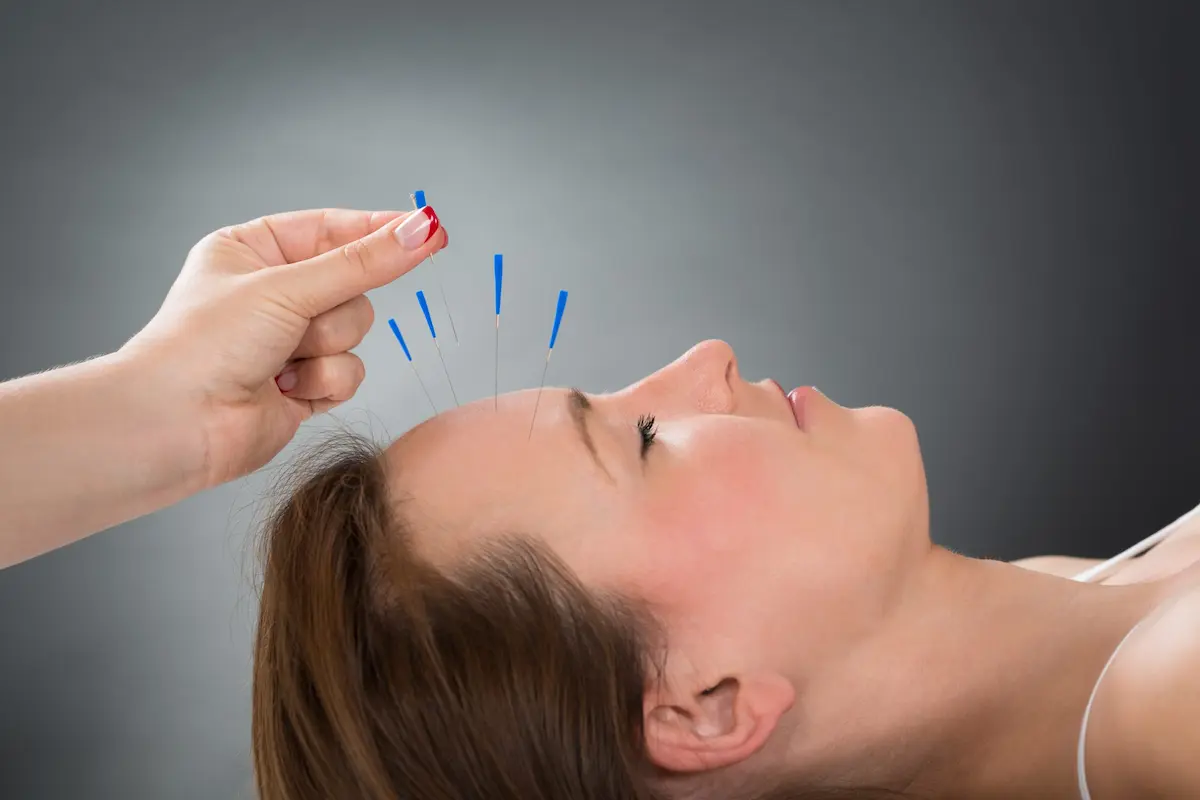
Chronic insomnia affects 10 to 15% of adults, with higher rates among women and adults over 60. Prescription sleep aids can help short-term but carry concerns about dependence and next-day grogginess. This guide reviews what the 2024 and 2025 research says about acupuncture for insomnia, how Traditional Chinese Medicine approaches sleep patterns, and what a realistic course of care looks like in East Setauket.
She was staring at the ceiling by 3 AM again, calculating how many hours of sleep she could still get if she fell asleep right now, which anyone with insomnia knows is exactly what keeps you awake. Sleep pressure was no longer enough. The off-switch between wakefulness and sleep was stuck, and that off-switch is precisely what acupuncture targets through the nervous system.
If that sounds familiar, you are not alone. This guide explains how acupuncture approaches insomnia from both the research side and the Traditional Chinese Medicine side, so you can decide whether it belongs in your sleep plan. At Messina Acupuncture in Setauket, we treat sleep as a measurable outcome, tracked with sleep diaries from the first visit.
Key Takeaways
- The scale: chronic insomnia affects 10 to 15% of U.S. adults. Cognitive behavioral therapy for insomnia (CBT-I) remains the first-line treatment, and acupuncture can complement it or support patients who cannot access it.
- The evidence: a 2025 systematic review found acupuncture improved subjective sleep scores, including the Pittsburgh Sleep Quality Index and Insomnia Severity Index, in adults with chronic insomnia.
- Dosing matters: a 2025 dose-response review found treatments given at least 3 times per week over 3 to 4 weeks, or at least 12 sessions total, produced the strongest effects.
- TCM patterns: practitioners classify insomnia into patterns like difficulty falling asleep, frequent waking, vivid dreams, or anxious racing mind, and select points accordingly. Yin Tang, HT7, SP6, and GV20 are commonly used.
- Sleep hygiene: consistent wake times, morning light, and a screen-free wind-down matter. Acupuncture works best alongside, not instead of, these habits.
How Acupuncture Affects Sleep, Physiologically
Acupuncture influences sleep through overlapping pathways. It may support melatonin secretion, dampen excessive sympathetic (fight-or-flight) activity, and shift the nervous system toward parasympathetic (rest-and-digest) dominance. Some trials also show reduced inflammation markers and more balanced cortical activity. One practical clinical observation: patients often report that sessions feel deeply restful, and several studies note participants feel sleepier in the evening after daytime treatments. That said, objective sleep study findings have been less consistent than subjective sleep scores, an honest limit of the current evidence.
TCM Pattern Diagnosis: Not All Insomnia Is the Same
Within Traditional Chinese Medicine, the reason sleep patterns guide treatment is that point selection follows the pattern. Difficulty falling asleep with a racing mind is treated differently from waking frequently at 3 or 4 AM, from shallow sleep with vivid dreams, or from difficulty falling back asleep with palpitations or anxiety. Commonly used points include Yin Tang between the eyebrows for calming, HT7 (Shenmen) for the racing mind, SP6 for sleep support, and GV20 at the crown of the head for regulation. Your practitioner maps your specific pattern at intake.
What a Course of Care Looks Like
A realistic plan mirrors what the dose-response research suggests: at least 3 sessions per week over 3 to 4 weeks, or at least 12 sessions total, for the strongest effects. Some patients notice changes in 2 to 4 sessions; more typically, sleep onset latency and nighttime awakenings begin improving by weeks 3 to 4. We reassess at week 6 with your sleep diary. Many patients then taper to monthly maintenance. Track your own sleep with a diary or wearable from the start, so improvement is something we measure rather than guess at.
Sleep Hygiene: The Foundation Acupuncture Builds On
Acupuncture works best alongside consistent habits: keep the same wake time daily (more important than bedtime), get bright light within an hour of waking, and create a 30 to 60 minute screen-free wind-down. Avoid caffeine after noon, limit alcohol within 3 hours of bed, and reserve the bed for sleep. Self-administered acupressure on points like HT7 and Yin Tang can support a bedtime routine.
A Note on Other Approaches
CBT-I remains the first-line treatment for chronic insomnia and is worth pursuing alongside or before acupuncture. Prescription and over-the-counter sleep aids, from melatonin to hypnotics, carry different side-effect profiles; acupuncture has a favorable safety profile in comparison but should never be positioned as a replacement you switch to on your own. Any changes to sleep medication need your prescribing physician involved.
Evidence Note: improved subjective sleep scores, less certain objective findings
A 2025 systematic review and meta-analysis of acupuncture for chronic insomnia (Yu et al., Frontiers in Neurology) found that acupuncture improved subjective sleep quality scores, including the Pittsburgh Sleep Quality Index (PSQI) and the Insomnia Severity Index (ISI), relative to controls. Objective sleep measures, such as polysomnography findings, were less consistently improved, which is an honest limitation to know. A separate 2025 dose-effect review (Frontiers in Psychiatry) suggested optimal dosing of at least 3 sessions per week for 3 to 4 weeks, or at least 12 sessions total, though it noted more large high-quality trials are needed.
Your First Visits, Step by Step
Assessment and first treatment (60 to 75 minutes)
We review your sleep history, pattern of insomnia (falling asleep, staying asleep, early waking), medications, and screen for sleep apnea, mood disorders, and other contributors. Bring a week of sleep diary entries if you can. Treatment begins the same day.
Follow-up sessions (30 to 45 minutes)
Research suggests at least 3 sessions per week over 3 to 4 weeks, or at least 12 sessions total, for the strongest effects. We track your sleep diary and adjust point selection as the pattern shifts.
After each visit
Many patients feel deeply relaxed and sleepier in the evening after daytime sessions. Keep your consistent wake time, morning light, and wind-down routine. Wearable data and your sleep diary guide our reassessment at week 6.
Why Choose Licensed Care
Licensed and coordinated care. Before booking acupuncture anywhere, confirm three things: the practitioner is licensed in New York State, they use sterile single-use needles, and they will communicate with your physician or sleep specialist. Messina Acupuncture meets all three. Any changes to sleep medication need your prescribing physician involved.
Some sleep problems need medical evaluation, not acupuncture. See a physician or sleep specialist for loud snoring with pauses in breathing or daytime sleepiness (possible sleep apnea), restless legs syndrome that resists simple measures, narcolepsy symptoms, or severe depression or mania. If insomnia started with a new medication, chronic pain, or perimenopause, mention it at intake so we can coordinate with your care team.
Frequently Asked Questions
Does acupuncture really help with insomnia?
A 2025 systematic review found acupuncture improved subjective sleep scores, including the PSQI and Insomnia Severity Index, in adults with chronic insomnia. Objective sleep-study findings were less consistent. It is a reasonable complement to CBT-I, which remains first-line treatment.
How quickly will I notice changes?
Some patients notice changes in 2 to 4 sessions. More typically, sleep onset latency and nighttime awakenings begin improving by weeks 3 to 4, with reassessment at week 6 using your sleep diary.
Is acupuncture safe if I take sleep medication?
Acupuncture is generally complementary to prescribed sleep aids. Never change or stop a prescription without speaking to your prescriber. Tell your acupuncturist about every medication at intake.
What is the difference between acupuncture and dry needling for insomnia?
Classical acupuncture uses established meridian points to calm the nervous system and support sleep regulation. Dry needling targets myofascial trigger points and is used for muscle-based pain rather than sleep directly. For insomnia we use classical acupuncture approaches.
Does insurance cover acupuncture for insomnia in New York?
Coverage varies by plan and diagnosis. Some commercial plans cover acupuncture for chronic pain but not specifically for sleep disorders. Call our front desk at 631-403-0504 and we will run a benefits check before your first visit.
Can I combine acupuncture with CBT-I?
Yes, and this is often the best combination. CBT-I remains the first-line treatment for chronic insomnia. Acupuncture can support the behavioral work by calming the nervous system and improving subjective sleep quality.
Ready to Stop Negotiating With the Ceiling?
If the off-switch between wakefulness and sleep feels stuck, a structured plan may be what has been missing. We will assess your sleep pattern, track it with a diary from the first visit, and tell you honestly what acupuncture can and cannot do for your specific case. Call to schedule your initial evaluation.
Messina Acupuncture PC
100 N Country Road, East Setauket, NY 11733
Sources and Further Reading
- Yu et al. Acupuncture for chronic insomnia: a systematic review and meta-analysis. Frontiers in Neurology, 2025.
- Dose-effect relationship of acupuncture for insomnia: a systematic review. Frontiers in Psychiatry, 2025.
- National Center for Complementary and Integrative Health: Acupuncture effectiveness and safety.