
Acupressure · Sinus and Facial Pain · East Setauket, NY
A toothache that is not really a toothache is one of the most confusing pains patients describe: the dentist finds healthy teeth, yet the upper teeth and jaw ache anyway. Often the true source is sinus pressure pressing on shared nerves. This guide explains why it happens, which acupressure points may bring relief, and when to see a dentist or ENT instead.
It usually starts after a cold or during Long Island’s allergy season. Several upper teeth ache at once, the cheekbone feels full, and biting into something cold makes it worse. A dentist confirms the teeth are fine, but the pain is real. That is the pattern that sends many Setauket patients looking for a different explanation, and sinus pressure is the most common one we find behind it.
At Messina Acupuncture in East Setauket, we regularly treat sinus-related facial pain with acupressure and acupuncture. The points and routine below are the same ones we teach patients for at-home relief between visits. For a fuller set of points, see our guide to acupressure points for sinus pressure relief.
- Why it happens: the floor of the maxillary sinus sits directly above the roots of the upper molars; inflamed sinuses press on the shared nerve pathways and the brain reads the signal as tooth pain
- Clues it is sinus-related: several upper teeth ache at once, pain worsens when bending forward or lying down, and it arrives with congestion, a cold, or allergy season
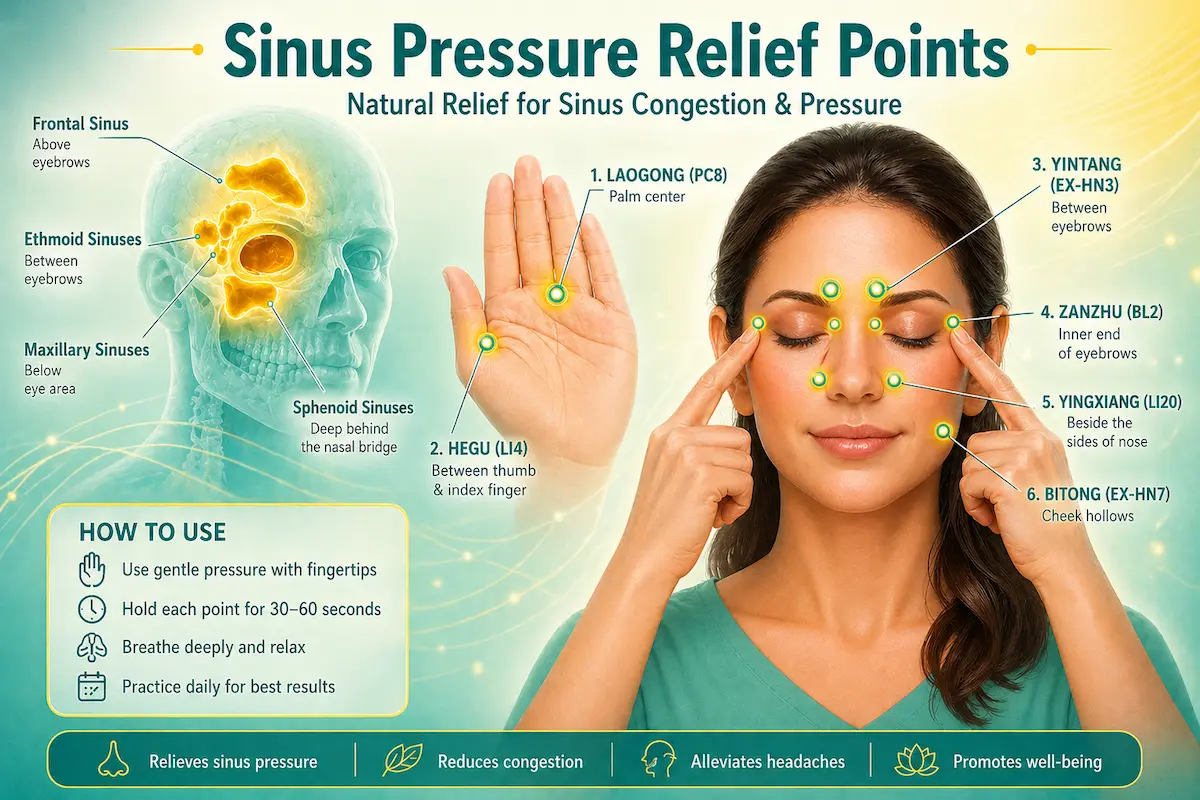
- Key points: LI20 and Bitong beside the nose, GB20 at the base of the skull, ST3 under the cheekbone, and ST7 in front of the ear for jaw tension
- The routine: about five minutes of gentle pressure, twice daily, plus a warm compress, hydration, and saline rinse for support
- Know when to redirect: pain in a single tooth, sensitivity to heat, or swelling in the gums points to a dental problem: see a dentist first
Why Sinus Pressure Causes Tooth and Jaw Pain
The maxillary sinuses, the large air-filled cavities behind your cheekbones, share their floor with the roots of the upper molars. When the sinus lining becomes inflamed from a cold, allergies, or infection, the swollen tissue presses on the nerve endings in that shared floor. Your brain receives the signal through the same trigeminal nerve branches that serve the teeth, and it interprets the pain as coming from the teeth themselves. That is why sinus tooth pain feels so convincingly dental: the wiring really does overlap.
Sinus Pain vs. a Real Dental Problem
Telling the two apart matters, because they need different clinicians. Sinus-related tooth pain usually affects several upper teeth at once, worsens when you bend forward or lie flat, and travels with nasal congestion, facial fullness, or a recent cold. Dental pain more often centers on a single tooth, reacts sharply to hot or cold, hurts when biting down on one spot, and may come with gum swelling or tenderness. If you are unsure, start with your dentist: a quick exam can rule out decay or infection before you pursue the sinus angle.
The Jaw Connection
Sinus pressure and jaw tension feed each other. Congestion forces mouth breathing at night, which dries the mouth and encourages clenching. Clenching irritates the temporomandibular joint (TMJ) and the masseter muscles, and a sore jaw makes the whole face hurt more. This is why sinus facial pain often arrives with a tight jaw in the morning. Relieving the congestion and calming the jaw muscles together breaks the cycle better than addressing either one alone.
Acupressure Points That May Help
Use the pads of your index fingers with firm but comfortable pressure. Press for 30 to 60 seconds per point, in small circles or with steady pressure, breathing slowly. Both sides unless noted.
LI20 (Yingxiang): Open the Nasal Passages
Located in the grooves where the nostrils meet the cheeks, LI20 is the classic point for nasal congestion. Pressing here while taking slow, deep breaths may help the nose feel clearer within a minute or two, which often takes pressure off the upper teeth at the same time.
Bitong: Clear the Nasal Passages
Bitong sits just beside the nostrils, slightly above LI20. It is traditionally used for a stuffy nose and loss of smell, and it pairs naturally with LI20. Alternate between the two points if one feels more tender.
GB20 (Fengchi): Release the Base of the Skull
Found in the hollows at the base of the skull, on either side of the neck muscles, GB20 is used for head and neck tension that accompanies sinus pressure. Gentle sustained pressure here can ease the headache that often travels with sinus-related tooth pain.
ST3: Ease Cheek and Upper-Tooth Pressure
ST3 lies directly below the pupil, on the cheekbone. It sits over the region where sinus pressure collects, and gentle pressure here may ease the deep ache patients feel in the upper teeth and cheeks.
ST7: Relax the Jaw
ST7 is located in front of the ear, in the depression that opens when you open your mouth. Pressing here targets the masseter and TMJ region, helping the jaw tension that so often accompanies sinus facial pain.
A Suggested 5-Minute Routine
- Warm a damp cloth and hold it over your cheeks and nose for one minute.
- Press LI20 and Bitong for 60 seconds while breathing deeply through your nose.
- Press ST3 on both cheekbones for 45 seconds.
- Press ST7 in front of each ear for 45 seconds, letting the jaw hang loose.
- Finish with GB20 at the base of the skull for 60 seconds, head slightly tilted forward.
- Repeat once or twice daily during congestion, or as needed.
Strategies That Support the Points
Acupressure works best alongside simple measures: a warm compress over the sinuses, a saline nasal rinse to thin mucus, steady hydration, and steam from a hot shower. Sleeping with the head slightly elevated can keep pressure from pooling overnight. Avoid aggressive nose blowing, which can push mucus deeper into the sinuses, and try not to press so hard on any point that it causes sharp pain or bruising.
Dentist, ENT, or Acupuncturist: Who First?
Start with your dentist when the pain is in one tooth, when heat or cold triggers it, or when the gums look swollen. See an ENT or your primary care doctor for sinus symptoms that last more than ten days, keep returning, or come with fever. An acupuncturist or acupressure practitioner fits in when the pattern is clearly sinus-related and recurring: we work on the congestion, the facial pressure, and the jaw tension together, and we coordinate with your other clinicians rather than replacing them.
What to Expect at Messina Acupuncture
A careful history
We listen to your full symptom story, review any dental findings, and check whether your pain pattern fits sinus referral, TMJ involvement, or both.
In-office treatment plus teaching
Your session combines acupressure and, where appropriate, acupuncture for sinus and facial tension. We also teach you the at-home routine so relief continues between visits.
A coordinated plan
If your symptoms suggest dental or ENT involvement, we say so plainly and refer you. For recurring sinus-pattern pain, we set a schedule that fits allergy season or your specific triggers.
Frequently Asked Questions
Can a sinus infection really feel like a toothache?
Yes. The maxillary sinuses sit directly above the upper molar roots and share nerve pathways with the teeth. When inflamed sinuses press on those nerves, the brain often interprets the signal as tooth pain, usually across several upper teeth at once.
How long should I try acupressure before seeing someone?
The five-minute routine is reasonable to try for a few days during a cold or allergy flare. If pain persists beyond ten days, worsens, or centers on a single tooth, see your dentist or doctor rather than continuing self-care alone.
Is acupressure safe when I have an active sinus infection?
Gentle acupressure is generally low risk, but an active infection with fever, significant pain, or swelling needs medical evaluation and treatment. Acupressure complements that care; it does not treat the infection itself.
Can these points help TMJ jaw pain too?
Points like ST7 and GB20 address the jaw tension and neck tightness that often accompany sinus pressure. For persistent TMJ pain, clicking, or locking, an in-office assessment helps determine the full picture.
What is the difference between acupressure and acupuncture for this?
Acupressure uses finger pressure you can learn to do at home; acupuncture uses fine needles placed by a licensed practitioner and generally reaches deeper stimulation. Many patients use both: office sessions plus the home routine.
When should I see a dentist instead?
See a dentist first for pain in a single tooth, sharp sensitivity to heat or cold, pain when biting on one spot, gum swelling, or any tooth that looks darker or feels loose. Those patterns point to dental causes that acupressure cannot address.
Tooth Pain With No Dental Cause?
If sinus pressure is masquerading as tooth or jaw pain, targeted acupressure may bring relief. Book a visit and learn the routine from our East Setauket practitioners.
Messina Acupuncture PC
100 N Country Road, East Setauket, NY 11733