
Dry Needling · Sciatica · East Setauket, NY
Sciatica sends pain radiating from the lower back down through the hip and leg, and it can make sitting, driving, or sleeping miserable. Dry needling does not treat the nerve itself. It targets the tight muscles around it, especially the piriformis and deep hip rotators, that can compress or irritate the sciatic nerve. Here are five ways the technique may help, what the research actually shows, and when sciatica needs a physician instead.
She teaches fourth grade in Setauket, which means she is on her feet all day, and for three months a deep ache has run from her right buttock down the back of her thigh. Sitting through a staff meeting is the worst part. Her primary care doctor called it sciatica, told her to stay active, and suggested physical therapy. A friend who golfs at Mill Pond mentioned dry needling, and she is wondering whether a few thin needles could really change anything.
We hear versions of this story every week at Messina Acupuncture. When sciatica is driven by muscle tension rather than a disc problem, releasing those muscles can make a real difference. Here is an honest look at five ways dry needling may help.
- 1. Pain relief, sometimes quickly: needling may trigger the release of endorphins and interrupt pain signaling, and some patients feel meaningful relief within a few sessions.
- 2. Less tension on the nerve: the local twitch response helps release taut muscle bands pressing near the sciatic nerve, especially the piriformis.
- 3. Restored mobility: looser hip and low back muscles improve range of motion for walking, bending, and returning to exercise.
- 4. Better blood flow: increased local circulation brings oxygen and nutrients to irritated tissue, supporting recovery.
- 5. A conservative option: a non-drug approach some patients explore before considering injections or surgery, with honest limits.
How Dry Needling Works for Sciatica
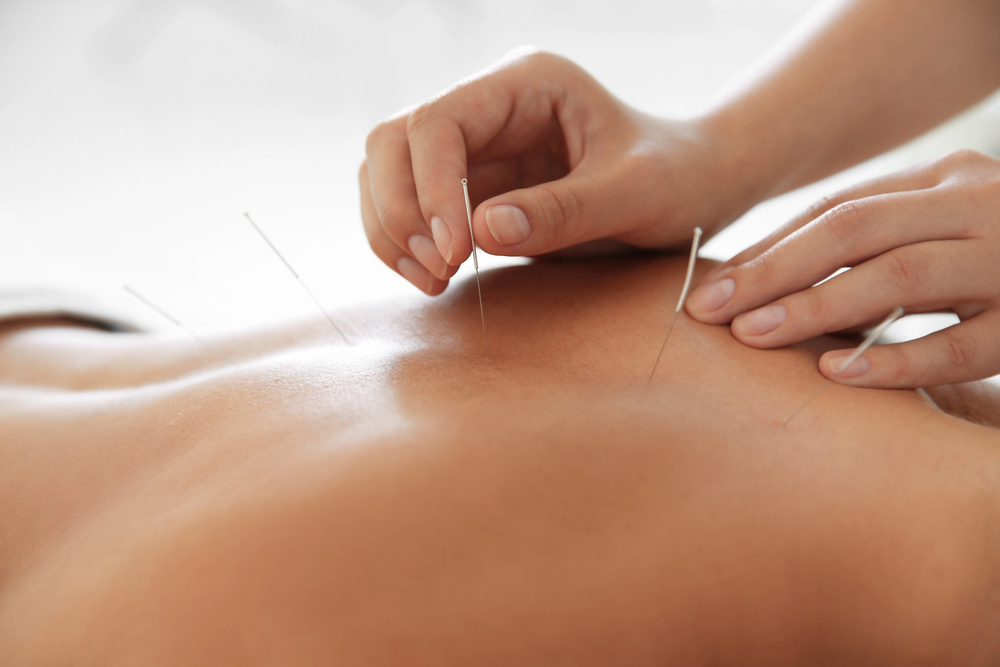
Dry needling involves placing thin, sterile, single-use needles into specific areas of tension within the muscles. For sciatica, the targets are usually the trigger points in the muscles that surround the sciatic nerve: the piriformis, gluteus medius and minimus, and the deep hip rotators. When these muscles stay locked in spasm, they can compress the nerve or keep the surrounding tissue inflamed, which amplifies pain.
The needle itself is the treatment. Its precise placement stimulates the muscle fiber, often producing a brief involuntary twitch, which practitioners take as a sign the trigger point has released. Nothing is injected, which is why the needles are called “dry.” Learn more in our complete guide to dry needling in Setauket.
Five Ways Dry Needling May Ease Sciatic Nerve Pain
1. Pain relief, sometimes quickly
One of the most immediate effects patients report is pain relief. Needling is thought to stimulate the body’s own pain-modulating chemistry, including endorphins, and to interrupt the pain signals traveling from irritated tissue. For the persistent ache of sciatica, even partial relief after the first few sessions can make daily tasks manageable again.
2. Release of the muscles pressing on the nerve
Muscles near the sciatic nerve can become tight enough to compress it, and the piriformis is the classic culprit. When the needle contacts an active trigger point, the muscle typically gives a brief “twitch” response and then releases. That release reduces the mechanical pressure on the nerve and restores more normal muscle function.
3. Restored mobility
Pain and stiffness narrow everything: shorter walks, avoided stairs, skipped workouts. By reducing muscle tightness around the hip and low back, dry needling can improve flexibility and range of motion, helping patients move more freely and return to normal exercise or physical therapy routines.
4. Better blood flow to irritated tissue
The insertion of needles creates tiny, controlled micro-stimulation in the tissue, which promotes increased local blood flow. That circulation brings oxygen and nutrients to the muscles while helping clear metabolic waste, which supports recovery and may calm inflammation around the nerve.
5. A conservative step before bigger interventions
Many patients prefer to exhaust conservative options before considering injections or surgery. Dry needling, often combined with acupuncture, fits that role: low risk, no medication, and no downtime. It is not a substitute for medical evaluation, and it cannot fix a herniated disc, but for muscle-driven sciatic pain it is a reasonable step to try first.
The evidence: promising for low back pain, limited specifically for sciatica
Honesty first: high-quality trials of dry needling specifically for sciatica are scarce. Most of the evidence comes from studies of chronic low back pain and myofascial trigger points. A 2022 systematic review and meta-analysis of 8 randomized trials (Lara-Palomo et al.) found that dry needling, especially combined with other therapies, reduced pain intensity for chronic low back pain in the short term. A separate meta-analysis of trigger point dry needling for musculoskeletal pain (Gattie et al., 2017) reached a similar conclusion: better than no treatment or sham needling in the short term, roughly comparable to other active treatments. Whether those findings transfer fully to sciatica is still an open question, which is why we describe dry needling as a reasonable option to try, not a guaranteed fix.
What to Expect at Messina Acupuncture
Assessment and first treatment (60 to 75 minutes)
We review your sciatica history, test your movement, and palpate the hip and low back muscles to map active trigger points. If your symptoms suggest a disc issue or nerve compression that needling cannot address, we will tell you and point you toward the right evaluation instead.
Follow-up sessions (30 to 45 minutes)
Most courses run 4 to 6 visits over 2 to 4 weeks. Sessions often pair dry needling with acupuncture and simple movement guidance to keep the released muscles from tightening back up.
After each visit
Mild soreness at the treated sites for 24 to 48 hours is normal, similar to post-workout soreness. Gentle walking, heat, and hydration usually ease it. Many patients notice sitting and walking feel easier within the first few sessions.
Licensed and coordinated care. Before booking dry needling anywhere, confirm three things: the practitioner is licensed in New York State, they use single-use sterile needles, and they will communicate with your physician or physical therapist if needed. Messina Acupuncture meets all three, and we coordinate with your physician, physical therapist, or other providers as needed.
Seek prompt medical evaluation for numbness in the saddle area, new loss of bladder or bowel control, rapidly worsening leg weakness, severe back pain after a trauma or fall, fever alongside back pain, or unexplained weight loss. These can signal conditions that need urgent care, and dry needling should never delay that evaluation.
Frequently Asked Questions
Can dry needling help sciatica?
It may help when muscle tension is driving or amplifying the pain, particularly involving the piriformis and deep hip muscles. Direct trials for sciatica are limited, but studies of low back pain and myofascial pain show short-term benefit. It cannot fix a herniated disc, so proper assessment comes first.
How many dry needling sessions will I need for sciatica?
Many patients notice meaningful change within 2 to 4 sessions. A typical course is 4 to 6 visits over 2 to 4 weeks, depending on how long symptoms have been present and how many muscle groups are involved.
Is dry needling painful?
Needle insertion is usually mild. When the needle contacts an active trigger point you may feel a brief cramp-like twitch, which most patients describe as intense but relieving. Soreness for a day or two afterward is normal.
Is dry needling safe?
When performed by a trained, licensed practitioner using sterile single-use needles, serious adverse events are rare. The most common effects are temporary soreness, minor bruising, or brief fatigue. The National Center for Complementary and Integrative Health notes that needling therapies have a strong safety profile in trained hands.
What should I avoid after dry needling?
For 24 hours, skip intense exercise, heavy lifting, and alcohol. Gentle walking, heat, and hydration help the treated muscles recover. Normal sleep and movement are encouraged.
When should I see a doctor for sciatica instead?
See a physician promptly for saddle-area numbness, bladder or bowel changes, worsening weakness, severe pain after trauma, or fever with back pain. If your symptoms suggest nerve compression that needling cannot address, we will tell you at your assessment and direct you to the right care.
Ready to Loosen Sciatica’s Grip?
If shooting leg pain, a tight piriformis, or a stiff lower back has been running your schedule, dry needling may help calm the muscles around the sciatic nerve. Dr. Daniel Messina will assess your symptoms honestly and tell you whether needling fits your case, or whether you need a physician first.
Messina Acupuncture PC
100 N Country Road, East Setauket, NY 11733
Sources and Further Reading
- Lara-Palomo IC et al. Efficacy of dry needling for chronic low back pain: a systematic review and meta-analysis of randomized controlled trials. Alternative Therapies in Health and Medicine, 2022.
- Gattie E et al. The effectiveness of trigger point dry needling for musculoskeletal conditions by physical therapists: a systematic review and meta-analysis. Journal of Orthopaedic and Sports Physical Therapy, 2017.
- National Center for Complementary and Integrative Health: Acupuncture effectiveness and safety.
- New York State Office of the Professions: Acupuncture consumer information.