
Dry Needling · Migraines · East Setauket, NY
A migraine is a neurological event, not just a headache: light sensitivity, nausea, throbbing pain that steals days. For migraines with a strong neck-muscle component, dry needling targets the trigger points that feed the pain loop. Here is how it works and what the evidence says.
She is a nurse at Stony Brook University Hospital who works 12-hour shifts and gets migraines that start as a rock-hard neck and end with her in a dark room. Triptans help but leave her foggy, and she is looking for something that addresses the neck tension she is sure starts it all.
Neck-driven head pain is one of the patterns we treat most at Messina Acupuncture. Here is the anatomy behind it and an honest look at the research.
- The trigeminal cervical complex (TCC): a brainstem relay that blends sensory input from the face and upper neck. Tight neck muscles can feed head pain through it.
- Key muscles: upper trapezius, sternocleidomastoid, suboccipitals, and temporalis each refer pain in recognizable patterns.
- How needling may help: releasing trigger points may reduce the constant pain input that keeps the system sensitized.
- Evidence: a 2021 review found dry needling improved headache frequency, related disability, and neck mobility in tension-type and cervicogenic headache, but the evidence quality was very low and migraine-specific data are limited.
- Not for every migraine: purely hormonal or vascular patterns may respond better to other approaches, including traditional acupuncture.
Why Your Neck May Be Starting Your Migraine
Many migraine sufferers notice the same sequence: the neck tightens first, then the head pain follows. There is an anatomical reason. The trigeminal cervical complex is a convergence point in the brainstem where sensory fibers from the upper cervical nerves meet fibers from the trigeminal nerve of the face. Pain signals from tight neck muscles pour into this junction and can be perceived as head pain.
When trigger points in the neck keep firing, the TCC stays sensitized. The system starts amplifying normal signals, which is why light, sound, and movement can all feel painful during an episode. Reducing the muscular input is a logical, anatomy-based target.
The Muscles We Assess
- Upper trapezius: the classic stress muscle. Its trigger points refer pain in a question-mark pattern: up the back of the neck, over the ear, and to the temple.
- Sternocleidomastoid (SCM): often called the mimic muscle because its pain can feel like sinus pressure, eye pain, ear symptoms, or dizziness.
- Suboccipitals: the small muscles at the base of the skull. Tight ones create the “vice grip” feeling and can cause pain that wraps over the head to the forehead.
- Temporalis: the temple muscle, frequently involved when jaw clenching or teeth grinding accompany headaches.
During assessment we palpate each of these and ask the key question: does this reproduce your familiar headache? If so, we have found a driver worth treating.
What Happens During a Session
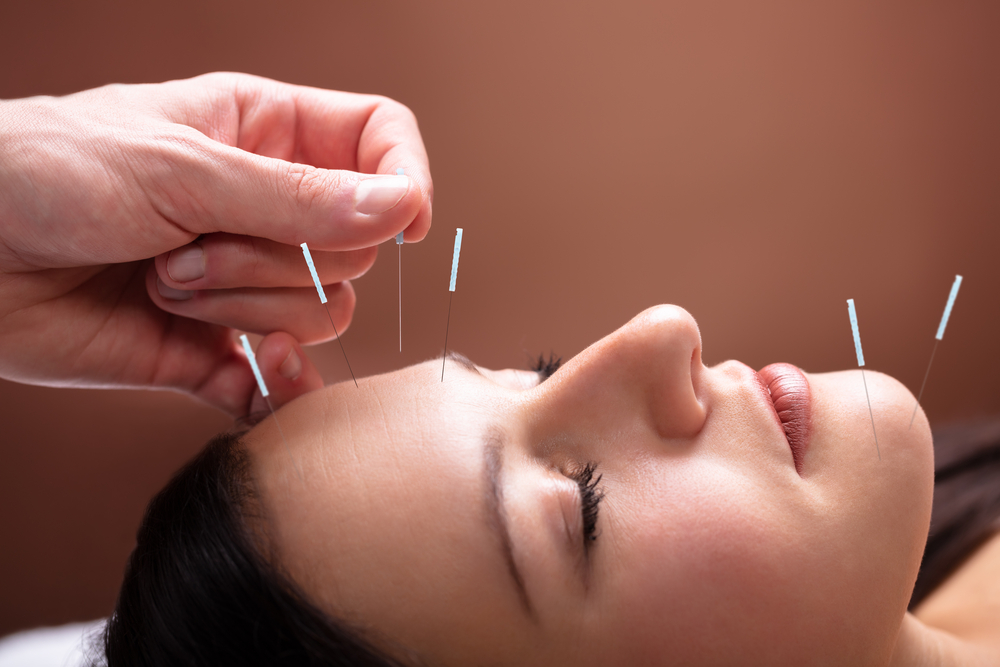
Treatment starts with careful mapping: we press the candidate muscles and confirm which ones reproduce your head pain. Then a thin filament needle is inserted into the active trigger points. Many patients feel an immediate deep ache followed by a release, and some describe their headache easing during the session itself.
After treatment, heat and gentle movement usually help. Some patients pair needling with medical massage for the neck and shoulders to extend the relief.
Who May Benefit Most
The best candidates are people whose headaches have a clear muscular pattern: cervicogenic headaches that start in the neck, tension-type headaches driven by posture and stress, and migraines that are consistently preceded by neck tightness. Chronic migraine sufferers who have not responded fully to medication are also reasonable candidates for a trial of care.
Patterns that are purely hormonal, or that come with no neck involvement at all, may respond better to other approaches. Traditional acupuncture is often the better fit there, and we will tell you so.
The evidence: promising for tension-type and cervicogenic headache; thin for migraine
A 2021 systematic review and meta-analysis of 11 randomized trials (Pourahmadi et al., Physical Therapy) found dry needling improved headache frequency, related disability, trigger point tenderness, and cervical range of motion in tension-type and cervicogenic headache. But the authors graded the evidence as very low quality, and dry needling was not statistically better than other interventions for pain intensity. Direct evidence for migraine specifically is limited: only one mixed trial included migraine patients. Our read: reasonable to try when neck tension clearly drives the pattern; not a migraine cure; medication plans should only change with your prescriber.
What to Expect at Messina Acupuncture
Assessment and first treatment (60 to 75 minutes)
We take a detailed headache history, palpate the neck and head muscles to map your pain pattern, and perform your first dry needling treatment if needling fits.
Follow-up sessions (30 to 45 minutes)
A typical course is 4 to 6 weekly visits. We track headache frequency, intensity, and medication use, and adjust the plan based on your response.
After each visit
Mild neck soreness for a day or so is common. Keep a simple headache diary noting frequency, triggers, and what helped; it is the best tool for judging progress.
Licensed and coordinated care. Before booking needling or acupuncture anywhere, confirm three things: the practitioner is licensed in New York State, they use single-use sterile needles, and they will communicate with your physician or physical therapist if needed. Messina Acupuncture meets all three, and we coordinate with your physician, physical therapist, or other providers as needed.
Seek prompt medical care for the sudden worst headache of your life, new weakness or vision changes, headache after head injury, fever with neck stiffness, a new headache pattern after age 50, or significant changes in aura. Releasing a trigger point can briefly flare a headache; we start gently. Coordinate any medication or Botox changes with your prescriber.
Frequently Asked Questions
Will dry needling trigger a migraine?
Occasionally a brief referral flare occurs when a trigger point releases; it usually settles quickly. We start gently and adjust based on your response.
How many sessions will I need?
Many patients notice neck tension changing after the first session. A typical course is 4 to 6 weekly visits to assess whether headache frequency is reducing.
Can I combine dry needling with Botox treatments?
They work through different mechanisms, and some patients do both. Coordinate timing and any changes with your prescribing physician.
Does it work for all types of migraines?
No. It is most useful when neck tension is a clear driver. Hormonal or purely vascular patterns may respond better to other approaches, including traditional acupuncture.
Is needling around the head and neck safe?
With a licensed, anatomy-trained practitioner using proper technique and depths, serious events are rare. We screen every patient before treating.
What if my migraines are hormonal?
We may recommend traditional acupuncture and coordination with your physician instead of, or alongside, dry needling. The pattern decides the plan.
Stop Letting Migraines Steal Your Days
If your migraines start in a tight neck and end in a dark room, the muscular trigger is worth addressing. Dr. Daniel Messina will map your pain pattern and tell you honestly whether dry needling fits, or whether another approach makes more sense.
Messina Acupuncture PC
100 N Country Road, East Setauket, NY 11733
Sources and Further Reading
- Pourahmadi M et al. Dry needling for the treatment of tension-type, cervicogenic, or migraine headaches: a systematic review and meta-analysis. Physical Therapy, 2021.
- National Center for Complementary and Integrative Health: Acupuncture effectiveness and safety.
- New York State Office of the Professions: Acupuncture consumer information.