

Back-to-School Stress Relief in East Setauket, NY
Late August and September can bring a sharp change in routine across Long Island. School schedules return, work calendars fill up, sports begin, commuting gets busier, and sleep schedules shift. For some people, that added demand coincides with more neck and shoulder tension, jaw clenching, headaches, disrupted sleep, or a general feeling of being physically wound up.
When a Busy Calendar Starts Showing Up in Your Body
Stress is not experienced only as a thought or emotion. The body’s stress response can overlap with muscle tension, sleep disruption, jaw clenching, headache patterns, changes in breathing, and other physical symptoms.
That does not mean every tight shoulder, headache, or poor night’s sleep is caused by stress. At Messina Acupuncture PC, the goal is to look at the whole pattern rather than automatically assigning every symptom to anxiety or the time of year.
Common Physical Patterns During High-Stress Weeks
Parents, teachers, professionals, students, and caregivers can all experience busy seasonal transitions differently. Some of the physical patterns we commonly discuss with patients include:
Muscle Guarding and Tension
Long hours at a computer, driving, carrying bags, reduced movement, and stress-related muscle guarding can overlap around the upper trapezius, shoulders, and base of the skull.
Tension Headache and Migraine Patterns
Changes in sleep, missed meals, workload, muscle tension, and other triggers can coincide with recurring headaches or migraine attacks in susceptible people.
Clenching and TMD/TMJ Tension
Some people notice more daytime clenching or nighttime grinding during demanding periods. Jaw-muscle tension can overlap with temple pain, facial discomfort, neck tension, and headaches.
Difficulty Settling Down
Busy schedules, irregular sleep times, worry, pain, late-night screen use, and changing routines can make it harder to wind down or feel restored in the morning.
Can Acupuncture Help With Stress?
Acupuncture is sometimes used as a complementary approach when stress is accompanied by physical tension, headache patterns, jaw clenching, disrupted sleep, or anxiety-related body symptoms.
It is important to separate patient experience from what research has actually established. Many people report feeling relaxed during or after an acupuncture session, but feeling relaxed during treatment does not prove that acupuncture has corrected an underlying anxiety disorder or permanently changed the body’s stress response.
What Does the Research Say About Acupuncture for Anxiety?
The National Center for Complementary and Integrative Health reports that some studies suggest acupuncture may reduce anxiety symptoms. However, the overall evidence remains limited, and many studies have been small or of low methodological quality.
Current evidence is therefore not strong enough to conclude that acupuncture is an established treatment for anxiety disorders. It is more accurate to consider it a complementary option that some patients may choose alongside appropriate medical or mental-health care.
Review NCCIH’s current guidance on anxiety and complementary care
How Messina Explains the East-West Approach
Traditional Chinese Medicine
Traditional Chinese medicine describes acupuncture using concepts such as Qi and channels. In that framework, Qi refers broadly to functional activity and movement through the body, and treatment aims to address the individual’s overall pattern rather than one isolated symptom.
Modern Clinical Perspective
Modern acupuncture research examines sensory nerve stimulation, pain modulation, connective-tissue responses, brain signaling, and possible effects involving autonomic regulation. These mechanisms remain areas of active research.
It is therefore more accurate to say acupuncture interacts with nervous-system and sensory pathways than to claim that a needle simply “switches on” the parasympathetic nervous system.
At Messina Acupuncture PC, these traditional and modern frameworks are discussed in plain language. The treatment itself is built around the patient’s symptoms, physical findings, history, and response rather than a generic stress protocol.
Learn more about acupuncture at Messina Acupuncture PC .
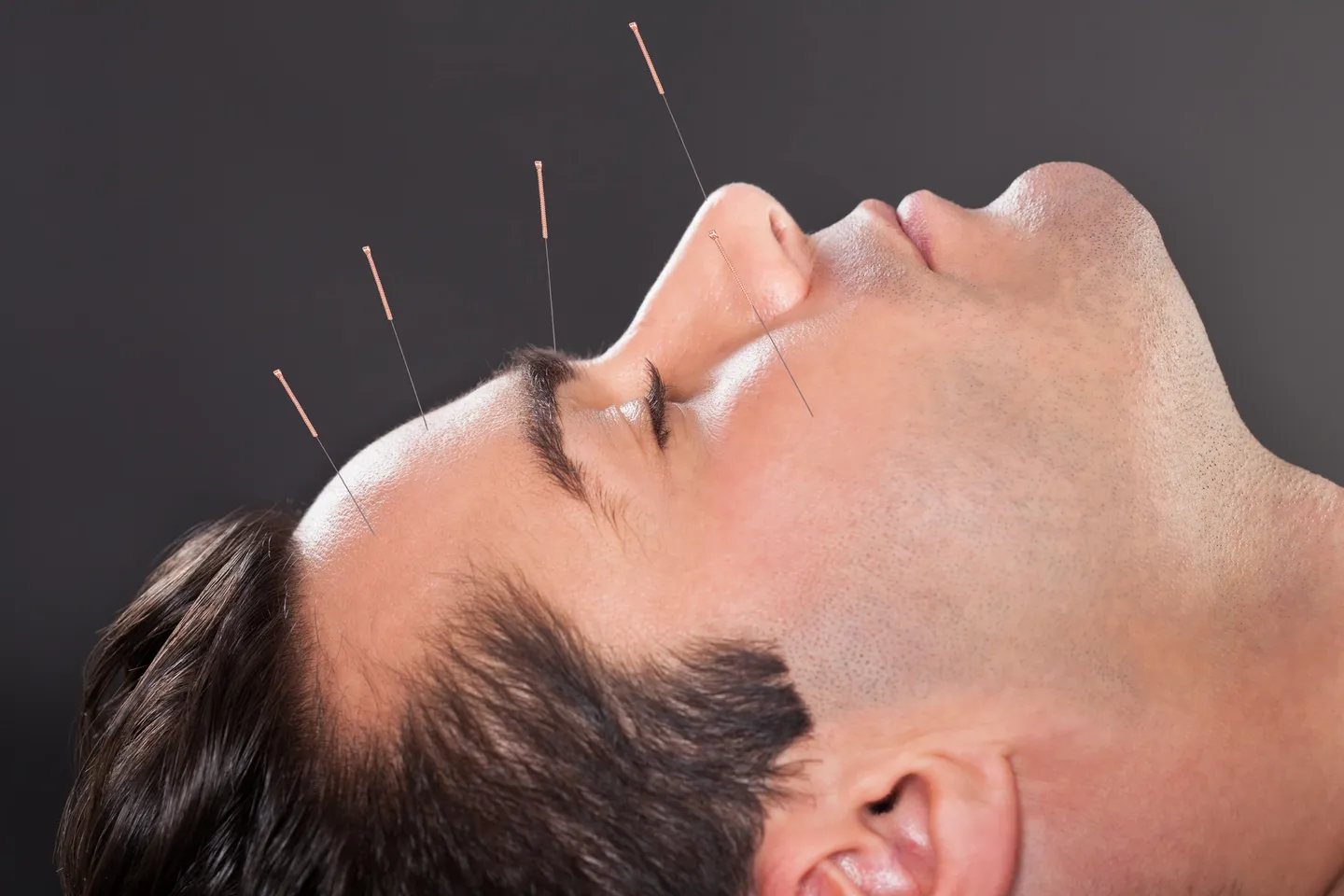
Acupuncture for Migraines and Tension Headaches: What the Evidence Says
This is an area where the evidence for acupuncture is stronger. Acupuncture does not cure migraine or guarantee that headaches will disappear, but research suggests it may be a reasonable non-drug option for some patients with recurring migraine or tension-type headache.
Headache Research at a Glance
NCCIH reports moderate-quality evidence that acupuncture may reduce the frequency of migraine. A major Cochrane review included 22 trials involving 4,985 participants and found evidence supporting acupuncture as an option for migraine prevention.
NCCIH reports moderate-to-low-quality evidence that acupuncture may reduce the frequency of tension-type headaches. Individual response varies, and headache type should be correctly identified before a treatment plan is built.
NCCIH also notes an important limitation: some of acupuncture’s observed benefit in headache studies may involve nonspecific effects such as expectation, treatment context, and placebo responses in addition to effects specific to needling. That uncertainty should be part of an honest discussion of the research.
If recurring headaches are part of your stress pattern, visit our acupuncture for headaches and migraines page for a more detailed look at migraine, tension-type headache, cervicogenic headache, and related neck and jaw patterns.
Some Headaches Need Medical Care First
Call 911 or seek emergency medical care for a sudden, extremely severe headache, particularly if it is unlike your usual headaches, or for a headache accompanied by confusion, fainting, seizures, new weakness or numbness, trouble speaking, significant vision changes, trouble walking, high fever with a stiff neck, or other new neurological symptoms.
A new headache pattern, headaches that are becoming more frequent or severe, or headaches that interfere substantially with daily life should also be discussed with an appropriate healthcare professional.
What About Stress-Related Neck and Jaw Tension?
Stress, posture, jaw clenching, headache patterns, and neck pain frequently overlap. That is one reason an orthopedic assessment can be more useful than treating a patient according to a label such as “stress.”
Look at the Physical Pattern
Range of motion, upper-trapezius guarding, suboccipital tension, posture, trigger points, and pain referral can help determine whether the neck itself is contributing to the symptoms.
Assess Clenching and TMD/TMJ
Jaw clenching or grinding can involve the masseter and temporalis muscles and may overlap with facial pain, temple headaches, neck tension, or restricted jaw movement.
Does Stress Mean You Need Electroacupuncture?
Usually not. Electroacupuncture adds gentle electrical stimulation through selected acupuncture needles, but it is not automatically a stronger or better treatment for stress.
At Messina Acupuncture PC, standard acupuncture is commonly the more appropriate starting point for stress and tension patterns. Electroacupuncture is considered selectively when deeper muscle guarding, persistent trigger-point behavior, nerve-related pain, chronic pain, or another clinical pattern calls for more consistent stimulation.
The treatment tool follows the evaluation. Patients do not need to decide ahead of time that they require electroacupuncture.

Simple Ways to Reduce Physical Tension Between Visits
Acupuncture is only one possible part of a broader stress-management plan. Simple habits between visits can also help reduce the physical load that tends to build during demanding weeks.
Slow Your Breathing
Take a few minutes to breathe slowly and comfortably, allowing the exhale to remain unforced. The goal is not to achieve a perfect breathing count but to interrupt the tendency to breathe rapidly or shallowly during a stressful moment.
Release the Jaw
Notice whether your teeth are touching when you are not chewing. Let the jaw rest comfortably and avoid repeatedly forcing the mouth open or aggressively massaging an irritated joint.
Change Position Regularly
If work or school keeps you at a desk, stand, walk, and change position periodically rather than expecting one “perfect” posture to eliminate every neck or shoulder symptom.
Protect Your Sleep Routine
A consistent sleep and wake schedule, reduced late-night screen exposure, a dark bedroom, and adequate time for sleep can help preserve recovery when schedules become busy.
Try Gentle Yintang Acupressure
Place a fingertip between the eyebrows just above the bridge of the nose and use gentle, comfortable pressure for 20 to 30 seconds while breathing normally. Think of this as a relaxation practice, not a treatment for an anxiety disorder.
Keep Moving
Walking, regular exercise, stretching, and ordinary daily movement can all be valuable during busy periods. Choose activity appropriate for your health and current pain level.
Patients who prefer a needle-free approach can also learn about professional acupressure.
Stress Is Not the Same as an Anxiety Disorder
Situational stress around work, school, family responsibilities, or schedule changes is different from an anxiety disorder. Persistent anxiety that is difficult to control, causes significant distress, triggers panic attacks, or interferes with work, relationships, sleep, or normal daily activities deserves evaluation by an appropriate healthcare or mental-health professional.
Effective conventional treatments for anxiety disorders include psychotherapy and medication when appropriate. Acupuncture should complement that care rather than delay or replace it.
How Many Acupuncture Sessions Will You Need?
There is no responsible way to promise a specific number of visits for stress, headaches, neck tension, or jaw clenching before evaluating the patient.
Acute muscle tension and a long-standing migraine pattern are different problems. So are occasional situational stress and persistent anxiety. Treatment frequency should reflect the actual condition, its duration, examination findings, and whether meaningful improvement occurs.
Establish a Baseline
Identify what you actually want to change: headache frequency, neck range of motion, jaw tension, sleep disruption, pain intensity, or another measurable concern.
Treat the Specific Pattern
Point selection and modality choice are based on the presentation rather than giving every patient the same “stress treatment.”
Reassess
Follow-up visits should ask whether the outcomes that mattered to you actually changed. If the treatment is not producing meaningful progress, the plan should be reconsidered.
A garden can be a useful analogy for ongoing care: some patterns improve with a small amount of attention, while others require more consistent work. But ongoing care should never continue simply because a predetermined package says it should. The response to treatment should guide the plan.
Care at Messina Acupuncture PC is led by Daniel Messina, MSOM, L.Ac., a New York State Licensed Acupuncturist and NCCAOM Board-Certified Diplomate. The practice has served East Setauket and Long Island’s North Shore since 2016 with an orthopedic and musculoskeletal focus.
Messina Acupuncture PC
100 N Country Road, East Setauket, NY 11733
(631) 403-0504
Learn more about acupuncture for stress and anxiety patterns .
Frequently Asked Questions
Can acupuncture help with stress?
Some studies suggest acupuncture may reduce anxiety or stress-related symptoms for some people, but the research is not strong enough to reach definite conclusions about treating anxiety disorders. Acupuncture is better viewed as a complementary option, particularly when stress overlaps with physical tension, headache, jaw clenching, or other body symptoms.
Can acupuncture help migraines?
Research is more established for migraine than for stress. NCCIH reports moderate-quality evidence that acupuncture may reduce migraine frequency. It should be considered one potential part of a migraine-management plan rather than a cure or guaranteed replacement for other appropriate treatment.
Can acupuncture help tension headaches?
NCCIH reports moderate-to-low-quality evidence that acupuncture may reduce the frequency of tension-type headaches. A proper headache history matters because migraine, tension-type headache, cervicogenic headache, TMJ-related pain, and other headache types can overlap.
Can stress cause neck and shoulder tension?
Stress can be one contributor to muscle tension, but posture, workload, sleep, injury, repetitive activity, headache patterns, and other factors may contribute as well. A physical assessment can help determine what is driving a particular neck or shoulder pattern.
Can acupuncture help jaw clenching and TMJ tension?
Acupuncture may be considered when jaw muscle tension, clenching, headaches, and neck tension overlap. Persistent jaw pain, locking, significant changes in bite, dental problems, or other concerning symptoms may also require evaluation by a dentist, physician, or another appropriate provider.
How quickly will acupuncture work for stress?
There is no reliable timeline that applies to everyone. Some patients report feeling relaxed during or after a session, but that does not predict how an anxiety disorder, headache pattern, sleep problem, or chronic muscle-tension condition will respond over time. Progress should be judged by changes in the specific symptoms being tracked.
Is acupuncture safe?
Acupuncture is generally considered safe when performed by a properly trained, licensed practitioner using sterile needles. Minor effects such as temporary soreness or bruising can occur, and serious complications are rare but possible. Tell your practitioner about your health history, pregnancy, medications, bleeding concerns, implanted devices, and other relevant medical conditions before care.
Do I need a referral for acupuncture in New York?
New York does not generally require a physician referral simply to receive care from a licensed acupuncturist. An individual insurance plan may still have referral, authorization, diagnosis, or network requirements for coverage, so benefits should be checked separately.
Start With the Pattern, Not a Generic Protocol
If a busy season is overlapping with neck and shoulder tension, recurring headaches, jaw clenching, or other physical stress patterns, contact Messina Acupuncture PC. We can help you understand what may be contributing and whether acupuncture, acupressure, medical massage, or another care pathway makes sense.
Messina Acupuncture PC
100 N Country Road, East Setauket, NY 11733
Sources and Further Reading
- National Center for Complementary and Integrative Health: Anxiety and Complementary Health Approaches
- National Center for Complementary and Integrative Health: Headaches and Complementary Health Approaches
- Cochrane: Acupuncture for Preventing Migraine Attacks
- American Migraine Foundation: Acupuncture and Migraine
- Mayo Clinic: Headache Warning Signs and First Aid