
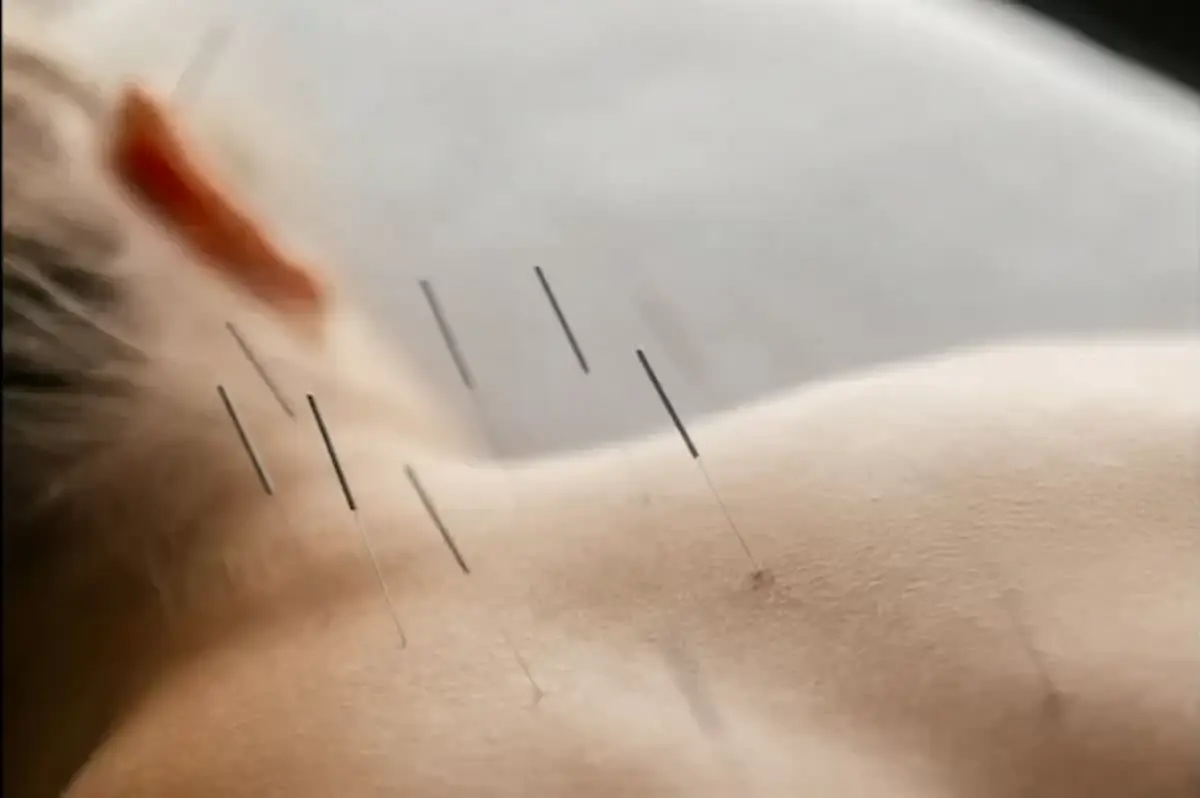
Chronic Pain Care in Setauket, NY
Acupuncture for chronic pain is one of the most studied non-drug treatments in modern medicine, with a landmark analysis of nearly 18,000 patients behind it. This guide explains what the research actually shows, which conditions respond best, and how a course of care works at our East Setauket clinic.
He is fifty-two, works at a desk in Stony Brook, and has had low back pain for four years. Physical therapy helped for a while. Ibuprofen helped until his doctor warned him about his kidneys. He is not a surgery candidate, and he does not want opioids. A colleague at the office told him acupuncture “fixed” her neck, and he is skeptical but out of options. That is roughly where most of our chronic pain patients start: not convinced, just tired of hurting.
We see versions of this story every week at Messina Acupuncture. This article is for Three Village residents living with pain that has lasted months or years, who want an honest, evidence-based account of what acupuncture can and cannot do.
- Landmark analysis: an individual patient data meta-analysis of 29 randomized trials and 17,922 patients found acupuncture superior to both sham acupuncture and usual care for chronic back and neck pain, osteoarthritis, and chronic headache.
- Guidelines: the American College of Physicians recommends acupuncture as an initial non-drug treatment for chronic low back pain.
- Mechanism: research suggests acupuncture stimulates the release of the body’s natural painkillers and affects brain areas involved in processing pain.
- Best-studied conditions: chronic low back pain, neck pain, knee osteoarthritis, tension headaches, and shoulder pain.
- Timeline: a standard course is 8 to 12 sessions over 6 to 10 weeks, with many patients noticing change within the first few visits.
What Chronic Pain Actually Is
Chronic pain is generally defined as pain lasting more than 12 weeks. It is not simply acute pain that overstayed its welcome. In many cases the original injury has healed, but the nervous system remains sensitized, amplifying signals the way a microphone too close to a speaker amplifies sound. Pain researchers call this nociplastic pain, and it explains why imaging can look normal while the person still hurts every day.
This matters because it changes the treatment target. If the problem is partly a sensitized nervous system rather than ongoing tissue damage, then therapies that modulate how the nervous system processes pain, rather than therapies that mask the signal or alter structure, start to make sense. That is the category acupuncture falls into.
The Strongest Evidence: 17,922 Patients
The Vickers meta-analysis: acupuncture beats sham and usual care
The most rigorous synthesis of acupuncture for chronic pain remains the Acupuncture Trialists’ Collaboration analysis (Vickers et al., Archives of Internal Medicine, 2012). Using individual patient data from 29 high-quality randomized trials with 17,922 patients, the researchers found acupuncture superior to both sham acupuncture and no-acupuncture controls for back and neck pain, osteoarthritis, and chronic headache. The difference between real and sham acupuncture was modest, which means some of the benefit comes from the overall package of care, but the total effect was large enough that the authors called acupuncture “a reasonable referral option for patients with chronic pain.”
The ACP guideline: try non-drug treatments first
In its 2017 clinical practice guideline, the American College of Physicians recommended that clinicians and patients with chronic low back pain initially select non-drug treatment, explicitly listing acupuncture among the options, before moving to medications. The guideline noted that non-drug approaches carry fewer harms than pharmacologic ones. That positioning, from the largest general-internal-medicine organization in the United States, is a long way from acupuncture being a fringe therapy.
How Acupuncture Eases Pain
No single mechanism explains everything, but the National Center for Complementary and Integrative Health summarizes the leading account: acupuncture stimulates the release of the body’s natural painkillers, such as endorphins, and affects areas of the brain involved in processing pain. Functional imaging studies have shown changes in pain-processing regions during and after treatment.
There is also a local story. Needling increases blood flow in the treated tissue and appears to quiet hyper-irritable muscle tissue, which is why acupuncture and its close cousin dry needling are often used for myofascial pain. And there is a systemic story: many patients report better sleep and lower stress during a course of treatment, both of which independently reduce pain sensitivity. Chronic pain is rarely one thing, so it makes sense that a treatment working on several levels at once can help.
Conditions That Respond Best
The trial evidence is strongest for the conditions studied in the Vickers analysis, and these match what we treat most often in East Setauket:
- Chronic low back pain: the most studied and the most common reason patients come to us.
- Neck pain: including the desk-work “tech neck” pattern of stiffness, headaches, and limited rotation.
- Knee osteoarthritis: trials show meaningful pain reduction, particularly when combined with exercise.
- Tension headaches and migraine: acupuncture may reduce headache frequency and is recommended in several headache guidelines as a preventive option.
- Shoulder pain: including rotator cuff related pain and the myofascial patterns around the shoulder girdle.
Conditions like fibromyalgia and widespread pain have thinner evidence, and we say so upfront. If your condition is one where the data is limited, we will tell you that during the first visit rather than sell you a course of treatment.
What a Course of Care Looks Like
The first visit (60 to 75 minutes)
Dr. Messina takes a full pain history: when it started, what makes it worse, what you have already tried, and what your goals are. He performs orthopedic and neurological screening tests to rule out anything that needs a physician first. Then comes the first treatment, which most patients find deeply relaxing.
The active phase (2 visits per week, 3 to 4 weeks)
Chronic pain patterns took months or years to develop, so the nervous system needs repeated input to change. Most patients notice the first meaningful shift, less morning stiffness, a longer pain-free window, around visits three to five.
Consolidation and maintenance (weekly, then monthly)
As improvements hold, visits space out. Many patients settle into a maintenance visit every 4 to 6 weeks, particularly those with arthritis or physically demanding jobs.
Some patients combine acupuncture with medical massage in the same office when muscle guarding and soft-tissue restriction are part of the pain picture. Both are available at our East Setauket clinic.
Licensed and coordinated care. Before booking with any acupuncture practice, confirm three things: the practitioner is New York State licensed, they use single-use sterile needles, and they will communicate with your physician when appropriate. Messina Acupuncture meets all three, and we coordinate directly with physicians at Stony Brook Medicine, Northwell, and private practices across the Three Village area.
Acupuncture is for chronic, stable pain, not emergencies. Seek prompt medical evaluation for new severe back pain with leg weakness or numbness, loss of bladder or bowel control, pain after significant trauma, unexplained weight loss with pain, fever with back pain, or pain that is rapidly worsening. If any of these apply, tell us and we will direct you to appropriate care before booking treatment.
Frequently Asked Questions
How many acupuncture sessions will I need for chronic pain?
Most chronic pain patients start with 8 to 12 sessions over 6 to 10 weeks. Improvement often begins around visits three to five, with the full benefit building over the course.
Is there real evidence, or is it just placebo?
Both play a role, and the research is honest about that. The largest analysis, covering nearly 18,000 patients, found acupuncture superior to sham acupuncture, which means there is a specific effect beyond placebo, though the non-specific effects of care contribute meaningfully too.
Can acupuncture help me avoid surgery?
Sometimes. For conditions like chronic low back pain without progressive neurological deficit, a trial of conservative care including acupuncture is what guidelines recommend before surgery is considered. It cannot fix structural problems that genuinely require surgery, and we will tell you if your case looks surgical.
Is acupuncture safe for long-term pain management?
Yes. Acupuncture has a strong safety record when performed by a licensed practitioner with sterile, single-use needles. Serious adverse events are rare. That safety profile is one reason guidelines favor non-drug options first.
Can I keep taking my pain medication during treatment?
Yes. Many patients use acupuncture alongside their current regimen and discuss tapering with their prescriber as pain improves. We never advise starting, stopping, or changing medication; that is your physician’s decision.
Does insurance cover acupuncture for chronic pain in New York?
Coverage varies by plan, and chronic pain is one of the more commonly covered indications. Our front desk verifies your benefits before the first visit. Call (631) 403-0504, or see our frequently asked questions for more detail.
Living With Pain Is Not a Plan
If chronic back pain, neck pain, or arthritis has been running your schedule, there is an evidence-based, non-drug option a few minutes from home. Dr. Daniel Messina and our team will give you a straight answer about whether acupuncture is likely to help your specific case, starting with a thorough first visit.
Messina Acupuncture PC
100 N Country Road, East Setauket, NY 11733
Sources and Further Reading
- Acupuncture Trialists’ Collaboration: Acupuncture for chronic pain, individual patient data meta-analysis (Vickers et al., Archives of Internal Medicine, 2012). University of York research summary.
- Qaseem A et al. Noninvasive treatments for acute, subacute, and chronic low back pain: a clinical practice guideline from the American College of Physicians. Annals of Internal Medicine, 2017.
- National Center for Complementary and Integrative Health: Low-back pain and complementary health approaches, what you need to know.
- National Center for Complementary and Integrative Health: Acupuncture effectiveness and safety.
- National Center for Complementary and Integrative Health: Traditional Chinese medicine, what you need to know.
- New York State Office of the Professions: Acupuncture consumer information.