
Treatment Options · East Setauket, NY
They share a map of points and a 2,000-year-old lineage, but acupressure and acupuncture are different tools. One uses finger pressure you can learn yourself; the other uses fine needles placed by a licensed professional. For pain relief, the question is rarely which is “better” in the abstract. It is which fits your condition, your comfort with needles, and your goals. Here is how they compare, honestly.
A new patient sat in our consult room last month and said, “I want acupuncture, but I am terrified of needles. Is the pressing thing just as good?” It is one of the most common questions we hear, and the honest answer is: it depends on what you are treating. For a tension headache at your desk, skilled self-acupressure may be all you need. For persistent low back pain, needled acupuncture usually accomplishes more.
At Messina Acupuncture, we practice both and teach the first to support the second. This guide lays out the real differences in technique, evidence, safety, and cost, so you can choose with clear eyes.
- Core difference: acupuncture uses fine sterile needles placed by a licensed professional; acupressure uses finger, thumb, or tool pressure, often self-applied.
- Depth and dose: needling reaches deeper tissue and holds stimulation longer, which matters for persistent pain.
- Evidence: acupuncture has far larger trials behind it for chronic pain; acupressure evidence is smaller but supportive for symptom relief.
- Access: acupressure is free, portable, and safe to learn; acupuncture requires appointments and a licensed practitioner.
- Best together: most of our plans pair in-office acupuncture with a taught self-acupressure routine for between visits.
Origins and Philosophies
Both come from Traditional Chinese Medicine and use the same point locations and meridian framework. The philosophical split is not in theory but in delivery: acupuncture delivers the stimulus with a needle, and acupressure with pressure. Modern practice adds a Western lens to both, using anatomy and pain science to explain why stimulating these spots influences pain perception, muscle tension, and the stress response.
Techniques and Practices
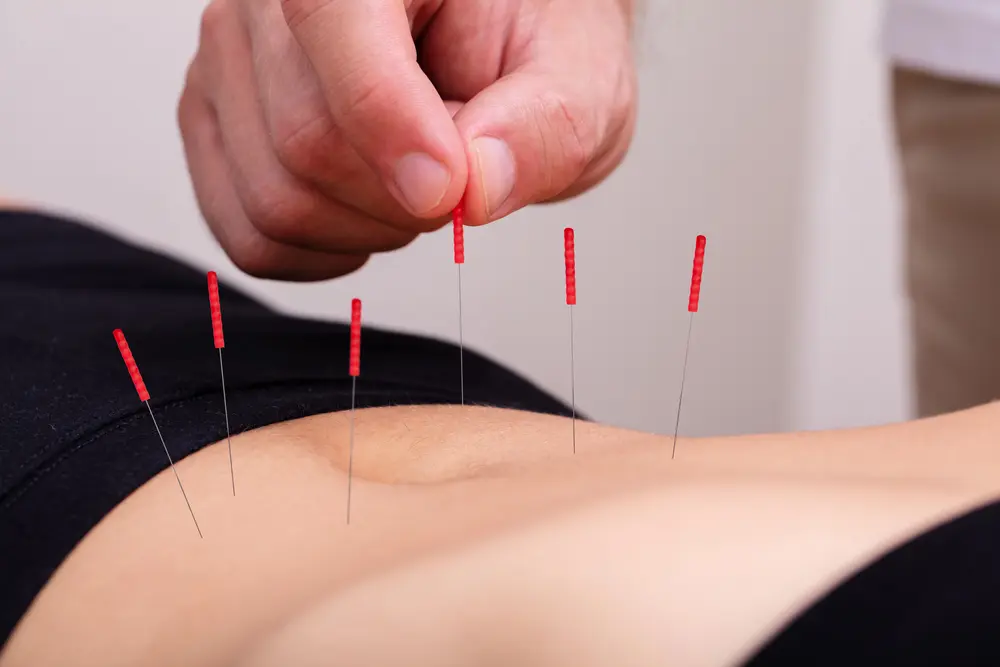
Acupuncture: after an assessment, the practitioner inserts hair-thin, sterile, single-use needles at selected points. Needles are typically retained 20 to 30 minutes while you rest. Sessions may include electroacupuncture (gentle current between needles), heat therapy, or cupping.
Acupressure: firm pressure with thumbs, fingers, knuckles, or simple tools, applied to the same point locations. Sessions are shorter, done clothed, and easily self-administered once you learn the locations. No licensure is required to press your own points, though learning from a professional beats learning from a video.
Which Is Better for Pain?
For persistent or complex pain, low back pain, neck pain, osteoarthritis, chronic headache, acupuncture has the stronger evidence base by far, including an individual patient data meta-analysis of 39 trials and 20,827 patients showing superiority over sham and no-treatment controls. Acupressure’s trials are smaller and focus more on symptom relief: tension headaches, nausea, stress, and sleep.
That does not make acupressure second-rate. It makes it a different tool: ideal for self-management, flare-ups between visits, and needle-averse patients, while acupuncture handles the heavier lifting of persistent conditions.
Risks and Considerations
Acupressure’s risks are minimal: temporary tenderness, and cautions around pregnancy (LI4 and similar points), blood thinners, and injured skin. Acupuncture’s risks are also low in trained hands: temporary soreness, minor bruising, rare lightheadedness. Serious events are rare with licensed practitioners using sterile single-use needles. The main “risk” of acupressure is relying on it alone for something that needs professional evaluation.
What to Expect at Messina Acupuncture in East Setauket
Most new patients start with a 60-minute assessment and acupuncture treatment. Before you leave, we teach 2 to 4 self-acupressure points matched to your complaint, so you have something useful between visits. Needle-sensitive patients can discuss gentler styles, and no one is ever pressured into a technique they are uncomfortable with.
How We Help You Decide
The decision usually makes itself once we understand your case. Everyday tension, mild headaches, stress, and nausea: start with taught self-acupressure. Persistent pain, recurring migraines, poor sleep that will not shift, or complex patterns: acupuncture, with self-acupressure as homework. Many patients end up using both, which is exactly how the two were designed to work together.
The evidence: one deep pool, one shallow
Acupuncture for chronic pain rests on an individual patient data meta-analysis of 39 trials and 20,827 patients (Vickers et al., Journal of Pain, 2018), showing superiority over sham and no-acupuncture controls with effects largely persisting at one year. Acupressure’s evidence is thinner: smaller trials support it for tension-type symptoms, nausea, stress, and sleep quality (for example, a 2025 meta-analysis of 41 trials and 3,680 inpatients on sleep: Nursing and Health Sciences, 2025). Different tools, different evidence bases, different jobs.
Assessment (60 minutes)
We evaluate your condition, discuss needle comfort openly, and recommend the approach with the best evidence for your case.
In-office treatment
Acupuncture sessions target the diagnosed pattern; needle-sensitive patients can discuss gentler techniques.
Self-care homework
You leave each visit with a short acupressure routine matched to your symptoms, checked for correct location and pressure.
Licensed for needles, generous with teaching. Acupuncture in New York requires a license; pressing your own points does not. Messina Acupuncture is a licensed practice using sterile, single-use needles, and we teach self-acupressure freely because informed patients do better. Verify any acupuncturist through the New York State Office of the Professions.
Both modalities are low risk, but neither replaces medical evaluation for new, severe, or worsening symptoms. Disclose pregnancy, blood thinners, bleeding disorders, and implanted devices before acupuncture. With acupressure, avoid strongly stimulating points during pregnancy unless a professional advises otherwise, and never press on broken skin or injured areas.
Frequently Asked Questions
Is acupressure as effective as acupuncture?
For everyday tension, mild headaches, and nausea, good self-acupressure can be genuinely helpful. For persistent pain, acupuncture has far stronger trial evidence and usually accomplishes more.
Does acupuncture hurt more than acupressure?
Acupuncture needles are hair-thin; most people feel a brief pinch, then dullness or warmth. Acupressure uses firmer sustained pressure. Neither should be genuinely painful.
Can I do acupressure on myself between acupuncture visits?
Yes, and we encourage it. We teach you the right points and check your technique so home care supports the in-office work.
I’m afraid of needles. Should I just do acupressure?
Acupressure is a fine starting point, and many needle-nervous patients are surprised by how mild acupuncture feels. Talk to us; gentler needling styles exist, and you set the pace.
Which is safer?
Both are low risk. Acupressure has almost no adverse effects beyond tenderness; acupuncture in licensed hands has rare serious events, with temporary soreness or bruising the most common effects.
Do you offer both at your clinic?
Yes. Most treatment plans combine in-office acupuncture with a taught self-acupressure routine, so you benefit during the visit and between visits.
Needles, Pressure, or Both? Get an Honest Recommendation
You do not have to decide between acupressure and acupuncture before you arrive. Tell us what hurts, what you have tried, and how you feel about needles, and we will recommend the approach with the best chance of helping.
Messina Acupuncture PC
100 N Country Road, East Setauket, NY 11733
Sources and Further Reading
- Vickers AJ et al. Acupuncture for chronic pain: update of an individual patient data meta-analysis. Journal of Pain, 2018;19(5):455-474.
- Effectiveness of acupressure on sleep quality among inpatients: systematic review and meta-analysis. Nursing and Health Sciences, 2025.
- National Center for Complementary and Integrative Health: Acupuncture effectiveness and safety.