

First Visit · Preparation · East Setauket, NY
Your first acupuncture appointment is coming up and you want to get it right. The good news: preparing for acupuncture is simple. Mayo Clinic notes that no special preparation is generally required. A sensible meal, comfortable clothing, an accurate health history and a few minutes of breathing room are what actually make the visit go well. This guide covers what to do, what you can skip, and exactly what happens at your first visit to Messina Acupuncture PC in East Setauket.
What Should You Do Before Acupuncture?
Eat normally or have a light meal an hour or two before, drink water as you usually would, wear loose clothing that rolls up past the elbows and knees, and bring a list of your medications and supplements. Tell your practitioner about pregnancy, blood thinners, a pacemaker or other implanted device, recent surgery, bleeding problems, or a history of fainting with needles.
You do not need to fast, detox, stop prescribed medication, avoid brushing your teeth, or arrive in a perfectly calm state. Acupuncture preparation is about comfort and communication, not rituals.
The 6-Point Acupuncture Preparation Checklist
If you read nothing else, these six habits cover almost everything that makes a first appointment comfortable.
1. Eat something
A light meal or snack one to two hours before helps prevent lightheadedness on the table. Avoid arriving starving or uncomfortably full.
2. Hydrate normally
Drink water through the day as you usually would. There is no need to force extra water, and easing off right before keeps you comfortable.
3. Dress for access
Loose clothing that rolls up past the elbows and knees. Gowns and draping are available whenever more access is needed.
4. Bring your list
Medications, supplements, relevant diagnoses, recent imaging reports and your insurance card if you plan to use insurance.
5. Tell us what matters
Pregnancy, blood thinners, implanted devices, recent surgery, bleeding disorders and needle anxiety all shape a safe plan.
6. Give yourself time
Arrive about 10 minutes early for your first visit so intake and insurance details do not feel rushed.
Eating, Drinking, Caffeine and Alcohol Before Acupuncture
Should you eat before acupuncture?
Yes, in most cases. Acupuncture does not require fasting. Arriving very hungry is one of the most common reasons a first-time patient feels lightheaded or unsteady, so a light meal one to two hours before is a good default: oatmeal, a banana with toast, soup, eggs, or a modest sandwich. If your schedule only allows a snack shortly beforehand, a piece of fruit or a handful of nuts is far better than nothing.
The opposite matters too. A heavy meal right before your visit will not stop acupuncture from working, but lying face down or staying still on a full stomach is simply uncomfortable. If another medical procedure has you fasting that day, follow that instruction and let us know.
How much water should you drink?
Drink normally through the day. You do not need large volumes of water to make your muscles “accept” needles, and there is no evidence that extra water changes how treatment works. One practical tip: ease off in the 30 minutes before your visit and use the restroom when you arrive so you are not shifting uncomfortably mid-session.
Can you drink coffee before acupuncture?
Generally, yes. There is no universal rule that caffeine “cancels out” acupuncture. If you drink coffee every day, your usual cup is fine. If a large coffee or energy drink tends to make you jittery, anxious or unable to lie still, cut back on appointment day. That is a comfort choice, not a medical requirement.
What about alcohol?
Do not arrive intoxicated. Alcohol affects balance, judgment, sensation and your ability to tell your practitioner accurately how you feel during treatment. Skipping alcohol on the day of your appointment is the simplest approach. If you have been drinking enough to feel impaired, call the office and reschedule rather than coming in. For timing questions after treatment, see can you have alcohol after acupuncture?
What to Wear to Acupuncture
Depending on what brings you in, your practitioner may need to reach your arms, lower legs, shoulders, back, hips or abdomen. The easiest outfits are the ones you would wear to the gym or around the house:
- Joggers, sweatpants, yoga pants or shorts that roll above the knee
- A short-sleeve top, or sleeves that push easily past the elbow
- Minimal jewelry, especially at the wrists and ankles
- A light layer, since you will be resting still for 20 to 30 minutes
Tight clothing is not dangerous; it is simply harder to work around. If your treatment needs access to the back, shoulder blades or hips, you will have privacy to change and will be draped throughout. Our full guide to what to wear to acupuncture covers seasonal details. Because our treatment space is shared, skipping strong perfume or cologne is a considerate choice for patients who are sensitive to scents.
What to Bring to Your First Appointment
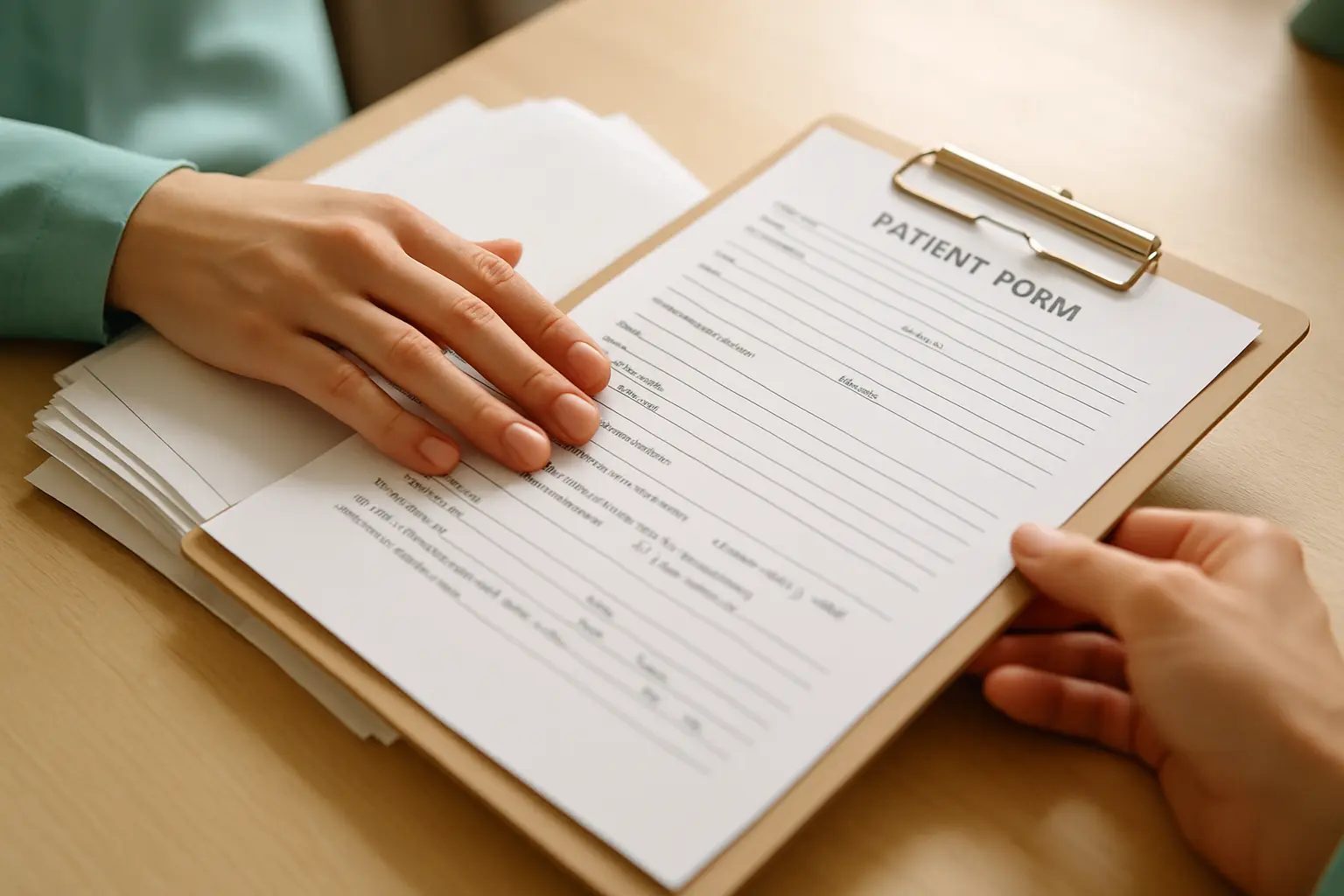
- A medication and supplement list, including over-the-counter pain relievers and anything you started or stopped recently
- Relevant medical information: diagnoses, recent surgery details, X-ray or MRI reports, and physician referrals if you have them
- Your insurance card and photo ID if you plan to use insurance. Coverage varies by plan; see is acupuncture covered by insurance? or call our front desk to verify benefits before your visit
- Your goals: what you want to be able to do again, whether that is turning your head while driving, sleeping through the night or getting back to training
- Your questions. Common ones are answered in our frequently asked questions, including etiquette questions like do you tip your acupuncturist?
Tell Your Practitioner About These Before Treatment
Your medical history matters more than any preparation tip
Before treatment, tell us if you are pregnant or trying to conceive, take anticoagulant or antiplatelet medication, have a bleeding disorder, recently had surgery, have an active infection or fever, or have fainted during injections or blood draws in the past. Also tell us about a pacemaker, implanted defibrillator, neurostimulator or any other implanted electronic device.
That last point matters most before electroacupuncture, which applies a gentle electrical current through selected needles. Mayo Clinic specifically advises telling your acupuncturist if you have a pacemaker or are pregnant, and the New York State Education Department advises answering health questions completely and accurately.
Should you stop medication or blood thinners before acupuncture?
No. Never start, stop or change a prescribed medication because of an acupuncture appointment. Blood thinners can affect bruising, so your practitioner needs to know you take them, but the decision to change or hold any prescription belongs with the clinician who manages it. The same goes for pain medication: if you took an over-the-counter pain reliever a few hours before your visit, just tell us, because it affects how we interpret your pain response during assessment.
What Not to Do Before Acupuncture
Most “what not to do” lists online are longer than they need to be. These are the mistakes worth avoiding, followed by the myths you can safely ignore.
Arriving starving
An empty stomach is the most common cause of lightheadedness during a first session.
Stopping prescribed medication
Keep taking it as directed and bring the list instead.
Hiding “unrelated” history
A pacemaker or blood thinner matters even if you are coming in for shoulder pain.
Arriving intoxicated
Alcohol affects balance, sensation and how accurately you can report what you feel.
A hard workout right before
Intense exercise can temporarily change pain and range of motion, which makes orthopedic assessment harder. Tell us what you did.
Rushing in from traffic
Being stressed will not stop acupuncture working, but a few unhurried minutes make intake easier.
Do you need to avoid brushing or scraping your tongue?
Some practitioners trained in Traditional Chinese Medicine look at the tongue as one part of a broader traditional assessment, so you may hear advice to skip tongue scraping that morning. You do not need to change your normal oral hygiene. Brush your teeth as usual; if you happen to use a harsh tongue scraper, you can leave it for the day. Tongue observation is a traditional tool and never a substitute for medical diagnosis, lab testing or imaging when those are appropriate.
Does your nervous system need to be “calm” first?
No. Researchers have studied acupuncture’s effects on the nervous system and pain processing, but the precise mechanisms are not fully understood. There is no evidence that caffeine, a busy morning or ordinary stress puts your body “in competition” with treatment. You do not need to meditate first or arrive in a special state. Come as you are.
Your First Visit at Messina Acupuncture, Step by Step
Plan for approximately 75 minutes for your first visit. Most of the extra time is conversation and assessment, not needling. Follow-up visits are generally 45 to 60 minutes. Here is what to expect when you arrive at our office at 100 N Country Road in East Setauket.
- Arrival · about 10 minutes early
Check in and settle
We copy your insurance card if you are using it, finish any remaining intake paperwork and walk you back without rushing. If you were stuck in traffic on 25A, just tell us and take a moment.
- Health history
A real conversation about what brings you in
Your practitioner reviews your intake and asks follow-up questions: when the problem started, what makes it better or worse, and how it affects your sleep, work or training. Expect questions about digestion, sleep, stress and energy too. In Traditional Chinese Medicine the body is read as a connected system, so a question about your appetite is useful information, not small talk.
- Assessment
An orthopedic-focused exam
For pain and mobility concerns we check range of motion, tenderness, posture and movement patterns. Your practitioner may also look at your tongue and feel your pulse at both wrists, two painless traditional assessment tools that take about a minute combined.
- The plan
You hear the plan before any needle goes in
Which areas will be treated, why, roughly how many needles and how long they stay in. You can ask anything, and you can decline any part. If acupuncture is not the best tool that day, we may suggest acupressure, medical massage, dry needling or a referral for different care.
- Treatment · 20 to 30 minutes of rest
Needles in, you rest
Sterile, single-use needles are placed and you rest in a quiet, private room. Many patients doze off. You stay in charge the whole time: any needle that feels wrong is adjusted or removed immediately.
- Before you leave
Aftercare and next steps
You get simple aftercare guidance and a recommended visit plan. There is no obligation to book a series up front. Our acupuncture aftercare guide covers what to expect afterward.

Will the Needles Hurt?
Most people are pleasantly surprised. Acupuncture needles are stainless steel, sterile, single-use and about the thickness of a strand of hair, dramatically thinner than the hollow needles used for blood draws or vaccines. Most patients feel a brief tap or pinch at insertion, then very little.
Once a needle is in place you may notice a sensation practitioners call de qi: a dull ache, heaviness, warmth or mild tingling around the point. In plain terms, that is your body registering the needle, and it is a normal part of treatment. “Qi” is the traditional word for the body’s functional activity; you do not have to believe in any particular theory for treatment to be useful. Anything sharp, burning or that does not settle within a few seconds is not normal, so say so and it will be adjusted.
If you are nervous about needles, tell us at the start. We can begin with fewer points, go slowly and check in with you throughout. According to the National Center for Complementary and Integrative Health, serious complications are uncommon when acupuncture is performed by a trained, licensed practitioner using sterile needles. The most common effects are minor and temporary, such as slight bruising or brief lightheadedness. See acupuncture side effects explained for more.
How Many Sessions Will You Need?
It depends on what you are treating and how long you have had it. Some patients notice a change in pain, tension, sleep or mood within a day or two of their first session; others need several visits before anything shifts. Acupuncture tends to work best as a course of care rather than a single event, so your practitioner will suggest a starting cadence and reassess with you along the way.
Those check-ins are practical: did your range of motion improve, did your pain pattern change, are you sleeping better? That feedback decides whether to continue, adjust or try something else. Our article on how to know if acupuncture is working explains what to watch for.
What the research says about preparation
Preparation advice such as eating beforehand or skipping alcohol comes from clinical experience and common sense, not from trials comparing pre-visit routines. That is why we present these tips as comfort and safety measures rather than rules that make treatment “work.” What research does support is screening: telling your practitioner about medications, devices and medical conditions is what keeps treatment safe.
What We Commonly See at Our East Setauket Practice
Messina Acupuncture PC takes an orthopedic-focused approach. Patients most often come in for:
- Back pain
- Neck pain
- Sciatica
- Headaches and migraines
- TMJ and jaw tension
- Joint pain
- Stress and anxiety
Depending on your plan, your visit may include acupuncture, electroacupuncture, dry needling, cupping, acupressure or medical massage.
Messina Acupuncture PC is located at 100 N Country Road in East Setauket and sees patients from across the Three Village area and Long Island’s North Shore, including Stony Brook, Port Jefferson, Port Jefferson Station, Centereach, Lake Grove, Miller Place and Smithtown. See all areas we serve.
Care is led by Daniel Messina, MSOM, L.Ac., a New York State Licensed Acupuncturist and NCCAOM Board-Certified Diplomate, in practice since 2016. Meet the full Messina Acupuncture team. All treatment uses sterile, single-use needles.
Acupuncture is not emergency care
Acupuncture complements, and never replaces, emergency or primary medical care. If you have symptoms that suggest a fracture, stroke, heart attack, serious infection or progressive numbness or weakness, call 911 or go to the nearest emergency department first. If you feel unwell on the day of your appointment, call us; resting and rescheduling is always the right call.
Frequently Asked Questions About Preparing for Acupuncture
How should I prepare for my first acupuncture appointment?
Eat a light meal one to two hours before, drink water normally, wear loose clothing that rolls up past your elbows and knees, and bring a list of your medications and supplements. Tell your practitioner about pregnancy, blood thinners, implanted devices or recent surgery. No fasting or special routine is needed.
Should I eat before acupuncture?
Yes. Acupuncture does not require fasting, and arriving very hungry makes lightheadedness more likely. A light meal or snack one to two hours beforehand is ideal. Avoid a large, heavy meal right before, since lying still on a full stomach is uncomfortable.
Can I drink coffee before acupuncture?
Generally, yes. Coffee does not cancel out acupuncture. If you drink coffee daily, your usual cup is fine. If caffeine makes you jittery or anxious, have less on appointment day so it is easier to relax on the table.
Can I drink alcohol before acupuncture?
You should not arrive intoxicated. Alcohol affects balance, sensation and your ability to describe how you feel during treatment. Skipping alcohol on the day of your appointment is the simplest approach.
Should I stop my medications before acupuncture?
No. Keep taking prescribed medication as directed unless the clinician who prescribes it tells you otherwise. Bring an accurate list, and tell your acupuncturist about blood thinners and any pain relievers you took that day.
What should I wear to acupuncture?
Loose, comfortable clothing such as joggers, yoga pants or shorts and a short-sleeve top. Clothing that rolls up past the elbows and knees is easiest. Gowns and draping are available if your treatment needs access to your back or hips.
Do I need to undress for acupuncture?
For most first sessions, no. Loose clothing that rolls up usually works. If treatment requires access to an area your clothing does not allow, you will have privacy to change and will be draped throughout.
How long is the first acupuncture appointment?
Plan for approximately 75 minutes at Messina Acupuncture PC. That includes intake, your health history, an assessment and your first treatment. Follow-up visits are generally 45 to 60 minutes.
Do acupuncture needles hurt?
Most patients feel a brief tap or pinch at insertion, then very little. The needles are about as thin as a hair. A dull ache, heaviness or tingling around a point is normal; anything sharp that does not settle should be adjusted right away.
I am afraid of needles. Can I still try acupuncture?
Yes. Tell your practitioner at the start of the visit. We can use fewer points, go slowly and check in throughout. If you have fainted during injections or blood draws before, mention that too so we can position you safely.
Can I exercise before acupuncture?
Ordinary activity is fine. A very hard workout right before an orthopedic assessment can temporarily change soreness, pain and range of motion, so tell your practitioner what you did beforehand, especially if you are coming in for a sports injury.
Should I scrape my tongue before acupuncture?
You do not need to change your normal oral hygiene. Some practitioners look at the tongue as part of a traditional assessment, so you can skip a harsh tongue scraper that morning if you use one, but brush your teeth as usual.
Can I drive home after acupuncture?
Usually, yes. Some patients feel relaxed or a little floaty for a short while after treatment. Sit for a few minutes before driving, and only drive once you feel fully alert and steady.
Where is Messina Acupuncture located?
Our office is at 100 N Country Road in East Setauket, NY 11733, convenient to Stony Brook, Port Jefferson, Centereach, Lake Grove, Miller Place, Smithtown and the rest of the North Shore. Call 631-403-0504 with any questions before your visit.
Ready to Book Your First Session?
You do not need to have everything figured out before your first visit. Call us with your questions, and Dr. Daniel Messina and the team will walk you through scheduling, insurance verification and exactly what to expect when you walk through our door.
Sources and Further Reading
- Mayo Clinic: Acupuncture – preparation, risks and what you can expect
- National Center for Complementary and Integrative Health: Acupuncture Effectiveness and Safety
- New York State Education Department, Office of the Professions: Acupuncture Consumer Information
- NCCAOM: National Certification Commission for Acupuncture and Oriental Medicine