
Dry Needling · Back Pain · East Setauket, NY
Low back pain is the leading cause of disability worldwide, and much of it is muscular: tight, irritable trigger points in the deep stabilizers of the spine. Dry needling targets those points directly. Here is the anatomy, the proposed mechanism, and what the research actually shows.
He is a Stony Brook professor who cannot sit through a lecture without his lower back seizing, and the commute home makes it worse. Imaging showed age-appropriate changes and no surgical target. His physical therapist suggested the problem is mostly muscular, and mentioned dry needling.
We see this pattern weekly at Messina Acupuncture. When back pain is driven by muscle dysfunction rather than structural damage, needling the right muscles can change the picture. Here is the science.
- The muscular culprits: quadratus lumborum, multifidus, and psoas are frequent drivers of chronic low back pain.
- Trigger points: taut bands of muscle stuck in contraction, with restricted blood flow and accumulated irritants.
- How needling may help: through the local twitch response, restored blood flow, and the release of natural pain-relieving chemicals.
- Evidence: meta-analyses find short-term pain and disability benefit compared with sham, roughly comparable to other active treatments; many trials carry high or unclear risk of bias.
- Not for everything: it cannot fix a herniated disc or spinal stenosis. Proper assessment decides whether needling fits your case.
The Anatomy: Three Muscles Behind Much Back Pain
Most chronic low back pain involves muscular dysfunction. Three muscles are common culprits:
- Quadratus lumborum (QL): the “joker of low back pain,” running from the lower ribs to the top of the pelvis. It often mimics sciatica and can create functional leg-length differences.
- Multifidus: small, deep stabilizers along the spine. Research shows they can weaken and waste after a pain episode, leaving the spine poorly supported even after the original problem settles.
- Psoas: connecting the spine to the femur, it shortens with prolonged sitting and can pull the lumbar spine into excessive curvature, compressing discs and joints.
Trigger Points and the “Energy Crisis”
Trigger points are hyperirritable spots within taut bands of skeletal muscle. In a common model, dysfunctional motor endplates keep a small segment of muscle locked in contraction. That sustained contraction compresses local capillaries, reducing blood flow. Oxygen delivery drops, waste products accumulate, the area becomes acidic, and nerve endings become sensitized.
Researchers have described this as a local “energy crisis”: the muscle needs energy to release the contraction, but restricted blood flow limits the oxygen required to produce it. Rest alone often does not break the cycle, which is why these knots can persist for months or years.
How Dry Needling Works
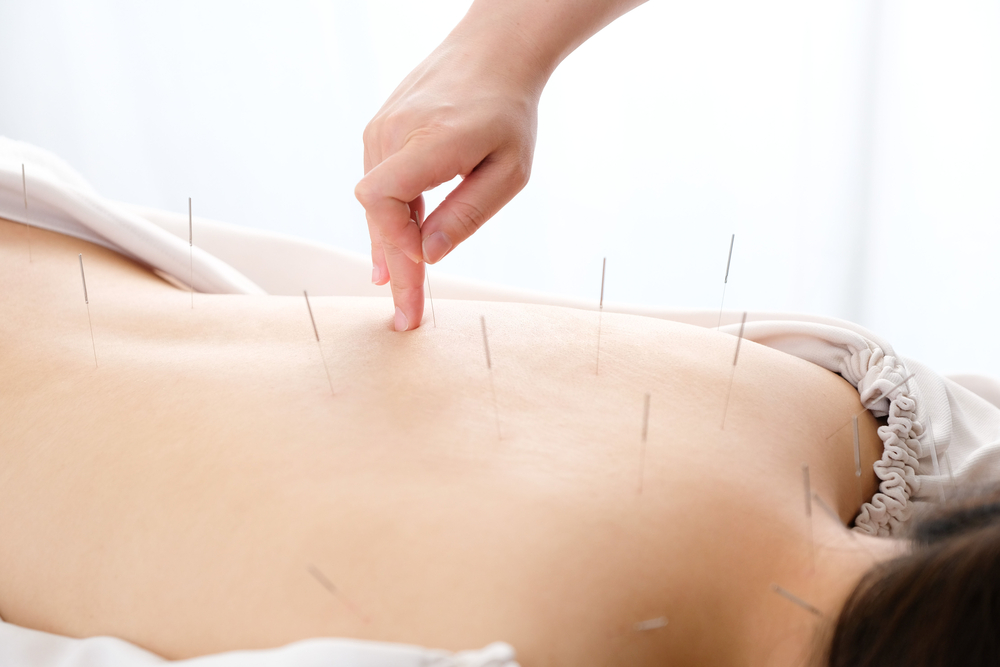
Dry needling uses a thin filament needle, the same tool used in acupuncture, inserted directly into a trigger point. Several things happen:
- The local twitch response: the needle often triggers a brief involuntary twitch. This spinal reflex appears to help reset the muscle and break the contraction cycle.
- Biochemical flushing: the needle stimulates local blood flow, which may help clear accumulated inflammatory substances and bring in oxygen and nutrients.
- Neurological effects: stimulating the muscle’s nerve fibers can modulate pain signals through the spinal cord, activate descending pain-inhibition pathways, and encourage the release of endorphins, serotonin, and other natural pain-relieving chemicals.
Dry Needling vs. Acupuncture
The tools are the same, but the frameworks differ. Dry needling is grounded in Western anatomy and neurophysiology and targets trigger points based on orthopedic assessment. Traditional acupuncture works within a meridian framework refined over centuries and may address broader patterns, including stress and systemic contributors to pain.
At our clinic, we often combine both: dry needling for the specific trigger points, and traditional acupuncture for the bigger picture.
The evidence: short-term benefit; honest limits
A 2018 meta-analysis of 16 randomized trials (Hu et al.) found dry needling reduced pain and disability more than sham needling immediately after treatment, and outperformed acupuncture in the short term, with effects roughly equal to acupuncture at follow-up. However, most included trials had high or unclear risk of bias, and superiority over other active treatments remains uncertain. A 2022 meta-analysis of 8 trials (Lara-Palomo et al.) found dry needling reduced chronic low back pain intensity in the short term, especially combined with other therapies. A 2017 meta-analysis (Gattie et al.) reached a similar verdict for musculoskeletal pain generally. Our read: a reasonable evidence-supported option for muscle-driven back pain, not a cure-all, and not a substitute for evaluating structural causes.
What to Expect at Messina Acupuncture
Assessment and first treatment (60 to 75 minutes)
We take a thorough history, test range of motion and perform orthopedic tests, and palpate the paraspinal muscles to distinguish structural from muscular drivers. If needling fits, your first treatment usually happens the same visit.
Follow-up sessions (30 to 45 minutes)
A typical course is 4 to 6 visits over 2 to 4 weeks. Sessions may include electrical stimulation through the needles for deeper stubborn points, and we combine needling with movement guidance.
After each visit
Mild soreness for 24 to 48 hours is normal and often feels like a deep workout. Heat, gentle walking, and hydration help. Tell us if soreness lasts longer so we can adjust the plan.
Licensed and coordinated care. Before booking needling or acupuncture anywhere, confirm three things: the practitioner is licensed in New York State, they use single-use sterile needles, and they will communicate with your physician or physical therapist if needed. Messina Acupuncture meets all three, and we coordinate with your physician, physical therapist, or other providers as needed.
Seek prompt medical evaluation for new bladder or bowel changes, numbness in the saddle area, rapidly worsening leg weakness, recent significant trauma, fever, unexplained weight loss, night pain that does not ease with rest, or a history of cancer. Tell us if you take blood thinners, have a bleeding disorder, are pregnant, or have an active infection. Serious needling complications such as pneumothorax are rare with a trained, licensed practitioner who uses proper anatomy and depth.
Frequently Asked Questions
Is dry needling effective for back pain?
The research supports short-term pain and disability relief for muscle-driven low back pain, with results roughly comparable to other active treatments. It is not a cure-all, and structural causes still need proper evaluation.
How is dry needling different from acupuncture?
The needles are the same. Dry needling targets trigger points using Western anatomy and orthopedic assessment; traditional acupuncture works within a meridian framework. Our clinic often combines both.
Will dry needling help a herniated disc?
Needling cannot fix a herniated disc or spinal stenosis. It may ease the muscular pain around these conditions. A careful assessment decides whether needling fits your case.
Is needling near the spine safe?
With a trained, licensed practitioner who uses proper anatomical landmarks and depths, serious events are rare. We screen every patient before treating.
How many sessions will I need?
Many patients feel change within 2 to 4 sessions. A typical course is 4 to 6 visits over 2 to 4 weeks; chronic cases may take longer.
What does dry needling feel like?
Insertion is usually mild. You may feel a deep ache, heaviness, or brief twitch when the needle engages a trigger point. Soreness for 24 to 48 hours afterward is normal.
Back Pain That Will Not Quit?
If muscular back pain is limiting your work, your commute, or your weekends, targeted dry needling may help. Dr. Daniel Messina will assess whether your pain is muscular, structural, or both, and tell you honestly what needling can do.
Messina Acupuncture PC
100 N Country Road, East Setauket, NY 11733
Sources and Further Reading
- Hu HT et al. Is dry needling effective for low back pain? A systematic review and PRISMA-compliant meta-analysis of randomized controlled trials. Medicine, 2018.
- Lara-Palomo IC et al. Efficacy of dry needling for chronic low back pain: a systematic review and meta-analysis of randomized controlled trials. Alternative Therapies in Health and Medicine, 2022.
- Gattie E et al. The effectiveness of trigger point dry needling for musculoskeletal conditions by physical therapists: a systematic review and meta-analysis. Journal of Orthopaedic and Sports Physical Therapy, 2017.
- National Center for Complementary and Integrative Health: Acupuncture effectiveness and safety.
- New York State Office of the Professions: Acupuncture consumer information.