
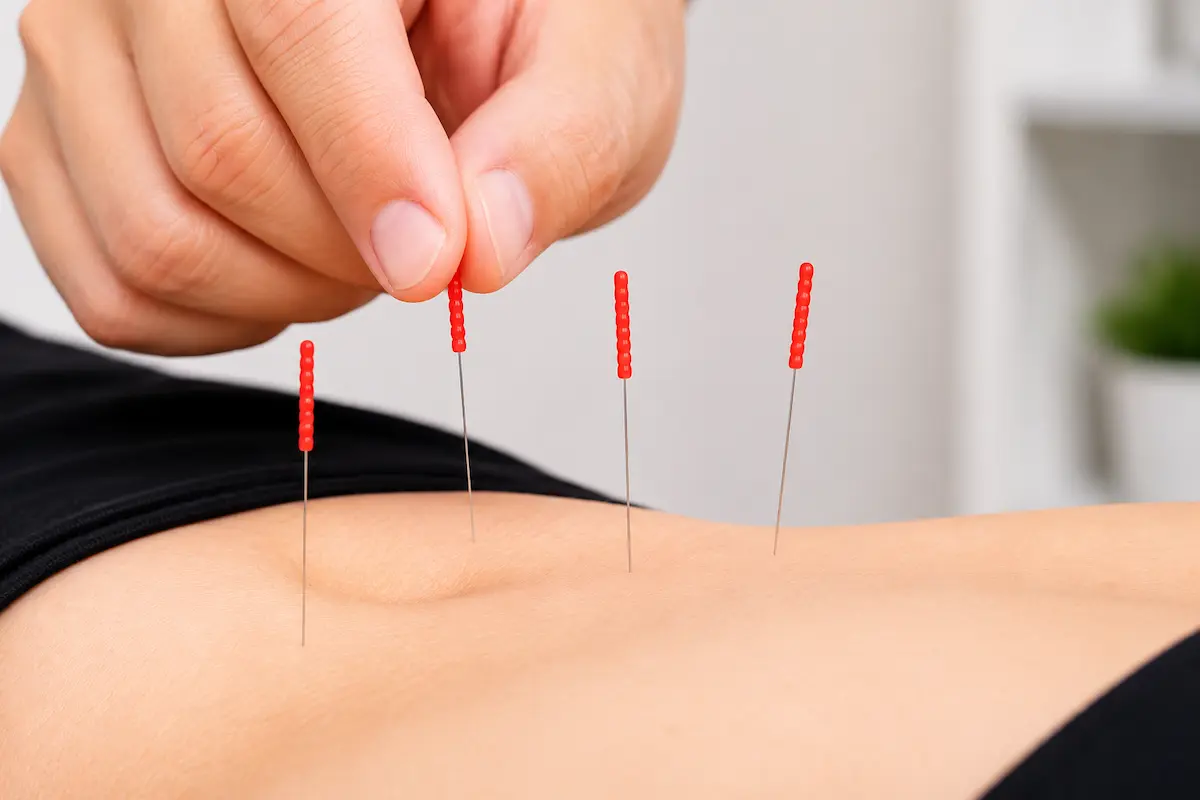
If you are evaluating whether clinical acupuncture for IBS can help restore your digestive stability, understanding the scientific mechanisms behind the therapy is your best starting point. A 38-year-old paralegal commutes from Stony Brook to a Manhattan law firm three days a week. By Thursday afternoon, her abdomen is painfully distended, she has been to the office bathroom four times since lunch, and she has had to cancel multiple client dinners because of unpredictable, intense cramping. Her gastroenterologist successfully ruled out inflammatory bowel disease and celiac last spring, delivering the diagnosis that many Long Islanders eventually receive: irritable bowel syndrome.
She reached out to our Setauket clinic wanting to know whether starting a course of targeted acupuncture for IBS could change her baseline function, and what the latest peer-reviewed clinical research actually reveals. This clinical guide walks through the modern medical evidence, the precise point selections we commonly use at Messina Acupuncture PC, the structural difference between functional subtypes, and most importantly the clinical red flags that indicate alternative therapy is not the correct first step.
Key Takeaways
-
The Condition: Irritable Bowel Syndrome (IBS) is a functional gastrointestinal disorder marked by recurrent abdominal pain tied directly to bowel movements, without visible structural or biochemical disease. It is fundamentally distinct from Inflammatory Bowel Disease (IBD).
-
Meta-Analytic Support: A 2025 systematic review and meta-analysis in PLOS ONE tracked 14 trials and 2,038 participants, concluding that utilizing acupuncture for IBS dramatically improved overall quality-of-life and symptom-severity scores.
-
Placebo-Controlled Success: A 2024 multicenter, randomized sham-controlled trial in Frontiers of Medicine demonstrated that active treatments yielded significantly larger symptom reductions than sham options, with relief maintained long after the final needle was removed.
-
The Gut-Brain Pathway: Clinical treatments appear to exert their influence directly via the bidirectional gut-brain axis, modulating vagal nerve activity, descending serotonergic pathways, and chronic stress signaling.
-
Targeted Point Selection: Protocols combine foundational points like ST36 Zusanli and ST25 Tianshu, adapted dynamically based on whether a patient presents with constipation, diarrhea, or mixed bowel patterns.
-
Clinical Red Flags: Severe symptoms like blood in the stool, unexplained weight loss, or anemia require an immediate, thorough evaluation by a gastroenterologist before starting any complementary care.
Understanding Irritable Bowel Syndrome: What Are the Manifestations Addressed by Acupuncture for IBS?
The National Institute of Diabetes and Digestive and Kidney Diseases (NIDDK) defines IBS as a functional disorder diagnosed by the Rome IV criteria: recurrent abdominal pain on average at least one day per week in the last three months, associated with two or more of the following related to defecation, change in stool frequency, change in stool form. It is real, common (10–15% of U.S. adults), and not a diagnosis of exclusion in the dismissive sense. It is a positive clinical diagnosis once red flags are ruled out.
Subtype Classifications: Customizing Acupuncture for IBS Presentations
To get the best results, treatments cannot be a one-size-fits-all protocol. We break presentations down into three primary diagnostic subtypes:
-
IBS-C (Constipation Predominant): The majority of stools are hard, dry, or lumpy.
-
IBS-D (Diarrhea Predominant): The majority of stools are entirely loose, urgent, or watery.
-
IBS-M (Mixed/Alternating): The patient alternates rapidly between constipation and diarrhea.
The critical reason these subtypes dictate the course of care is that a plan designed to assist IBS-D slowing down hyperactive motility and calming spasms, uses completely different stimulation techniques than a plan for IBS-C, where the goal is to safely stimulate smooth-muscle peristalsis and alter visceral hypersensitivity.
Differential Diagnosis: Distinguishing What Is Not Addressed by Acupuncture for IBS
IBS is not Crohn’s disease, ulcerative colitis, celiac disease, gastroesophageal reflux disease (GERD), or colorectal cancer. It does not cause inflammation visible on colonoscopy, does not damage the gut wall, and does not increase colon cancer risk. Patients sometimes arrive at our Setauket office calling everything “IBS” including reflux, food intolerances, and IBD and the first job is to make sure the diagnosis is actually correct. The International Foundation for Gastrointestinal Disorders is a strong patient-facing resource for understanding the distinctions.
Clinical Studies: What Does the 2024–2026 Evidence Say About Acupuncture for IBS?
The independent medical evidence base establishing acupuncture for IBS as a safe, highly effective digestive intervention has strengthened significantly over the last two years.
A major 2025 systematic review and meta-analysis published in PLOS ONE evaluated 14 randomized controlled trials tracking 2,038 total patients. The pooled global data revealed that choosing acupuncture for IBS generated statistically significant, profound improvements in both the IBS Quality of Life (IBS-QoL) metrics and the standardized IBS Symptom Severity Scale (IBS-SSS) when evaluated against conventional drug therapies.
Furthermore, a rigorous 2024 multicenter, randomized sham-controlled trial in Frontiers of Medicine targeted patients with refractory, chronic symptoms who had previously failed standard first-line pharmaceutical care. The objective IBS-SSS scores plummeted by an average of 140.0 points in the active treatment group, compared to a modest 64.4 points in the sham-needling control arm. This trial is highly respected across the integrative community because it strictly accounted for the placebo effect, proving that real acupuncture for IBS outperforms sham alternatives.
This was further reinforced by the 2025 ACTION Clinical Trial (Efficacy of Acupuncture in Irritable Bowel Syndrome), which verified that 15 structured sessions over six weeks provided persistent, durable improvements in abdominal pain thresholds and stool consistency that lasted through 18 weeks of long-term follow-up.
How to Read These Studies as a Patient
- Effects are real, larger than sham, but not curative.
- Most positive trials use 10–15 sessions over 4–6 weeks.
- Quality of life often improves before pain frequency does.
- Acupuncture works best as part of a broader plan diet (often low-FODMAP), stress modulation, sleep, and any prescribed gut-directed therapy from your GI.
Physiological Pathways: Examining the Gut-Brain Axis and Why Acupuncture for IBS Works
Modern gastroenterology recognizes that IBS is a complex disorder of the gut-brain axis: the bidirectional neuro-hormonal communication network linking the central nervous system, the enteric nervous system, the vagus nerve, and the gut microbiome. Systemic stress, anxiety, and hyper-vigilance alter gut motility and heighten visceral pain sensitivity. Conversely, abnormal gut signals travel upward to shape emotional status.
Clinical research demonstrates that applying acupuncture for IBS safely interacts with this axis at several key physiological checkpoints:
-
Vagal Nerve Modulation: Somatic stimulation of specific body and ear points stimulates vagal afferent nerve fibers, helping increase parasympathetic (“rest and digest”) tone while dampening chronic sympathetic (“fight or flight”) overdrive.
-
Visceral Pain Inhibition: Needling recruits descending serotonergic and noradrenergic pathways within the brainstem, effectively turning down the volume on hypersensitive pain receptors in the bowel wall.
-
HPA-Axis Regulation: Chronic stress drives hyper-reactivity of the hypothalamic-pituitary-adrenal (HPA) axis; undergoing a course of acupuncture for IBS has been shown to stabilize fluctuating cortisol patterns.
-
Local Myoelectric Balance: Targeted local points like ST25 provide segmental autonomic input directly to the nerve plexuses lining the colon, re-establishing regular smooth-muscle transit.
This mechanistic story is consistent with how the NCCIH summarizes acupuncture’s evidence base and with the broader research on acupuncture for stress and nervous-system regulation that we cover in a separate post.
Anatomical Target Sites: The Points We Use When Performing Acupuncture for IBS
Every clinical prescription we write is entirely customized following an extensive diagnostic intake, food diary analysis, and stress review. When executing a clinical protocol using acupuncture for IBS in our Setauket practice, we select our target points based on their deep neurological relationships to the GI tract:
| Point Name | Anatomical Location | Primary Gastrointestinal Function |
| ST36 (Zusanli) | Below the knee, on the tibialis anterior muscle | The premier point for overall GI regulation; modulates transit velocity and controls visceral pain. |
| ST25 (Tianshu) | Bilateral, exactly two cun lateral to the navel | Located directly over the colon fields; acts as the core local point for balancing all bowel subtypes. |
| CV12 (Zhongwan) | Midline, four cun above the umbilicus | Targets upper-abdominal distension, limits severe bloating, and regulates the gastric stomach wave. |
| LI4 (Hegu) | In the first dorsal interosseous hand web | A dominant systemic analgesic point that clears physical tension and abdominal stagnation. |
| SP6 (Sanyinjiao) | Lower leg, three cun above the inner ankle bone | Highly useful when structural digestive pain strongly overlaps with stress, anxiety, or menstrual shifts. |
| LV3 (Taichong) | On the foot, between the first and second toes | The premier point utilized to quiet down stress-induced, emotionally triggered bowel spasms. |
For patients suffering from acute IBS-D patterns, we frequently pair our acupuncture for IBS protocols with indirect, soothing moxibustion (herbal heat therapy) over the navel to settle hyper-motility. For rigid IBS-C patterns, we favor gentle electro-acupuncture across the ST25 points to restore normal peristaltic contractions.
Acupressure between visits particularly at PC6, ST36, and LI4 is something we teach most patients so they have a tool for flares.
Differential Diagnosis: Comparing Other Digestive Disorders to Acupuncture for IBS
Patients sometimes arrive asking about acupuncture for “digestive issues” when what they actually have is something else. The treatment approach diverges sharply.
GERD, Celiac, and IBD Concerns
-
GERD & Functional Dyspepsia: Gastroesophageal Reflux Disease (GERD) involves the physical backflow of stomach acid into the esophagus. While functional dyspepsia (upper abdominal bloating and early fullness) frequently overlaps with your plan for acupuncture for IBS, true GERD requires initial tracking and stabilization by your primary care physician.
-
Inflammatory Bowel Disease: Unlike functional disorders, IBD (Crohn’s and Ulcerative Colitis) is a serious, progressive autoimmune condition that causes visible, destructive ulceration across the intestinal wall. While adjunctive acupuncture for IBS symptoms can support a patient during stable IBD remission phases, it must always be carefully coordinated with your gastroenterologist.
-
Celiac Disease: Celiac disease is a strict, systemic autoimmune reaction to dietary gluten that physically flattens the villi of the small intestine. Utilizing acupuncture for IBS has no role in modifying the underlying celiac autoimmune response, though it can help settle residual functional sensitivity once a strict gluten-free lifestyle is established.
Patient Screening Protocol: Red Flags That Precede a Course of Acupuncture for IBS
Your safety is our absolute priority. Before scheduling a course of acupuncture for IBS, we require that all patients have their presentation evaluated by a medical physician or gastroenterologist to rule out structural pathology. The following symptoms are absolute red flags that are not indicative of IBS:
- Blood in stool or black tarry stools
- Unintentional weight loss
- Persistent vomiting
- Nocturnal diarrhea that wakes you
- Anemia or iron deficiency
- New change in bowel habits after age 50
- Family history of colon cancer, IBD, or celiac disease in a first-degree relative
- Fever with abdominal pain
If any of these markers are present during your consultation, we will gently pause care and assist you in connecting with a primary care provider or a local gastrointestinal specialist before performing acupuncture for IBS.
When to See a Licensed Acupuncturist
If you have a confirmed IBS diagnosis from your physician or gastroenterologist, ongoing symptoms despite first-line therapy, and no red-flag symptoms, acupuncture is a reasonable adjunct to consider. New York State requires acupuncturists to be licensed by the Department of Education; the NCCAOM credential is an additional benchmark of training and continuing competency.
A useful first visit at our Setauket acupuncture practice includes a detailed bowel and dietary history, review of your GI workup, a TCM assessment (pulse, tongue, abdominal palpation), and a written plan with measurable goals. We use the IBS-SSS and IBS-QoL at baseline and at week four so improvement is something both of us can see, not guess at.
If you are currently taking medications for IBS antispasmodics, prescription antidiarrheals, certain antidepressants used for visceral pain please bring the list. We address timing questions specifically in our post on whether painkillers and medications interact with acupuncture sessions, and the same logic applies to gut-directed medications.
Frequently Asked Questions
How many sessions before I notice a difference?
Most patients report some improvement in stress and sleep within 2–3 visits, and meaningful change in bowel symptoms by sessions 6–8. A typical initial course is 10–15 sessions over 6 weeks, then reassessment.
Will acupuncture cure my IBS?
No honest practitioner promises a cure. IBS is a chronic disorder, and the goal of acupuncture is to reduce symptom severity, improve quality of life, and lower flare frequency. Many patients move from severe IBS-SSS scores into mild or moderate ranges and stay there with maintenance care.
Should I continue my GI medications during acupuncture?
Yes, never stop a prescribed medication without consulting your physician. Acupuncture is complementary, not a replacement. We work alongside your gastroenterologist and primary care provider, not around them.
Is acupuncture safe if I have IBD instead of IBS?
Acupuncture is generally safe in stable IBD as a complement to gastroenterology care, but it requires coordination with your GI team and should never replace disease-modifying therapy. If you have a Crohn’s or UC diagnosis, please tell us at intake.
What should I eat before an acupuncture session?
A light meal 60–90 minutes beforehand is ideal, never come fasted, and avoid a heavy meal immediately before. Hydrate. Avoid caffeine if it is a known IBS trigger for you.
Does insurance cover acupuncture for IBS in New York?
Coverage varies by plan and diagnosis. Some New York commercial plans cover acupuncture for chronic pain conditions but not for IBS specifically. Call our front desk at 631-403-0504 and we will run a benefits check before your first visit.
Ready to Book at Messina Acupuncture
If you are tired of canceling dinners, planning your day around the nearest bathroom, or feeling like your gut is running the show, acupuncture is worth a conversation. Call 631-403-0504 or visit us at 100 N Country Road, Setauket, NY 11733 to book an IBS consultation with Dr. Messina or a member of our team. We will review your GI workup, listen to the full picture of your symptoms, and give you an honest read on whether acupuncture is the right fit including the cases where it is not. Email fr*******@****************re.org with questions before booking.