
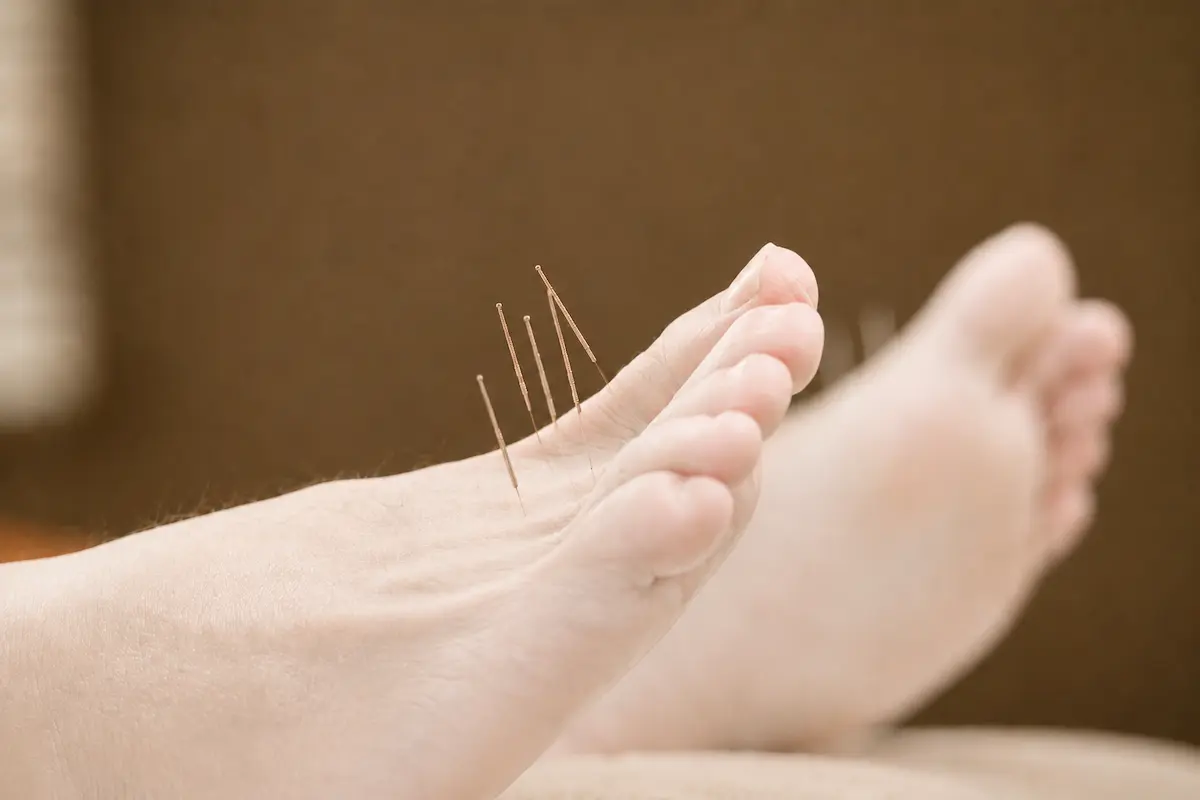
Diabetic peripheral neuropathy brings burning, tingling, and numbness that often worsens at night, and many patients on the North Shore are asking whether acupuncture belongs in their care plan. This guide reviews what the 2024 to 2026 research actually shows, how electroacupuncture differs from standard sessions, and the safety precautions that matter when treating diabetic feet.
A long-time patient on the North Shore recently told her clinician she had stopped walking her grandchildren to the beach in East Setauket because her feet felt like they were on fire by the time she reached the corner. Her endocrinologist at Stony Brook had prescribed gabapentin, her A1C was finally moving in the right direction, but the burning, tingling, and numbness in her feet kept her awake at night.
Her story is one we hear weekly at Messina Acupuncture. Diabetic peripheral neuropathy is one of the most common and most under-treated complications of type 2 diabetes in Suffolk County. Here is what the current evidence says about acupuncture as part of the conversation, and how it fits safely alongside the medications a physician has already prescribed.
Key Takeaways
- What it is: diabetic peripheral neuropathy (DPN) is nerve damage from chronically elevated blood glucose. It usually starts in the feet and lower legs with burning, numbness, tingling, or pin-prick pain.
- The evidence: a 2025 Bayesian network meta-analysis of 62 randomized trials and 5,942 participants found acupuncture interventions, especially electroacupuncture, improved nerve conduction velocity compared with medication alone.
- An add-on, not a replacement: acupuncture works best as coordinated add-on therapy alongside blood sugar control and prescribed medications like gabapentin or duloxetine. Never stop a prescription without speaking to your prescriber.
- Safety first: diabetic feet need extra precaution because of slower healing and infection risk. Licensed practitioners use sterile single-use needles and avoid needling through any ulcer, callus, crack, or unhealthy skin.
- Typical course: many plans run 1 to 2 sessions per week for 8 to 12 weeks. Patients often notice better sleep before changes in deep numbness, which is the slowest symptom to shift.
What Is Diabetic Peripheral Neuropathy, Exactly?
Diabetic peripheral neuropathy is nerve damage caused by chronically elevated blood glucose, which over years injures the small blood vessels that feed peripheral nerves. According to the American Diabetes Association, about half of people with diabetes will develop some form of neuropathy. DPN tends to start in the longest nerves first, which is why the toes and soles of the feet are usually affected before the hands.
Most Setauket patients describe a recognizable pattern: burning or electric pain that flares at night, numbness like walking on cotton, pins-and-needles tingling, sharp stabbing pains with no obvious trigger, and loss of balance on uneven ground. DPN differs from other foot pain in useful ways: plantar fasciitis hurts when you stand up, while DPN hurts at rest. We talk through these distinctions at the first visit because point selection and precautions depend on what is actually generating the symptom.
Why Electroacupuncture Specifically?
Electroacupuncture connects two needles to a small battery-powered device that delivers a gentle, controlled pulse most patients describe as light tapping or buzzing. For DPN, electroacupuncture is thought to help by stimulating peripheral microcirculation around the affected nerves, modulating spinal cord pain-gating pathways, and encouraging local growth-factor release that may support nerve repair over months. In our Setauket office, electroacupuncture is typically added once a patient has tolerated a few standard sessions and we are confident there are no contraindications, such as a pacemaker or significant peripheral vascular disease.
Points Commonly Used for Diabetic Neuropathy
Point selection is individualized, but plans for DPN often combine lower-leg and foot points that influence the lower-limb nerve pathways: ST36 below the kneecap, SP6 above the inner ankle, KD3 near the inner ankle, KD1 on the sole for burning soles at night, and the Bafeng points between the toe webs for tingling in the toes. Some sessions also include gentle acupressure homework we teach for between visits.
Acupuncture Alongside Your Medications
The most common question new DPN patients ask is whether acupuncture fits with their prescriptions, and it is the right question. Acupuncture is complementary, not competitive, with first-line pharmaceuticals. Gabapentin, pregabalin, and duloxetine work through different pathways than acupuncture, and the combination is common. Topical capsaicin or lidocaine has no known interaction, though we time sessions so the skin is clean and free of topicals. Insulin and oral antihyperglycemics have no direct interaction, but patients are asked to eat normally beforehand and bring a glucose meter and a small snack. Always tell your acupuncturist every medication you take.
What a Typical Treatment Course Looks Like
Most DPN patients do best on a graduated course rather than a single visit. A common rhythm is 1 to 2 sessions per week for the first month, focused on symptom relief and sleep, with electroacupuncture added around weeks 5 to 8 if tolerated. Sessions then space to weekly or every other week as symptoms stabilize, and many patients continue monthly through winter, when symptoms tend to flare. Symptom changes generally happen in this order: sleep first, burning intensity next, tingling, and numbness last. Patients who have had DPN for less than two years typically respond faster than those with a decade or more of symptoms.
Evidence Note: promising for nerve conduction and symptoms, low to moderate certainty
A 2025 Bayesian network meta-analysis (62 randomized trials, 5,942 participants) found that acupuncture interventions improved motor nerve conduction velocity compared with conventional pharmacological care, with electroacupuncture ranking as the most effective single modality. A separate 2024 systematic review and meta-analysis (Ge et al., Frontiers in Neurology) reached similar conclusions for overall DPN symptoms and nerve conduction. Caveats matter: many included trials were conducted in China, blinding is difficult with acupuncture, and the certainty of evidence is rated low to moderate. Acupuncture is not a cure and has not been shown to reverse established nerve damage; the support is for it as an adjunctive therapy alongside blood sugar control.
Your First Visits, Step by Step
Assessment and first treatment (60 to 75 minutes)
We review your diabetes and neuropathy history, current medications, and most recent A1C, then perform a careful foot inspection and the first gentle acupuncture treatment. We also screen for overlapping conditions like sciatica or tarsal tunnel that can mimic DPN.
Follow-up sessions (30 to 45 minutes)
Most courses run 1 to 2 visits per week for 8 to 12 weeks. Electroacupuncture may be added after a few standard sessions if you tolerate it and have no contraindications. Sessions often pair needling with simple self-care instruction.
After each visit
Mild soreness or a day of deeper tiredness is possible but uncommon. Eat normally before sessions, bring your glucose meter and a snack, and keep an eye on your feet. Many patients notice sleep improving within the first few weeks, before deeper numbness shifts.
Why Choose Licensed Care
Licensed and coordinated care. Before booking acupuncture anywhere for diabetic neuropathy, confirm three things: the practitioner is licensed in New York State, they use sterile single-use needles, and they will coordinate with your physician, endocrinologist, or podiatrist. Messina Acupuncture meets all three, and we routinely coordinate with your physician, physical therapist, or other providers as needed.
Foot care is the single most important safety consideration in DPN. Reduced sensation, slower healing, and microvascular changes mean a small injury can become a serious problem quickly, so we never needle through a callus, ulcer, crack, or unhealthy skin, and we inspect the feet at the start of each visit. Patients with active foot ulcers, uncontrolled infection, severe peripheral vascular disease, bleeding disorders, or unstable cardiac disease should defer treatment until those are stabilized. Contact your physician promptly for any new foot wound, spreading redness, or fever.
Frequently Asked Questions
Can acupuncture reverse diabetic nerve damage?
Acupuncture has not been shown to reverse established nerve damage in the sense of regenerating fully scarred nerves. The 2025 evidence supports improvement in nerve conduction velocity and symptom intensity, particularly with electroacupuncture, when combined with good blood sugar control.
How many sessions before I notice anything?
Most DPN patients in our Setauket office notice changes in sleep and burning intensity within 3 to 5 sessions. Improvements in tingling and numbness usually take longer, often 8 to 12 weeks of consistent treatment.
Is electroacupuncture painful?
No. The current is set well below pain threshold and feels like a light tapping or warming sensation. We start very low and increase only if you are comfortable.
Can I do acupuncture if I take gabapentin or duloxetine?
Yes, these are common combinations. Acupuncture appears to work through different pathways and is generally complementary to these medications. Always share your full medication list, and never change a prescription without speaking to your prescriber.
Does insurance cover acupuncture for neuropathy in New York?
Coverage varies by plan. Medicare covers acupuncture for chronic low back pain only, and most commercial plans on Long Island require pre-authorization. Our front desk at 631-403-0504 can verify your benefits before your first visit.
Who should not get acupuncture for diabetic neuropathy?
Patients with active foot ulcers, uncontrolled infection, severe peripheral vascular disease, bleeding disorders, or implanted electrical devices (for electroacupuncture) should consult their physician first. We screen for all of these at intake.
Ready to Talk Through Your Neuropathy Options?
If burning, tingling, or numb feet are keeping you off the Setauket-Port Jefferson Greenway or keeping you up at night, you have options beyond raising your prescription dose. Dr. Daniel Messina and our team will review your case, inspect your feet carefully, and tell you honestly whether acupuncture fits your care plan.
Messina Acupuncture PC
100 N Country Road, East Setauket, NY 11733
Sources and Further Reading
- Acupuncture for diabetic peripheral neuropathy: a systematic review and Bayesian network meta-analysis. Medicine, 2025.
- Ge et al. The efficacy of acupuncture for diabetic peripheral neuropathy: a systematic review and meta-analysis. Frontiers in Neurology, 2024.
- National Center for Complementary and Integrative Health: Acupuncture effectiveness and safety.
- New York State Office of the Professions: Acupuncture consumer information.