
Breathwork · Nausea Relief · East Setauket, NY
When nausea rises, most people hold their breath and brace, which can actually make the queasiness worse. Slow, controlled breathing does the opposite: it signals the nervous system to stand down, and for some people that is enough to take the edge off nausea. Here are three techniques worth knowing, the honest story on the evidence, and the warning signs that mean nausea needs medical attention, not breathing exercises.
He is a college student in Stony Brook who gets motion sick on every Long Island Rail Road trip into the city, and the nausea once made him miss a midterm. A friend who sails suggested he try slow breathing before reaching for medication. He was skeptical, but on the next ride he breathed slowly through the worst of it and arrived feeling steadier than usual.
Stories like his are common at Messina Acupuncture, where breathwork often accompanies treatment. Breathing exercises cost nothing, have no side effects, and can be used anywhere. They are not a cure for nausea, and the research is still developing, but as a first response they are worth having in your toolkit.
- 1. Slow breathing calms the stress response: controlled breathing may shift the nervous system toward a calmer state, which for some people eases nausea.
- 2. Three techniques to know: diaphragmatic breathing, paced breathing with counted exhales, and brief mindfulness breathing each give the mind and body something steady to do.
- 3. Evidence is early: the physiological rationale is sound, but rigorous trials of breathwork specifically for nausea are limited.
- 4. Pairs well with other care: breathing exercises may complement acupressure or acupuncture, though combined approaches have not been proven to multiply relief.
- 5. Know the red flags: persistent vomiting, dehydration, blood, severe pain, or concerning symptoms in pregnancy or during chemotherapy need medical care, not self-help.
Why Breathing Might Calm Nausea
Nausea involves a tug-of-war in the autonomic nervous system. Anxiety, rapid shallow breathing, and a racing heart can amplify the queasy signal from the gut. Slow, diaphragmatic breathing appears to nudge the system in the other direction: heart rate steadies, muscle tension drops, and attention shifts from the nausea to the rhythm of the breath.
This is a plausible mechanism, not a proven treatment pathway. The honest summary is that controlled breathing is a low-risk technique with a sensible rationale and promising early reports, particularly for motion-related and anxiety-linked nausea.
Technique 1: Diaphragmatic Breathing
Sit or lie comfortably and place one hand on your belly. Breathe in slowly through your nose for about four counts, feeling the belly rise rather than the chest. Exhale gently through the mouth for six counts, letting the belly fall. Continue for two to five minutes. The longer exhale is the calming part, so never rush it.
Technique 2: Paced Breathing
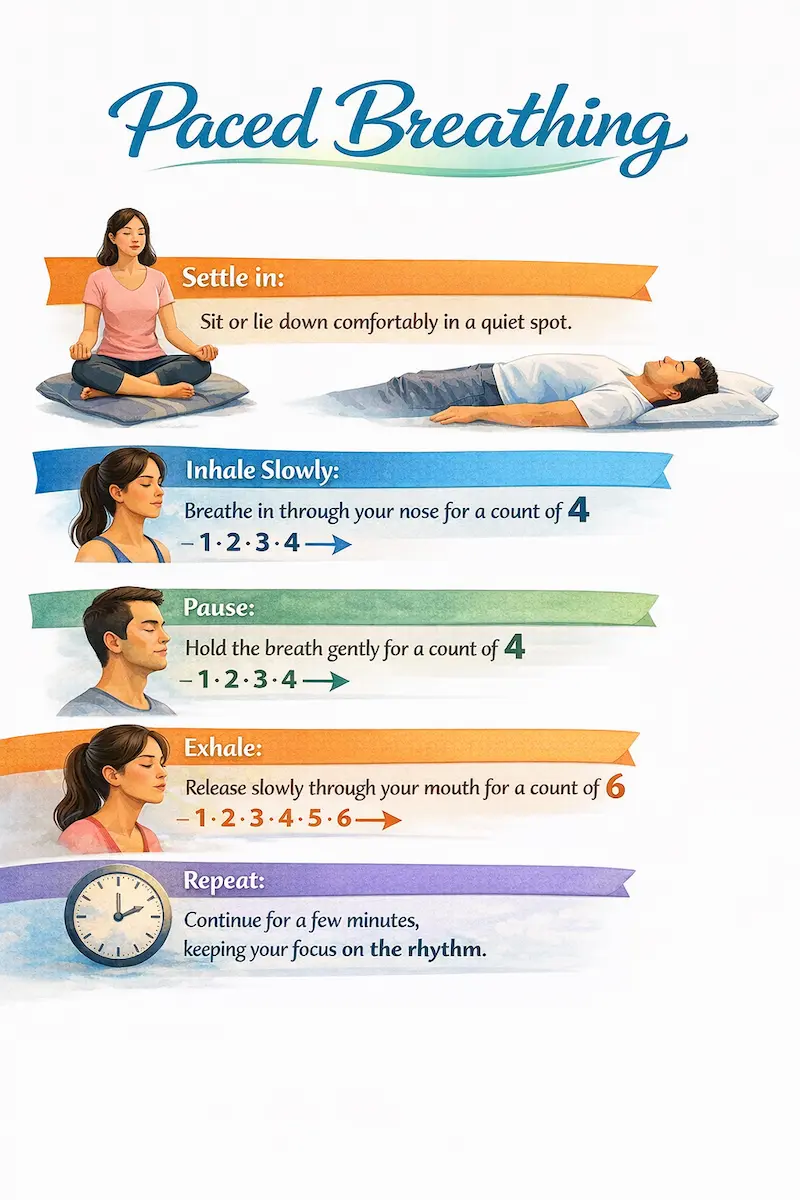
Paced breathing adds structure, which helps when nausea makes it hard to concentrate. Inhale through the nose for four counts, hold for two, exhale for six counts. Some people prefer a simple 4-6 pattern with no hold. If counting feels stressful, drop the numbers and simply make each exhale longer than the inhale.
Technique 3: Mindfulness Breathing
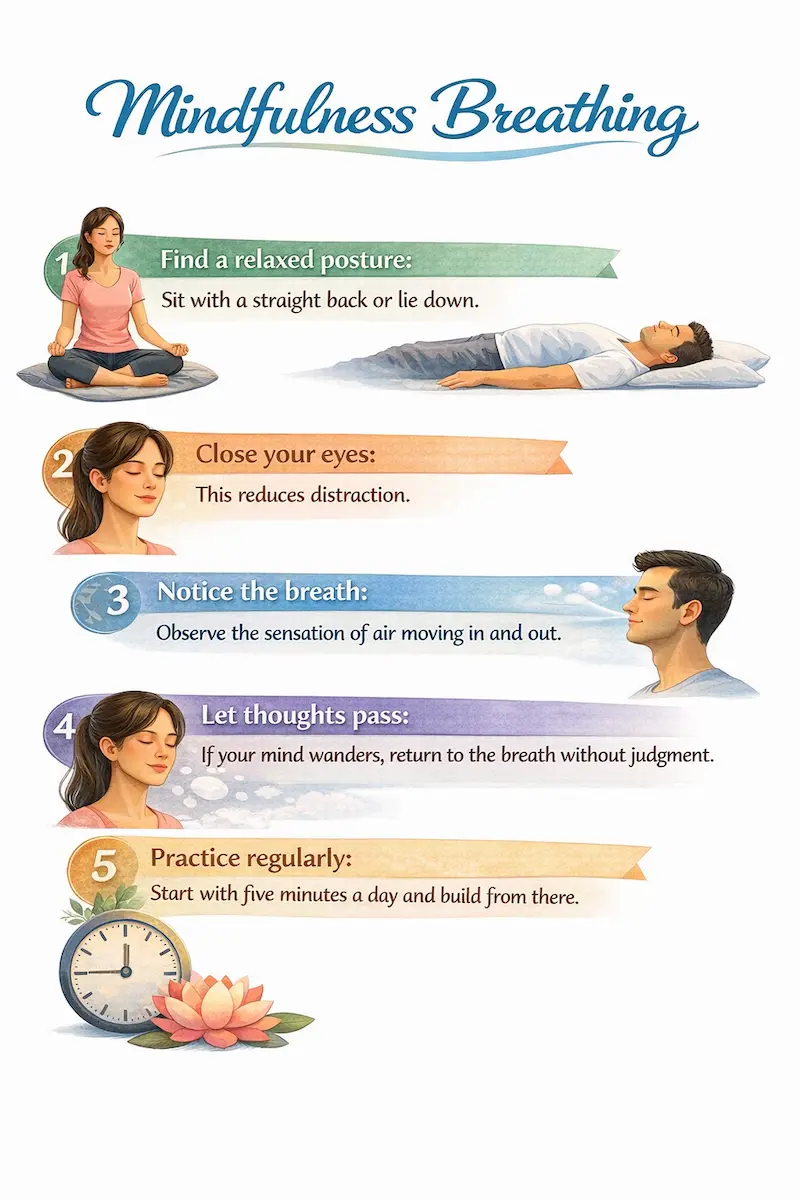
When nausea spikes, attention locks onto the sensation and amplifies it. Mindfulness breathing interrupts that loop: breathe slowly and notice each breath without judging it, labeling thoughts as they pass. Even sixty seconds of this can break the spiral of nausea plus anxiety about nausea. It will not eliminate severe nausea, but it can make mild episodes more bearable.
Combining Breathwork With Acupressure or Acupuncture
Breathing exercises pair naturally with other gentle approaches. Some patients press the P6 point on the inner wrist while breathing slowly, and acupuncture sessions themselves tend to slow the breath as relaxation sets in. It is reasonable to combine these tools, but be wary of claims that stacking them produces dramatically stronger relief. The research has not established that, and honest practitioners will not promise it.
What the evidence says: promising rationale, limited trials
Slow breathing has documented calming effects on heart rate and perceived stress, which gives the nausea application a credible foundation. Direct trials of breathwork for nausea, however, are few and small, and results are mixed. Reviews of related approaches such as acustimulation for pregnancy nausea (Cochrane, 2015) likewise find limited evidence.
The fair conclusion: breathing exercises are a sensible, zero-risk first step for mild nausea, not an evidence-backed treatment for significant vomiting. Use them freely, and seek care when symptoms cross the lines described below.
What to Expect at Messina Acupuncture
Assessment of your nausea pattern (first visit)
We ask when nausea strikes, what triggers it, and whether a medical cause needs attention first. If your symptoms suggest something beyond routine nausea, we will direct you to medical care.
Acupuncture for relaxation and symptom support
Sessions focus on calming the nervous system and easing tension that accompanies nausea. Many patients find their breathing naturally slows and deepens during treatment.
Take-home techniques
We teach the breathing patterns above plus the location of useful acupressure points, so you have practical tools for the moments nausea appears between visits.
Licensed and coordinated care. Before booking acupuncture anywhere, confirm three things: the practitioner is licensed in New York State, they use single-use sterile needles, and they will coordinate with your physician when relevant. Messina Acupuncture meets all three.
Seek prompt care for vomiting that prevents keeping fluids down for 24 hours, signs of dehydration, blood in vomit, severe abdominal pain, a stiff neck with fever, signs of pregnancy complications, or nausea and vomiting during chemotherapy that your oncology team has not addressed. These situations need medical evaluation, and self-help techniques should never delay it.
Frequently Asked Questions
Can breathing exercises really stop nausea?
They may ease mild nausea for some people by calming the nervous system and redirecting attention. They are unlikely to stop significant vomiting. Think of breathwork as a first response worth trying, not a treatment.
Which breathing pattern works best for nausea?
Most people do well with diaphragmatic breathing: in through the nose for four counts, out through the mouth for six. The key is a slow exhale longer than the inhale. Experiment to find the rhythm that feels steadiest for you.
How long should I do breathing exercises?
Two to five minutes is a good session. Even sixty seconds can help break an anxiety-nausea spiral. If nausea persists or worsens after several minutes, consider other remedies or medical advice.
Does combining breathing with acupressure work better?
Many people combine slow breathing with pressing the P6 wrist point, and the combination is reasonable to try. Claims that combined approaches produce dramatically stronger relief go beyond what research has established.
Is breathwork safe during pregnancy?
Gentle slow breathing is safe during pregnancy and is often recommended for both nausea and labor preparation. If nausea is severe or persistent, however, contact your OB, since pregnancy-related vomiting sometimes needs medical treatment.
When should I see a doctor about nausea?
See a doctor for persistent vomiting, dehydration, blood in vomit, severe pain, unexplained weight loss, or nausea tied to pregnancy complications or chemotherapy. These need evaluation, not self-help techniques.
Tired of Nausea Running Your Day?
If nausea keeps interrupting your work, your travel, or your daily life, acupuncture and practical self-care coaching may help you manage it better. Dr. Daniel Messina will assess your situation honestly and tell you whether our approach fits, or whether you need medical care first.
Messina Acupuncture PC
100 N Country Road, East Setauket, NY 11733