
Acupuncture · Whole-Person Wellness · East Setauket, NY
Pain rarely travels alone. It brings poor sleep, frayed nerves, skipped workouts, and the slow accumulation of stress that makes everything harder. A whole-person approach to acupuncture treats the symptom and the context around it: the stress, the sleep, the habits, and the goals that shape how you heal. Here is what that looks like in practice at our East Setauket clinic, and what the evidence can and cannot support.
Think of your last rough month. The shoulder flared, so you slept badly. Bad sleep made you short with your family and useless at the gym. The gym slide made the shoulder stiffer. By the time you call us, the question is not just “can you fix my shoulder” but “can you help me get my life back on track.” That is what whole-person care is for.
- Whole-person acupuncture looks at physical symptoms alongside stress, sleep, daily habits, environment, and: your goals.
- The best evidence for acupuncture remains in chronic pain, headaches, and stress-related tension. Effects for other systems are preliminary.
- Acupuncture works best as part of a coordinated plan: movement, sleep habits, nutrition, and medical care where needed.
- Traditional concepts like Qi and meridians are part of our framework. We describe them as traditional theory, not proven biology.
- Persistent mental-health symptoms, chest symptoms, or unexplained changes deserve medical evaluation first.
What Whole-Person Care Actually Means
Whole-person care starts from a simple observation: a body is not a collection of isolated parts. Your intake with us covers more than the painful area. We ask about sleep quality, stress load, digestion, activity, work demands, and what “better” would actually look like for you. That context shapes the treatment plan, because a shoulder that hurts partly because you are sleeping four hours a night needs a different strategy than one injured in a single accident.
This is not new. Classical acupuncture theory has always described health as a dynamic balance involving the whole person, not just the tissue in front of the needle. We use that framework while staying honest about what modern research can verify.
Two Frameworks, One Patient
Traditional Chinese Medicine describes health in terms of Qi (vital energy) flowing through meridian pathways, with balance among systems described as Yin and Yang. We find this framework useful for diagnosis and point selection, and we describe it as the traditional model it is. We do not claim that meridians are proven anatomical structures or that acupuncture directly rebalances hormones, neurotransmitters, or immune cells in the ways some marketing suggests.
Modern research describes acupuncture’s effects in different terms: stimulation of nerves and tissue, modulation of pain signaling, and measurable changes in stress-related physiology. These two frameworks can coexist in a treatment room. What matters is that we do not sell traditional concepts as proven biomedical fact.
What Acupuncture May Support
Here is an honest map of where the evidence stands for common wellness goals:
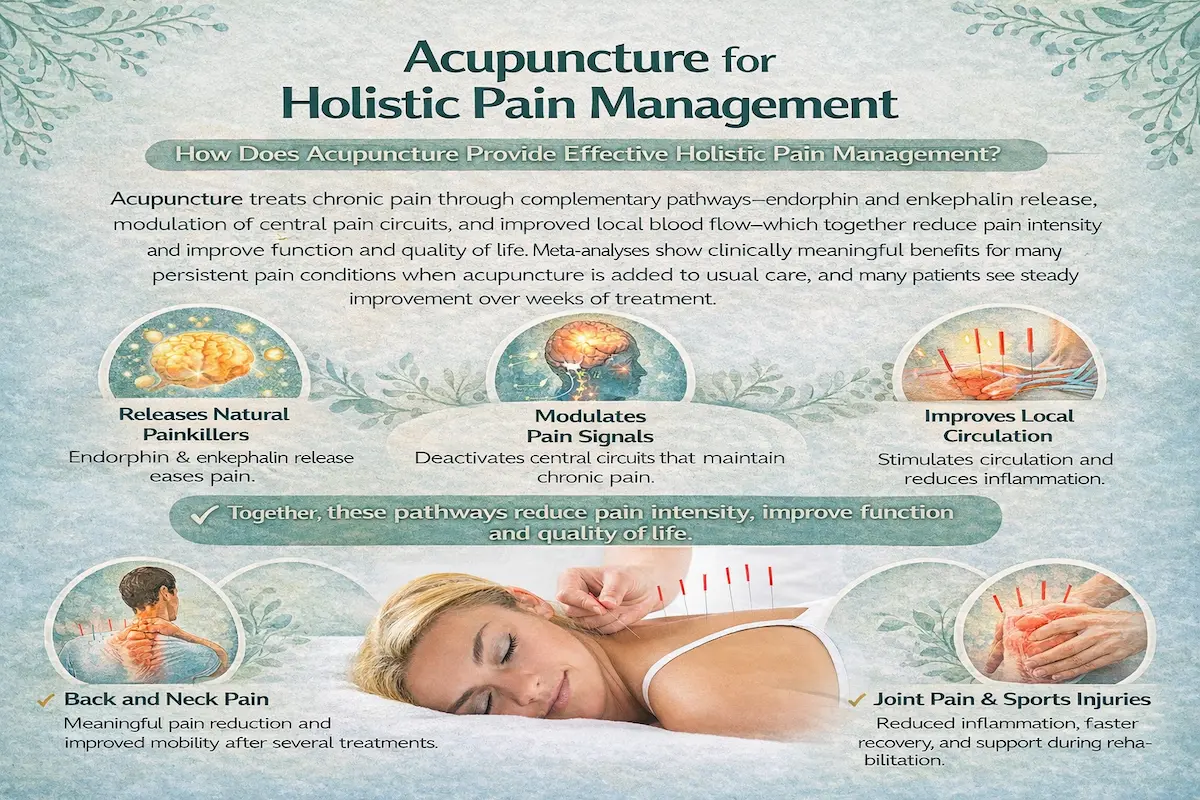
- Chronic pain: The strongest evidence base. Large reviews find acupuncture helps many patients with chronic back, neck, joint, and headache pain compared with no treatment or usual care.
- Stress and tension: Many patients report meaningful relaxation during and after sessions. Acupuncture may help some people manage stress-related muscle tension and restlessness as part of a broader plan.
- Sleep: Some studies suggest acupuncture may improve sleep quality for certain patients, possibly in part by reducing pain and calming pre-sleep arousal. Evidence is modest.
- Headaches: Reasonable evidence for tension-type and migraine headaches as a preventive approach for some patients.
- Digestion, immunity, energy, hormones: Preliminary or theoretical only. We do not claim acupuncture treats these systems directly. If you have persistent digestive, immune, hormonal, or fatigue concerns, medical evaluation comes first, and acupuncture may play a supportive role alongside it.
The Modalities in a Wellness Plan
A whole-person plan at Messina may combine several tools, depending on what your assessment shows:
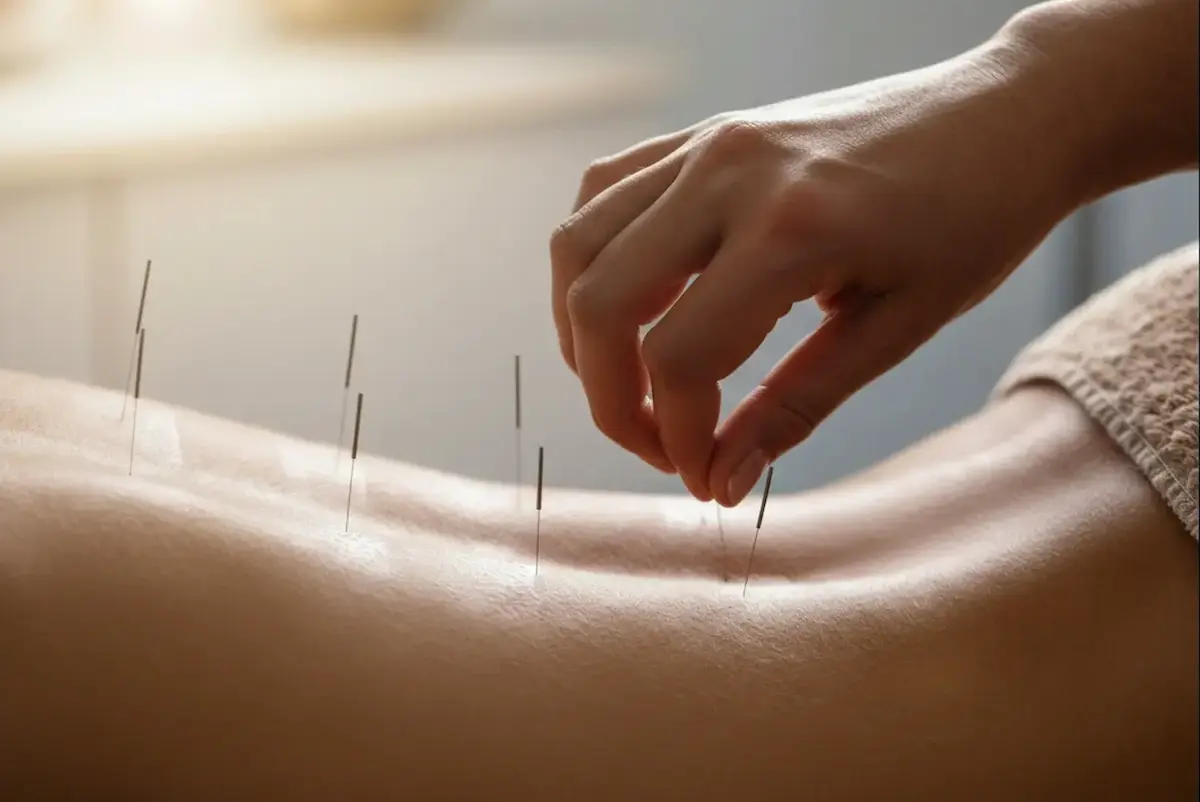
- Acupuncture: The core modality, for pain, tension, headaches, and stress-related symptoms.
- Dry needling: A Western-framework technique targeting muscular trigger points, often used for stubborn knots and movement restrictions. Learn more on our dry needling page.
- Medical massage: Assessment-led manual therapy focused on specific functional goals rather than general relaxation.
- Acupressure guidance: Simple points patients can press at home between visits to extend the benefit of a session.
No plan includes everything. We recommend only what your presentation suggests is useful, and we tell you why.
What the Research Actually Shows
The most rigorous evidence for acupuncture comes from chronic pain research. A landmark individual-patient meta-analysis (Vickers et al., 2012, covering nearly 18,000 patients) found acupuncture superior to both sham and no-acupuncture controls for chronic back and neck pain, osteoarthritis, and chronic headache. The advantage over sham was real but modest, which is typical for pain interventions and consistent with acupuncture having both specific and context-dependent effects.
For wellness claims beyond pain, the honest summary is shorter: there is no comparable body of high-quality evidence that acupuncture directly improves immunity, digestion, or hormonal balance. Claims about cortisol, vagal tone, or neurotransmitter rebalancing are mostly extrapolated from small or preliminary studies. We mention them because patients ask, and we qualify them because the evidence does.
The National Center for Complementary and Integrative Health (NCCIH) maintains the most balanced public summary of acupuncture’s evidence and safety, and we encourage patients to read it alongside anything a clinic tells you.
Your First Visit: What to Expect at Messina
Step 1: A Full-Picture Intake
We go beyond the chief complaint: sleep, stress, activity, medical history, and medications. This is also where we screen for anything that needs a physician first. See our acupuncture services and meet our team for background on how we practice.
Step 2: A Plan With Priorities
We identify what to treat first, which modalities fit, and what you can do at home. Wellness goals get translated into concrete targets, such as pain levels, sleep hours, or activity milestones.
Step 3: Reassess Honestly
We check progress against those targets. If something is not working, we change the approach or refer you to a more appropriate provider. A plan that never gets questioned is not a plan.
Acupuncture supports wellness. It does not replace medical care. Seek prompt medical evaluation for chest pain or pressure, unexplained weight loss, persistent fever, new neurological symptoms, severe depression or anxiety, or any symptom that is rapidly worsening. If you take prescription medication, keep taking it as directed and coordinate any changes with your prescribing physician. And if you are experiencing a mental-health crisis, contact a licensed mental-health professional or crisis line rather than relying on acupuncture alone.
Licensed, Regulated Care in New York. Acupuncture in New York State is a licensed profession overseen by the New York State Education Department. Messina Acupuncture’s practitioners are New York State licensed acupuncturists (L.Ac.) using sterile single-use needles and documented safety protocols. Whole-person philosophy does not mean improvised medicine: your care follows a documented assessment, a defined plan, and clear referral standards. Our FAQ page answers common first-visit questions.
Frequently Asked Questions
Can acupuncture really help with stress and sleep, or is that just relaxation?
Both can be true. Sessions are genuinely restful, and rest itself has value. There is also modest evidence that acupuncture may help some patients with stress-related tension and sleep quality, often as part of reducing pain. We do not claim it treats anxiety disorders or insomnia on its own.
Do I need to believe in Qi for acupuncture to work?
No. Many patients are skeptical and still report benefit. We explain the traditional framework because it guides our point selection, but your treatment does not require belief in it.
How is a wellness plan different from coming in for pain?
The intake is broader, the goals are wider, and the plan may combine modalities such as acupuncture, dry needling, and medical massage with home strategies. The visit rhythm may also be steadier, aimed at maintaining gains rather than chasing a single flare.
Can acupuncture replace my medications?
No. Never stop or change prescription medication without your prescribing physician’s guidance. Acupuncture may be a useful complement to medical care, and any medication changes must be coordinated with your doctor.
How often would I come in for a wellness plan?
It depends on your goals and how you respond. Many patients start weekly or biweekly, then taper to monthly or as-needed maintenance. We set the schedule from your reassessment results, not from a package.
What should I do between sessions to support the plan?
The unglamorous basics matter most: consistent sleep, daily movement, and managing the stressors you can control. We give specific, realistic home strategies at each visit rather than generic lifestyle lectures. Call (631) 403-0504 to talk through a plan for your situation.
Ready for a Whole-Person Plan?
Start with a thorough intake where we look at the full picture, not just the painful spot. We will build a realistic plan around your symptoms, your schedule, and your goals.
Messina Acupuncture PC
100 N Country Road, East Setauket, NY 11733
Sources and Further Reading
- Vickers AJ, et al. Acupuncture for chronic pain: individual patient data meta-analysis. Archives of Internal Medicine, 2012. PubMed 22965186
- National Center for Complementary and Integrative Health. Acupuncture: effectiveness and safety. NCCIH
- New York State Education Department. Acupuncture consumer information. NYSED