
Aftercare · East Setauket, NY
It is common to feel different for a day or two after acupuncture: tired, a little sore, headachy, or unexpectedly emotional. Our clinic calls these short-term adjustment responses “detox symptoms.” This guide explains what they are, why they happen, how long they last, and how to tell normal post-treatment effects from warning signs.
She had her first acupuncture session on a Tuesday afternoon for chronic neck tension. The treatment itself was deeply relaxing. That evening, though, she felt unusually tired, and by Wednesday morning she had a dull headache and a wave of irritability she could not quite explain. She wondered if something had gone wrong, or whether acupuncture was simply not for her.
Nothing had gone wrong. What she experienced is one of the most common things our patients report, and it is the reason we wrote this guide. At Messina Acupuncture, we want every patient in East Setauket to understand what is normal after treatment, what helps, and what deserves a phone call.
- What they are: mild, short-term physical and emotional responses as your body integrates treatment. Our practice calls them detox or adjustment symptoms.
- How common: fatigue, muscle soreness, mild headache, and emotional shifts are the most frequently reported. Most patients experience at least one after their first few sessions.
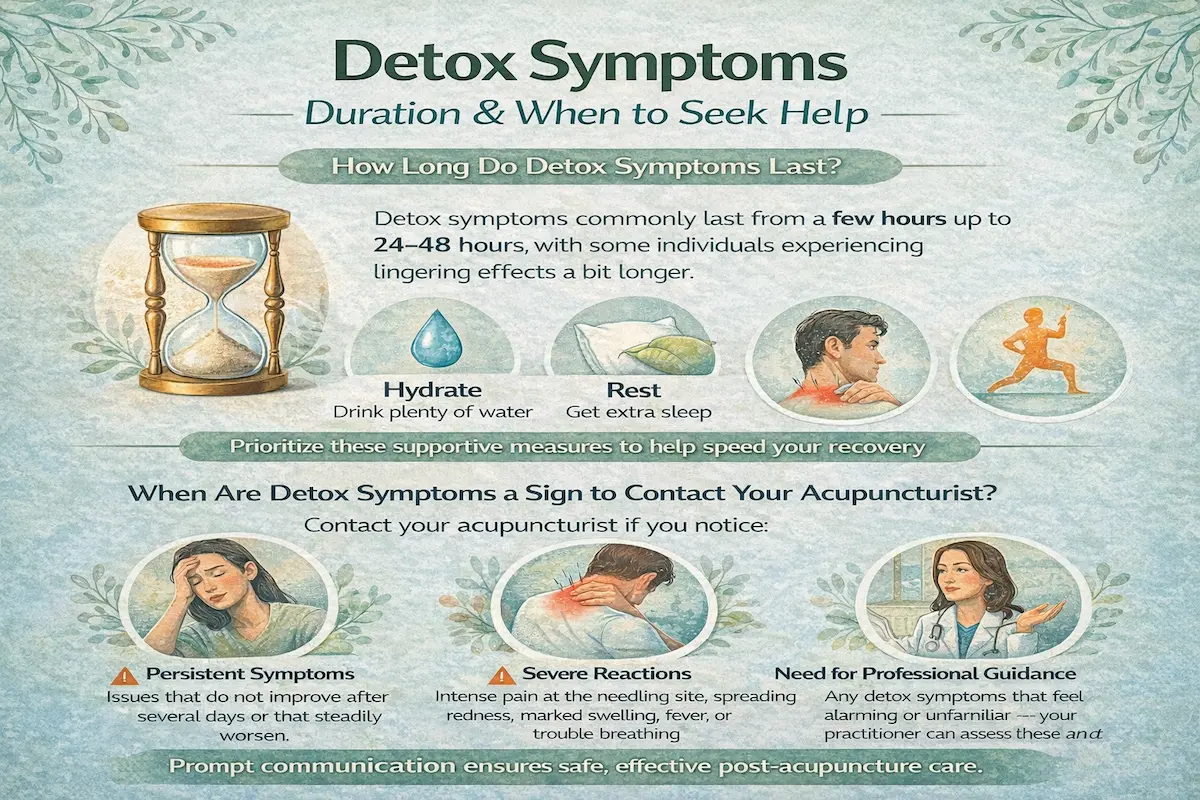
- Timeline: most effects appear within hours of treatment and resolve within 24 to 48 hours.
- Safety context: acupuncture from a trained, licensed practitioner has a strong safety record; serious adverse events are rare, per the National Center for Complementary and Integrative Health.
- The key distinction: mild and fading is normal. Severe, worsening, or persistent symptoms are not, and they warrant a call to your provider or physician.
What “Detox Symptoms” Means in This Context
Let us be clear about the word “detox.” Your liver and kidneys handle actual detoxification around the clock; acupuncture does not cleanse toxins from your body in the way juice cleanses claim to. When our clinic talks about detox symptoms after acupuncture, we mean the mild, temporary responses that can follow a session as your nervous system shifts, circulation changes, and muscles release long-held tension.
Think of it as an adjustment period. Acupuncture nudges multiple systems at once: it downregulates the sympathetic “fight or flight” response, increases local blood flow, and releases muscular holding patterns. That is a lot of change for one session, and your body needs a day or so to settle into the new state.
Common Physical Detox Symptoms
- Fatigue: the most common response. Many patients feel deeply tired or unusually relaxed the evening after treatment as the parasympathetic nervous system takes over.
- Muscle soreness: a mild post-workout ache near treated areas, typically fading within 48 hours.
- Mild headache: tension release and circulation changes can trigger a brief, tension-style headache.
- Lightheadedness: occasional and brief, more likely if you arrived hungry or dehydrated.
- Minor bruising or tenderness: small marks at needle sites that fade within a few days.
- Digestive shifts: mild bloating or nausea as the digestive system responds to nervous system changes.
Emotional Responses Are Normal Too
Some patients feel unexpectedly tearful, irritable, or simply lighter after a session. In Traditional Chinese Medicine, emotions are understood to be stored in the body, and releasing chronic muscular tension can release the feelings held with it. From a Western perspective, the same shift can be explained by the sudden drop in stress hormones and the nervous system moving from high alert to rest.
Either way, the experience is common and temporary. It does not mean the treatment went wrong, and it does not mean you are unusually sensitive. It means your system is processing change.
Why Do These Symptoms Happen?
The physiology behind post-treatment responses
Acupuncture activates the parasympathetic nervous system, the branch responsible for rest and recovery. That shift can feel heavy or tiring, especially if you arrived at your session running on stress and caffeine. Needling also increases local blood flow to treated tissues and modulates pain signaling in the spinal cord and brain. Each of these is a real physiological change, and each can produce a short adjustment period. The NCCIH notes that while acupuncture is generally safe, minor side effects such as soreness, bruising, and transient fatigue are the effects most commonly reported.
First sessions tend to produce the strongest responses. As your body becomes familiar with treatment, post-session effects usually become milder, which is one reason regular patients often report feeling energized rather than tired after later visits.
What Helps: The Short Version
Rest, hydration, and a normal meal cover most of it. Avoid strenuous exercise and alcohol for 24 hours, take a gentle walk or warm bath if you feel sore, and give yourself permission to go to bed early. For the full practical checklist, see our companion guide: 10 tips to manage detox symptoms after acupuncture.
We prepare you before it happens. Every new patient at Messina Acupuncture receives aftercare guidance at their first visit, so post-treatment effects never come as a surprise. If you are ever unsure whether what you are feeling is normal, call us at (631) 403-0504. We would rather answer a quick question than have you worry. You can also review our frequently asked questions for more on what to expect from care.
Normal: mild fatigue, soreness, headache, or emotional shifts that appear within hours and fade within 1 to 2 days.
Call us or your physician if: symptoms are severe or worsening rather than fading; you develop fever, spreading redness, or swelling at a needle site; you experience chest pain, fainting, persistent dizziness, or difficulty breathing; or any reaction lasts beyond a few days. Acupuncture should never delay evaluation of a potentially serious medical issue.
Frequently Asked Questions
Are detox symptoms a sign the acupuncture is working?
Not necessarily, and their absence does not mean treatment failed. Post-treatment responses vary widely between people and even between sessions. Symptom improvement over the course of care is the meaningful measure, not how tired you feel afterward.
How long do detox symptoms last after acupuncture?
Most appear within hours of treatment and resolve within 24 to 48 hours. Fatigue is often same-evening only. If any symptom persists beyond a few days or worsens instead of fading, contact us or your physician.
Is it normal to feel emotional after acupuncture?
Yes. Temporary tearfulness, irritability, or a sense of lightness are commonly reported as muscular tension releases and stress hormones drop. These feelings are temporary and typically pass within a day.
Do detox symptoms happen after every session?
Usually not. First sessions tend to produce the strongest responses. As treatment continues, post-session effects typically become milder, and many regular patients feel energized rather than tired afterward.
Should I cancel my plans after an acupuncture session?
You do not need to clear your schedule, but plan a lighter evening: avoid intense workouts and alcohol for 24 hours, eat normally, and get to bed at a reasonable hour. Most people return to normal activity the next day.
When should I worry about a reaction?
Call us or your physician for severe or worsening symptoms, fever, spreading redness or swelling at a needle site, chest pain, fainting, persistent dizziness, or difficulty breathing. Mild and fading is normal; severe or persistent is not.
New to Acupuncture? We Will Walk You Through It
Knowing what to expect makes all the difference. At Messina Acupuncture, every treatment plan includes clear aftercare guidance, and our team is a phone call away if you ever have questions about how you feel after a session.
Messina Acupuncture PC
100 N Country Road, East Setauket, NY 11733