

Motion sickness can turn a fun trip into an uncomfortable, anxious experience. Knowing the most effective ways to prevent and treat it—especially acupuncture, herbal supports, and simple practical steps—helps you travel more comfortably. This guide explains what causes motion sickness, common symptoms, and easy-to-use treatments you can try before and during travel so you spend more time enjoying your trip and less time feeling unwell.
What Is Motion Sickness and How Does It Affect Travelers?
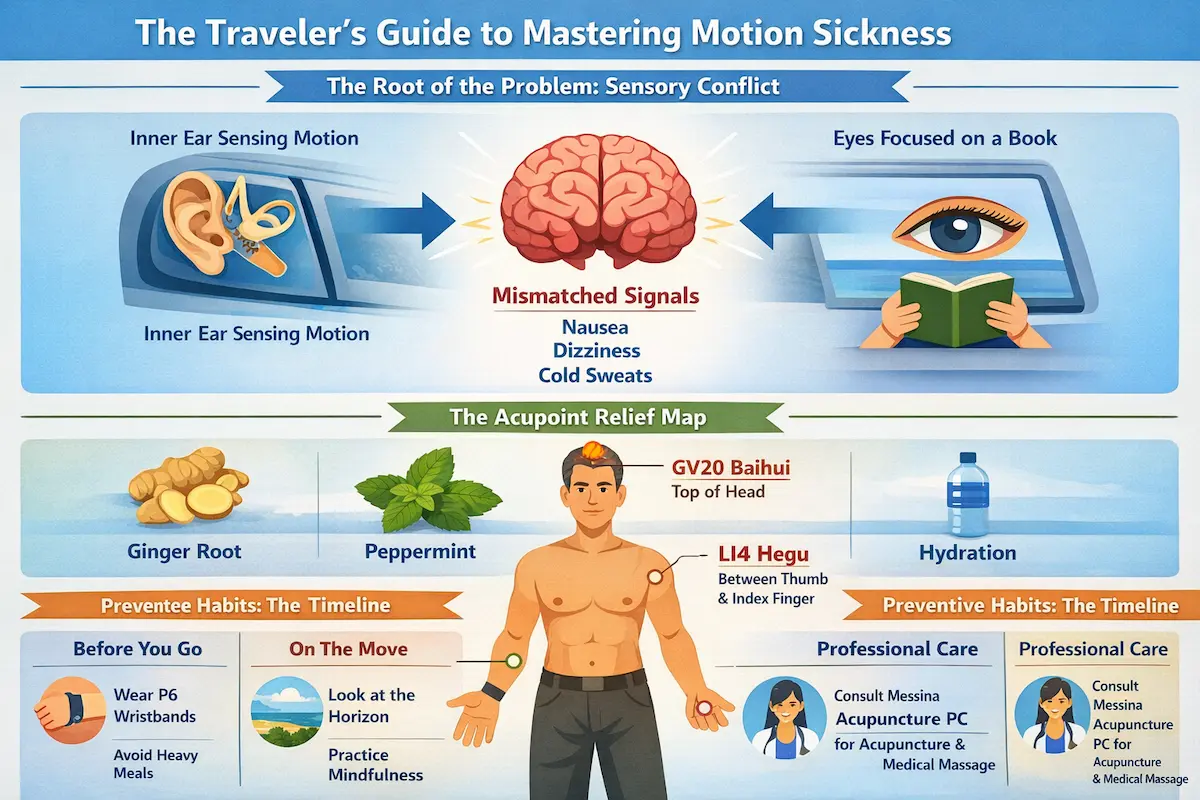
Motion sickness happens when the brain receives conflicting signals from the inner ear, eyes, and body. That mismatch often shows up as nausea, dizziness, sweating, or lightheadedness. It can occur in cars, planes, boats, or trains and sometimes becomes severe enough that people avoid certain types of travel. Understanding how and why it happens makes it easier to reduce symptoms and travel more comfortably.
Clinicians and researchers generally agree that motion sickness stems from sensory conflict and produces a predictable cluster of symptoms for many travelers.
Motion Sickness: Causes, Symptoms, and Prevention
Motion sickness has long accompanied travel by ship and other vehicles. It typically appears during unusual or conflicting movement when visual, vestibular (inner ear), and motor signals don’t agree. Different motions produce different forms of sickness—air sickness, car sickness, seasickness, and so on. Only a small number of people are extremely prone or extremely resistant; most fall somewhere in between. Common symptoms include nausea, vomiting, weakness, and cold sweating. Various medications can reduce susceptibility, but many people also experience pallor, headache, dizziness, increased salivation, drowsiness, belching, and rapid breathing.
Motion Sickness Manifestations and Prevention, GP Kumar, 2020
What Causes Motion Sickness and Its Common Symptoms?
Motion sickness most often results from conflicting information sent to the brain by the inner ear, eyes, and body. A familiar example is reading in a moving car: your eyes focus on a stationary page while your inner ear senses motion. That mismatch can trigger nausea, vomiting, dizziness, cold sweats, and sometimes headaches. Factors such as anxiety, fatigue, or the type of motion can make symptoms worse. Identifying your triggers early helps you manage symptoms and enjoy your trip.
How Does Motion Sickness Impact Travel Experience and Wellness?
Beyond physical discomfort, motion sickness can affect how people travel—leading to missed activities, increased anxiety, and a reduced sense of well-being. Left unaddressed, it can make trips feel stressful rather than enjoyable. Learning preventive and treatment strategies protects both your comfort and peace of mind, improving the overall travel experience.
How Can Acupuncture Provide Relief for Motion Sickness?
Acupuncture is a drug-free option many travelers use to reduce nausea and dizziness. Thin needles placed at specific points stimulate nerves and circulation and help rebalance the body. Research and clinical practice point to points like P6 on the wrist for reducing nausea and vomiting. Acupuncture can provide quick relief during episodes and may also improve how the body responds to motion over time.
| Acupuncture Point | Mechanism | Benefit |
|---|---|---|
| P6 (Neiguan) | Stimulates the vagus nerve | Reduces nausea and vomiting |
| ST36 (Zusanli) | Enhances digestive function | Improves overall gastrointestinal health |
| PC6 (Neiguan) | Balances energy flow | Alleviates anxiety and stress |
Because it’s nonpharmaceutical and can be tailored to the individual, acupuncture is a practical option for travelers who prefer natural approaches or want to avoid medication side effects.
Which Acupressure Points, Including P6, Are Effective for Nausea Relief?
Several acupressure points can help control motion-related nausea. The P6 point on the inner wrist is the most widely used and can be pressed by hand, bands, or needles. ST36 supports digestion, and PC6 can ease anxiety that worsens nausea. These points are easy to access while traveling and can offer quick, drug-free relief.
- P6 (Neiguan): About three finger-widths below the wrist crease on the inner forearm. Often targeted by acupressure wristbands to ease nausea.
- ST36 (Zusanli): Located roughly four finger-widths below the kneecap; supports digestion and overall gut health.
- PC6 (Neiguan): Found about two finger-widths above the wrist crease; useful for reducing anxiety and stress that can make motion sickness worse.
These simple acupressure techniques can be used during travel to reduce nausea without medication.
What Are the Benefits of Personalized Acupuncture Treatments at Messina Acupuncture PC?
At Messina Acupuncture PC, we customize treatments to fit each person’s symptoms and overall health. This individualized approach can improve circulation, ease pain, reduce stress, and restore energy balance—factors that often lower vulnerability to motion sickness. By addressing your specific triggers and patterns, tailored acupuncture care can offer more reliable and lasting relief than one-size-fits-all methods.
Our clinic blends traditional acupuncture with modern assessment to create a calm, professional environment that supports recovery and travel readiness.
What Natural and Herbal Remedies Help Prevent and Treat Motion Sickness?
Natural remedies are often effective for motion sickness and travel-friendly. Ginger and peppermint are among the most reliable—ginger for nausea and peppermint for stomach comfort—and both come as teas, candies, or capsules. Simple techniques like deep breathing calm the nervous system and reduce anxiety that can worsen symptoms.
- Ginger: Effective against nausea; available as tea, capsules, or hard candies for on-the-go relief.
- Peppermint: Soothes the stomach and can be taken as tea or used as a diluted inhalant for short-term relief.
- Deep Breathing Techniques: Calms the nervous system and lowers anxiety, helping to reduce motion-related nausea.
Adding these gentle remedies to your travel toolkit gives you options beyond medication and helps manage symptoms whenever they arise.
How Do Herbal Treatments Like Ginger Support Nausea Relief?
Ginger contains compounds such as gingerol and shogaol that decrease inflammation and support digestion—effects that help curb nausea. Clinical studies and traditional use support ginger’s role for motion-related nausea. It’s portable and versatile as fresh root, tea, candy, or capsules, making it a practical choice for travelers.
Using ginger during travel can reduce reliance on pharmaceuticals while still offering meaningful symptom relief.
What Are Other Recommended Natural Remedies and Their Effectiveness?
Beyond ginger, several nonpharmaceutical approaches can ease motion sickness. Acupressure—by hand or with wristbands—often produces quick relief. Medical massage can relax muscles and lower anxiety. A healthcare provider can recommend personalized strategies or complementary treatments that fit your needs.
- Acupressure Techniques: Targeted pressure can quickly ease nausea and discomfort without drugs.
- Medical Massage: Helps relax tense muscles and reduce stress, improving overall comfort during travel.
- Consultation with Healthcare Providers: A clinician can suggest tailored options, from lifestyle changes to combined therapies, for safer and more effective relief.
When combined into a travel plan, these options increase comfort and reduce the chance of severe motion sickness.
Which Preventive Methods Can Travelers Use to Minimize Motion Sickness?
Preventive steps can greatly lower the risk of motion sickness. Try acupressure or wristbands before symptoms begin, stay hydrated, and avoid heavy meals before traveling. Small behavioral changes and simple tools make a big difference in how well you tolerate motion.
- Acupressure Techniques: Use before travel to reduce the likelihood of nausea developing.
- Wristbands: Designed to press the P6 point continuously; discreet and effective for many travelers.
- Behavioral Tips: Drink water, avoid greasy or heavy foods before a trip, and rest when possible to lower symptoms.
These practical measures help keep trips comfortable and reduce interruptions from motion sickness.
How Do Acupressure Wristbands Work to Reduce Symptoms?
Acupressure wristbands apply steady pressure to the P6 point at the inner wrist, stimulating nerves that help regulate nausea. They are noninvasive, simple to wear, and provide continuous pressure during travel, making them a handy, drug-free option many people find useful.
Because they’re easy and discreet, wristbands are a popular first-line choice for travelers seeking natural relief.
What Lifestyle and Behavioral Tips Support Travel Sickness Prevention?
Alongside acupressure and herbal remedies, everyday habits support prevention. Stay hydrated, choose light, low-fat meals before traveling, and use stress-reduction practices like deep breathing or brief mindfulness. These measures help reduce both the chance and severity of motion sickness.
- Hydration: Adequate fluids support overall well-being and help prevent symptoms during travel.
- Dietary Recommendations: Light, low-fat meals are less likely to trigger nausea or digestive upset on the move.
- Stress Management Techniques: Deep breathing, meditation, or short mindfulness practices can lower anxiety and improve motion tolerance.
Putting these tips into practice makes travel more comfortable and lowers the chance that motion sickness will interfere with your plans.
How to Book Acupuncture Services for Motion Sickness Relief at Messina Acupuncture PC?
Booking acupuncture at Messina Acupuncture PC is simple. Contact the clinic by phone or online to make an appointment. At your first visit, practitioners review your health history and symptoms and design a treatment plan tailored to your needs. Bringing a short list of symptoms and any relevant medical information helps the team prepare the most effective, personalized care.
We strive to offer a calm, professional setting where patients find relief and build confidence in their ability to travel comfortably.
What to Expect During Your Initial Consultation and Treatment Plan?
At the initial consultation, we’ll take a detailed health history and discuss how motion sickness affects you. That assessment shapes a customized treatment plan that may include acupuncture, acupressure training, herbal suggestions, or other supportive therapies. Open communication helps set goals and ensures you feel informed and involved in your care.
This collaborative approach supports better outcomes and helps you manage motion sickness on future trips.
How to Schedule Appointments and Prepare for Acupuncture Sessions?
To schedule, call the clinic or use the online booking option. For appointments, bring notes about your symptoms and medical history, and wear comfortable clothing that allows easy access for treatment. These simple preparations make your session more efficient and effective.
Preparing this way helps you get the most from acupuncture and supports better results for motion sickness relief.
Additional Acupressure Techniques and Their Benefits
In addition to common points like P6, ST36, and PC6, other acupressure points can help with related symptoms such as dizziness, headache, and fatigue. These points can be pressed manually or with tools during travel to improve comfort.
| Acupressure Point | Location | Benefit |
|---|---|---|
| LI4 (Hegu) | Between thumb and index finger | Relieves headache and reduces stress |
| GV20 (Baihui) | Top of the head, center | Improves dizziness and mental clarity |
| SP6 (Sanyinjiao) | About four finger-widths above the inner ankle bone | Supports relaxation and reduces fatigue |
Frequently Asked Questions:
What is motion sickness?
Motion sickness is a condition caused by mismatched signals sent to the brain from the inner ear, eyes, and body. It commonly leads to symptoms like nausea, dizziness, and sweating during travel.
How can acupuncture help with motion sickness?
Acupuncture can reduce symptoms by stimulating points such as P6 on the wrist, which helps ease nausea and vomiting, and by improving circulation and energy balance to relieve discomfort.
Are there natural remedies for motion sickness?
Yes. Natural remedies like ginger and peppermint are effective for preventing and treating motion sickness—ginger for nausea and peppermint for stomach comfort. Deep breathing techniques also help calm the nervous system.
What preventive measures can travelers take to avoid motion sickness?
Travelers can use acupressure wristbands on the P6 point, stay hydrated, avoid heavy meals before travel, and practice stress-management techniques to lower the risk of motion sickness.
How do acupressure wristbands work?
Acupressure wristbands apply steady pressure to the P6 point on the inner wrist, stimulating nerves that help regulate nausea. They provide a drug-free, noninvasive way to reduce motion sickness symptoms.
What should I expect during an acupuncture consultation for motion sickness?
During your initial consultation, we will review your health history and symptoms to create a personalized treatment plan that may include acupuncture, acupressure guidance, and herbal recommendations tailored to your needs.