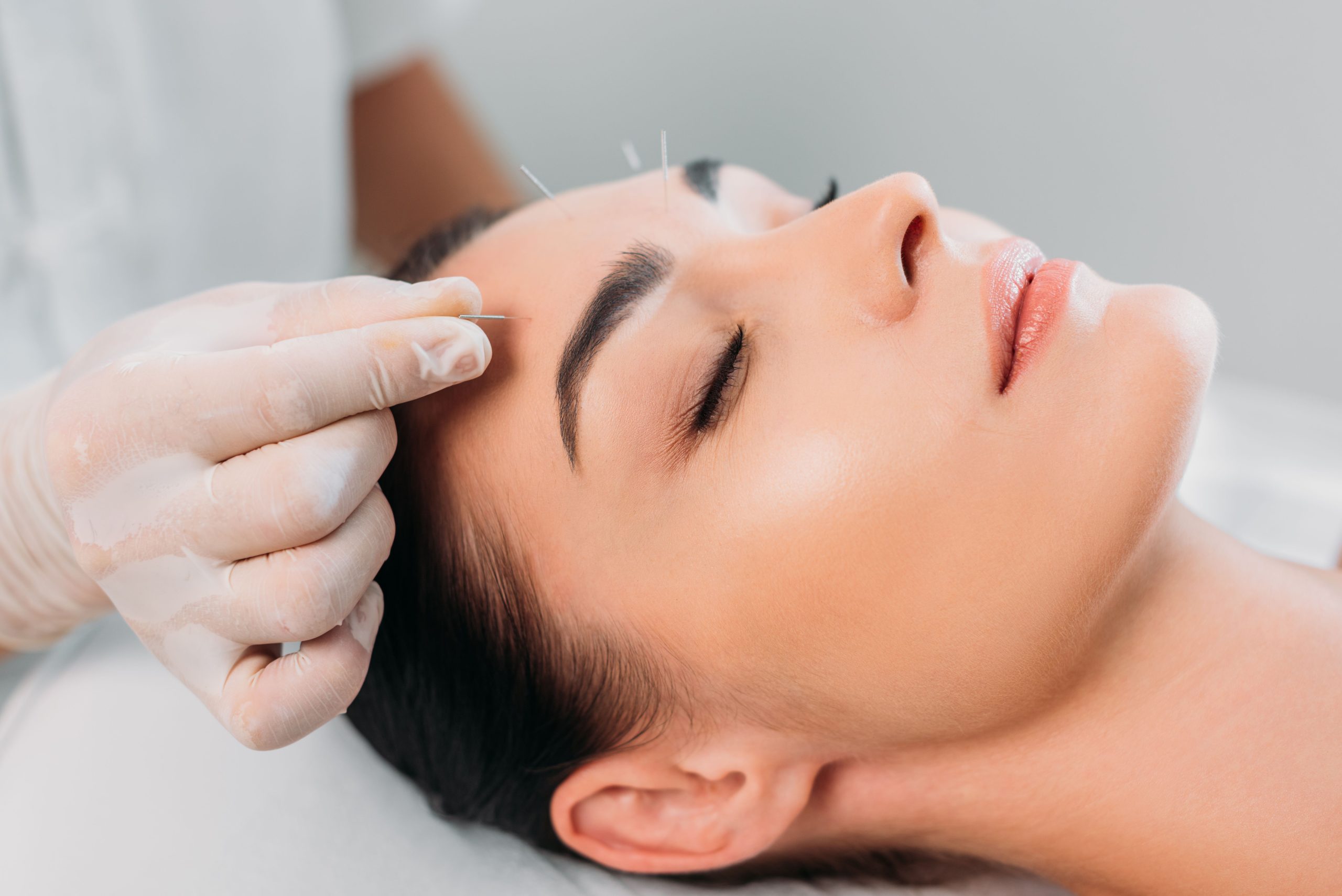
If you live with migraines, you know that calling it “just a headache” is an insult. A migraine is a neurological event that can steal entire days of your life. The sensitivity to light that forces you into a dark room. The nausea that makes eating impossible. The throbbing pain behind one eye that medications sometimes can’t touch.
For many patients, the standard route of care involves a cocktail of triptans (like Imitrex), NSAIDs, or preventative Botox injections. While these can help, they often come with side effects, diminishing returns, or incomplete relief. This leaves many asking: “Is there a way to address the root cause without more medication?”
The answer gaining traction in the medical community is dry needling. But how can a needle in your neck stop a pain in your brain? Let’s explore the fascinating neuroscience that connects your cervical spine to your migraines.
The Anatomy of a Migraine: Why Your Neck Matters
To understand why dry needling works for migraines, you need to understand where the pain signal actually originates. Most people assume migraines start exclusively in the brain. However, decades of research point to a crucial anatomical structure that connects your neck to your head pain: the Trigeminocervical Complex (TCC).
The Trigeminocervical Complex: Your Pain Processing Hub
The TCC is a critical structure in your brainstem where sensory fibers from two major nerve systems converge and synapse onto shared second-order neurons[1]. These are:
- The Trigeminal Nerve (Cranial Nerve V) – responsible for sensation in your face, head, and the meninges (the protective layers around your brain)
- The Upper Cervical Spinal Nerves (C1-C3) – which transmit sensory information from your upper neck muscles, joints, and ligaments
This convergence was first demonstrated in 1961 when researchers showed that neurons in the upper cervical spinal cord responded to stimulation of both the trigeminal nerve and cervical spinal nerves[2]. Because these pathways share the same neurons, your brain can get confused about the source of incoming pain signals.
Referred Pain: Why Your Neck Feels Like Your Head
When you have a tight, chronically contracted muscle in your upper neck—such as your upper trapezius or suboccipital muscles—it sends constant nociceptive (pain) signals to the TCC. Because trigeminal and cervical nerves converge here, your brain misinterprets this neck input as head pain. This phenomenon is called referred pain, and it explains why:
- Neck dysfunction can activate the TCC and trigger migraines
- Many migraine patients report neck pain as an accompanying or prodromal symptom
- Treatment targeting the neck can reduce migraine symptoms in many patients
Central Sensitization: When Everything Becomes a Trigger
When muscles in your neck are chronically tight—from stress, poor posture, injury, or repetitive strain—they bombard the TCC with continuous nociceptive input. Over time, this leads to central sensitization: the nervous system becomes hyperexcitable and develops a “hair-trigger” response.
Suddenly, stimuli that shouldn’t cause pain—a change in barometric pressure, a glass of wine, bright lights, or normal neck movements—can trigger a full migraine cascade. Research has shown that this sensitization can cause allodynia (pain from normally non-painful stimuli) and hyperalgesia (exaggerated pain response), both hallmarks of chronic migraine.
Dry needling aims to interrupt this cycle by addressing the peripheral muscular input—essentially “turning down the volume” on the pain signals reaching the TCC from your neck.
Ready to address the root cause of your migraines?
What Is Dry Needling?
Dry needling is a targeted therapeutic technique where a licensed practitioner inserts a thin, solid filament needle directly into a myofascial trigger point (MTrP) within the muscle. Unlike acupuncture, which is based on traditional Chinese medicine concepts of energy meridians and Qi, dry needling is grounded in Western anatomical and neurophysiological principles. It specifically targets the mechanical release of muscle knots and the neurological modulation of pain.
Understanding Myofascial Trigger Points
A myofascial trigger point is defined as a hyperirritable spot within a palpable taut band of skeletal muscle. These spots are characterized by:
- A nodule of contracted muscle fibers that can be felt on palpation
- Local and referred pain patterns when compressed
- A characteristic “jump sign” when stimulated
- Elevated concentrations of inflammatory and pain-signaling chemicals
Trigger points can be active (spontaneously causing pain and reproducing your headache pattern when pressed) or latent (only painful when directly compressed). Studies have consistently found that patients with chronic tension-type headaches and migraines have significantly more active trigger points in their head, neck, and shoulder muscles compared to healthy individuals[5].
The Local Twitch Response: Resetting the Muscle
When the needle penetrates a trigger point, it often elicits a local twitch response (LTR)—an involuntary, momentary contraction of the muscle fibers in the taut band. This reflex is both diagnostic (confirming you’ve hit the trigger point) and therapeutic.
The therapeutic mechanisms include:
- Mechanical Reset: The twitch response helps release the sustained contraction of muscle fibers, allowing them to lengthen and relax. This reduces tension on surrounding structures, including vertebrae and nerves.
- Biochemical Changes: Research has shown that trigger points contain elevated concentrations of inflammatory chemicals including bradykinin, substance P, and CGRP (calcitonin gene-related peptide—a key player in migraine pathophysiology). Needling has been shown to reduce these chemical concentrations, possibly through improved local blood flow that “flushes” the area.
- Neurological Downregulation: By resolving the constant pain signal from the neck muscles, dry needling can reduce the nociceptive input to the TCC. This may help reverse central sensitization over time, making your nervous system less reactive to migraine triggers.
- Descending Pain Inhibition: Some research suggests that needling activates descending inhibitory pathways from the brainstem, which can suppress pain signal transmission at the spinal cord level.
The “Migraine Muscles”: Where We Target
Migraine pain patterns are remarkably predictable. Research has established that specific muscles refer pain to specific parts of the head. During your session at Messina Acupuncture, we systematically map your pain to identify the likely culprits.
Upper Trapezius
Referral Pattern: The upper trapezius creates the classic “question mark” pain pattern. Pain starts at the base of the neck, travels up the posterolateral aspect of the neck to the mastoid process, and curls around to the temple and behind the eye. This is one of the most common sources of tension headaches.
Treatment: We needle the bulky portion of the shoulder muscle to release the tension that pulls on the skull base and refers pain upward.
Sternocleidomastoid (SCM)
Referral Pattern: This prominent strap-like muscle on the front of your neck is a notorious migraine mimicker. Trigger points in the SCM can refer pain deep into the eye, over the eyebrow, across the forehead, and into the cheek. The SCM can also cause dizziness, ear fullness, and nausea—symptoms often attributed to “sinus headaches” or inner ear problems.
Treatment: Careful pincer-grip needling of the SCM can often resolve “sinus” or “eye” headaches that haven’t responded to other treatments.
Suboccipital Muscles
Referral Pattern: These small, deep muscles connect the base of the skull to the top two vertebrae. Studies have found that suboccipital trigger points have the largest referred pain areas of any cervical muscles—often creating widespread pain that wraps around the entire head like a “vice grip” or tight band. They are among the most prevalent trigger points found in headache patients.
Treatment: Precise needling at the base of the skull reduces compression on the occipital nerves and addresses one of the primary sources of cervicogenic headache.
Temporalis
Referral Pattern: Pain in the temples, forehead, and teeth—often associated with jaw clenching, teeth grinding (bruxism), or TMJ disorders.
Treatment: Needling the temporal muscles can stop the localized throbbing associated with stress-related migraines and jaw tension.
Levator Scapulae
Referral Pattern: This muscle, which runs from your shoulder blade to your upper cervical spine, can refer pain to the angle of the neck and the side of the head. Research has shown it produces some of the largest referred pain areas among neck muscles.
Treatment: Needling the levator scapulae addresses work-related chronic tension headaches associated with sustained postures.
The Science: What Does the Research Say?
At Messina Acupuncture, we believe in evidence-based care. Here’s what the current research tells us about dry needling for headaches:
Systematic Reviews and Meta-Analyses
A comprehensive 2021 systematic review and meta-analysis published in Physical Therapy (PTJ) analyzed 11 randomized controlled trials examining dry needling for tension-type headaches, cervicogenic headaches, and migraines. The researchers found that dry needling significantly improved headache frequency, health-related quality of life, trigger point tenderness, and cervical range of motion in patients with tension-type and cervicogenic headaches.
The analysis highlighted that dry needling provided significant improvement in headache-related disability, particularly for tension-type headaches—often reducing the intensity and frequency of episodes by addressing the muscular component that “feeds” the headache cycle.
Emerging Research and Expert Consensus
The field continues to evolve. A 2025 international Delphi study protocol published in the Journal of Clinical Medicine is working to establish expert consensus guidelines for dry needling practices in headache management. This reflects the growing recognition of dry needling as a legitimate therapeutic approach that deserves standardized protocols.
A 2024 randomized controlled trial found that dry needling significantly reduced the total number of active trigger points and pain intensity in patients with tension-type headaches, with patients reporting meaningful perceived clinical improvement.
The Trigger Point-Headache Connection
Multiple studies have demonstrated a clear association between active trigger points and headache patterns:
- Patients with chronic tension-type headaches have significantly more active trigger points in head, neck, and shoulder muscles compared to healthy controls
- When active trigger points are pressed, patients consistently report “Yes, this is the pain I feel during my headache attacks”
- The presence of active trigger points correlates with headache intensity and duration
- Patients with active trigger points tend to have greater forward head posture—a postural factor that perpetuates the cycle
Dry Needling vs. Medication
It’s important to understand that dry needling and medication work through different mechanisms:
- Medications (triptans, NSAIDs) primarily address the chemical and vascular outcomes of a migraine attack
- Dry needling addresses the mechanical and neuromuscular triggers that may be initiating or perpetuating the pain cycle
Many of our patients find that a course of dry needling allows them to reduce their reliance on abortive medications, potentially sparing them from medication overuse headaches and the gastrointestinal side effects of frequent NSAID use.
What to Expect During Your Session
If you’ve never had dry needling, the idea of needles near your head and neck might seem intimidating. Here’s exactly what happens during a session at our Setauket clinic:
- Assessment and Palpation: We begin by systematically mapping your trigger points. We’ll press on specific muscles in your neck and ask, “Does this reproduce your headache?” When we find the spot that recreates your specific pain pattern, we’ve identified a treatment target.
- Needle Insertion: We gently insert the thin filament needle into the muscle. Most patients don’t feel the insertion itself—the needles are much finer than injection needles.
- The Release: We guide the needle to the trigger point to elicit the local twitch response. This may feel like a deep ache, a quick cramp, or a brief electrical sensation. It’s unusual but often described as “satisfying” because you can feel the tension releasing.
- Post-Treatment Care: After needling, we may use medical massage or heat therapy to flush the treated area and reduce post-treatment soreness.
Safety and Side Effects
Dry needling is generally very safe when performed by a qualified practitioner. However, when treating the head and neck, precision and training are essential. This is why seeing a highly trained expert is non-negotiable.
Common Side Effects:
- Post-needling soreness: It’s normal to feel like you’ve had a workout in your neck muscles for 24-48 hours. This is a physiological consequence of the local twitch response and typically resolves quickly.
- Minor bruising: Small hematomas can occasionally occur.
- Temporary fatigue: The release of chronic tension can be temporarily exhausting for the nervous system.
The Safety Difference: In New York, Licensed Acupuncturists (L.Ac) undergo thousands of hours of training, including detailed anatomy of the cervical spine, skull, and neurovascular structures. We know exactly where the nerves and arteries are located to ensure your safety.
Systematic reviews of adverse events have found that serious complications from dry needling are rare. No serious adverse events such as local infection or significant bleeding have been registered in controlled trials of dry needling for headaches.
Who Is a Good Candidate?
Dry needling is not a one-size-fits-all solution, but it’s highly effective for specific headache types:
- Cervicogenic Headaches: Headaches that clearly originate in the neck and radiate upward into the head.
- Tension-Type Migraines: Migraines triggered or exacerbated by stress, computer work, prolonged driving, or poor posture.
- Chronic Migraineurs: People experiencing 15+ headache days per month who haven’t found adequate relief with standard medications.
- Patients with Palpable Trigger Points: Those who can identify that pressing on certain neck muscles reproduces their headache pattern.
Note: If your migraines are strictly hormonal (menstrual migraines) or purely vascular without a musculoskeletal component, we may recommend Traditional Acupuncture instead to address the endocrine system and broader constitutional factors.
Frequently Asked Questions
Will dry needling trigger a migraine?
In rare cases, releasing a trigger point can momentarily trigger a referral headache. However, this typically subsides quickly and is followed by significant relief. We always start gently to gauge your individual sensitivity.
How many sessions will I need?
Most patients notice a difference in neck tension after the first session. For lasting reduction in migraine frequency, we typically recommend a course of 4 to 6 weekly sessions. The research suggests that benefits can persist for 4-12 weeks after treatment.
Can I combine this with Botox?
Yes. Botox works by paralyzing the muscle to prevent contraction. Dry needling releases the existing knots and trigger points that Botox might miss. They work through different mechanisms and can be complementary approaches.
Is dry needling the same as acupuncture?
No. While both use thin needles, they’re based on different philosophies. Acupuncture is rooted in traditional Chinese medicine concepts of energy meridians. Dry needling is based on Western anatomical and neurophysiological principles, specifically targeting myofascial trigger points to address musculoskeletal dysfunction.
Take Control of Your Migraines Today
You don’t have to live in fear of the next attack. If your neck feels like a rock and your head feels like a drum, it’s time to address the muscular triggers directly.
We treat patients from across Long Island’s North Shore who can’t afford to lose another day to a migraine.
Or call us directly: (631) 403-0504
Why Setauket Residents Choose Messina Acupuncture
At Messina Acupuncture, we pride ourselves on a comprehensive approach—we don’t just chase the pain; we look at your posture, your stress patterns, and your mechanics to solve the puzzle.
We combine the precision of Dry Needling with the holistic wisdom of Acupuncture to give you the best chance at a pain-free life.
⭐ See Our 5-Star Reviews on Google
Messina Acupuncture
100 N Country Road, Setauket, NY 11733
Serving Setauket, Port Jefferson, Stony Brook, and the North Shore
(631) 403-0504