
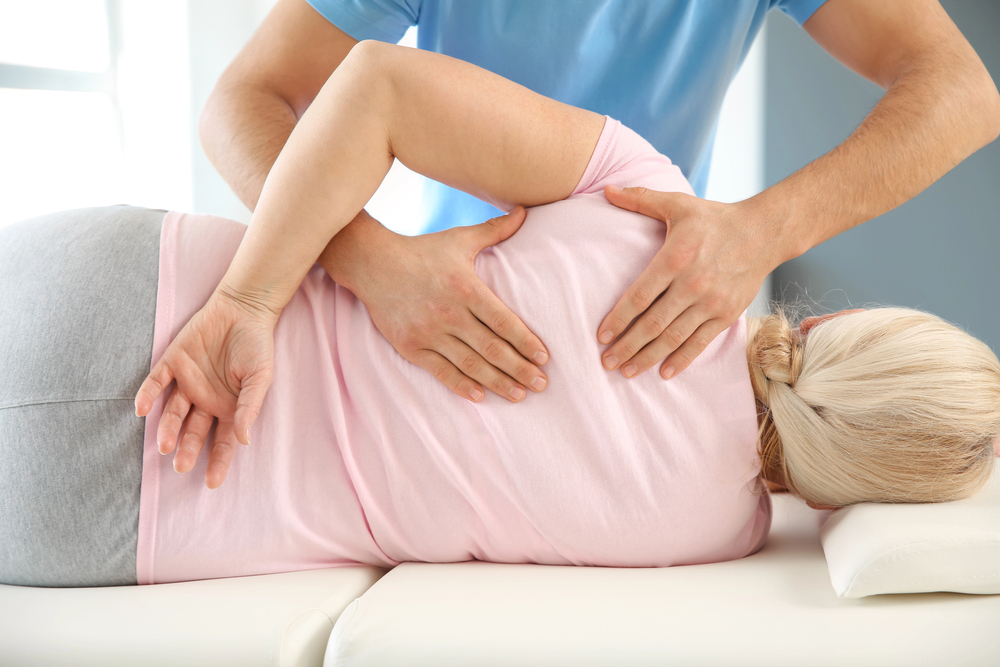
For many stroke survivors, recovery is not a straight line. Muscles tighten, sensation changes, emotions fluctuate, and simple daily activities require renewed effort. While physical therapy and medical care form the foundation of rehabilitation, massage therapy for stroke recovery has become a powerful complementary tool — helping ease muscle stiffness, improve circulation, enhance body awareness, and support emotional healing.
At Messina Acupuncture in East Setauket, NY, we work with individuals at various stages of their recovery. Whether someone is newly discharged from a rehabilitation program or is years past their stroke but still struggling with muscle tightness, fatigue, or sensory disconnection, massage therapy offers a supportive path toward greater comfort and mobility.
Muscle Activation and Improved Circulation
After a stroke, it’s common for one side of the body to become weaker or less responsive. This can lead to inactivity, reduced muscle engagement, and a gradual increase in stiffness. Over time, muscles that are not stimulated may shorten, lose strength, or develop painful tension.
Massage therapy helps by gently stimulating soft tissue and reintroducing movement and sensation. This manual stimulation supports better blood flow, bringing oxygen and nutrients to areas that have been underused or tense for long periods.
Improved circulation is an essential component of stroke recovery. Better blood flow may:
- Support tissue healing and reduce inflammation
- Improve temperature regulation in the affected limb
- Help restore more natural muscle tone
- Reduce swelling in areas prone to fluid retention
Many stroke survivors notice that their hands or feet feel colder on the affected side. Targeted massage may help warm the tissues and encourage improved sensory awareness, helping reconnect the brain and body through gentle, repetitive input.
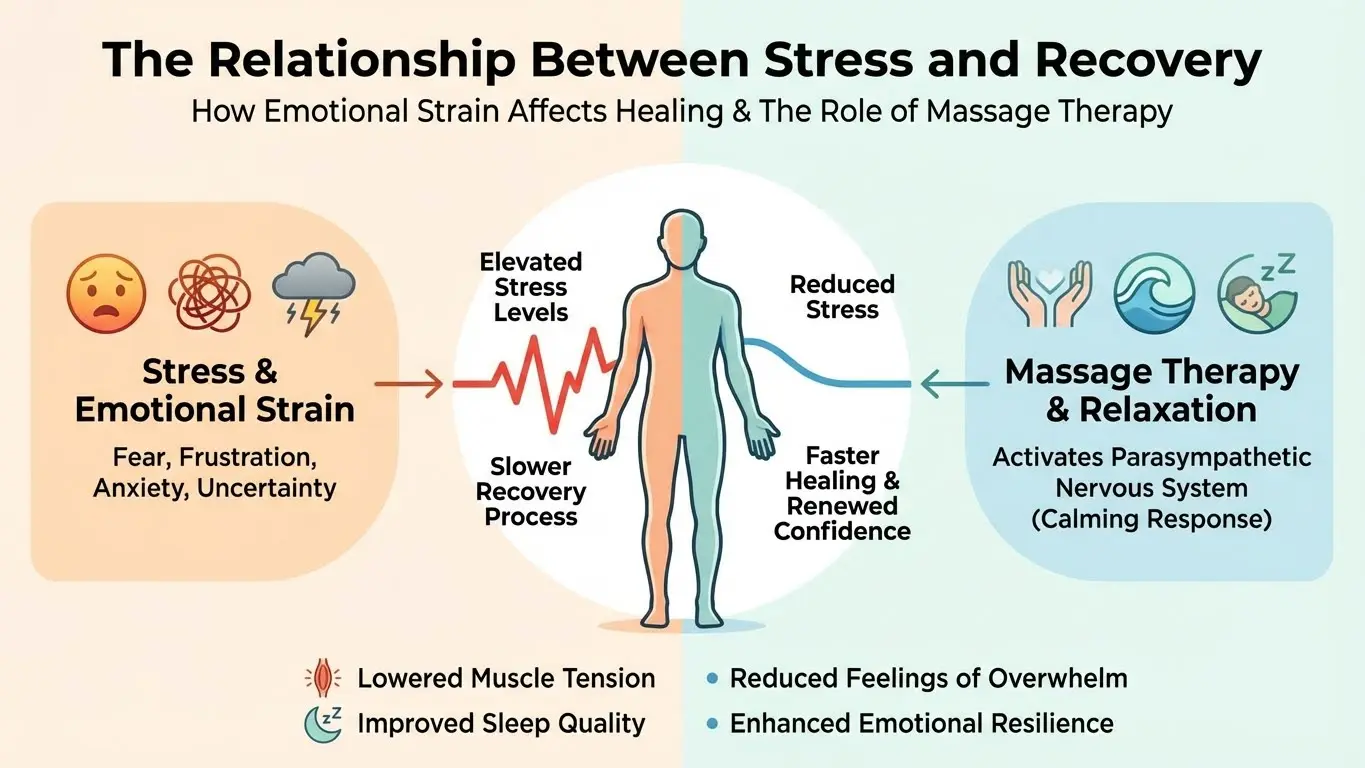
The Relationship Between Stress and Recovery
Recovering from a stroke involves far more than regaining physical strength. Emotional strain — including fear, frustration, anxiety, and uncertainty — often parallels the physical challenges. These emotional responses influence the body’s stress levels, and elevated stress can slow the recovery process.
Massage therapy activates the parasympathetic nervous system, the part of the body responsible for calming stress responses and regulating breathing, digestion, and heart rate.
Benefits may include:
- Lowered muscle tension caused by stress
- Improved sleep quality
- Reduced feelings of overwhelm
- Enhanced emotional resilience
Even a short period of deep relaxation can create meaningful improvements. Over time, these effects may contribute to faster healing and more stable energy levels, helping stroke survivors approach their rehabilitation with renewed confidence.
Reconnecting with the Body Through Safe, Supportive Touch
One of the most emotionally challenging aspects of stroke recovery is the feeling of being “disconnected” from parts of the body. Stroke survivors often describe their affected limbs as heavy, unfamiliar, or difficult to control.
Massage therapy reintroduces safe, intentional touch to these areas, helping rebuild sensory awareness.
This gentle input can create a “feedback loop” between the body and brain, supporting improvements in:
- Sensory awareness
- Proprioception (sense of body position)
- Neuromuscular response
- Emotional comfort with the affected limb
For individuals who feel self-conscious or discouraged about their mobility, massage offers a nonjudgmental, therapeutic experience that emphasizes safety, respect, and support. It becomes a moment where survivors can simply receive care rather than exert effort.
Targeted Relief for Joint Pain
Reduced movement after a stroke can place uneven stress on the joints. Overuse of the stronger side often leads to stiffness or discomfort in areas such as the shoulders, hips, knees, or neck. Likewise, the weaker side may become rigid from inactivity.
A trained therapist understands how to work safely around inflammation, muscle weakness, or limited mobility.
Therapeutic massage may help by:
- Reducing stiffness in the shoulder and scapular area
- Supporting hip mobility for easier walking
- Improving flexibility in the knees and ankles
- Encouraging better alignment during movement
For many survivors, joint pain becomes a barrier to rehabilitation. Massage therapy may provide enough relief to help individuals participate more comfortably in physical therapy, exercise, or daily tasks.
Massage as a Long-Term Recovery Tool
Recovery does not stop when formal physical therapy ends. Many individuals continue experiencing tightness, reduced range of motion, or fatigue for months or even years. Massage therapy becomes a sustainable, long-term strategy for maintaining comfort and preventing secondary complications.
Long-term benefits may include:
- Reduced muscle spasticity
- Smoother, more coordinated movement
- Better posture and gait
- Less pain during daily activities
- Improved comfort during sleep
Regular sessions help keep tissues flexible and improve the body’s ability to adapt and compensate without excessive strain.
Patience, Skill, and Personalization Matter
Every stroke survivor has a different history and a different set of challenges. Some may struggle with spasticity, while others experience numbness or difficulty controlling specific muscle groups.
A massage therapist working in stroke rehabilitation must employ:
- A slow, attentive pace
- Gentle but intentional pressure
- Close observation of the body’s responses
- Communication about comfort levels
Massage should never be rushed. The therapist’s role is to create a supportive environment where progress is encouraged without overstimulation or discomfort.

Combining Acupressure, Acupuncture, and Massage for Stroke Recovery
Massage therapy plays a significant role in recovery, but when paired with acupressure or acupuncture, the benefits may expand further.
Acupressure applies gentle pressure to specific points linked to nerve pathways and organ systems, supporting circulation and relaxation. Acupuncture may help regulate muscle tone, reduce inflammation, and stimulate neural pathways that assist with motor function.
Many patients find that a combined approach reduces fatigue, improves limb coordination, and enhances their sense of overall well-being.
How We Support Stroke Recovery at Messina Acupuncture
At Messina Acupuncture in East Setauket, NY, we understand the physical and emotional challenges stroke survivors face. Our approach to care is grounded in patience, empathy, and clinical insight.
Every session is customized. We take time to understand your symptoms, mobility limitations, and goals. Whether you’re working on improving sensation, reducing stiffness, or simply finding more comfort in your daily life, our treatments are designed to support you step by step.
Inspired by Daniel Messina’s personal journey overcoming significant physical hardship, our clinic prioritizes compassionate, skilled care that respects your pace and your progress.
If you’re seeking supportive massage therapy as part of your stroke recovery, we invite you to reach out to our team. We’re here to help you move forward — one session at a time.
Frequently Asked Questions (FAQ)
How soon after a stroke can someone begin massage therapy?
Many individuals can begin gentle massage once cleared by their medical team. The timing depends on overall health, mobility, and the stage of recovery.
Is massage safe for stroke survivors with mobility limitations?
Yes. A trained therapist adapts pressure and techniques to ensure safety, comfort, and therapeutic benefit without overstimulating the muscles.
Can massage improve spasticity?
Massage may help reduce muscle tightness, improve circulation, and support better range of motion, which may lessen spasticity over time.
How often should stroke survivors receive massage?
Frequency varies, but many benefit from weekly or biweekly sessions, especially during periods of active rehabilitation.
Does massage replace physical therapy?
No. Massage is a complementary therapy. It supports physical therapy by reducing pain, improving mobility, and preparing muscles to work more efficiently.