
For residents in Setauket, Port Jefferson, and the surrounding North Shore communities, back pain is rarely just a temporary nuisance—it is often a pervasive barrier to daily life. We see it every day at Messina Acupuncture: the Stony Brook University professor unable to sit through a lecture, the commuter battling traffic on the LIE with a lumbar ache that won’t quit, or the local athlete sidelined by stiffness. Lower back pain (LBP) is the single leading cause of disability worldwide, yet so many patients are told their only options are “wait and see,” painkillers, or surgery.
In recent years, however, Dry Needling has emerged as a clinically validated, non-pharmaceutical intervention for musculoskeletal dysfunction. But a common question remains: How effective is dry needling for back pain relief? Is it simply a trend, or is it grounded in hard physiological science?
This comprehensive guide dives deep into the anatomy of back pain, the neurophysiological mechanisms of dry needling, and why this targeted therapy is changing the landscape of pain management for our patients on Long Island.
The Anatomy of Back Pain: It’s Not Just “Bad Luck”
To understand why dry needling works, we must first understand the complex machinery of the lumbar spine and its supporting musculature. Back pain is rarely a random occurrence; it is a physiological response to mechanical stress, poor posture, or chronic overuse. While diagnoses often focus on the spine itself—such as herniated discs, stenosis, or degenerative changes—a significant percentage of chronic back pain is actually myofascial in origin.
The spine relies on a complex system of muscles for stability. When these muscles fail or fatigue, the spine takes the load, leading to pain. At our Setauket clinic, we frequently identify three primary muscular culprits that contribute to chronic back issues:
1. The Quadratus Lumborum (QL)
Often called the “joker of lower back pain,” the QL is a deep muscle that connects the pelvis to the spine and the lowest rib. It is responsible for side-bending and hiking the hip. When this muscle becomes hypertonic (tight), it can pull the pelvis out of alignment, causing a “functional leg length discrepancy.” This imbalance forces the spine to curve to compensate, leading to a deep, aching pain that often mimics kidney pain or disc issues.
2. The Multifidus Muscles
These are small but critical stabilizers that run along the spine, connecting each vertebra to the one above it. Their job is to provide fine-tuned stability during movement. Research shows that after a single episode of back pain, these muscles can atrophy (weaken) and become inhibited. When the Multifidus stops firing correctly, the vertebrae become unstable, leading to chronic vulnerability and recurrence of pain.
3. The Iliopsoas (Hip Flexors)
The Psoas major attaches to the front of the lumbar vertebrae and runs down to the hip. It is a powerful hip flexor. In our modern, sedentary world (think: desk jobs at Stony Brook or long drives), this muscle is chronically shortened. A tight Psoas pulls on the lumbar spine from the front, creating an exaggerated arch (lordosis) and significant compressive force on the discs and facet joints.
The “Energy Crisis” in Your Muscles
When these muscles are overworked or injured, they develop myofascial trigger points. These are not just “knots” in the colloquial sense; they are palpable, hyper-irritable spots in a taut band of skeletal muscle. Within a trigger point, the muscle fibers are stuck in a permanent state of contraction.
This constant tension creates a local “energy crisis.” The tight bands compress local blood vessels (capillaries), restricting blood flow and starving the tissue of oxygen (hypoxia). Without oxygen, the muscle cannot produce enough ATP (energy) to release the contraction. This leads to an accumulation of acidic waste products like lactic acid and inflammatory cytokines, which sensitize the nerves and send constant pain signals to the brain. This is why “resting” often doesn’t fix the problem—the chemical cycle is self-perpetuating.
What is Dry Needling?
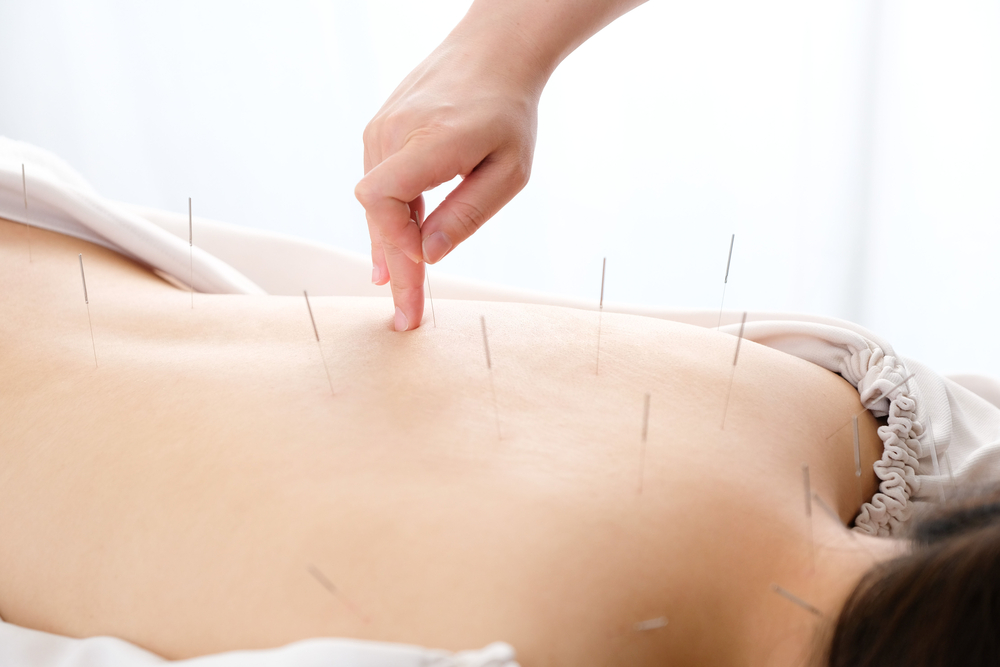
Dry needling is a skilled intervention that uses a thin filiform needle to penetrate the skin and stimulate underlying myofascial trigger points, muscular, and connective tissues for the management of neuromusculoskeletal pain and movement impairments. It is termed “dry” because no medication or fluid is injected; the needle itself is the therapeutic agent.
“The needle acts as an extension of the practitioner’s hand, allowing us to treat deep tissue structures that manual therapy simply cannot reach.”
Is it the same as Acupuncture? While dry needling utilizes the same tools as acupuncture, the theoretical framework is entirely different. Acupuncture is rooted in Traditional Chinese Medicine (TCM) and focuses on the flow of “Qi” along meridians to balance energy. Dry needling, conversely, is strictly based on Western anatomical and neurophysiological principles. It targets specific anatomical structures—identified via palpation and orthopedic assessment—to restore mechanical function and reduce pain.
The Physiology: How Dry Needling Works
The effectiveness of dry needling for back pain lies in its ability to physically and chemically alter the muscle tissue. When a needle enters a trigger point, it elicits a specific physiological chain reaction that manual therapy (massage) often cannot achieve alone.
1. The Local Twitch Response (LTR)
A hallmark of effective dry needling is the Local Twitch Response. This is an involuntary spinal cord reflex in which the muscle fibers contract and then immediately release. This “reset” is crucial. It mechanically disrupts the dysfunctional integrity of the trigger point, effectively “uncoupling” the actin and myosin filaments that were locked together. This forces the muscle to relax, immediately improving range of motion.
Clinical studies suggest that eliciting this twitch response is often correlated with better outcomes in pain reduction and functional improvement, as it physically breaks the cycle of the muscle spasm.
2. Biochemical Restoration
One of the most compelling pieces of evidence for dry needling comes from landmark research by Shah et al., published in the Archives of Physical Medicine and Rehabilitation. The researchers used microdialysis needles to sample the fluid inside a trigger point. They found that active trigger points contain a “toxic soup” of inflammatory chemicals, including:
- Substance P: A neurotransmitter associated with the transmission of pain.
- CGRP (Calcitonin Gene-Related Peptide): A peptide involved in pain transmission and inflammation.
- Acidic pH: The tissue environment was significantly more acidic than healthy muscle.
The study confirmed that dry needling normalizes these chemical levels immediately post-treatment. By increasing local blood flow, the treatment flushes out these inflammatory mediators and restores oxygenation to the tissue, effectively “washing away” the pain.
3. Pain Gating and Opioid Release
On a neurological level, the insertion of the needle stimulates the body’s afferent nerve fibers (specifically A-delta fibers). This stimulation activates the “Gate Control Theory” of pain in the dorsal horn of the spinal cord, essentially jamming the slower pain signals (C-fibers) from reaching the brain. Furthermore, the micro-trauma stimulates the central nervous system to release endogenous opioids (endorphins and enkephalins) and serotonin. This provides a systemic analgesic effect, meaning the pain relief often extends beyond just the local area treated.
Clinical Evidence: Does It Work for Back Pain?
At Messina Acupuncture, we rely on evidence-based practices. Dry needling is not a placebo; it is backed by a growing body of clinical research specific to the lumbar spine.
Systematic Reviews on Low Back Pain
A systematic review and meta-analysis published in 2018 titled “Is dry needling effective for low back pain?” (Hu et al., 2018) examined multiple randomized controlled trials. The authors concluded that dry needling is more effective than “sham” treatments and acupuncture for alleviating pain intensity in patients with low back pain immediately post-intervention.
Deep vs. Superficial Needling
Another major review published in 2019 (Griswold et al., 2019) focused specifically on the effectiveness of dry needling for spine-related pain. This study found that deep dry needling (inserting the needle into the muscle belly) was significantly more effective in reducing pain intensity compared to superficial needling. This supports our clinical observation: to get lasting relief, we must treat the deep stabilizers like the Multifidus and QL, removing the muscular barrier to movement.
Efficacy for Specific Back Conditions
Dry needling is highly effective for specific pathologies we treat at our Setauket clinic. Understanding these distinctions helps patients know if they are a candidate.
Chronic Lower Back Pain (CLBP)
For chronic sufferers, the nervous system often becomes “winded up” or sensitized (central sensitization). Even after the original injury heals, the nerves continue to fire pain signals. Dry needling helps desensitize these pathways. By treating the Multifidus and Longissimus muscles, we can reduce the constant nociceptive input to the brain, allowing the nervous system to “down-regulate.”
Sciatica and Radiating Pain
True sciatica involves compression of the sciatic nerve, often by a disc. However, many patients suffer from “pseudo-sciatica,” where trigger points in the Gluteus Minimus or Piriformis muscles refer pain down the leg, mimicking nerve damage. Research indicates that deactivating these gluteal trigger points can resolve radiating leg pain without the need for spinal intervention.
Joint Pain and Arthritis
While we cannot reverse the bone changes of osteoarthritis, joint pain is often exacerbated by the tight muscles surrounding the joint. When muscles around an arthritic vertebra are tight, they increase compression on the joint surfaces. Dry needling releases this tension, “decompressing” the joint and reducing friction and pain during movement.
Dry Needling vs. Traditional Treatments
Patients often ask how this compares to the conventional methods they have already tried. Here is a breakdown of the differences:
| Treatment Method | Mechanism of Action | Limitation |
|---|---|---|
| Medication (NSAIDs/Opioids) | Chemically dulls pain signals or reduces systemic inflammation. | Does not fix the mechanical issue; high risk of side effects, stomach ulcers, or dependency. |
| Medical Massage | Manual pressure to relax superficial tissues and improve circulation. | Difficult to reach deep stabilizers (like the Multifidus or deep QL) without causing significant pain; hands cannot always isolate a specific trigger point like a needle can. |
| Chiropractic | Adjusts joint alignment (Skeletal focus). | If the muscles pulling the joint out of alignment aren’t treated, the adjustment may not hold (“snapping back” effect). |
| Dry Needling | Neuromuscular reset of deep tissue via mechanical stimulation. | Requires needle insertion (invasive), though minimally so. |
At Messina Acupuncture, we often find that Dry Needling serves as the “missing link.” For example, once the muscle is released via needling, a chiropractic adjustment holds longer because the tension pulling the bone out of place is gone. Similarly, rehabilitation exercises become more effective because the muscle is no longer inhibited by pain, allowing for correct firing patterns.
The Procedure: What to Expect at Messina Acupuncture
If you are considering this treatment, it is natural to be curious—or even a little nervous—about the process. We prioritize a sterile, safe, and professional environment.
Step 1: Comprehensive Assessment
Every session begins with a diagnosis. We evaluate your range of motion, perform orthopedic tests, and palpate the spine to identify specific trigger points. We also differentiate whether your pain is structural (bone/disc) or muscular to ensure needling is the right tool.
Step 2: The Treatment
You will lie comfortably on a treatment table. The skin is sanitized with alcohol. Using a sterile, single-use filament needle, the practitioner inserts the needle into the target muscle. What does it feel like? You generally won’t feel the needle enter the skin. Once it reaches the trigger point, you may feel a dull ache, a “heavy” sensation, or a cramping feeling. This is the “twitch response” mentioned earlier—it is a positive sign that the trigger point is being deactivated.
Step 3: Integration and Electrostimulation
Depending on your condition, we may leave the needles in for a period (static dry needling) or combine them with electrical stimulation (e-stim). This involves attaching small clips to the needles and running a gentle current through the muscle. This mimics the signals from your nervous system, forcing the muscle to contract and relax rhythmically. This increases blood flow significantly and produces a robust release of endorphins.
Safety, Side Effects, and Contraindications
Dry needling is a safe procedure when performed by a qualified, licensed professional. However, as with any medical intervention, informed consent is vital.
Common Side Effects:
- Muscle Soreness: It is typical to feel like you have had an intense workout for 24 to 48 hours after treatment. This is a sign of tissue remodeling and is a normal response.
- Bruising: Minor bruising may occur at the insertion site, as the area is highly vascularized.
- Fatigue: The release of tension and endorphins, along with the drop in blood pressure that sometimes accompanies relaxation, can leave some patients feeling tired. Hydration is key post-treatment.
Understanding Pneumothorax: A rare but serious risk of needling around the thorax is a pneumothorax (lung puncture). This highlights the importance of choosing a highly trained expert. At Messina Acupuncture, we are rigorously trained in anatomical landmarks and safe needle depths to completely mitigate this risk. We never needle directly over the lung field without specific safety protocols (such as pincer palpation) to ensure the needle stays within the muscle tissue.
Contraindications: Dry needling is not appropriate for everyone. Patients with bleeding disorders, those on high doses of blood thinners, active local infections, or those in the first trimester of pregnancy should proceed with caution or avoid treatment. It is essential to discuss your full medical history with us before beginning.
Why Choose Messina Acupuncture?
Finding the right provider is critical. Dry needling requires a deep understanding of human anatomy to ensure safety and efficacy. At Messina Acupuncture, located conveniently at 100 N Country Road, Setauket, we bridge the gap between Eastern holistic care and Western medical science.
Our approach is data-driven and patient-centered. We do not simply treat the symptom; we investigate the root cause. Whether you are dealing with TMJ disorders, neck pain, or debilitating back issues, our goal is to restore your quality of life without long-term reliance on medication.
Conclusion: Taking the Next Step Toward Relief
So, is dry needling effective for back pain relief? The clinical evidence, combined with the experiences of countless patients in the Stony Brook and Port Jefferson area, suggests a resounding yes. By targeting the neurological and mechanical sources of pain, it offers a distinct advantage over superficial treatments.
If you are tired of living with back pain and are ready for a scientific, hands-on approach to recovery, we invite you to experience the difference. Do not let pain dictate your life any longer.
Ready to schedule your assessment? Call us today at (631) 403-0504 or book your appointment online.
See what our neighbors in Setauket and Stony Brook are saying: Read our Google Reviews.