
Understanding nausea triggers is a vital first step toward finding relief and reclaiming your overall well-being. Whether you are dealing with motion sickness, hormonal shifts, or stress, identifying specific nausea triggers allows you to choose the most effective management strategy.
Identifying Common Nausea Triggers
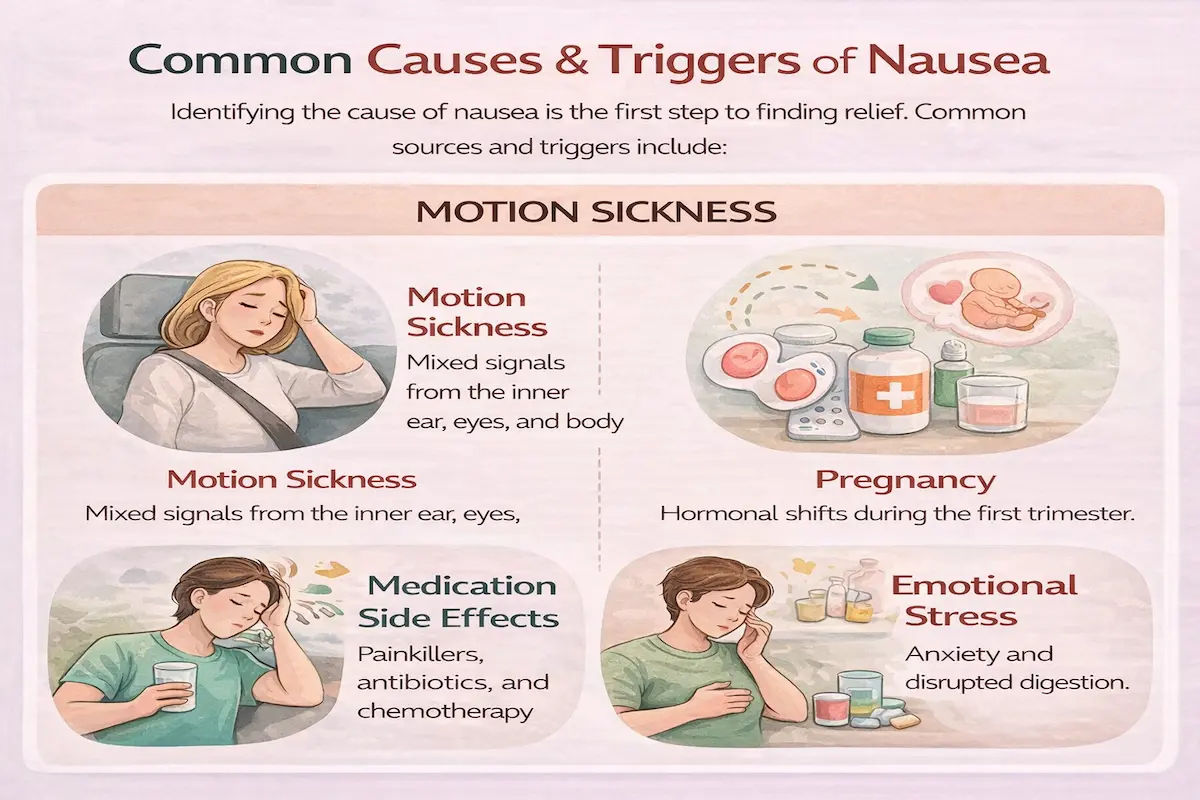
Nausea triggers can arise from several distinct sources, ranging from environmental factors to internal physical changes. Recognizing these nausea triggers helps in tailoring a personalized treatment plan.
-
Motion Sickness: This occurs when the brain receives conflicting signals from the eyes, inner ear, and body.
-
Pregnancy: Known as morning sickness, these nausea triggers are primarily driven by hormonal shifts, such as rising hCG and estrogen levels.
-
Medication Side Effects: Drugs like opioids, antibiotics, and chemotherapy agents are well-known nausea triggers that can irritate the stomach lining.
-
Emotional Stress: Anxiety can act as one of the most common nausea triggers by releasing hormones like cortisol that alter digestive function.
How Do Motion Sickness and Pregnancy Contribute to Nausea?
Motion sickness develops when sensory information from the inner ear, eyes, and body don’t match. That sensory mismatch can cause dizziness, sweating, and nausea, especially during car, plane, or boat travel.
Pregnancy-related nausea is usually linked to hormonal changes, including rises in hCG and estrogen, which affect the digestive system. These shifts are most pronounced in the first trimester and can produce nausea and vomiting for many pregnant people.
What Medication Side Effects and Stress Factors Trigger Nausea?
Some medications are well known to cause nausea. Opioids, certain antibiotics, and many chemotherapy drugs can irritate the stomach lining or alter brain centers that control nausea and vomiting.
Stress is another common trigger. When the body responds to stress, hormones like cortisol can change gut motility and sensitivity, contributing to nausea. Recognizing medication and stress-related causes helps guide effective management strategies.
Managing Nausea Triggers with Acupuncture
Acupuncture offers a non-pharmacological approach to managing various nausea triggers. By stimulating specific points on the body, this traditional method helps restore balance to the autonomic nervous system.
The Role of Pericardium 6 (P6)
The Pericardium 6 (P6) point, located on the inner forearm, is the most studied point for addressing nausea triggers like motion sickness and pregnancy. Stimulating this point can influence digestive function and reduce the body’s nausea response.
This holistic approach addresses both symptoms and some underlying mechanisms, offering an option for people looking for nonpharmacologic relief from nausea.
Recent studies are clarifying how acupuncture interacts with body systems to produce these benefits.
Acupuncture’s ANS Mechanism for GI Dysmotility & Acupoint Efficacy
Acupuncture treats digestive disorders by using skin stimulation to trigger somatic-autonomic reflex pathways, which help regulate gut movement, reduce inflammation, and balance hormones. This review suggests that while the practice effectively modulates the autonomic nervous system to restore balance, its success is highly dependent on the specific acupoints chosen and the intensity of the stimulation applied to the patient.
The autonomic nervous system in acupuncture for gastrointestinal dysmotility: from anatomical insights to clinical medicine, 2025
At Messina Acupuncture PC, we focus on acupuncture treatments for pain relief and overall wellness, including strategies to help manage nausea using time‑tested techniques adapted to each patient’s needs.
What Is the Role of Acupuncture Points Like Pericardium 6 in Nausea Management?
Specific acupuncture points are central to treating nausea. Pericardium 6 (P6), located on the inner forearm, is one of the most widely used and studied points for relieving nausea and vomiting.
Stimulation of P6 is thought to influence digestive function and the body’s nausea response, making it a common choice for motion sickness and pregnancy‑related nausea. Other points, such as Conception Vessel 17, may be used to support digestion and reduce discomfort.
What Evidence Supports Acupuncture as a Natural Treatment for Nausea?
Clinical trials have shown that acupuncture and related techniques can reduce nausea and vomiting for patients undergoing chemotherapy and those with postoperative nausea. Many clinicians report improved symptom control when acupuncture is added to conventional care.
Historical use and contemporary studies together support acupuncture’s role as a complementary option for managing nausea, particularly when patients prefer nonpharmacologic approaches.
Natural Remedies for Nausea Triggers
Natural remedies can work alongside acupuncture to ease nausea. Common, evidence‑friendly choices include ginger, lemon, and maintaining good hydration.
- Ginger: A well‑studied anti‑nausea option, ginger can be taken as tea, capsules, or eaten fresh.
- Lemon: The scent or small amounts of lemon juice can reduce queasiness for some people.
- Hydration: Keeping fluids up — water or electrolyte drinks — helps prevent dehydration, which can worsen nausea.
These simple strategies are easy to add to daily routines and can complement professional treatment.
| Natural Remedy | Form | Benefits |
|---|---|---|
| Ginger | Tea, capsules, raw | Anti‑nausea properties |
| Lemon | Juice, scent | May ease queasiness |
| Hydration | Water, electrolyte drinks | Prevents dehydration |
Used together with acupuncture, these remedies can strengthen an overall nausea management plan.
Ongoing research continues to evaluate medicinal herbs and traditional approaches for their roles in treating nausea and vomiting.
Natural Remedies & Medicinal Herbs for Nausea and Vomiting
When stomach contractions force contents back into the esophagus, vomiting can occur — and nausea is among the most common complaints in clinical practice.
Many acute cases with a clear cause are straightforward to manage, but conditions such as chemotherapy‑induced nausea and chronic unexplained nausea can be difficult to control.
These persistent problems can reduce quality of life and increase healthcare use. Reviewing the effects of medicinal herbs and natural methods offers potential alternatives for symptom relief.
Natural treatment for nausea and vomiting: A short message, 2025
Which Lifestyle Changes and Dietary Tips Reduce Nausea Symptoms?
Small lifestyle adjustments can make a meaningful difference. Try these practical tips:
- Eat light, frequent meals: Smaller portions spread throughout the day reduce digestive strain.
- Stay hydrated: Sip clear fluids regularly to prevent dehydration and ease nausea.
- Avoid strong odors: Scents can trigger or worsen nausea — removing a source of odor can help.
Applying these changes consistently often improves comfort for people prone to nausea.
How Can Acupressure and Other Complementary Therapies Support Nausea Relief?
Acupressure uses finger pressure on the same points acupuncture targets and can be effective for short‑term relief, especially when applying pressure to P6. It’s a simple, needle‑free option people can use on the go.
Aromatherapy, relaxation techniques, and mindfulness practices can also reduce nausea by calming the nervous system and lowering stress. These therapies often work best when combined with acupuncture for a balanced, holistic plan.
When Should You Seek Medical Help for Persistent or Severe Nausea?
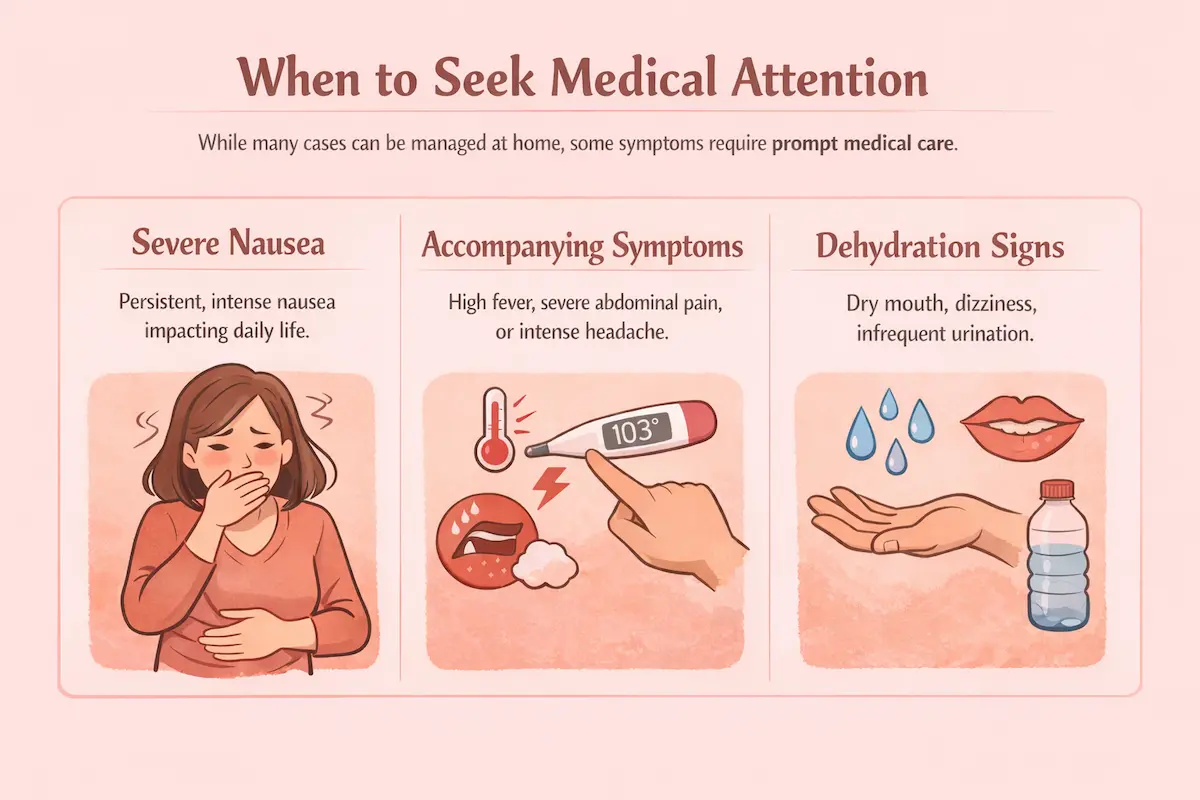
While many cases of nausea can be managed at home, you should contact a healthcare provider when symptoms are persistent or severe. Seek medical attention if nausea lasts more than a few days, is accompanied by high fever, severe abdominal pain, or signs of dehydration.
A clinician can evaluate for underlying causes that require specific treatment and help you create a safe, effective plan.
What Are the Warning Signs Indicating the Need for Professional Care?
Recognizing warning signs helps ensure timely care. Key indicators include:
- Severe nausea: Intense symptoms that interfere with daily life.
- Accompanying symptoms: High fever, severe headache, or intense abdominal pain.
- Dehydration signs: Dry mouth, dizziness, or notably reduced urination.
If you notice any of these signs, contact a healthcare professional without delay.
How Does Acupuncture Integrate with Conventional Medical Treatments?
Acupuncture is commonly used as a complementary therapy alongside standard medical care. Many providers support integrating acupuncture into treatment plans for nausea, to enhance symptom control and improve patient comfort.
When coordinated with conventional care, acupuncture can address physical symptoms and emotional stress, offering a more comprehensive approach to recovery.
What Do Patient Testimonials and Case Studies Reveal About Acupuncture for Nausea?
Patient reports and case studies frequently describe meaningful reductions in nausea after acupuncture treatment. These real‑world experiences, together with clinical evidence, support acupuncture as a useful option for people seeking additional relief.
Individual results vary, but many patients find acupuncture improves both symptoms and overall well‑being.
How Have Personalized Acupuncture Plans Improved Nausea Symptoms?
Tailored acupuncture plans consider a person’s medical history, symptom pattern, and lifestyle to create a focused treatment strategy. Personalization often improves outcomes because treatments target the patient’s specific triggers and needs.
Customized care has helped many patients achieve better control of nausea than with one‑size‑fits‑all approaches.
What Outcomes Demonstrate the Holistic Approach to Nausea Management?
A holistic strategy that combines acupuncture, natural remedies, and lifestyle adjustments typically produces positive outcomes: reduced nausea, better daily functioning, and improved quality of life.
By addressing multiple factors at once, patients often experience more durable symptom relief and greater overall comfort.
Frequently Asked Questions (FAQ)
What are the most common causes of nausea?
Common causes include motion sickness, pregnancy, medication side effects, and stress.
How does acupuncture help relieve nausea?
Acupuncture targets specific points like Pericardium 6 to influence the nervous system and encourage the release of natural calming chemicals, which can reduce nausea.
Are there natural remedies that can complement acupuncture for nausea?
Yes. Ginger, lemon, and maintaining hydration are commonly used to complement acupuncture and help manage nausea.
When should I seek medical attention for nausea?
See a healthcare provider if nausea is persistent, severe, or accompanied by fever, dehydration, or intense abdominal pain.
Can lifestyle changes reduce nausea symptoms?
Yes. Eating smaller meals, staying hydrated, and avoiding strong odors are practical steps that can help reduce nausea.