
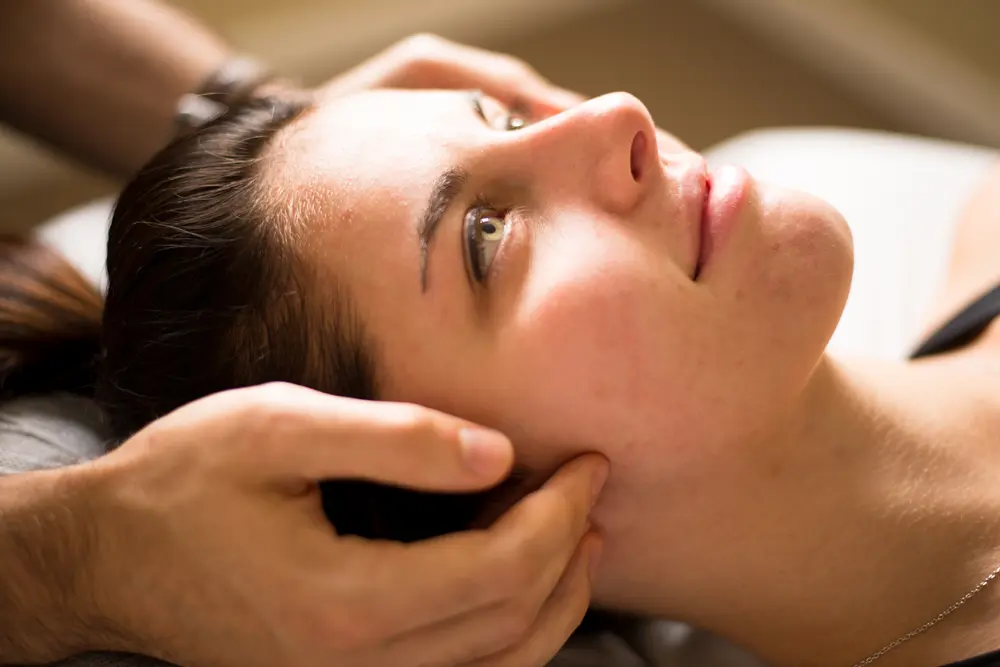
Everyone experiences stress — but the real trouble starts when stress stops feeling temporary and begins to show up in your body. Tight shoulders, a stiff neck, tension headaches, trouble sleeping, jaw clenching, fatigue, and that constant “wired and tired” feeling are all signs your body is carrying more stress than it can process.
When stress becomes chronic, it doesn’t just affect your mood — it affects your muscles, circulation, sleep, and overall health. This is why so many people who feel “burnt out” also report physical symptoms. Over time, the body becomes stuck in a pattern of tension and fatigue.
Medical massage therapy is one of the most effective natural ways to interrupt this stress cycle. At Messina Acupuncture, we combine targeted acupressure and medical massage techniques to calm the nervous system, loosen tight muscles, and help your body reset. If stress is taking a toll on your physical well-being, medical massage is an excellent place to begin.
In this guide, we’ll explore how stress affects the body, how medical massage helps break the stress–tension cycle, and why regular sessions can support long-term emotional and physical wellness.
How Stress Actually Affects the Body
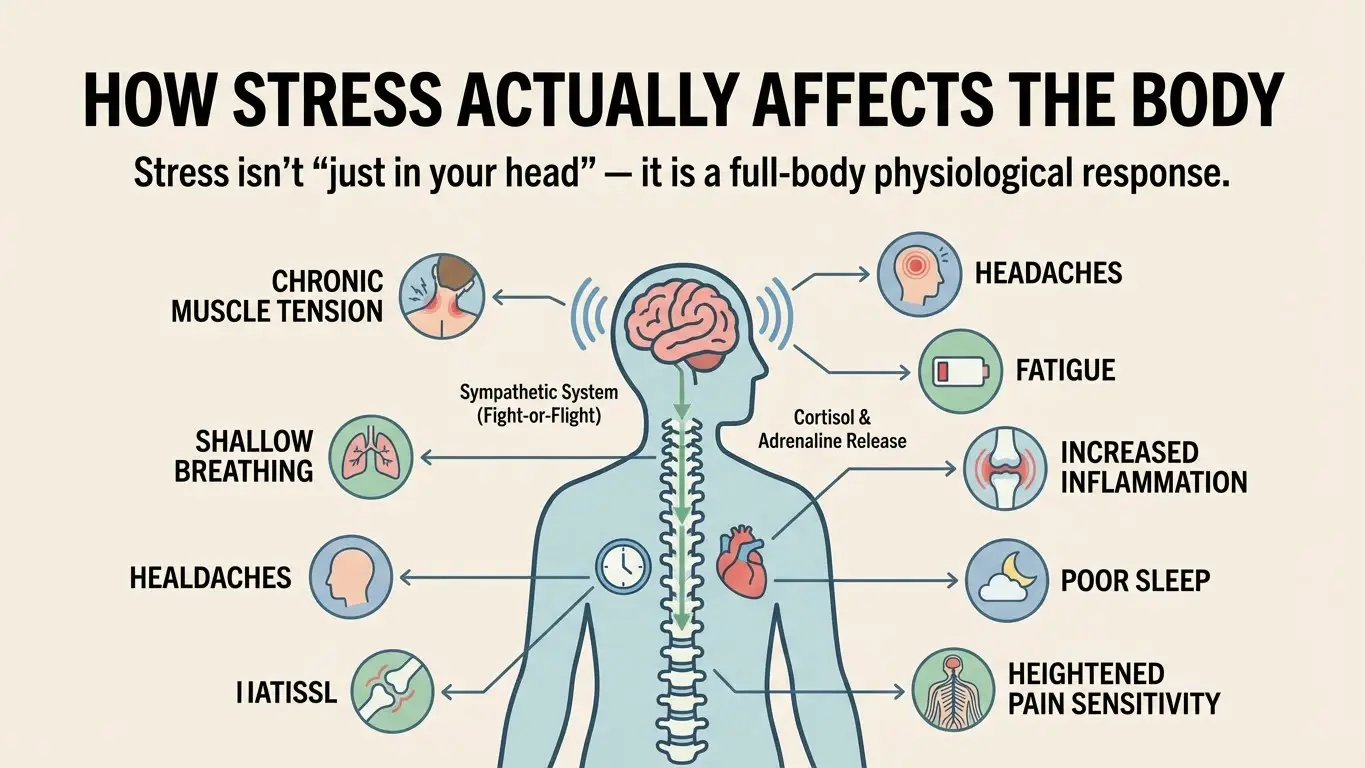
Stress isn’t “just in your head” — it is a full-body physiological response. When your brain senses a threat (even if it’s just a long to-do list or a difficult day), your nervous system changes instantly. The sympathetic system — known as the fight-or-flight response — activates.
This releases hormones like cortisol and adrenaline, which prepare your body to deal with danger. In the short term, this is normal. But when stress becomes chronic, this system is activated far more often than your body can handle.
Common physical effects of prolonged stress include:
- Chronic muscle tension — especially in the neck, back, shoulders, and jaw
- Shallow breathing, which reduces oxygen flow to muscles
- Headaches and pressure behind the eyes
- Fatigue and slower recovery from daily activities
- Increased inflammation and tightness in the connective tissues (fascia)
- Poor sleep quality, causing further stress and tension
- Heightened pain sensitivity, due to nervous system overload
This is why people often say their body “holds stress.” It’s not a figure of speech — your muscles literally contract and stay tight. And because this tightness restricts healthy blood flow, nutrients can’t reach the tissues efficiently, and waste products accumulate, making the muscles feel even more sore and fatigued.
This creates a cycle where stress causes tension, tension causes pain, and pain increases stress all over again.
Medical massage therapy is one of the few interventions that can interrupt this cycle at the physical level.
How Medical Massage Therapy Helps Relieve Stress
Massage has been used for thousands of years to address stress and tension, and modern research strongly supports its effectiveness. More importantly, medical massage uses specific techniques designed to reduce pain, calm the nervous system, and restore healthy muscle function — making it far more than just relaxation.
1. Releases Muscle Tension Caused by Stress
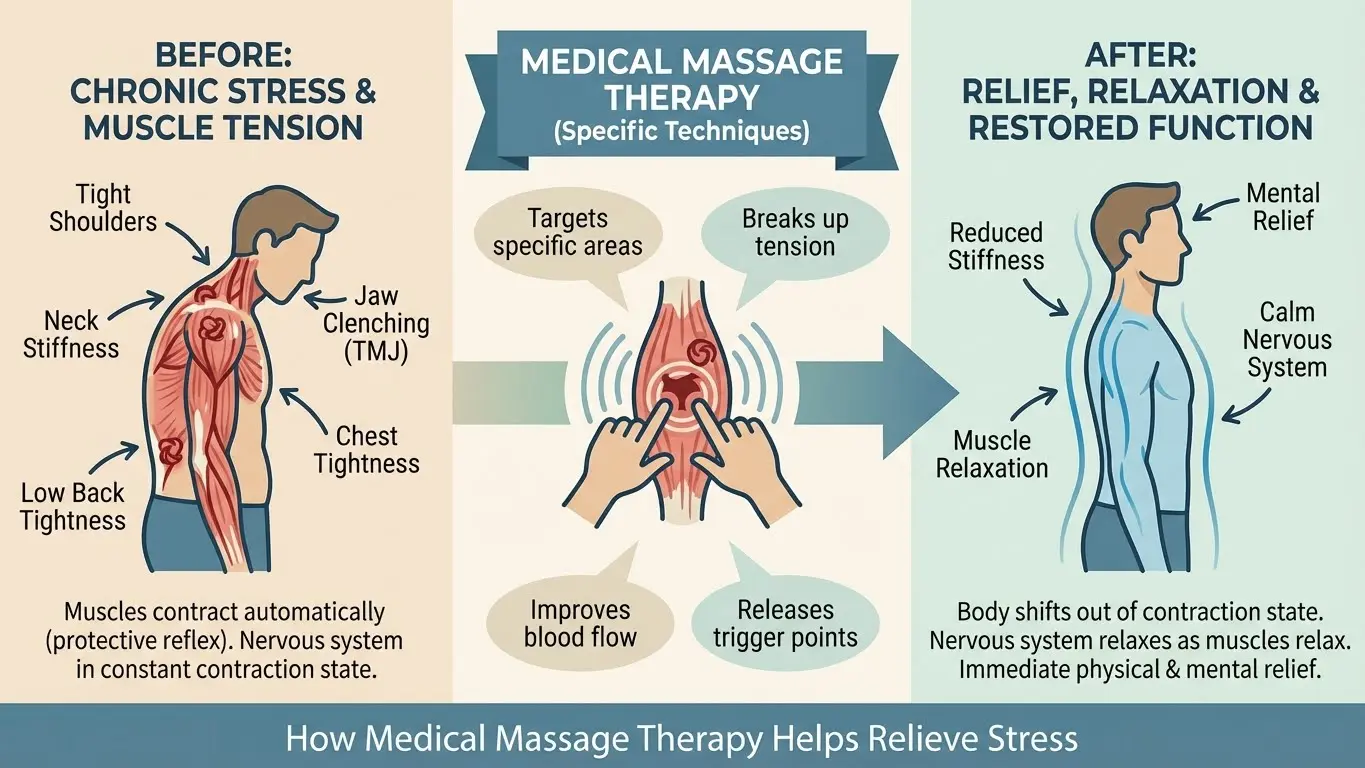
When you’re stressed, your muscles contract automatically as part of your body’s protective reflex. For many people, this shows up as:
- Tight shoulders
- Neck stiffness
- Low back tightness
- Jaw clenching or TMJ discomfort
- Rib and chest tightness from shallow breathing
Medical massage targets these exact areas, breaking up tension, reducing stiffness, and helping the muscles relax naturally. By improving blood flow and releasing trigger points, massage helps the body shift out of a constant state of contraction.
After a session, many patients feel immediate relief — not only physically, but mentally, because the nervous system relaxes when the muscles do.
2. Calms the Nervous System and Reduces Cortisol Levels
One of the biggest misconceptions about massage is that it only affects muscles. In reality, its greatest impact is on the nervous system. Research shows that therapeutic massage can increase parasympathetic activity — the “rest and digest” system that helps the body recover.
Medical massage:
- Lowers cortisol (stress hormone) levels
- Increases serotonin and dopamine — the body’s natural calming chemicals
- Promotes slower, deeper breathing
- Helps shift the body out of fight-or-flight mode
- Reduces the sensitivity of pain receptors
This is why massage often brings a sense of clarity, emotional relief, and calm — it’s not just the muscles relaxing; the brain and nerves are quieting down, too.
3. Improves Blood Flow and Oxygenation
When stress tightens your muscles, circulation decreases. Reduced blood flow means less oxygen reaches your tissues, contributing to fatigue, soreness, and slow recovery.
Massage stimulates healthy circulation, delivering oxygen and nutrients to the tissues while helping remove metabolic waste products that build up when muscles remain tight for too long.
This not only helps muscles recover faster but also improves overall energy levels — which is why many people feel lighter and more refreshed after a session.
4. Helps Improve Sleep and Reduce Insomnia
Stress and sleep are deeply connected. Stress makes it difficult to fall asleep or stay asleep, while lack of sleep increases cortisol and makes stress feel worse. It becomes a vicious cycle.
Medical massage helps break this cycle by calming the nervous system and releasing tension that makes it difficult to unwind at night.
Research shows that people who receive massage therapy experience:
- Improved sleep quality
- Enhanced REM sleep
- Less nighttime muscle tension
- Better breathing patterns during sleep
When the body is relaxed, falling asleep becomes a natural process again.
5. Helps Prevent the Long-Term Effects of Chronic Stress
Chronic stress isn’t harmless — it has long-term consequences. Elevated cortisol levels and constant muscular tension can lead to:
- Frequent tension headaches
- Reduced immune function
- Digestive issues
- Persistent muscular stiffness
- Increased inflammation
- Higher risk of injury
- Burnout and emotional fatigue
Regular massage can serve as a protective buffer, helping the body process stress before it becomes physically damaging.
Why Long-Term Massage Therapy Works Better Than One-Off Sessions
One session can absolutely help, but long-term benefits come from consistency. Just like stress builds up over time, the body often needs repeated sessions to fully reset.
With regular massage, many patients notice:
- Fewer stress-related symptoms
- Reduced muscle stiffness
- Better posture and breathing
- Improved focus and mental clarity
- More energy throughout the day
- Better resilience to daily stressors
The body becomes more familiar with the relaxed state — meaning it takes more stress to trigger tightness or discomfort.
Think of it as training your nervous system to calm down more easily.
Who Can Benefit Most From Stress-Relief Massage?
While everyone experiences stress differently, some people benefit especially from medical massage therapy, including those with:
- Desk jobs or long hours of sitting
- Tension-related neck or shoulder pain
- Frequent headaches or migraines
- High-pressure careers or caregiving roles
- Sleep disturbances or insomnia
- Chronic muscle tightness
- Anxiety that shows up physically
- Jaw clenching or TMJ symptoms
If stress “lives” in your body, massage can be one of the most effective ways to release it.
Massage Therapy vs. Other Stress-Relief Methods
People often try many approaches to relieve stress — deep breathing, meditation, stretching, exercise, journaling — and these all have value. But massage holds a unique place because it directly affects both the muscular system and the nervous system at the same time.
Unlike other methods, massage provides:
- Hands-on release of physical tension
- A direct calming effect on the nervous system
- Improved circulation and oxygenation
- An immediate sense of relaxation
- Long-lasting physiological benefits
Meditation can calm your mind, but it won’t release knots in your shoulders. Stretching can increase flexibility, but it won’t lower cortisol on its own. Massage bridges the gap by addressing stress physically and neurologically.
Frequently Asked Questions About Massage for Stress Relief
How often should I get a massage for stress?
Once every 2–4 weeks is ideal for most people. Those experiencing chronic stress or muscle tension may benefit from weekly sessions at first.
Can stress really cause physical pain?
Absolutely. Stress activates muscles continuously, especially in the neck, shoulders, and back. This leads to soreness, reduced circulation, and tension headaches.
Is medical massage different from a spa massage?
Yes. Medical massage targets specific muscles and uses therapeutic techniques aimed at addressing pain, tension, and dysfunction — not just temporary relaxation.
Will massage help my anxiety?
Many patients report feeling calmer after massage. It helps regulate breath, lowers cortisol, and activates the parasympathetic nervous system — all of which help reduce anxiety symptoms.
Can massage therapy help headaches caused by stress?
Yes. Tension headaches often improve significantly with targeted work on the neck, jaw, shoulders, and upper back.
How quickly will I feel the benefits?
Many patients feel relief immediately after their first session, especially in areas of muscular tightness and stress-induced tension.
Make Medical Massage Part of Your Stress Relief Routine
If stress is beginning to affect your body — whether through muscle tightness, fatigue, headaches, or general tension — medical massage therapy is one of the most effective, natural ways to help your system reset.
At Messina Acupuncture, our acupressure & medical massage treatments are tailored to your needs, helping you relieve tension, reduce stress, and restore balance to your body.
Ready to feel relief? We’d love to help you experience the difference that expert therapeutic massage can make in your stress levels and overall well-being.
Book a medical massage appointment today: Schedule Here or call 631-403-0504.