
Nausea can be overwhelming—whether it comes from motion, pregnancy, treatment side effects, or anxiety. Many people prefer gentle, drug-free ways to feel better, and specific breathing exercises often help. This article explains how targeted breathwork can reduce nausea, what’s happening in the body, and how combining breathwork with holistic therapies like acupuncture can boost results.
With a clearer understanding of the breath–nausea link, you’ll gain practical tools to manage symptoms more confidently.
In this guide we’ll review common causes and triggers of nausea, how holistic care supports recovery, and simple breathing techniques you can use right away. We’ll also describe how these practices pair with acupuncture and share patient observations from Messina Acupuncture PC.
Finally, we include steps for practicing safely and information on booking personalized care if you’d like guided support.
What Causes Nausea and How Natural Methods Help
Nausea is a complex symptom with physical and emotional roots. It often signals the body’s response to stress, toxins, or internal imbalance. Natural approaches—like breathwork, acupressure, and herbal support—aim to calm the nervous system and restore balance rather than only masking symptoms.
Because these approaches are non-invasive and drug-free, many people find them appealing as first-line options for relief.
Methods such as calming breathing patterns, gentle acupressure, and soothing teas can reduce the body’s stress response, support digestion, and improve overall resilience against nausea triggers.
Understanding how these methods work helps you choose the right, evidence-informed strategies for your situation.
Common Triggers of Nausea
Knowing what typically causes nausea makes it easier to prevent and treat. Common triggers include:
- Motion sickness: A mismatch between visual cues and inner-ear signals during travel.
- Pregnancy: Hormonal shifts that commonly cause morning sickness in early pregnancy.
- Chemotherapy: Cancer treatments that frequently provoke nausea and vomiting as side effects.
Recognizing the trigger can help you pick targeted techniques—like breathing patterns or acupressure—that work best for your condition.
How Holistic Care Helps Manage Nausea
Holistic care treats the whole person—body and mind—rather than focusing only on symptoms. Common elements include acupuncture, dietary adjustments, relaxation practices, and breathwork.
Key benefits of a holistic approach include:
- Restoring balance: Treatments aim to rebalance bodily systems that contribute to nausea.
- Lowering stress: Practices such as mindfulness and paced breathing reduce stress, a frequent trigger for nausea.
- Supporting overall wellness: Regular self-care and professional therapies build resilience against future episodes.
When incorporated into daily life, these methods empower you to manage nausea more effectively.
Breathing Techniques That Help Nausea
Several breathing practices are especially helpful for easing nausea:
- Diaphragmatic breathing: Deep abdominal breaths that activate the body’s relaxation response.
- Paced breathing: A controlled rhythm that steadies the nervous system and calms the gut.
- Mindfulness breathing: Gentle attention to the breath that reduces anxiety-related symptoms.
These exercises are portable and can be used whenever nausea strikes.
Why Diaphragmatic Breathing Works
Diaphragmatic (abdominal) breathing engages the diaphragm for deeper inhalations and fuller exhalations. It stimulates the vagus nerve, which helps shift the body from a fight-or-flight state into a calmer, parasympathetic state.
That shift reduces stress hormones and can lessen nausea—especially when nausea is linked to anxiety or tension.
Deeper breathing also improves oxygen flow and mental clarity, which can make nausea feel less intense and easier to manage.
Step-by-Step: Paced and Mindfulness Breathing
Paced and mindfulness breathing are easy to learn and can be practiced daily. Try these simple steps:
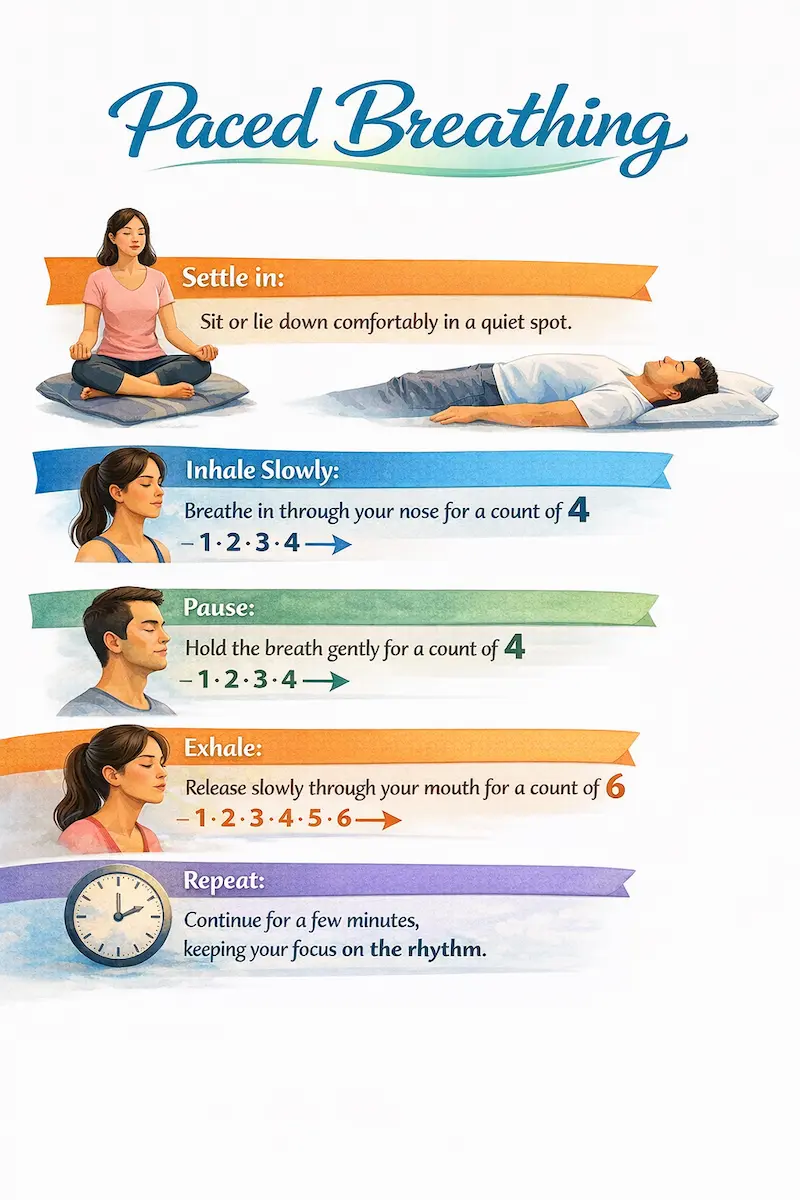
Paced Breathing
- Settle in: Sit or lie down comfortably in a quiet spot.
- Inhale slowly: Breathe in through your nose for a count of four.
- Pause: Gently hold the breath for a count of four.
- Exhale: Release slowly through your mouth for a count of six.
- Repeat: Continue for a few minutes, keeping your focus on the rhythm.
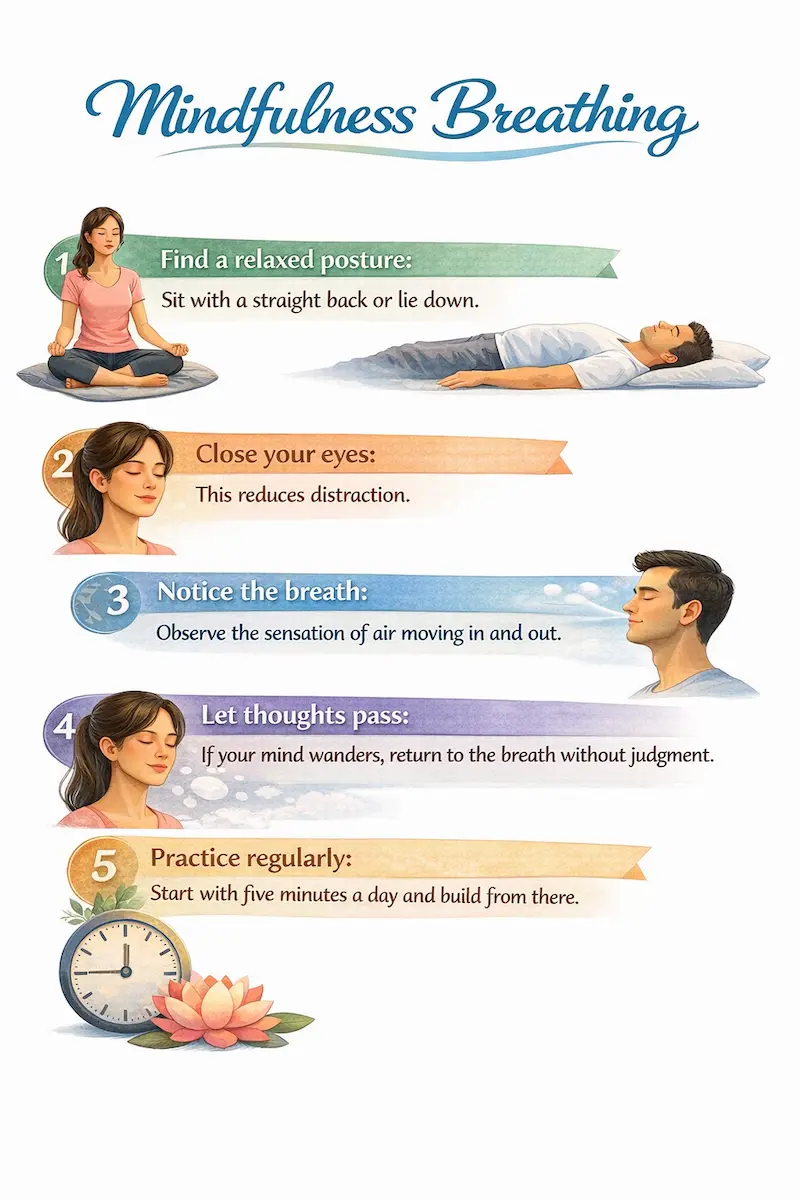
Mindfulness Breathing
- Find a relaxed posture: Sit with a straight back or lie down.
- Close your eyes: This reduces distraction.
- Notice the breath: Observe the sensation of air moving in and out.
- Let thoughts pass: If your mind wanders, return to the breath without judgment.
- Practice regularly: Start with five minutes a day and build from there.
Use these techniques during a bout of nausea to promote immediate calm and help symptoms subside.
How Acupuncture Enhances Breathing Techniques
Acupuncture uses fine needles at specific points to encourage the body’s natural healing and balance. When combined with breathwork, acupuncture can deepen relaxation and reduce both physical and emotional contributors to nausea.
Complementary effects of acupuncture include:
- Deeper relaxation: Needling can trigger endorphin release and lower anxiety.
- Energy rebalancing: In traditional terms, acupuncture helps restore harmony in the body systems that influence digestion and nausea.
- Ongoing support: Regular sessions can strengthen resilience to common nausea triggers.
Pairing acupuncture with breathing exercises often produces a stronger, more sustained relief than either approach alone.
Research on Acupuncture for Nausea
Studies show acupuncture can reduce nausea, particularly for patients undergoing chemotherapy or surgery. Research suggests acupuncture may work by:
- Modulating neurotransmitters: Influencing brain chemicals involved in nausea and vomiting.
- Stimulating the vagus nerve: Helping rebalance the autonomic nervous system and reduce nausea.
These findings support adding acupuncture to a comprehensive nausea-management plan.
Combining Acupressure with Breathing for Faster Relief
Acupressure applies firm pressure to points that help settle the stomach. Using acupressure alongside breathing often increases immediate relief. Try this approach:
- Find key points: P6 (Neiguan) on the inner wrist and ST36 (Zusanli) on the lower leg are commonly used.
- Apply steady pressure: Use your thumb or finger to press each point while maintaining steady breathing.
- Stay focused: Keep a calm, even breath to deepen relaxation and effectiveness.
This simple combination can quickly ease nausea and promote a sense of calm.
Do These Therapies Improve Nausea Outcomes?
Yes. When breathing exercises are combined with acupuncture or acupressure, many patients report better outcomes—less frequent or less severe nausea and greater overall satisfaction with their care.
A multimodal strategy lets you address physiological and emotional contributors together, increasing the chance of lasting relief.
Advantages of a Multimodal Nausea Plan
Using multiple methods offers clear benefits:
- Broader relief: Different therapies address different causes of nausea.
- Personalized care: You can choose techniques that fit your triggers and lifestyle.
- Less reliance on drugs: Natural methods can reduce the need for medications and their side effects.
Putting several tools together builds a resilient plan for managing nausea.
Patient Results from Messina Acupuncture PC
Patients at Messina Acupuncture PC often describe meaningful relief when combining acupuncture with daily breathing exercises. Reports include reduced nausea during pregnancy, less chemotherapy-related discomfort, and greater control over motion sickness.
These case examples show how a consistent, personalized approach can improve day-to-day comfort and quality of life.
How to Practice Breathing Exercises Safely
Follow these tips to ensure safe, effective practice:
- Choose a quiet space: A calm environment helps you stay focused.
- Drink water: Staying hydrated supports your overall comfort.
- Honor your limits: If you feel dizzy or unwell, stop and rest.
With simple precautions, breathing exercises are a low-risk, high-benefit option for many people.
Precautions and Tips for Better Technique
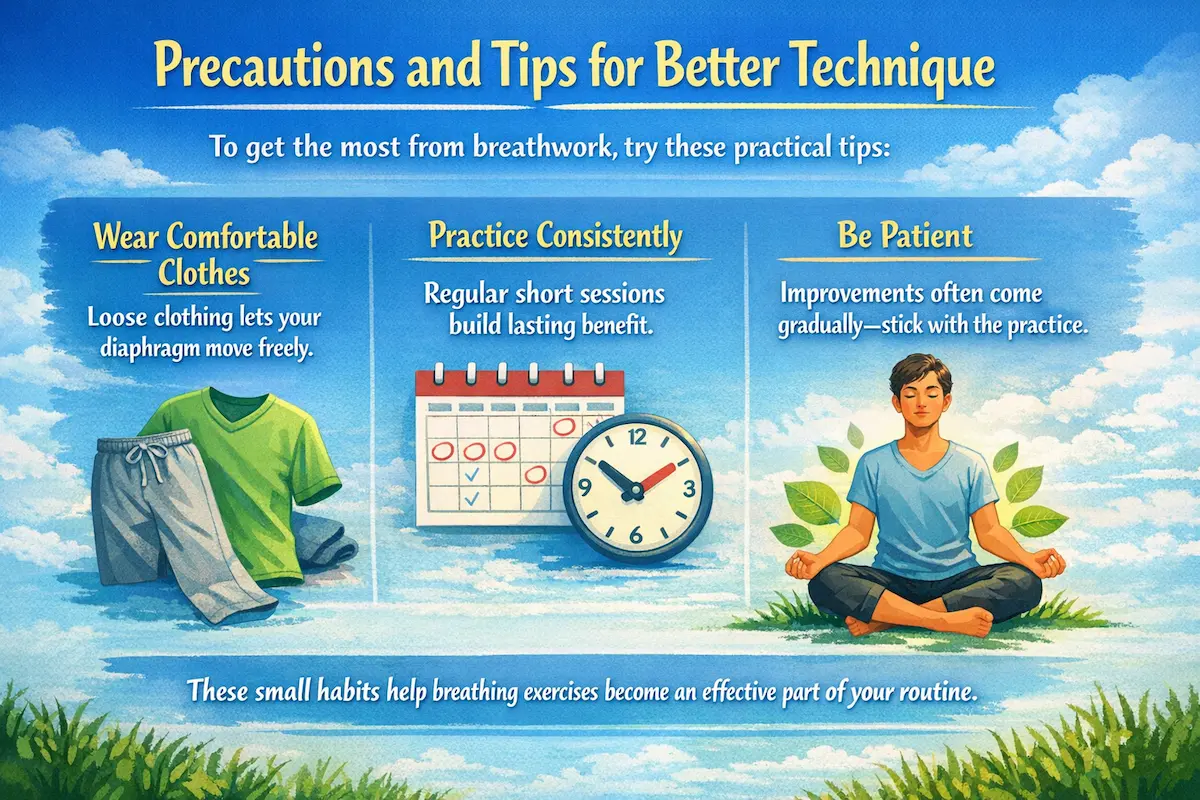
To get the most from breathwork, try these practical tips:
- Wear comfortable clothes: Loose clothing lets your diaphragm move freely.
- Practice consistently: Regular short sessions build lasting benefit.
- Be patient: Improvements often come gradually—stick with the practice.
These small habits help breathing exercises become an effective part of your routine.
When to Seek Professional Acupuncture for Nausea
Breathing exercises can offer quick help, but professional care may be needed when:
- Nausea persists: Ongoing symptoms despite self-care deserve professional evaluation.
- There are underlying conditions: Chronic illness or active treatments like chemotherapy require tailored care.
- You want integrated support: If you’d like a coordinated plan combining acupuncture, breathwork, and lifestyle advice, professional guidance is ideal.
A qualified acupuncturist can design a safe, personalized plan that complements medical care.
How to Book Personalized Care at Messina Acupuncture PC
Scheduling personalized acupuncture and breathwork at Messina Acupuncture PC is easy. Call the clinic to arrange a consultation and discuss your symptoms. The team creates individualized plans to address each patient’s needs.
For more information or to book an appointment, call (631) 403-0504 and speak with a member of our staff.
Preparing for Your Consultation
To make the most of your visit, consider these steps:
- Bring your medical history: Be ready to share relevant conditions and treatments.
- Note your symptoms: Record when nausea occurs and any triggers you notice.
- Prepare questions: Write down concerns or goals to discuss with your practitioner.
Being prepared helps your practitioner create a focused, effective care plan.
What to Expect at Your First Appointment
Your first visit includes a thorough review of your symptoms and health history. The practitioner will discuss treatment options and may teach breathing techniques to use at home. Together you’ll develop a plan tailored to your needs.
This initial session lays the groundwork for ongoing care and symptom improvement.
Comparison of Breathing Techniques for Nausea Relief
| Breathing Technique | Description | Benefits for Nausea |
|---|---|---|
| Diaphragmatic Breathing | Deep abdominal breaths engaging the diaphragm fully. | Promotes relaxation, stimulates the vagus nerve, and eases stress-related nausea. |
| Paced Breathing | Controlled cycle of inhaling, holding, and exhaling. | Calms the nervous system and reduces nausea by regularizing breathing. |
| Mindfulness Breathing | Gentle attention to breath sensations without judgment. | Soothes anxiety-related nausea, grounds attention, and promotes calm. |
Key Acupressure Points for Nausea Relief
| Acupressure Point | Location | Effect on Nausea |
|---|---|---|
| P6 (Neiguan) | Inner wrist, about three finger-widths below the base of the palm. | Helps reduce nausea and vomiting; commonly used for motion sickness and pregnancy-related nausea. |
| ST36 (Zusanli) | Lower leg, about four finger-widths below the kneecap, one finger-width lateral to the shinbone. | Supports digestion and helps relieve nausea symptoms. |
Frequently Asked Questions (FAQ)
What causes nausea and how can breathing exercises help?
Nausea can have many causes—motion, pregnancy, anxiety, or medical treatments like chemotherapy. Breathing exercises calm the nervous system, lower stress, and activate the parasympathetic response, which can reduce nausea.
Are breathing exercises safe for everyone?
Most people can practice breathing exercises safely. If you have significant respiratory issues or other serious health concerns, check with your healthcare provider before beginning a new breathing routine.
How often should I practice breathing exercises for nausea relief?
Regular practice is most effective. Even a few minutes daily can help, and using these techniques at the first sign of nausea can prevent symptoms from escalating.
Can acupuncture be combined with breathing exercises?
Yes. Acupuncture and breathing exercises work well together—acupuncture enhances relaxation and the body’s regulation, while breathwork provides immediate tools you can use anytime.
When should I seek professional help for nausea?
Seek professional care if nausea persists despite self-care, if it’s tied to serious conditions, or if you want a comprehensive treatment plan. A qualified practitioner can offer personalized, evidence-informed options.