

Nausea relief is essential for a trip to feel energizing rather than undermined by queasiness. For many people, motion sickness, travel-related anxiety, or unfamiliar foods can trigger discomfort and make a trip less enjoyable. This article outlines effective, traveler-friendly strategies for nausea relief—highlighting acupuncture and other natural approaches—to help you stay comfortable on the road.
With a clear sense of how each method works, you can choose the right tools for nausea relief to prevent or ease symptoms. We cover how acupuncture affects the body, the most useful acupressure points, and simple natural and dietary practices that support digestive calm while traveling.
How Acupuncture Provides Nausea Relief and Eases Motion Sickness
Nausea relief can be achieved through acupuncture by stimulating targeted points that help balance the autonomic nervous system. This process triggers the release of feel-good neurochemicals, such as endorphins, which are vital for effective nausea relief. This whole-person approach often eases symptoms and addresses contributing factors like stress or digestive imbalance.
By working along established energy pathways, acupuncture serves as a powerful tool for nausea relief and may improve overall comfort during travel. Many people find that a short course of sessions before a trip significantly lowers the likelihood of motion-related symptoms, providing proactive nausea relief.
Ongoing research continues to clarify how acupuncture interacts with nervous and gastrointestinal systems to deliver these consistent nausea relief benefits.
Acupuncture mechanisms for GI nausea relief
Emerging work on the autonomic nervous system’s role in digestive balance is highlighting acupuncture’s therapeutic potential. This review evaluates acupuncture’s effectiveness and the autonomic-related mechanisms in gastrointestinal dysmotility across laboratory and clinical studies, and points to directions for future research.
The autonomic nervous system in acupuncture for gastrointestinal dysmotility: from anatomical insights to clinical medicine, 2025
Messina Acupuncture PC focuses on personalized, holistic care for nausea and related conditions. Their practitioners combine clinical experience with gentle, evidence-informed techniques to help travelers feel better before and during trips.
What acupuncture is and how it works for nausea
Acupuncture is a traditional Chinese medicine method that uses very thin needles placed at specific points to restore balance and support healing. For nausea, the needles help modulate the nervous system, which can change neurotransmitter and hormone patterns that influence digestion and the sensation of nausea.
Improved local circulation and reduced inflammation are additional ways acupuncture may ease stomach upset, making it a practical option for travelers seeking nonpharmaceutical relief.
What the evidence says about acupuncture for motion sickness and nausea
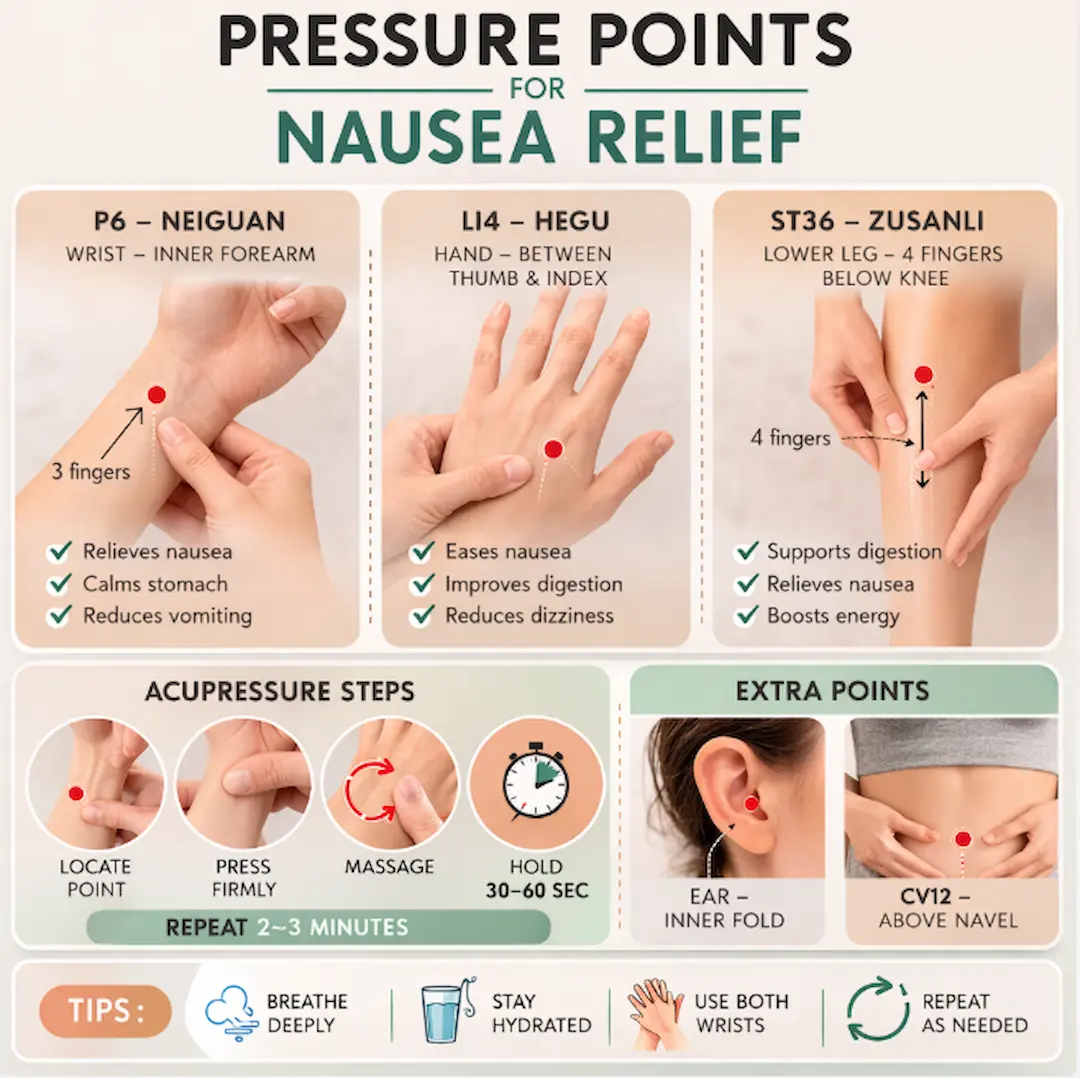
Clinical research supports acupuncture as a useful option for motion sickness and nausea. In particular, stimulation of the Pericardium 6 (P6) point on the wrist has been shown to reduce nausea in multiple studies.
Trials report that participants receiving acupuncture or targeted acupressure often report less nausea than control groups, supporting its role as a complementary therapy for people prone to motion sickness.
Key acupressure points that can stop nausea
Several acupressure points are commonly used to manage nausea. The most effective are:
- Pericardium 6 (P6): On the inner wrist; widely used to reduce nausea and vomiting.
- Conception Vessel 17 (CV17): At the center of the chest; helps calm anxiety-related nausea.
- Stomach 36 (ST36): Below the knee; supports digestion and overall stomach function.
You can stimulate these points with firm finger pressure or use acupressure bands for ongoing support during travel.
How to find and stimulate the P6 point for travel-sickness relief
Locate and stimulate P6 with these steps:
- Find the spot: Measure about three finger-widths down from the crease at the base of your wrist, between the two tendons on the inner forearm.
- Apply pressure: Press firmly with your thumb or index finger for 30–60 seconds, using steady, circular pressure.
- Repeat as needed: Re-stimulate during the trip whenever nausea begins or you expect symptoms.
This simple, portable technique can be very effective for managing motion-related nausea.
Other helpful acupressure points and how to use them
Beyond P6, a few other points can help relieve nausea:
| Acupressure Point | Location | Benefits |
|---|---|---|
| Conception Vessel 17 (CV17) | Center of the chest | Calms anxiety and eases nausea |
| Stomach 36 (ST36) | Below the knee | Supports digestion and reduces stomach discomfort |
| Spleen 4 (SP4) | Inside the foot | Assists with digestive complaints and nausea |
Apply firm pressure for several seconds at a time and repeat as needed until you notice relief.
Natural remedies travelers can use for motion sickness
In addition to acupuncture and acupressure, several natural remedies are helpful and easy to use while traveling:
- Ginger: A well-documented anti-nausea option—available as tea, candies, or capsules.
- Peppermint: Can soothe the stomach; try peppermint tea or inhaling diluted essential oil (with care).
- Acupressure bands: Wearable bands that apply constant pressure to the P6 point for hands-free relief.
Adding one or two of these strategies to your travel routine can make journeys more comfortable.
How ginger helps and the best ways to use it
Ginger contains active compounds like gingerol and shogaol that have anti-inflammatory and antiemetic effects. These constituents can relax the gastrointestinal tract and help reduce the urge to vomit.
Practical ways to use ginger include:
- Ginger tea: Steep fresh slices in hot water for a calming drink.
- Ginger candies: Handy for quick relief on the go.
- Ginger capsules: A convenient, concentrated option for predictable dosing.
Taking ginger before and during travel often lowers the incidence and severity of motion-related nausea.
Several studies have found consistent support for ginger’s effectiveness against motion sickness.
Ginger’s effectiveness for motion sickness
Research comparing ginger to dimenhydrinate and placebo found ginger reduced symptoms of motion sickness, suggesting it may act on gastric rhythm and nervous-system pathways that control nausea.
Effects of ginger on motion sickness and gastric slow-wave dysrhythmias induced by circular vection, 2003
Diet and hydration habits that support nausea relief while traveling
Simple food and drink choices can make a big difference. Try these guidelines:
- Stay hydrated: Sip water regularly—dehydration can worsen nausea.
- Eat light: Choose bland, easy-to-digest foods like crackers, toast, or bananas before and during travel.
- Avoid heavy or greasy meals: Fatty foods are more likely to trigger stomach upset, especially in unfamiliar settings.
These small adjustments can reduce your risk of feeling unwell on the move.
When travelers should seek medical attention for persistent nausea
Seek care promptly if nausea is persistent and occurs with more serious symptoms such as:
- Severe abdominal pain: May indicate a more serious condition.
- High fever: Could signal infection or another health issue.
- Signs of dehydration: Dizziness, dry mouth, or reduced urine output.
Being aware of these red flags helps keep travel safe and healthy.
Warning signs that require urgent medical evaluation
Certain symptoms warrant immediate professional attention. Watch for:
- Severe or worsening nausea: Especially if it doesn’t respond to home remedies.
- Vomiting blood: A serious symptom that needs urgent care.
- Confusion or disorientation: May indicate a significant underlying problem.
When in doubt, seek local medical help or contact your primary provider.
How acupuncture can complement medical treatment for severe nausea
Acupuncture is often used alongside conventional medical care—such as during chemotherapy—to help reduce nausea and improve overall well-being. It can lessen side effects and support recovery, but it typically works best as part of a coordinated treatment plan with your medical team.
How to book personalized acupuncture sessions for nausea relief
If you want acupuncture tailored to travel-related nausea, Messina Acupuncture PC offers individualized plans designed around your travel schedule and health needs.
To set an appointment, call 631-403-0504. A practitioner will work with you to create a practical plan that fits your trip and preferences.
What to expect during an acupuncture session for travel sickness
A typical session begins with a focused consultation to review your symptoms and medical history.
During treatment you can expect:
- Needle placement: Thin, sterile needles are gently inserted at chosen points.
- Relaxation: Most people find sessions calming; some even fall asleep.
- Duration: Sessions generally last 30–60 minutes, depending on your needs.
Afterward, practitioners often share simple self-care tips and follow-up recommendations to help you maintain relief.
How to prepare and schedule your appointment for best results
Follow these simple tips to get the most from your visit:
- Arrive hydrated: Drinking water before your session supports treatment.
- Wear comfortable clothing: This makes it easier to access points on your arms and legs.
- Be open about symptoms: Share your nausea patterns, triggers, and any medical history during the consultation.
These steps help your practitioner tailor treatment to your situation.
Frequently asked questions
Is acupuncture safe for all travelers?
When performed by a licensed, experienced practitioner, acupuncture is generally safe. Travelers who are pregnant or have specific medical conditions should consult their primary care provider before treatment.
Can acupressure bands be used by children?
Acupressure bands are often safe for children, but check with a pediatrician first—especially for very young children or those with health concerns.
How soon before travel should I start acupuncture treatments?
Begin a few days to a week before travel when possible; this allows treatments to build benefit and lowers the chance of nausea during your trip.
Are there any side effects of using ginger for nausea?
Ginger is typically well tolerated, though some people may experience mild heartburn or stomach upset. Use it in moderation and consult a healthcare provider if you have concerns or are on medication.
Can acupuncture replace medication for severe nausea?
Acupuncture can be a valuable complement to medical treatment, but it should not replace prescribed medication for severe nausea without input from your healthcare provider. Work with your medical team to integrate acupuncture safely into your care plan.