
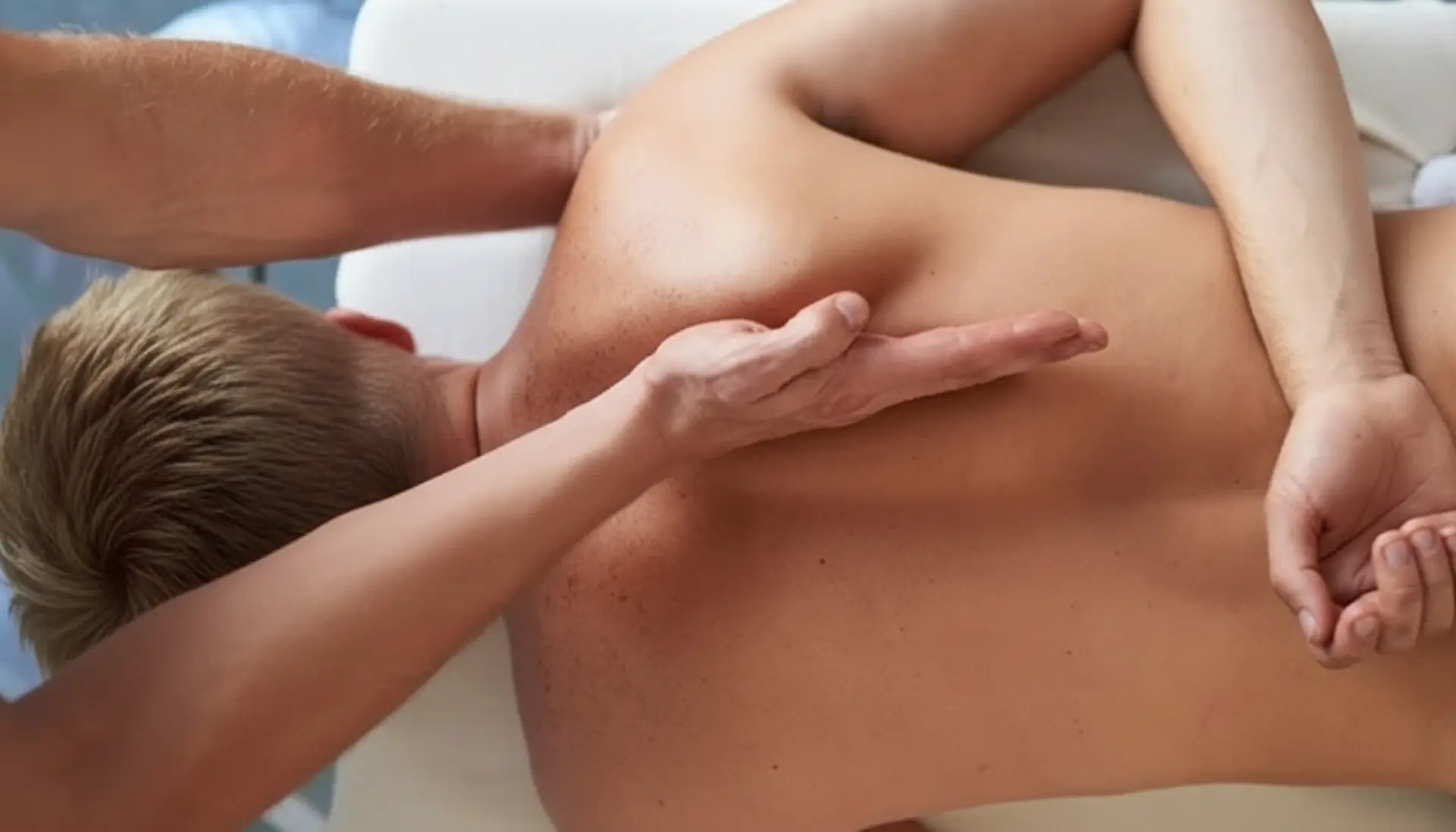
Discover the profound benefits of Medical Massage Therapy for chronic pain relief in Setauket, NY. This clinician-directed manual care addresses soft-tissue problems, reducing persistent pain and restoring function. Learn how Medical Massage Therapy works, its patient results, responsive conditions, and how it compares to other massage styles, with local context for Setauket. If you have persistent pain or restricted motion, Medical Massage Therapy targets underlying tissue drivers, offering mechanisms like myofascial release and combining effectively with acupuncture. We also cover insurance and local options.
What Is Medical Massage Therapy and How Does it Work?
Medical massage therapy is an assessment‑driven approach. Clinicians use targeted manual techniques to correct soft‑tissue dysfunction, reduce pain, and restore movement. Therapists locate dysfunctional tissues—tight fascia, trigger points, or scar tissue—applying focused pressure and mobilization. This restores normal muscle tone, improves tissue glide, lowers pain, and supports scar remodeling. This outcome‑oriented focus distinguishes it from general relaxation massage.
What Defines Medical Massage Therapy Compared to Traditional Massage?
Medical massage therapy differs from relaxation massage in intent, assessment, and documentation. Each session begins with a clinical assessment of posture, range of motion, and pain sources, then follows a treatment plan targeting identified dysfunctions. Techniques like myofascial release address specific tissue deficits. Progress is tracked as part of a therapeutic plan, aiding coordination with other providers and supporting insurance needs.
How Does Medical Massage Therapy Target Pain and Promote Healing?
Medical massage therapy combines mechanical and neurophysiological effects to restore tissue function and reduce pain. Mechanically, directed pressure across fascia and scar tissue improves extensibility, increasing range of motion. Neurophysiologically, stimulating mechanoreceptors and releasing active trigger points reduces central sensitization and interrupts chronic pain cycles. Improved microcirculation and lymphatic flow also remove inflammatory mediators. Research shows targeted manual therapy lowers chronic pain and improves function.
What Are the Key Benefits of Medical Massage Therapy?
Medical massage therapy offers measurable benefits for chronic pain and musculoskeletal dysfunction: focused pain relief, better circulation, faster recovery, and improved range of motion and posture. These advantages are for those seeking therapeutic, outcome‑focused care. Below is a concise list of benefits and a quick reference table mapping mechanisms to likely outcomes.
Medical massage therapy provides these top benefits:
- Targeted pain relief: Techniques targeting trigger points and tight muscles reduce discomfort.
- Improved circulation & less inflammation: Manual mobilization boosts blood/lymph flow, clearing inflammatory byproducts.
- Faster recovery after injury or surgery: Scar mobilization and edema control support earlier return of mobility.
- Greater range of motion & better posture: Fascial release and neuromuscular retraining restore movement, reducing strain.
The following table summarizes how each benefit links to mechanisms and expected outcomes.
| Benefit | Mechanism | Expected Outcome |
|---|---|---|
| Pain relief | Trigger point deactivation, neuromuscular inhibition | Lower pain levels, fewer flare‑ups |
| Circulation & inflammation | Increased microvascular perfusion, lymphatic drainage | Reduced swelling, improved tissue health |
| Post‑surgical recovery | Scar remodeling, edema control | Improved ROM, earlier functional milestones |
| Mobility & posture | Fascial release, neuromuscular re‑education | Smoother movement patterns, less compensatory pain |
This overview helps you see expected improvements with consistent treatment.
For Setauket residents, Messina Acupuncture offers medical massage therapy as part of an integrated plan for musculoskeletal pain. Our clinic builds personalized treatment plans, combining medical massage therapy with acupuncture and dry needling. We support insurance coordination and flexible scheduling.
How Does Medical Massage Therapy Provide Targeted Relief for Chronic Pain?
Medical massage therapy targets tissue drivers of pain—hypertonic muscles, fascial adhesions, and active myofascial trigger points—applying specific techniques to restore normal tissue behavior. Clinicians perform a focused exam to identify painful arcs of motion and referral patterns, then use interventions like ischemic compression and myofascial mobilization. Chronic low‑back pain often improves with lumbar paraspinal trigger point work, reducing referred pain and restoring function. Many patients notice measurable pain relief after a few sessions.
Research supports myofascial trigger points in maintaining chronic pain states like neck pain, where central sensitization plays a part.
Myofascial trigger points and central sensitization in chronic neck pain
This study outlines how chronic neck pain after whiplash is often associated with central sensitization — a change in central pain processing that lowers pain thresholds. Authors explore the hypothesis that peripheral nociceptive input from myofascial trigger points may help perpetuate central sensitization, suggesting trigger points can modulate ongoing pain in chronic neck conditions. Chronic whiplash and central sensitization; an evaluation of the role of myofascial trigger points in pain modulation, MD Freeman, 2009
In What Ways Does Medical Massage Therapy Improve Circulation and Reduce Inflammation?
Medical massage therapy improves circulation and reduces inflammation by mechanically stimulating blood flow and enhancing lymphatic return. Better perfusion delivers oxygen and nutrients, clearing metabolic waste and inflammatory mediators. Lymphatic‑focused techniques control edema after injury or surgery, allowing earlier rehabilitation. Clinically, patients often report less stiffness and soreness within days, with cumulative improvements in tissue quality and fewer inflammatory flare‑ups over several weeks.
Which Conditions Can Medical Massage Therapy Effectively Treat?
Medical massage therapy effectively treats a wide range of musculoskeletal and chronic pain issues, including persistent low back/neck pain, sciatica, tension‑type headaches, fibromyalgia‑related myofascial pain, and post‑operative soft‑tissue restrictions. It’s also useful for sports injuries and rehab plans prioritizing scar mobility. We use this approach when soft‑tissue drivers contribute to symptoms and measurable functional goals guide care. Below is a compact list of common conditions and a table mapping symptoms to how medical massage therapy helps.
Common conditions helped by medical massage therapy include:
- Chronic low back and neck pain
- Sciatica and radicular discomfort from muscular compression
- Tension‑type headaches and some migraines linked to cervical muscle tension
- Fibromyalgia and widespread myofascial pain
- Post‑surgical soft‑tissue restrictions and scar adhesion
| Condition | Typical symptoms | How medical massage therapy helps |
|---|---|---|
| Low back pain | Localized lumbar pain, limited bending | Deactivates paraspinal trigger points, restores lumbar mobility |
| Sciatica | Pain in the buttock often radiating to the leg | Reduces piriformis and gluteal tension that can compress the sciatic nerve |
| Tension headaches | Band‑like head pain, neck stiffness | Releases suboccipital and cervical trigger points to reduce referred pain |
| Post‑surgical stiffness | Scar tightness, restricted ROM | Scar mobilization and edema control to restore tissue glide |
This table clarifies which symptoms respond to medical massage therapy and the therapeutic actions used.
What Musculoskeletal and Chronic Conditions Benefit from Medical Massage Therapy?
Many chronic and musculoskeletal presentations improve with medical massage therapy when soft‑tissue dysfunction contributes. Patients with axial pain, myofascial referral patterns, TMJ muscular tension, and repetitive strain syndromes often notice reduced pain and better function. For fibromyalgia, techniques adapt to tolerance, used alongside other modalities. We recommend coordinating care with physicians or physical therapists when manual therapy integrates into a larger medical plan.
How Does Medical Massage Therapy Aid Post-Surgical Recovery and Injury Rehabilitation?
In post‑operative and rehab settings, medical massage therapy treats scar adhesions, reduces swelling, and retrains muscles and fascia. Early interventions focus on gentle lymphatic support and pain modulation; later phases emphasize scar remodeling and myofascial release to recover full range of motion. After orthopedic procedures, measured scar mobilization with ROM exercises shortens timelines to milestones. Coordination with surgeons and physical therapists determines safe timing and appropriate treatment intensity.
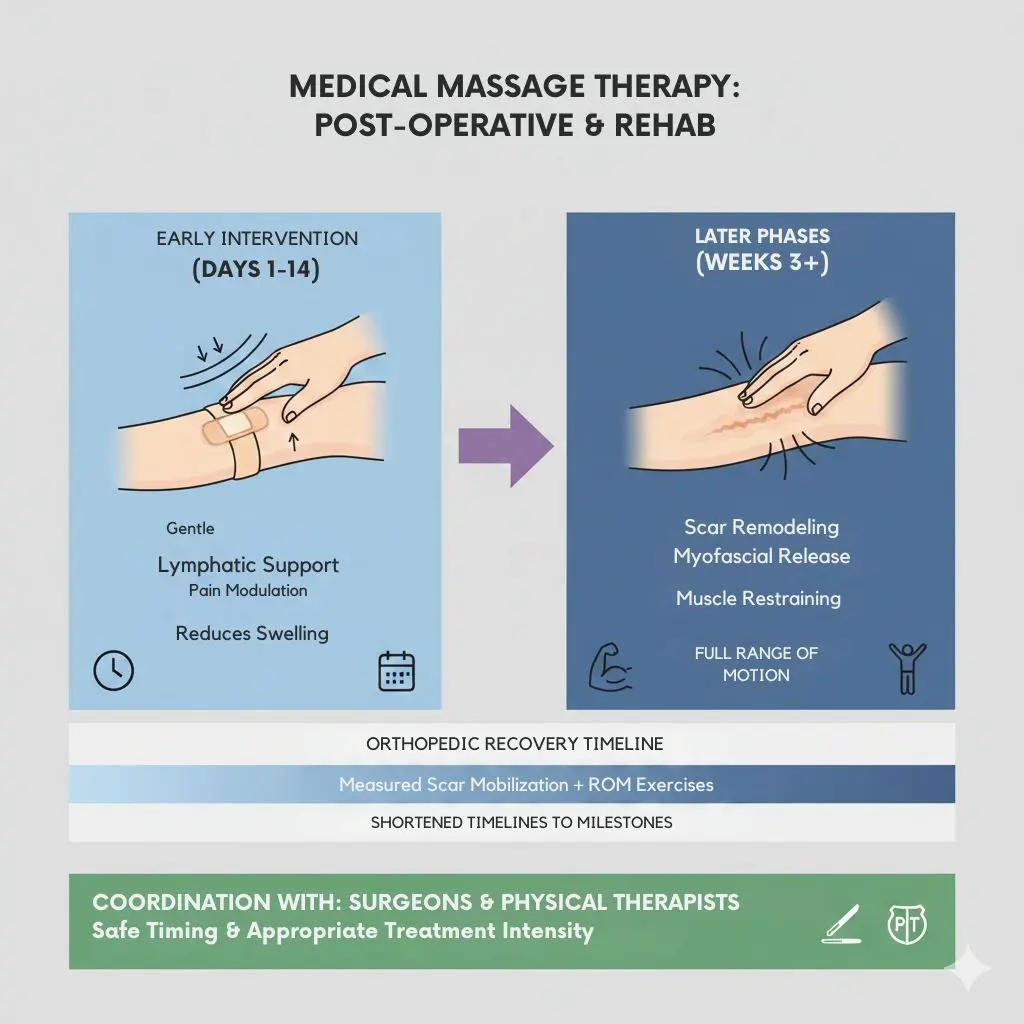
Clinical reports note that including massage therapy in early postoperative care can reduce pain and support faster functional recovery.
Post‑operative massage: pain relief and rehabilitation benefits
Recent findings suggest targeted ortho‑massage in early postoperative periods can be a valuable component of multidisciplinary rehabilitation. Combined with personalized care, massage helps reduce pain, ease muscle tension, and support emotional well‑being — all contributing to faster recovery after surgery. Application of modular ortho‑massage system in early post‑operative therapy, 2025
How Does Medical Massage Therapy Compare to Other Massage Types?
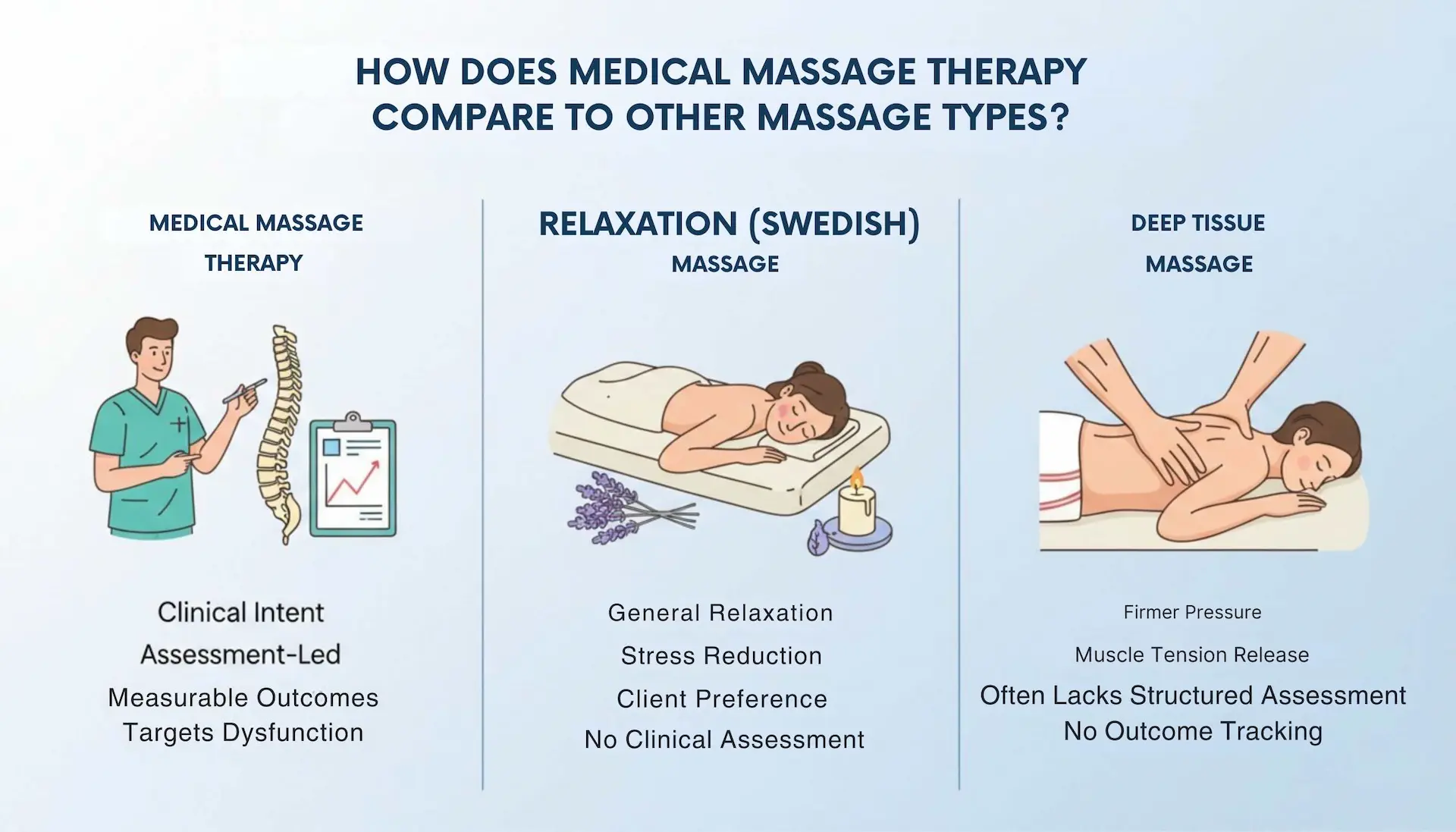
Medical massage therapy is defined by clinical intent, assessment‑led planning, and documentation supporting measurable outcomes. Relaxation (Swedish) massage emphasizes general relaxation. Medical massage therapy targets specific dysfunctions using techniques like neuromuscular therapy, myofascial release, and trigger point deactivation. Deep tissue massage uses firmer pressure but often lacks structured assessment and outcome tracking. The comparison below highlights major differences to help you choose.
When choosing between modalities, consider these differences:
- Intent and goals: Medical massage therapy restores function; relaxation massage reduces stress.
- Assessment and planning: Medical massage therapy uses clinical assessment and measurable goals; other types follow client preference.
- Integration with medical care: Medical massage therapy documents progress and coordinates with providers; relaxation services typically do not.
| Therapy type | Primary goal | Typical techniques | Best used for |
|---|---|---|---|
| Medical massage therapy | Restore function, reduce pain | Myofascial release, trigger point therapy, neuromuscular techniques | Chronic pain, rehab, post‑op scars |
| Deep tissue massage | Relieve deep muscle tension | Slow, firm strokes and friction | Chronic tension without an active medical plan |
| Relaxation (Swedish) | Promote relaxation and stress relief | Effleurage, petrissage, light kneading | Stress reduction and general well‑being |
This side‑by‑side view helps you decide when medical massage therapy is the most appropriate choice.
What Are the Differences Between Medical Massage Therapy and Deep Tissue Massage?
Both medical massage therapy and deep tissue massage use firmer pressure on deeper muscle layers, but differ in clinical framing. Medical massage therapy begins with a targeted assessment, sets measurable goals, and documents progress as part of a care plan, often integrated into broader rehabilitation. Deep tissue massage typically relieves generalized deep muscle tension, lacking diagnostic assessment or medical follow‑up. For patients with outcome‑driven rehab goals, medical massage therapy tracking functional progress is usually the better fit.
How Does Medical Massage Therapy Complement Acupuncture and Dry Needling?
Medical massage therapy pairs well with acupuncture and dry needling. Manual release of tight fascia and trigger points enhances needling effectiveness. Needling can reduce hypertonicity, which manual techniques then reinforce. Clinicians may deliver both therapies in one visit for synergy or alternate sessions. Together, these modalities form a multidisciplinary approach addressing muscle and neural contributors to chronic pain.
Why Choose Messina Acupuncture for Medical Massage Therapy in Setauket, NY?
Messina Acupuncture, a family‑owned Setauket clinic, offers integrated care for pain and wellness, including medical massage therapy, acupuncture, and acupressure. We emphasize personalized, outcome‑driven plans for orthopedic and chronic pain. Our team assists with insurance documentation and flexible scheduling. Our approach focuses on measurable improvements in pain, range of motion, and function. For targeted medical massage therapy in a coordinated clinic, Messina Acupuncture offers a practical, integrated model for recovery.
Frequently Asked Questions
What Should I Wear to a Medical Massage Therapy Session?
Wear comfortable, loose-fitting clothing. Your therapist advises if specific access is needed. Goal: your comfort.
How Long Does a Typical Medical Massage Session Last?
Sessions 60-90 minutes, depending on needs. Initial visits include assessment; follow-ups focus on treatment. Therapist recommends length.
Can Medical Massage Therapy Be Combined with Other Treatments?
Yes, medical massage combines effectively with acupuncture, physical therapy, and dry needling. Combining therapies improves results. Discuss goals with provider.
Are There Any Side Effects Associated with Medical Massage Therapy?
Most tolerate medical massage well. Mild soreness, temporary bruising, or fatigue can occur, resolving in a day or two. Communicate discomfort for adjustments. Hydration aids recovery.
How Can I Prepare for My First Medical Massage Therapy Appointment?
Arrive early for paperwork. Bring medical history, medications, and note pain areas. Comfortable clothing and discussing symptoms help therapist tailor session.
What Is the Expected Timeline for Seeing Results from Medical Massage Therapy?
Results vary. Many patients see improvement within a few sessions, especially for acute pain. Chronic issues require longer commitment, typically weekly sessions over several weeks. Regular reassessment tracks progress.