Medical Massage for Chronic Pain in Setauket — Practical Relief and Treatment Options

A professional therapist demonstrating Medical Massage benefits by applying targeted pressure to a patient's lower back for chronic pain relief.

Medical massage for chronic Pain offers targeted care if chronic pain limits your life in Setauket. This goal-oriented therapy involves clinicians assessing problems, applying focused soft-tissue techniques, and building a plan to ease muscle tension, improve circulation, and change pain processing. We explore how medical massage works, conditions it treats, and what to expect. Common techniques—trigger point work, myofascial release, deep tissue, and cupping—are described, plus notes on scheduling and insurance in Setauket. Messina Acupuncture PC integrates massage with acupuncture and dry needling for lasting improvement.

This overview reflects how manual therapy and massage restore function and reduce pain.

Manual therapy and massage: benefits for pain and function

Manual therapy involves skilled hand-based work on soft tissues and joints to improve movement, support rehabilitation, and reduce pain. Therapeutic massage is a core tool for restoring physical function.

Role of manual therapy and massage in the treatment of fibromyalgia: testing the hypothesis, BF Koçyiğit, 2021

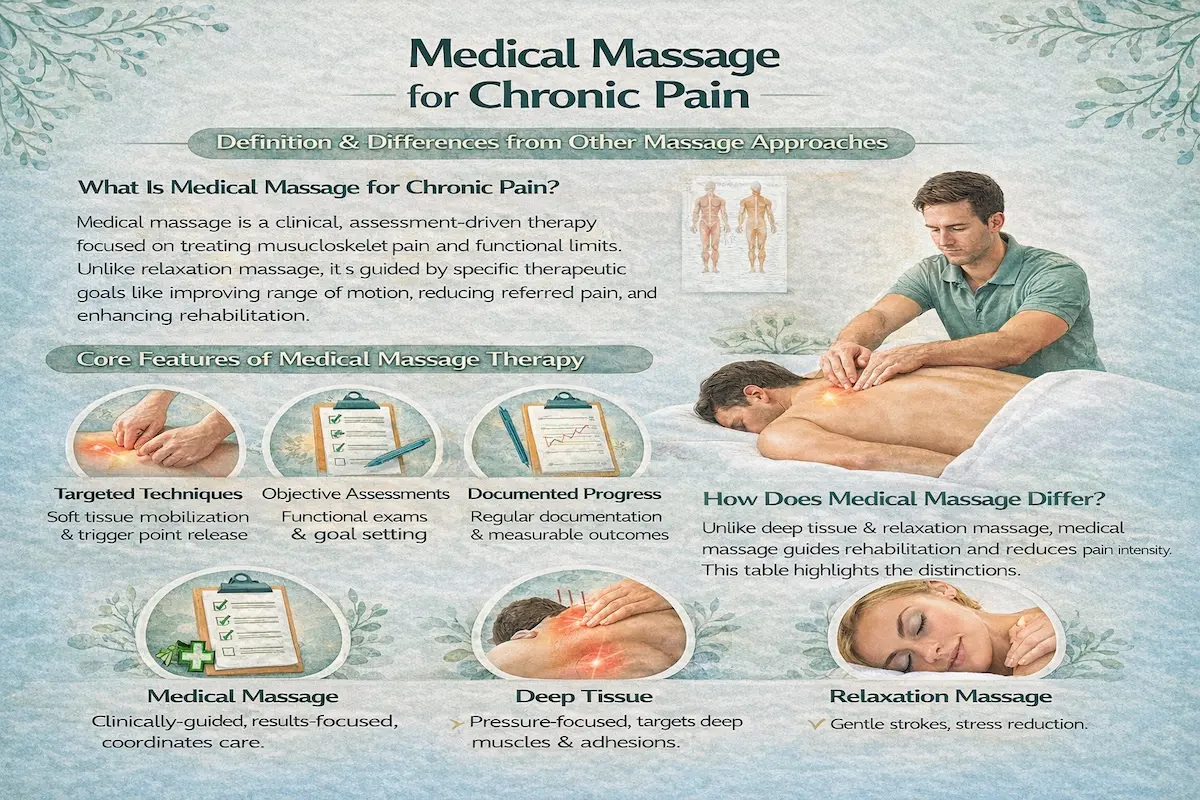
What is Medical Massage for Chronic Pain, and How Does it Differ?

Medical massage is a clinical, assessment-driven approach treating musculoskeletal problems, pain, and functional limits. Unlike relaxation massage, it’s guided by specific therapeutic goals—improving range of motion, reducing referred pain, and supporting rehabilitation. Practitioners perform objective assessments, select targeted techniques, and track outcomes. This clinical emphasis means documented notes and measurable goals, aiding care coordination.

Definition and core features of medical massage therapy

Medical massage combines focused history and exam with hands-on treatments addressing dysfunctions like trigger points or fascial tightness. This assessment shapes a targeted plan with measurable aims. Techniques include soft-tissue mobilization, trigger point release, and myofascial work. Regular documentation and follow-up facilitate integration with acupuncture or dry needling, helping adjust care.

How medical massage differs from deep tissue and relaxation massage

These three approaches serve different goals. Medical massage is assessment-led and outcome-focused, correcting dysfunction and reducing pain. Deep tissue uses firmer pressure for deeper muscle layers and chronic tightness. Relaxation massage uses gentle strokes for stress relief, not structural issues. Choosing the right style depends on whether rehabilitation and pain control or rest is the priority.

  • Quick distinctions:
  • Medical massage: clinically guided, outcome-driven, coordinates care.
  • Deep tissue: pressure-focused, targets deep muscles and adhesions.
  • Relaxation massage: gentle strokes, stress reduction.

Selecting the approach that matches your goals leads to better results and clearer expectations.

How Medical Massage for Chronic Pain Provides Relief

Medical massage reduces chronic pain by treating peripheral sources (tight muscles, restricted fascia, poor circulation) and influencing central pain processing. Key actions include lowering muscle tone, improving joint mechanics, boosting blood/lymph flow, reducing inflammation, and stimulating pain-relief chemicals. These mechanisms decrease referred pain, restore mobility, and improve daily function, leading to measurable improvement.

Evidence supports non-drug treatments like medical massage addressing chronic pain through multiple physiological pathways.

Non-pharmacological approaches for chronic pain: mechanisms and promise

This review summarizes how non-invasive therapies act at peripheral, spinal, and brain levels to normalize pain processing and limit central sensitization.

Multimodal non-invasive non-pharmacological therapies for chronic pain: mechanisms and progress, 2023

  • Main ways medical massage lowers pain:
  • Reduced muscle tension: manual releases normalize resting tone and improve joint function.
  • Improved circulation: better blood and lymph flow supports repair.
  • Inflammation modulation: massage shifts local cytokine activity toward healing.
  • Neurochemical effects: endorphin release lowers pain perception.

These effects address local tissue issues and sensitized pain pathways, providing durable functional improvements.

Locally in Setauket, Messina Acupuncture PC combines targeted manual techniques—trigger point therapy and myofascial release—with acupuncture or dry needling to strengthen neurochemical modulation and mechanical recovery. To explore a coordinated plan, contact Messina Acupuncture PC for an initial assessment.

Mechanics: easing tension and restoring circulation

Hands-on methods—soft tissue mobilization, myofascial release, and sustained pressure on trigger points—reduce muscle tone and restore smooth tissue glide, improving joint range and reducing pain. Stretching fascial restrictions and breaking down adhesions rebalances muscle length and movement. Improved local circulation speeds waste removal and delivers nutrients for repair.

Lowering inflammation and increasing endorphins

Therapeutic touch shifts the biochemical environment toward healing and stimulates pain-relief systems. Research shows massage influences inflammatory markers, boosting endorphins and serotonin, lowering pain sensitivity and lifting mood. These neurochemical benefits complement mechanical improvements, producing immediate analgesia and aiding longer-term recovery. Massage alongside acupuncture or dry needling amplifies these effects.

Which Chronic Pain Problems Respond Well to Medical Massage for Chronic Pain in Setauket?

Medical massage helps many chronic pain issues by addressing muscular, fascial, and neurogenic contributors, improving function through hands-on care. Responsive conditions include back/neck pain, sciatica (soft-tissue drivers), fibromyalgia (gentle approaches), migraine-related tension, and joint pain from soft-tissue restrictions. Outcomes vary; evidence-based plans begin with a focused phase, then move to maintenance. The table below maps symptoms to how medical massage helps.

Systematic reviews support massage therapy’s short-term benefits for musculoskeletal pain, even as a stand-alone treatment.

Massage therapy: evidence for musculoskeletal pain relief

Summary: As a stand-alone treatment, massage therapy reduces pain and improves function for common musculoskeletal complaints.

Massage therapy has short-term benefits for people with common musculoskeletal disorders compared to no treatment: a systematic review, 2015

Different chronic conditions present with distinct patterns responding to targeted manual work.

Condition Typical Symptoms How Medical Massage for Chronic Pain Helps
Chronic low back pain Stiffness, flare-ups, limited lumbar mobility Deactivates paraspinal trigger points, balances pelvic/core muscles, improves local circulation for healing
Chronic neck pain Reduced rotation/flexion, tension headaches, tight upper trapezius Releases myofascial restrictions, restores cervical mobility, eases referred head pain
Sciatica (soft-tissue contributors) Gluteal trigger points, radiating leg pain Targets gluteal/piriformis trigger points, reduces neural tension through mobility work
Fibromyalgia Widespread pain, tender points, heightened sensitivity Uses gentle myofascial techniques to lower central sensitization and improve comfort
Migraine with neck tension Recurrent headaches tied to neck muscle tightness Relieves cervical muscle tension, decreases neck-to-head referral pathways

Medical massage for back and neck pain

Back and neck complaints are top reasons for medical massage, as persistent tightness and fascial restrictions drive pain. Therapists evaluate posture, mobility, and trigger point patterns to rebalance the spine. Care combines trigger point work, myofascial release, and posture changes. Clinicians set measurable goals, and many patients see functional improvement.

Treating migraines, fibromyalgia, sciatica, and joint pain

Approach varies: migraines linked to neck tension use suboccipital release; fibromyalgia care is gentle; sciatica needs gluteal/hamstring release; joint pain benefits from soft-tissue mobilization. When appropriate, manual therapy combines with acupuncture and dry needling. Expect individualized plans with regular reassessment.

Medical Massage Techniques for Chronic Pain at Messina Acupuncture

At Messina Acupuncture PC, we offer medical massage techniques chosen from clinical assessment and coordinated with other services. Common methods include trigger point therapy, myofascial release for pain and fascial restrictions, deeper soft-tissue work for chronic tension, and cupping for circulation. Pressure, session length, and adjunct therapies are tailored to tolerance and objectives. Clinicians document progress. The table below summarizes each technique, its target, and typical session elements.

The table below outlines techniques and practical session details.

Technique What it targets Typical session details
Trigger point therapy Local hyperirritable spots that refer pain Focused pressure and release work, 10–20 minutes, followed by stretching and movement
Myofascial release Fascial restrictions limiting motion Sustained gliding techniques with moderate pressure, combined with movement to restore tissue glide
Deep tissue medical massage Chronic muscle tension and adhesions Slow, firm strokes to deeper layers; occasional post-session soreness.
Cupping therapy Circulation and fascial binding Suction-based mobilization for short periods, often paired with manual release

Trigger point therapy and myofascial release — how they work

Trigger point therapy locates and deactivates tight muscle nodules that refer pain, interrupting patterns and restoring function. Therapists use sustained pressure, then stretching. Myofascial release addresses connective tissue with sustained glides to free adhesions and normalize movement, improving range. These techniques are often combined for better overall results.

Deep tissue work, cupping, and complementary options

Deep tissue medical massage applies progressive pressure to break down chronic adhesions and reorganize scar tissue, respecting comfort. Cupping uses negative pressure to lift fascial layers, increasing blood flow and lymphatic drainage. When indicated, we integrate acupuncture and dry needling. Blending modalities matches treatment to dysfunction, improving sustained relief.

Accessing Medical Massage for Chronic Pain and Insurance in Setauket

Starting medical massage in Setauket involves verifying benefits, understanding documentation, and scheduling an initial assessment. Insurance coverage varies: some plans require a physician referral, specific diagnosis codes, or prior authorization. To avoid surprises, check if your policy covers rehabilitative manual therapy, ask about provider credentialing, and confirm if notes or a treatment plan are needed. The table below outlines common plan types, coverage likelihood, and verification steps.

Confirm typical plan behaviors before booking to reduce billing surprises.

Insurance plan type Coverage likely? Next steps (verify/authorize)
Employer PPO Possible with documented diagnosis and notes Call insurer, confirm in-network providers and prior-authorization rules
Medicare Advantage Variable; often limited Review plan details for rehabilitative services and provider credentialing
HMO Less likely without a referral Obtain physician referral and any required pre-authorization
Worker’s compensation Often covered when work-related File claim and follow employer’s authorization steps

Navigating Insurance for Medical Massage for Chronic Pain

Is medical massage covered by insurance? It depends on plan rules, medical necessity, and provider network status. Many insurers cover therapeutic massage under rehabilitative benefits with appropriate codes and notes. Gather your plan name and ID, confirm authorization rules, and ask if Messina Acupuncture PC is in-network or eligible for out-of-network reimbursement. We guide patients through benefit checks.

Simple steps to verify benefits and speed authorization:

  • Have your insurance plan name and member ID ready before calling.
  • Ask if rehabilitative manual therapy or medical massage for chronic Pain is covered.
  • Confirm referral or prior-authorization requirements and needed documentation.
  • Verify if Messina Acupuncture PC is in-network or if out-of-network reimbursement applies.

Following this checklist helps streamline authorization and allows clinicians to plan an appropriate treatment schedule.

Booking and what to expect at your first visit

Booking starts with an intake gathering your medical history, pain, and goals for a focused physical exam and treatment plan. Your first appointment combines assessment and hands-on treatment: the therapist checks posture, mobility, and trigger points, sets goals, and begins targeted interventions. Clinicians recommend 4–6 initial visits, then reassess frequency. Bring medical records, medication list, and imaging.

Why Choose Messina Acupuncture for Medical Massage for Chronic Pain in Setauket?

Messina Acupuncture PC integrates medical massage with acupuncture and dry needling to address complex pain. As a family-owned practice serving Setauket, we emphasize personalized plans, clear goals, and insurance navigation. Our therapists coordinate disciplines: manual work improves biomechanics, while acupuncture and dry needling modulate neural input. For local residents seeking integrated pain management, Messina Acupuncture PC offers a clear path to functional improvement.

Why patients in Setauket choose Messina Acupuncture PC:

  • Personalized, family-owned care with focused treatment and follow-up.
  • Integrated services: medical massage for chronic Pain, acupuncture, and dry needling for complementary relief.
  • Practical assistance with insurance verification to minimize costs.

Personalized, family-centered care from experienced therapists

Personalized care means focused assessment, a measurable treatment plan, and ongoing adjustments based on objective progress toward functional goals. Our family-owned model prioritizes continuity and a patient-centered approach. Clinicians explain treatments, set realistic expectations, and teach self-management. This attention improves adherence and outcomes. You get a local team offering integrated options.

Blending medical massage with acupuncture and dry needling

Thoughtfully combined, medical massage, acupuncture, and dry needling act on different pain cascade parts. Hands-on work restores tissue mechanics and lowers nociceptive input. Acupuncture and dry needling influence central pain processing and trigger-point activity. This multimodal approach often speeds relief and recovery. Plans alternate or combine sessions for maximum gains. If ready to explore options, Messina Acupuncture PC can help verify benefits and schedule an assessment.

We also offer acupressure, a non-invasive, pressure-based method supporting natural healing. It complements or substitutes needle-based therapies and fits well into recovery plans.

This article covered how medical massage works, conditions that benefit, common techniques, and practical steps for accessing services and insurance support in Setauket. If considering medical massage for chronic Pain, Messina Acupuncture PC provides integrated, personalized care and insurance navigation.

Frequently asked questions

What to Expect During Your First Medical Massage for Chronic Pain Session?

Your first visit combines intake (history, pain, limitations) with a focused physical exam. The therapist identifies tension, explains a personalized plan, and performs targeted techniques. Expect immediate relief and clear goals for follow-up.

How often should I schedule medical massage for chronic pain?

Frequency depends on condition, severity, and goals. A common start is 4 to 6 sessions to assess response. Your therapist recommends maintenance spacing—weekly, bi-weekly, or monthly—based on progress. Regular reassessment keeps the plan aligned.

Can medical massage be combined with other treatments?

Yes. Medical massage pairs well with acupuncture, dry needling, and physical therapy. Each targets different aspects of pain and healing—tissue mechanics, nervous-system modulation, rehabilitation—so combining them often leads to better outcomes.

Is medical massage safe for everyone?

Medical massage is safe for most, but some conditions require caution. If you have severe osteoporosis, recent surgery, active infection, or specific skin conditions, consult your healthcare provider first. Always share your medical history and medications.

How to Verify Insurance Coverage for Medical Massage for Chronic Pain?

Call your insurer with your plan name and ID. Ask if rehabilitative manual therapy or medical massage for chronic Pain is covered, and if a referral or prior authorization is needed. Check if Messina Acupuncture PC is in-network. We guide you through verification.

What techniques are commonly used in medical massage?

Common techniques include trigger point therapy, myofascial release, deep tissue medical massage, and cupping. Trigger point work deactivates local pain spots; myofascial release addresses fascial restrictions; deep tissue targets chronic adhesions; and cupping supports circulation. Clinicians select and combine techniques for optimal results.