
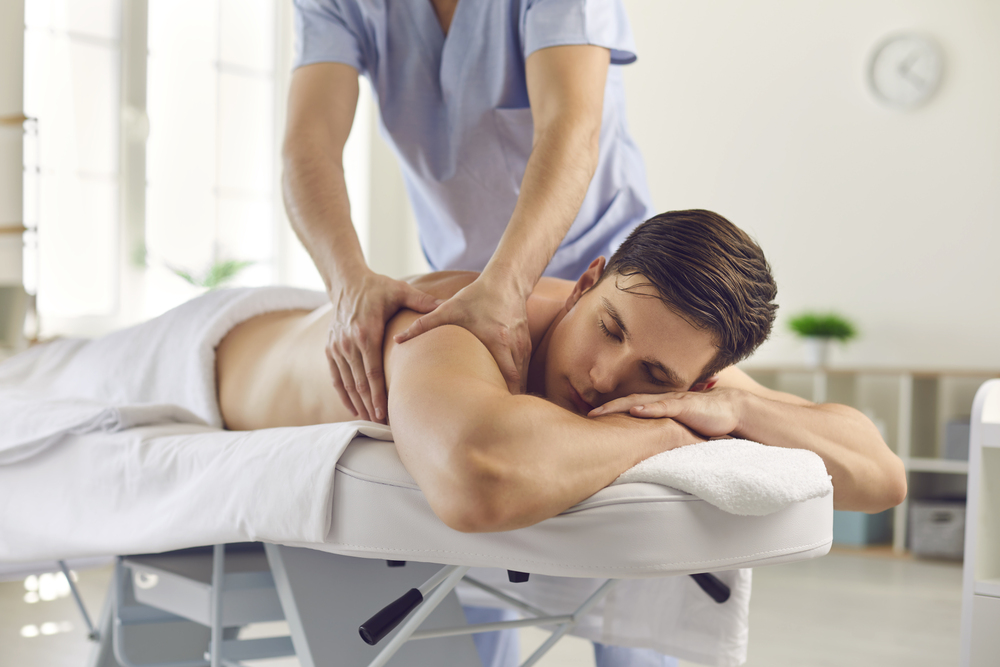
Massage therapy is a broad field, and not all massage is the same. Some people are looking for targeted relief from pain or injury, while others simply want to unwind after a stressful week. Two of the most common approaches are medical therapy massage and relaxation massage. Both involve hands-on work to the muscles and soft tissues, but they are designed for very different purposes.
At Messina Acupuncture in East Setauket, we focus on clinical, goal-oriented bodywork that helps patients in East Setauket, Stony Brook, Port Jefferson, and the surrounding Suffolk County area move better and feel better. This article breaks down the key differences between medical therapy massage and relaxation massage, when each makes sense, and how they can work together as part of a comprehensive plan for pain relief and long-term wellness.
What Is Medical Therapy Massage?
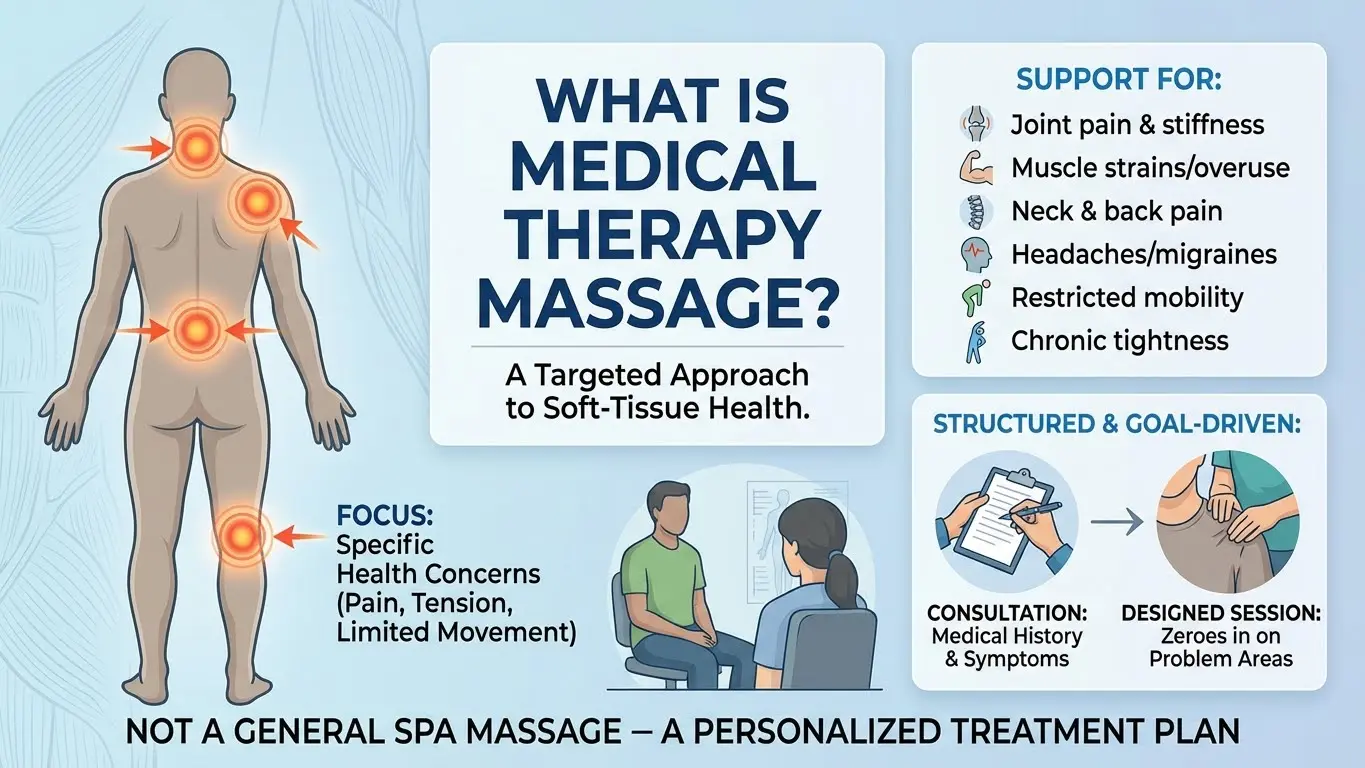
Medical therapy massage (often called medical massage or therapeutic massage) is a targeted approach to soft-tissue treatment that focuses on specific health concerns. Rather than working the entire body in a general way, medical massage zeroes in on problem areas that are contributing to pain, limited movement, or chronic tension.
This type of massage is often used to support people dealing with:
- Joint pain and stiffness
- Muscle strains or overuse injuries
- Neck and back pain from posture or repetitive stress
- Headaches or migraines linked to muscle tension
- Restricted mobility after an injury
- Chronic tightness from work or sports
Sessions are usually more structured and goal-driven than a standard spa massage. Before beginning, the therapist will ask about your medical history, current symptoms, and activity level, then design a session around the areas that need the most attention.
How Medical Therapy Massage Works
Medical therapy massage uses a range of techniques chosen to address specific soft-tissue problems, such as:
- Deep tissue massage – to work into deeper muscle layers and release long-standing tension.
- Trigger point therapy – to address “knots” that refer pain into other areas (for example, a trigger point in the shoulder causing pain down the arm).
- Myofascial release – to gently stretch and soften the fascia, the connective tissue that surrounds muscles and can restrict movement when it becomes tight.
- Cross-fiber friction – to help remodel scar tissue and adhesions after strain or injury.
- Acupressure and massage – combining pressure to key points with soft-tissue work to relieve deeper holding patterns.
Because the focus is clinical rather than purely relaxing, the pressure may be deeper and more focused in certain areas. It should still be tolerable, but it is common to feel a “good discomfort” as problem tissues begin to release. Throughout the session, communication between therapist and patient is important to keep the work effective and safe.
Medical therapy massage is frequently one part of a larger treatment strategy. At Messina Acupuncture, we often combine it with acupuncture, dry needling, or targeted exercise recommendations to support long-term change rather than short-term relief alone.
What Is Relaxation Massage?
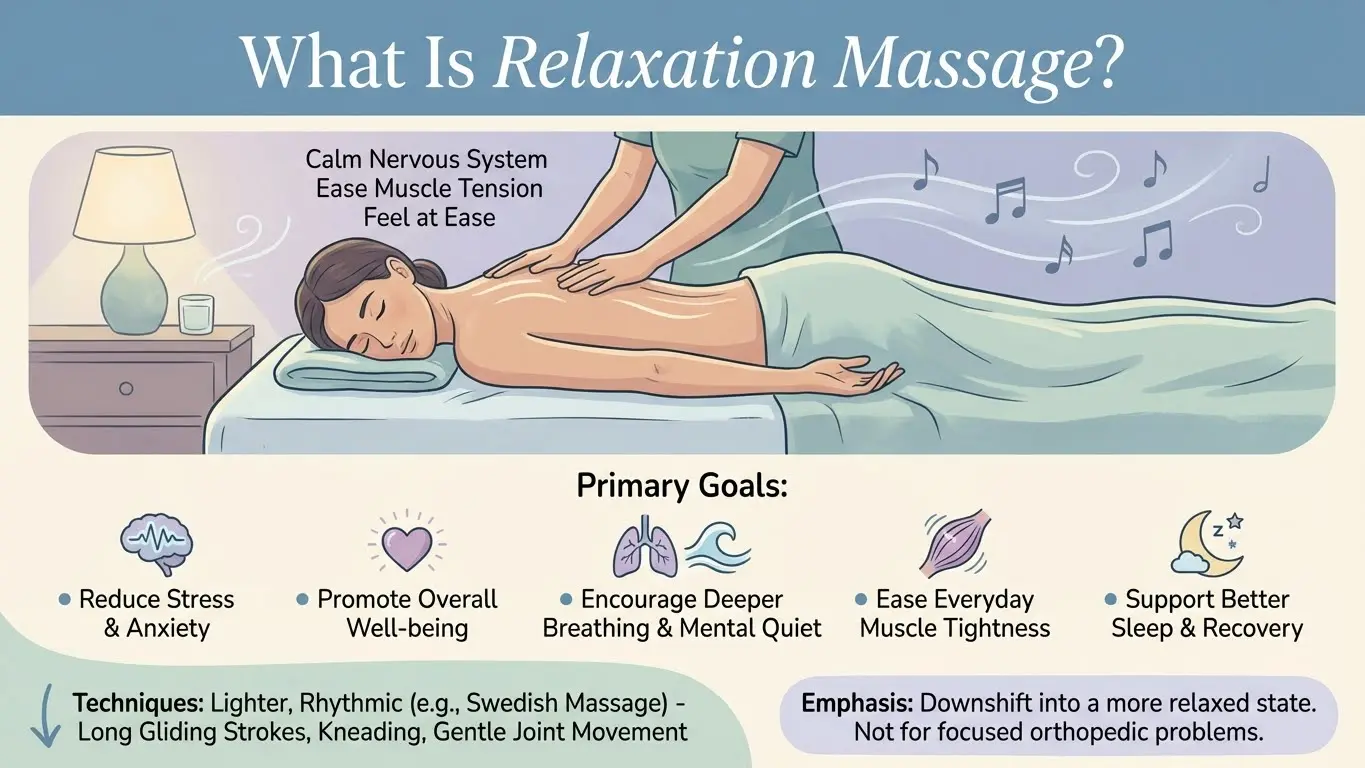
Relaxation massage is designed primarily to calm the nervous system, ease general muscle tension, and help you feel more at ease in your body. It’s what many people think of when they imagine a spa massage: dim lights, calming music, and long, flowing strokes that help the body and mind settle down.
The primary goals of relaxation massage are to:
- Reduce stress and anxiety
- Promote a sense of overall well-being
- Encourage deeper breathing and mental quiet
- Ease everyday muscle tightness from general life stress
- Support better sleep and recovery
Techniques are often lighter and more rhythmic, such as Swedish massage, which uses long gliding strokes, kneading, and gentle joint movement. The emphasis is less on solving a specific orthopedic issue and more on helping the entire system “downshift” into a more relaxed state.
Relaxation massage can still have meaningful physical benefits — improved circulation, decreased baseline muscle tightness, and better sleep all support overall health. But it is not usually the first choice when someone has a focused problem like chronic joint pain, a sports injury, or a movement restriction that needs targeted work.

Medical Therapy Massage vs. Relaxation Massage: Key Differences
Although both approaches involve hands-on work to muscles and soft tissue, they differ in several important ways. Understanding these differences makes it easier to choose the right option for your current needs.
1. Purpose and Primary Goals
Medical therapy massage is goal-oriented. It is used when there is a clear problem to address — pain, limited range of motion, postural strain, or recovery from injury. The session is built around improving function, reducing symptoms, and supporting long-term tissue health.
Relaxation massage is experience-oriented. The goal is to help you unwind, feel calmer, and reduce general tension. While many people feel physically better afterward, the focus is not on a specific clinical outcome but on helping your nervous system reset and recharge.
2. Techniques and Depth of Work
In medical therapy massage, the therapist may use more precise, sometimes deeper techniques aimed at specific muscles, fascia, or trigger points. This may include:
- Deep pressure into problem spots
- Slow, focused work along a restricted muscle or tendon
- Cross-fiber friction over old scar tissue
- Myofascial stretching to restore glide between layers
- Integration of acupressure and massage for stubborn tension patterns
Relaxation massage typically uses lighter pressure and more global strokes. Techniques like Swedish massage, gentle kneading, effleurage (long gliding strokes), and light stretching are common. The session tends to flow across broader regions of the body rather than staying concentrated on one problem area.
3. Intensity and Sensation During Treatment
Because medical therapy massage is working directly on irritated, tight, or restricted tissue, some portions of the session may feel intense. It should never feel unsafe or overwhelming, but you may notice a “good ache” as the muscle releases or a tender spot being addressed on purpose. Many people describe feeling lighter and looser afterward, even if parts of the session were more focused or challenging.
Relaxation massage is usually gentler and less intense overall. The pressure is chosen for comfort, and the intent is to keep you in a relaxed state throughout the session. It is common to drift into a light sleep or deep rest as your body and mind settle.
4. Conditions Each Type Is Best For
Medical therapy massage is often recommended for people who are dealing with issues such as:
- Chronic neck or back pain
- Postural strain from desk work
- Sports injuries or overuse syndromes
- Localized joint pain or stiffness
- Limited mobility after injury or surgery
- Recurring headaches related to muscle tension
Relaxation massage is a better fit when the main goals are:
- Reducing overall stress and anxiety
- Improving sleep quality
- Supporting general well-being
- Easing mild, non-specific muscle tension from daily life
- Taking time out for self-care and nervous system reset
How Medical Therapy Massage Helps with Pain, Mobility, and Recovery
Many people in East Setauket, Stony Brook, and Port Jefferson come to us after trying to “push through” pain or stiffness for months. Medical therapy massage is especially valuable in these situations because it helps address the underlying soft-tissue patterns that are feeding into pain and limited movement.
Some of the ways medical massage supports pain relief and function include:
- Improved circulation – Better blood flow brings oxygen and nutrients to irritated tissues and helps clear metabolic waste, which supports healing.
- Reduced muscle guarding – Chronic pain often makes muscles tighten around a problem area. Massage helps interrupt that guarding so the body can move more normally.
- Restored range of motion – By releasing tight muscles and breaking down adhesions, massage can improve how far and how smoothly a joint can move.
- Decreased load on joints – When muscles are balanced and functioning properly, joints are less likely to be overloaded, which can reduce symptoms in conditions like joint pain or early wear-and-tear.
- Support for injury recovery – For sprains, strains, or post-surgical stiffness, targeted massage can help tissues remodel in a healthier way and speed the return to everyday activity.
For many patients, medical therapy massage is not a one-time fix but part of a structured plan. The goal is to make steady progress over several sessions and support the improvements with home strategies like stretching, strengthening, and posture changes.
The Role of Relaxation Massage in Stress Relief and Overall Health
Stress is one of the most common drivers of muscle tension and discomfort. Even when there is no clear injury, the body can feel tight, sore, and “wound up” simply from living in a constant state of alertness. Relaxation massage plays an important role here.
By calming the nervous system and activating the body’s “rest and digest” response, relaxation massage can help:
- Lower perceived stress levels
- Reduce baseline muscle tightness
- Ease tension-related headaches
- Support more restful sleep
- Improve mood and mental clarity
For many people, regular relaxation massage becomes a key part of their self-care routine. While it may not resolve a specific orthopedic problem on its own, it can make the body more receptive to other therapies and reduce the everyday strain that often aggravates pain conditions.
Combining Acupuncture and Massage for Better Outcomes
At Messina Acupuncture, we often combine medical therapy massage with acupuncture to create a more complete approach to pain and movement problems. While massage focuses on muscles, fascia, and soft-tissue mechanics, acupuncture influences the nervous system, circulation, and pain pathways.
Together, they can:
- Reduce pain more effectively than either approach alone for some patients
- Help calm overactive muscle groups that keep re-tightening
- Support better sleep and stress resilience
- Improve how the body responds to movement and exercise
Some patients start with acupuncture and add massage as mobility improves. Others begin with focused medical massage and later incorporate acupuncture for more stubborn or long-standing issues. The right combination depends on the person, their goals, and their response to treatment.
Which Massage Is Right for You?
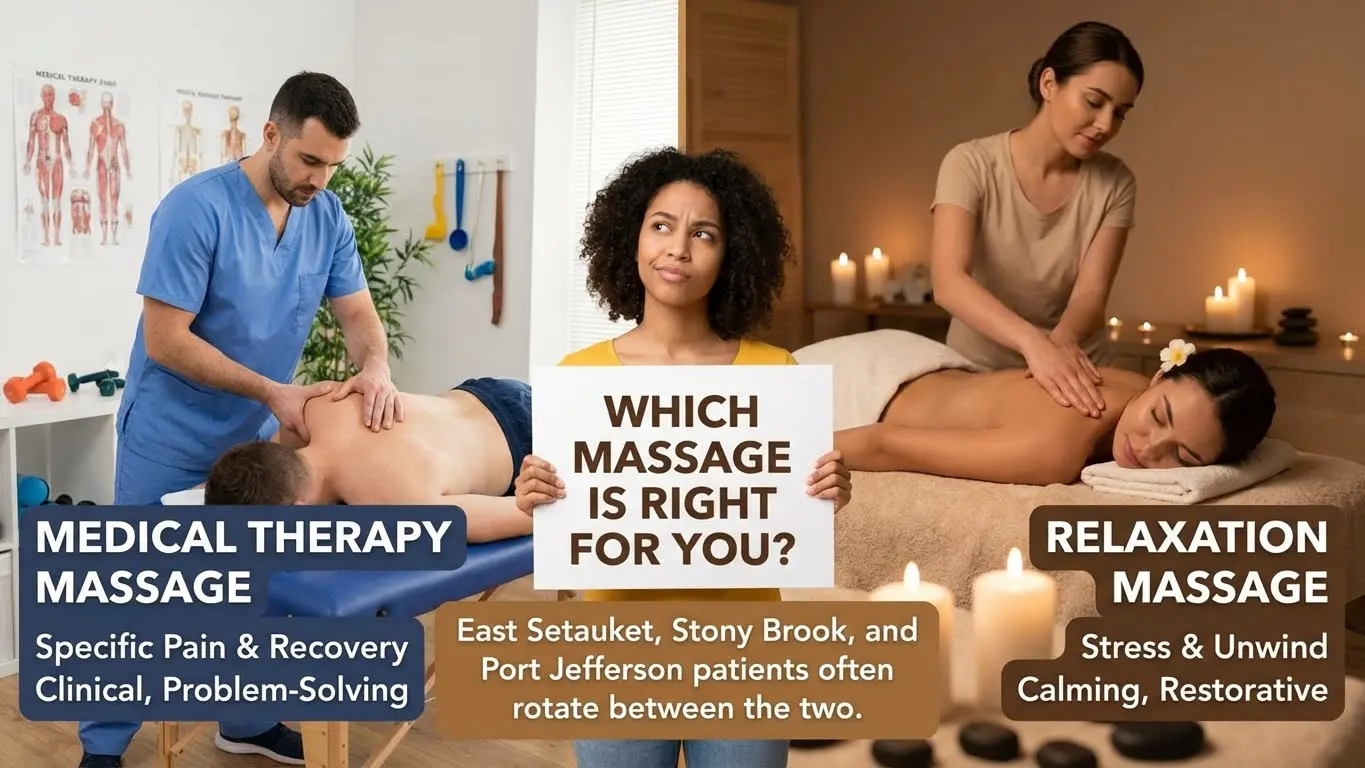
When deciding between medical therapy massage and relaxation massage, it helps to ask a simple question: What is my main goal right now?
Choose medical therapy massage if you:
- Have a specific area of pain or limited movement
- Are recovering from an injury or flare-up
- Notice recurring tightness in the same region (neck, low back, hips, shoulders)
- Have been told you have postural strain or muscle imbalances
- Want a more clinical, problem-solving session
Choose relaxation massage if you:
- Feel overwhelmed, stressed, or mentally drained
- Want to unwind and give your body a break
- Have general, mild tightness but no specific injury
- Are focused on sleep, mood, or overall well-being
- Want a calming, restorative experience
Many patients in East Setauket, Stony Brook, and Port Jefferson rotate between the two. They might use medical therapy massage during periods of pain or heavy training, and relaxation massage during quieter times to support ongoing recovery and stress management.
Medical Therapy Massage in East Setauket at Messina Acupuncture
At Messina Acupuncture, our focus is on helping you move better, hurt less, and understand what your body is telling you. We are located in East Setauket and regularly see patients from Stony Brook, Port Jefferson, and neighboring communities on the North Shore of Long Island.
Our clinical emphasis is on orthopedic and musculoskeletal issues — back and neck pain, joint discomfort, movement limitations, and stress-related tension that affects how you function. While we do not hold a board certification in orthopedics, our training and day-to-day practice are centered on these concerns.
Treatment plans may include:
- Medical therapy massage for targeted soft-tissue work
- Acupuncture for pain modulation and nervous system regulation
- Acupressure and massage for deeper tension patterns
- Dry needling where appropriate
- Home care strategies for posture, movement, and self-management
Insurance is accepted for many services, and our team will help you understand your options and what coverage may apply. We know that pain and limitation impact every part of your life — from work and family responsibilities to the activities you enjoy — and our goal is to provide care that is practical, honest, and focused on real-world improvement.
If you are unsure whether medical therapy massage, relaxation massage, acupuncture, or a combination is right for you, we are happy to talk through your situation and help you decide on a starting point.
Contact us today to schedule an appointment or ask a question. Whether you are looking to finally address a long-term pain problem or simply want to move and feel better in your daily life, we are here to help you take the next step.