
Dry Needling vs. Acupuncture · East Setauket, NY
Dry needling and acupuncture use the same hair-thin needles, but they work from different frameworks, target different problems, and feel different on the table. This guide compares the tool they share, the philosophies behind each, the evidence, and how to choose between them.
Acupuncture and dry needling use the same thin needles, which is why patients in Setauket and East Setauket sometimes arrive at a clinic expecting one and are offered the other. One practitioner may talk about meridians and whole-body balance, while another talks about trigger points and muscle anatomy. It is easy to leave more confused than when you arrived.
That confusion is common, and it is understandable. At Messina Acupuncture, we offer both therapies, often in the same treatment plan. An informed patient gets better results, so here is a clear breakdown of how these two modalities differ and when each makes sense.
- The shared tool: both therapies use solid, flexible filiform needles that are far thinner than hypodermic needles. Nothing is injected, so both are sometimes described as “dry.”
- Dry needling: a modern, Western approach grounded in anatomy and neurophysiology. It targets myofascial trigger points to release tight, painful muscle.
- Acupuncture: rooted in Traditional Chinese Medicine with thousands of years of history. It selects points along meridians to address broader patterns involving pain, stress, sleep, and systemic balance.
- The sensation: dry needling often produces a brief, intense twitch; acupuncture is generally gentler, with needles retained while you rest.
- Training matters: licensed acupuncturists complete thousands of hours of needle-specific education, far beyond short certification courses some other providers take.
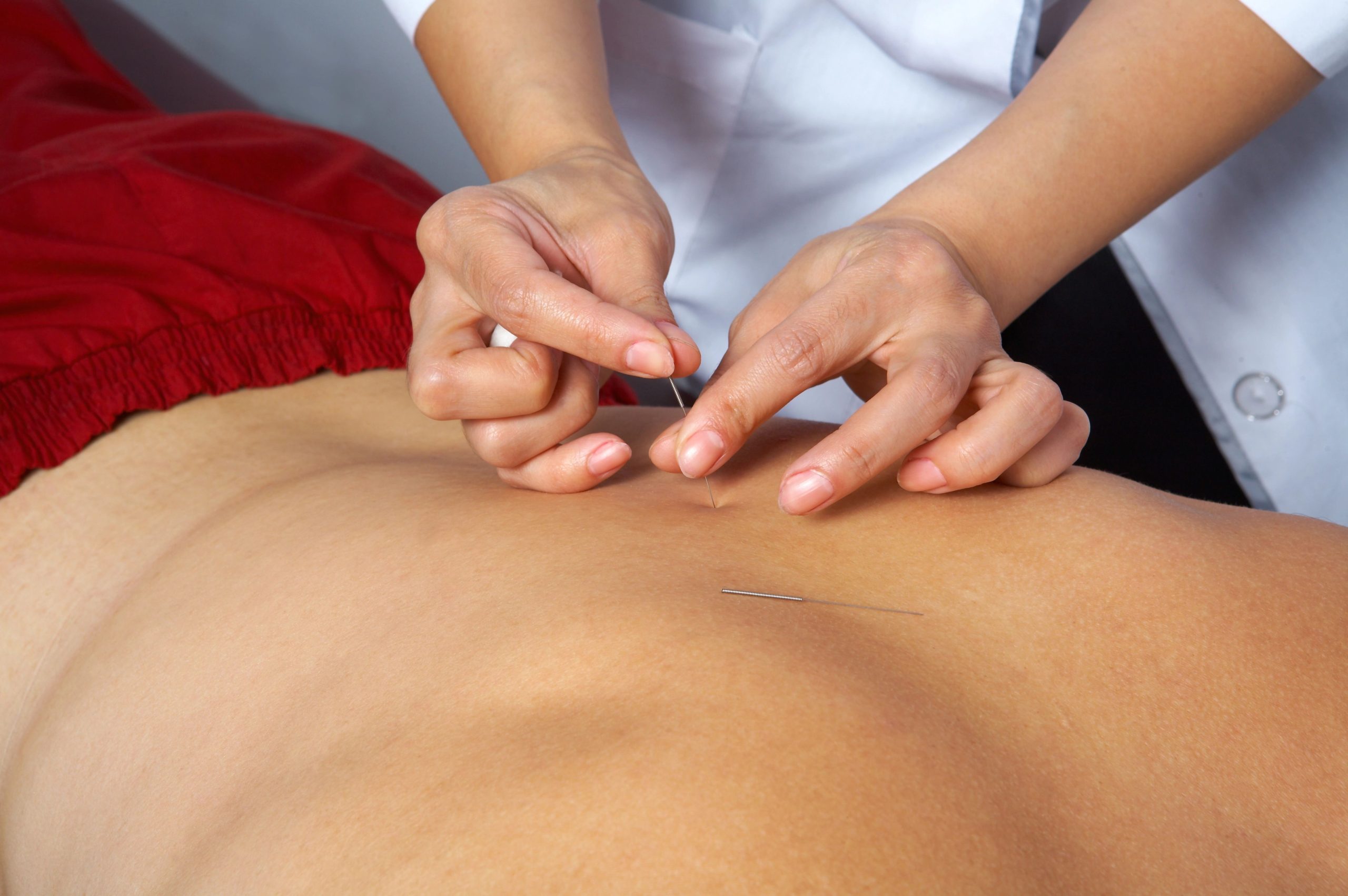
The Shared Tool: The Filiform Needle
Before the differences, the main similarity: both treatments use a filiform needle. Unlike the hollow needles used for flu shots or blood draws, these needles are solid, flexible, and hair-thin. Because they do not inject fluid, they are minimally invasive and carry a low risk of side effects when handled by a licensed professional. How the needles are used is where the paths diverge.
Dry Needling: Western Anatomy and Trigger Points
Philosophy. Dry needling is a strictly modern, Western approach. It does not rely on energy pathways. It relies on anatomy, neurology, and biomechanics.
Target. The primary goal is treating myofascial trigger points: hyperirritable spots in skeletal muscle, commonly known as knots. When a muscle is overworked or injured, it can stay locked in contraction, restricting blood flow and referring pain elsewhere (a shoulder knot causing a headache, for example).
Mechanism. The practitioner inserts the needle directly into the belly of the tight muscle, aiming to elicit a local twitch response: an involuntary spinal reflex in which the fibers contract and release. That release is thought to interrupt the spasm cycle and reset the muscle.
Best for. Dry needling is often the first choice for strictly muscular issues: sports injuries, tight hamstrings, calf cramps, or “text neck” from screen time.
Acupuncture: Holistic Balance and Systemic Health
Philosophy. Acupuncture is a pillar of Traditional Chinese Medicine with more than 2,000 years of history. It views the body as an interconnected system in which physical health, mental state, and organ function are linked by pathways called meridians.
Target. Acupuncturists place needles at specific points along these meridians, often in areas rich in nerve endings and blood vessels. Where a dry needling practitioner chases the pain, an acupuncturist treats the pattern. For a migraine, for instance, an acupuncturist might needle points on the feet or hands rather than the head.
Mechanism. Modern research suggests acupuncture stimulates the nervous system and influences the body’s own pain-modulating chemistry. The National Center for Complementary and Integrative Health summarizes the current evidence: acupuncture shows benefit for several pain conditions, while research into other applications is still developing.
Best for. Acupuncture is often the better choice for complex or multi-layered concerns: persistent stress, anxiety, insomnia, digestive complaints, and chronic pain patterns where the nervous system seems stuck in overdrive. Evidence is strongest for pain; other uses have more limited support.
Comparing the Sensation
Dry needling is often described as intense but satisfying. Because the needle is manipulated to trigger a muscle twitch, you may feel a brief, sharp cramp or deep ache. Post-treatment soreness similar to a heavy workout is common for about 24 hours.
Acupuncture is generally gentler. Needles are often left in place for 20 to 30 minutes while you relax. You may feel “De Qi,” a dull, heavy, or tingling sensation at the needle site, but it is rarely painful. Many patients fall asleep during treatment.
The evidence: both have support, strongest for musculoskeletal pain
A 2017 meta-analysis of 13 randomized trials (Gattie et al.) found dry needling reduced musculoskeletal pain more than no treatment or sham needling in the short term, with results roughly comparable to other active treatments. For acupuncture, the NCCIH concludes that research supports its use for several pain conditions, including back pain, neck pain, and osteoarthritis-related knee pain, while evidence for other conditions remains limited. Neither therapy is a cure-all, and honest practitioners describe both as tools with real but bounded effects.
Why Licensing Matters
This may be the most important section of this guide. In New York, a Licensed Acupuncturist (L.Ac.) completes a master’s or doctoral program with thousands of hours of clinical training specifically in needle technique, anatomy, and safety. In some jurisdictions, other providers may perform dry needling after a short certification course of as little as 20 to 50 hours.
At Messina Acupuncture, whether we are performing dry needling or traditional acupuncture, your practitioner has years of needle-specific training, not days. That depth of training matters most in sensitive areas, such as the neck or near the lungs, where precision is a safety issue. Verify any provider through the New York State Office of the Professions.
Can You Combine Both Therapies?
Yes, and at our clinic this combination is common. The two approaches address different layers of a problem. A typical hybrid plan for lower back pain with high stress might use dry needling on the gluteal and lumbar muscles to release the specific knots driving the spasm, then acupuncture points on the legs and hands to encourage general relaxation while you rest on the table. The mechanical release and the calming session complement each other.
Choosing the Right Therapy
Still unsure which to book? Use this as a starting guide, then let your assessment refine it:
- Consider dry needling first if: your pain is specific and localizable (“right here when I turn my head”), massage gives only brief relief, or the problem sits in a deep muscle that hands cannot easily reach.
- Consider acupuncture first if: your concerns are broader or layered, such as pain plus poor sleep, ongoing stress, or digestive complaints alongside musculoskeletal pain.
- Consider both if: you have a stubborn local problem plus the tension, stress, or sleep disruption that keeps feeding it. Many of our treatment plans combine the two.
You do not have to decide alone. Our initial consultation includes a thorough orthopedic and health history assessment, and we will recommend the modality, or combination, that best fits your goals.
What to Expect at Messina Acupuncture
Consultation and assessment (60 to 75 minutes)
We review your history, examine the problem areas, and discuss which approach fits. You can ask to skip any point or technique; you direct your own care.
Your first treatment
Many first visits include both modalities: dry needling for the specific muscular driver, then acupuncture points selected for your broader pattern while you rest.
Follow-up and reassessment
We track what changed between visits and adjust the mix. If we have not moved the needle within a few sessions, we revisit the diagnosis and refer out when appropriate.
Licensed and coordinated care. Before booking either therapy, confirm three things: the practitioner is licensed in New York State, they use single-use sterile needles, and they will communicate with your physician or physical therapist if needed. Messina Acupuncture meets all three, and we are happy to coordinate with your physician or physical therapist when it helps your care.
Contact your physician promptly for new or worsening numbness or weakness, severe or unrelenting pain, chest symptoms, signs of infection at a needle site (increasing redness, warmth, swelling, or fever), or any symptom that feels wrong to you. Needle therapies should never delay evaluation of a potentially serious condition.
Frequently Asked Questions
Is dry needling the same as acupuncture?
No. They share the same type of needle, but dry needling targets muscle trigger points using Western anatomy, while acupuncture follows Traditional Chinese Medicine and addresses broader patterns of health. The diagnostic frameworks differ.
Which hurts more, dry needling or acupuncture?
Dry needling tends to feel more intense because the needle is manipulated to trigger a muscle twitch, which can feel like a brief cramp. Acupuncture is usually gentler, with needles resting in place while you relax.
Can I receive both in one visit?
Yes. Many of our treatment plans combine dry needling for a specific muscular problem with acupuncture points for broader tension, stress, or sleep issues. Your practitioner will tailor the mix to your goals.
Which one works better for back pain?
Both have research support for musculoskeletal pain. Dry needling is often chosen for a clearly muscular driver; acupuncture is often chosen when pain comes with stress, poor sleep, or a complex pattern. An assessment helps determine the better starting point.
Are both safe?
When performed by a trained, licensed practitioner using sterile single-use needles, serious adverse events are rare for both. The most common effects are temporary soreness, minor bruising, or brief fatigue. The NCCIH notes a strong safety profile for needling therapies in trained hands.
How do I choose a qualified provider?
Look for a New York State license, thousands of hours of needle-specific training, sterile single-use needles, and a willingness to coordinate with your other providers. See our team page for our credentials, or call (631) 403-0504 with questions.
Not Sure Which Therapy Fits? We Will Help You Decide.
You do not have to choose between dry needling and acupuncture on your own. At your consultation we will assess your condition, explain which approach fits best, and often combine both for a more complete result.
Messina Acupuncture PC
100 N Country Road, East Setauket, NY 11733
Sources and Further Reading
- Gattie E et al. The effectiveness of trigger point dry needling for musculoskeletal conditions by physical therapists: a systematic review and meta-analysis. Journal of Orthopaedic and Sports Physical Therapy, 2017.
- National Center for Complementary and Integrative Health: Acupuncture effectiveness and safety.
- New York State Office of the Professions: Acupuncture consumer information.