
Dry Needling Safety · East Setauket, NY
Dry needling is widely used for muscle pain, but like any procedure that penetrates the skin, it has side effects you should understand first. This guide walks through the common, temporary reactions, the rare risks, and the red flags that deserve urgent care, so you can make an informed decision.
Before booking any treatment that breaks the skin, it is fair to ask what could go wrong. Terms like pneumothorax show up in online reading about dry needling, and it is worth understanding what they mean, and how rare they are, before you decide.
That is exactly the right question to ask before any needle-based treatment. At Messina Acupuncture, we would rather you arrive informed than anxious. Here is an honest accounting of dry needling side effects, from the routine to the rare.
- Most common: soreness at the treated sites for 24 to 48 hours, minor bruising, and brief fatigue. These are temporary and usually mild.
- Normal during treatment: a brief muscle twitch when the needle contacts a trigger point, mild redness, and occasional lightheadedness in needle-sensitive patients.
- Less common: temporary nerve irritation (tingling or numbness) that resolves, and vasovagal faintness, especially if you arrive hungry or anxious.
- Rare but serious: pneumothorax (a punctured lung) is extremely rare and is the main reason anatomical training and needle depth matter.
- Bottom line: serious adverse events are rare when dry needling is performed by a trained, licensed practitioner using sterile, single-use needles.
Common Side Effects
Soreness and discomfort (24 to 48 hours)
The most common side effect is soreness at the needle insertion sites, generally mild and temporary. The needle creates a tiny, controlled disruption in the muscle, which prompts a local healing response with increased blood flow. Most patients describe it as similar to post-workout soreness, and it typically fades within a day or two.
Bruising
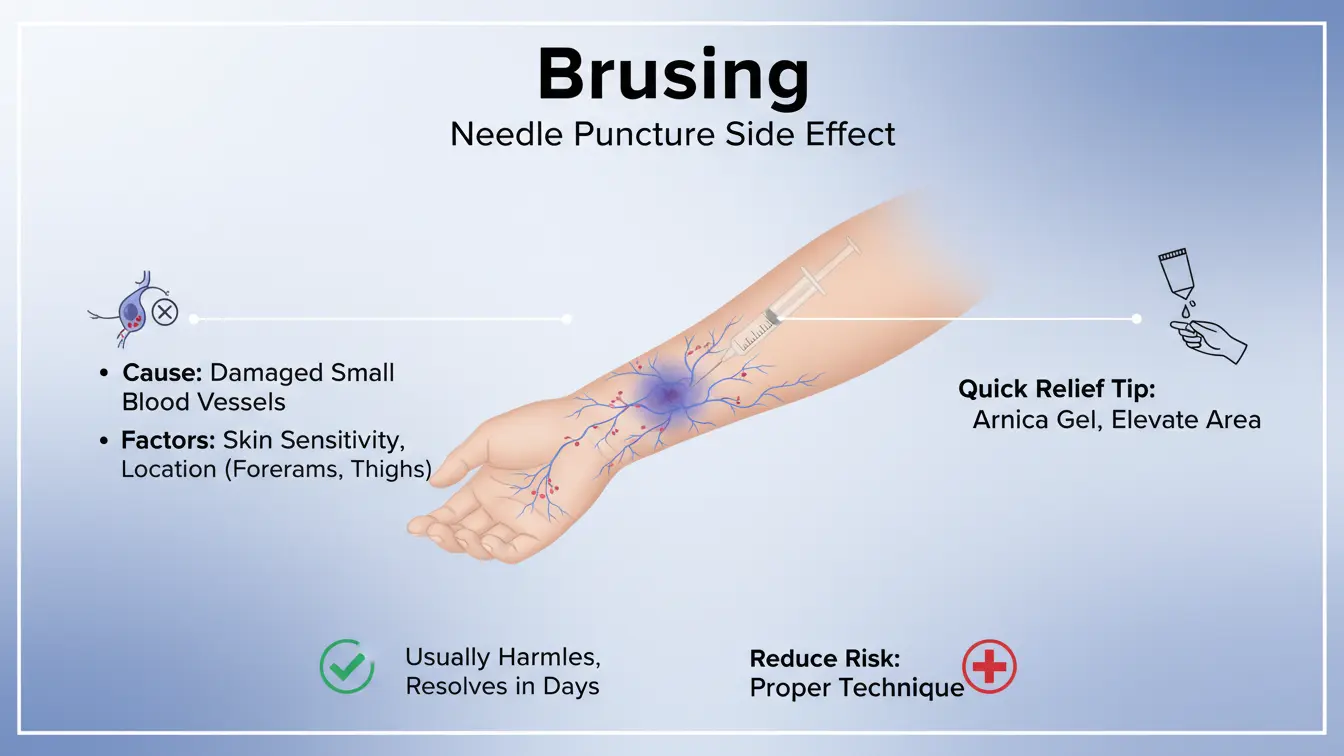
When a needle passes near small blood vessels under the skin, a bruise can form. Size and severity vary with skin sensitivity and location; areas with thinner skin or more vascularity, such as the forearms, may bruise more easily. Bruising is usually harmless and resolves on its own within a few days.
Fatigue
Some patients report feeling tired or heavy after a session. This is likely the body’s response to the release of long-held muscle tension and the start of the repair process, similar to how you might feel after a vigorous workout. Rest and hydration usually take care of it.
Muscle twitching during treatment
You may feel an involuntary muscle twitch, called a local twitch response, during the session. This is a normal and often useful reaction: it indicates the needle has engaged a trigger point, those hyperirritable spots in the muscle that refer pain. The sensation can be startling but subsides quickly once the needle is removed.
Redness and mild swelling
Mild redness around insertion sites is a common, short-lived inflammatory response as the body addresses the micro-stimulation from the needles. It usually resolves within a few hours.
Lightheadedness (vasovagal response)
Some patients feel lightheaded or faint, particularly if they are nervous, dehydrated, or have low blood sugar. This vasovagal response is a drop in blood pressure, not a sign the treatment harmed you. Eating a light meal before your appointment and telling us if you feel woozy keeps this manageable. If you feel faint, we will have you lie down, rest, and drink water before you leave.
Less Common and Rare Side Effects
Temporary nerve irritation
In uncommon cases, a needle may briefly irritate a nearby nerve, causing tingling or numbness. Experienced practitioners are trained in anatomical landmarks to minimize this risk. If you feel an “electric” sensation during treatment, tell your practitioner immediately so the needle can be adjusted or removed.
Pneumothorax (extremely rare)
Pneumothorax, where a needle enters the space around the lung, is an extremely rare but serious risk, mainly relevant when needling the upper back, shoulders, or chest wall. This is the primary reason to choose a provider with deep anatomical training who controls needle depth and angle carefully, rather than a weekend-certified practitioner.
A note on emotional responses: some patients tell us they feel deeply relaxed, light, or unexpectedly emotional after a session. We mention this only so you know you are not alone if it happens. It is an anecdotal report, not an established effect of treatment, and it is never a goal we promise.
The evidence: serious harm is rare in trained hands
Large safety reviews of needling therapies consistently find that serious adverse events are uncommon when treatment is performed by trained practitioners using sterile, single-use needles. The National Center for Complementary and Integrative Health notes that needling therapies have a strong safety profile in trained hands, with the most common effects being temporary soreness, minor bruising, or brief fatigue. For a deeper dive into dry needling safety specifically, see our definitive safety guide for Setauket patients.
Managing Side Effects: What You Can Do
Communicate before and during treatment
Tell us about your medical history, blood-thinning medications, bleeding disorders, and any prior fainting with needles. During the session, give real-time feedback about your comfort level so we can adjust immediately.
Follow simple aftercare
Ice or heat on sore areas, gentle movement rather than complete bed rest, and avoiding strenuous activity for 24 hours usually keeps post-treatment soreness brief. Drink water and eat normally.
Know what is normal and what is not
Soreness, small bruises, and tiredness for a day or two are normal. Worsening pain after 48 hours, spreading redness or warmth, fever, chest symptoms, or new numbness or weakness are not: contact us or your physician promptly.

Licensed and coordinated care. Before booking dry needling anywhere, confirm three things: the practitioner is licensed in New York State, they use single-use sterile needles, and they will communicate with your physician or physical therapist if needed. Messina Acupuncture meets all three, and we are happy to coordinate with your physician or physical therapist when it helps your care.
Call 911 or go to urgent care for chest pain, trouble breathing, or shortness of breath after needling near the ribs, upper back, or shoulders; these can rarely signal a lung injury. Also seek prompt care for signs of infection at a needle site (increasing redness, warmth, swelling, or fever), severe or worsening pain, or new numbness or weakness. Dry needling should never delay evaluation of a potentially serious condition.
Frequently Asked Questions
Can I drive home after dry needling?
Most patients can drive immediately after treatment. If you feel lightheaded, sit in our waiting room for a few minutes and drink some water before leaving.
How long does post-needling soreness last?
Typical soreness lasts 24 to 48 hours and feels like post-workout muscle soreness. Gentle movement, heat, and hydration usually ease it. Soreness that worsens after 48 hours deserves a call to us or your physician.
Is bruising after dry needling normal?
Yes, small bruises are common and harmless, especially in areas with thinner skin. They should resolve on their own within a few days. Tell us if you take blood thinners, since that raises the chance of bruising.
What is the most serious risk of dry needling?
Pneumothorax, a punctured lung, is the most serious risk, but it is extremely rare. It is the main reason to choose a practitioner with extensive anatomical training who carefully controls needle depth and angle, especially around the chest and upper back.
Should I eat before my appointment?
Yes. Have a light meal 1 to 2 hours beforehand. Arriving hungry or dehydrated increases the chance of lightheadedness or a vasovagal response.
How is dry needling different from acupuncture?
Both use thin, solid needles, but dry needling targets muscle trigger points using Western anatomical principles, while acupuncture follows Traditional Chinese Medicine and addresses broader patterns of health. Learn more in our acupuncture services overview.
Questions About Safety? Ask Us Directly.
If you are considering dry needling but have concerns about side effects, medications, or whether your condition is appropriate, talk with us first. We will give you a straight answer, and if needling is not right for you, we will say so.
Messina Acupuncture PC
100 N Country Road, East Setauket, NY 11733