
If you’re looking for natural relief from pain, tension, or stress, you may find yourself comparing acupressure vs. massage and wondering which one is the better fit. Both therapies can help you feel better without medication, but they work in different ways and are often used for different goals. Understanding those differences is especially helpful if you are deciding what to book at a clinic like Messina Acupuncture PC here in East Setauket.
This guide walks through how acupressure and massage therapy work, the kinds of problems they tend to help most, and how we combine them in our practice to support patients across Suffolk County.
Origins and Historical Background of Acupressure and Massage
Acupressure comes from Traditional Chinese Medicine (TCM), with roots going back more than 2,000 years. Practitioners observed that applying pressure to specific points along the body’s meridians – the same channels used in acupuncture – could influence pain, digestion, mood, and overall vitality. These points are thought to regulate the flow of Qi, or life energy. When Qi is blocked or imbalanced, symptoms appear. Acupressure was developed as a needle-free way to stimulate those points and restore balance.
Massage therapy also has ancient origins, appearing in cultures such as Egypt, Greece, India, and China. Instead of focusing on meridian points, traditional massage centered on the muscles, joints, and soft tissues. Healers noticed that kneading and stretching muscle tissue could relieve soreness, improve circulation, and help the body recover from exertion. Over time, this grew into a wide range of styles—like Swedish, deep tissue, and sports massage—that are now common in medical and wellness settings.
What Each Therapy Primarily Focuses On
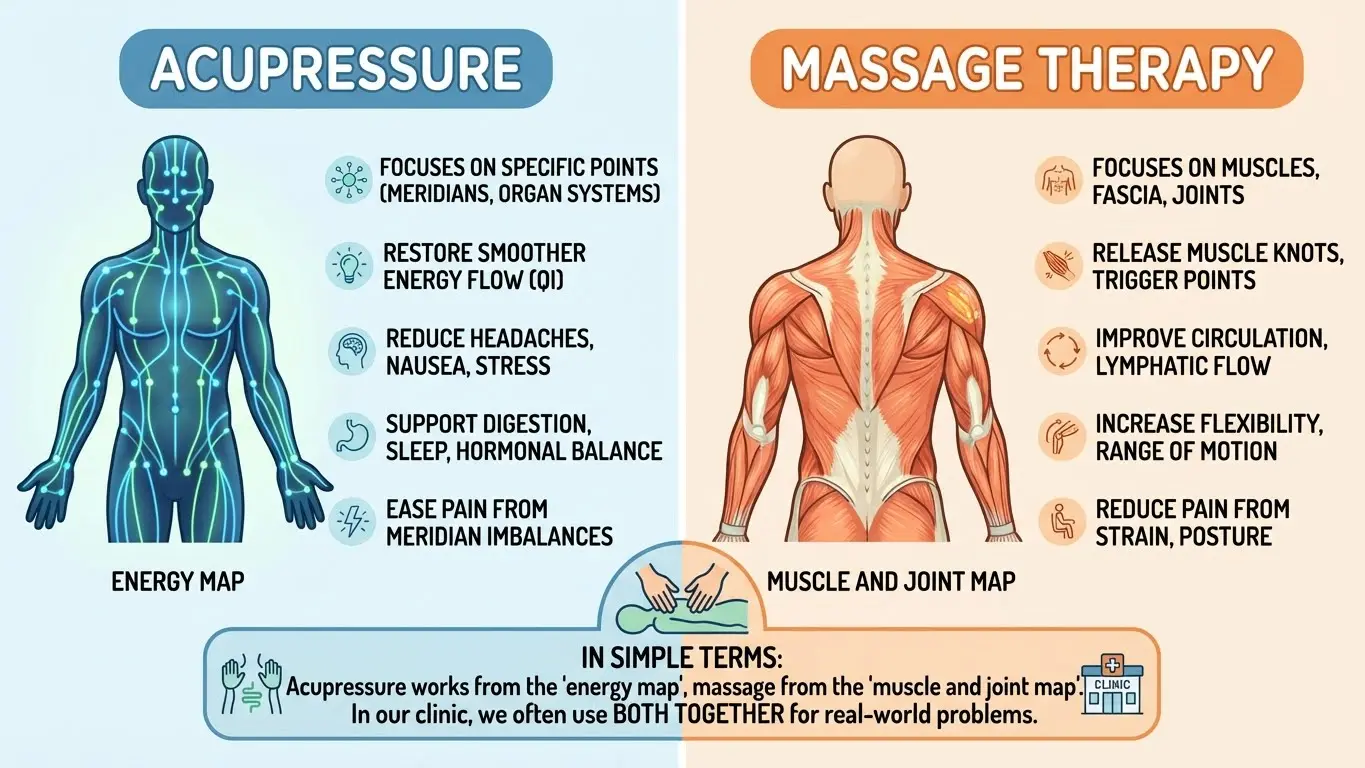
Acupressure: The focus is on specific points that correspond to meridians and organ systems. By pressing and holding these points, the practitioner aims to:
- Restore smoother energy flow (Qi) through the body
- Reduce symptoms such as headaches, nausea, or stress
- Support internal systems like digestion, sleep, and hormonal balance
- Ease pain related to meridian imbalances or long-standing tension patterns
Massage therapy: The focus is on the muscles, fascia, and joints themselves. A therapist looks for tight, overworked, or inhibited areas and uses hands-on techniques to help them:
- Release muscle knots and trigger points
- Improve circulation and lymphatic flow
- Increase flexibility and range of motion
- Reduce pain from strain, overuse, or poor posture
In simple terms: acupressure works more from the “energy map” of the body, while massage works more from the “muscle and joint map.” In our clinic, we often use both together, because most real-world problems involve some combination of the two.
How Acupressure and Massage Techniques Differ
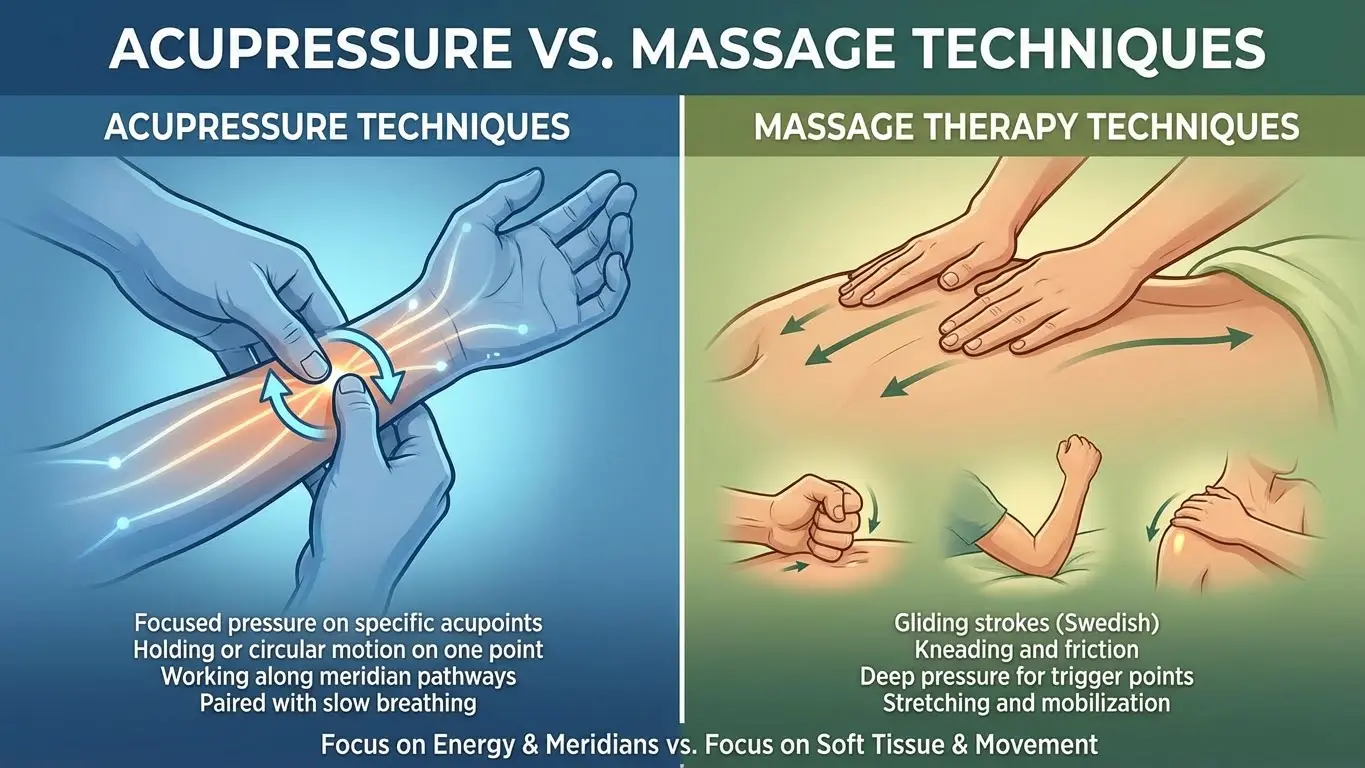
Acupressure techniques typically involve:
- Using fingers, thumbs, knuckles, or elbows to apply pressure to specific acupoints
- Holding pressure steadily, or using small circular motions on a single point
- Working along a meridian pathway to influence a whole region (for example, the neck and shoulder line for tension headaches)
- Pairing point work with slow breathing and relaxation to amplify the effect
Acupressure sessions can feel surprisingly powerful even without deep physical pressure—patients often describe a dull, heavy, or warming sensation that travels beyond the exact spot being pressed.
Massage therapy techniques are more focused on soft tissue and may include:
- Long, gliding strokes (typical of Swedish massage) to relax muscles and improve circulation
- Kneading and friction to work into tight muscle fibers
- Deep, slower pressure to reach trigger points and chronic tension
- Stretching and joint mobilization to support mobility and posture
At Messina Acupuncture PC, our medical massage work tends to be more focused and orthopedic than a spa-style relaxation session. We’re looking at how your muscles, joints, and nerves behave with movement, not just how they feel lying on the table.
Tools and Equipment Used in Each Therapy
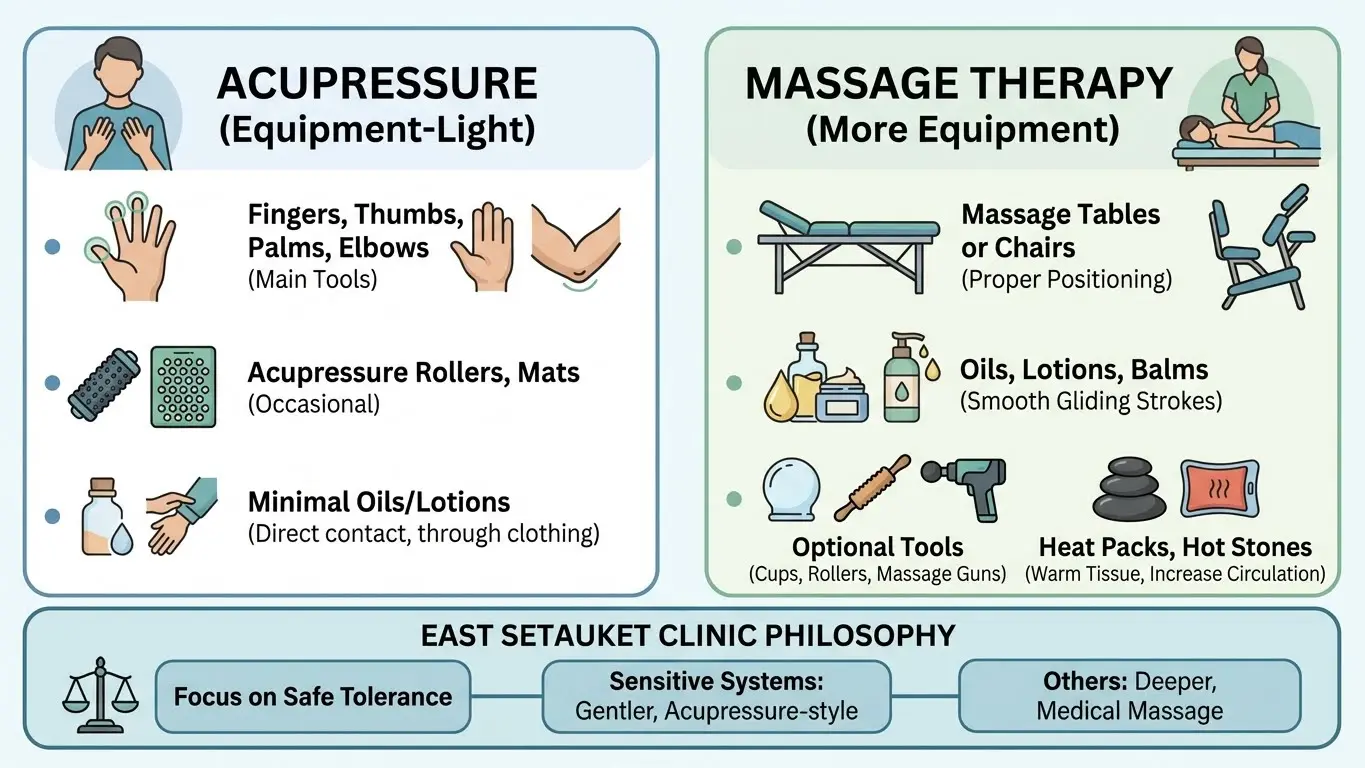
Acupressure is mostly a hands-on, equipment-light therapy. Practitioners use:
- Fingers, thumbs, palms, or elbows as the main tools
- Occasional use of small devices (such as acupressure rollers or mats) as a supplement
- Minimal oils or lotions—contact is usually direct through clothing or light draping
Massage therapy often integrates more equipment, including:
- Massage tables or chairs designed for proper body positioning
- Oils, lotions, or balms to protect the skin and allow smooth gliding strokes
- Optional tools like cups, rollers, or massage guns in some treatment plans
- Heat packs or hot stones in certain styles to warm tissue and increase circulation
In our East Setauket clinic, the focus is always on what your body can tolerate safely. For some patients—especially those with sensitive nervous systems—we favor gentler, more acupressure-style work. Others benefit from deeper, more traditional medical massage.
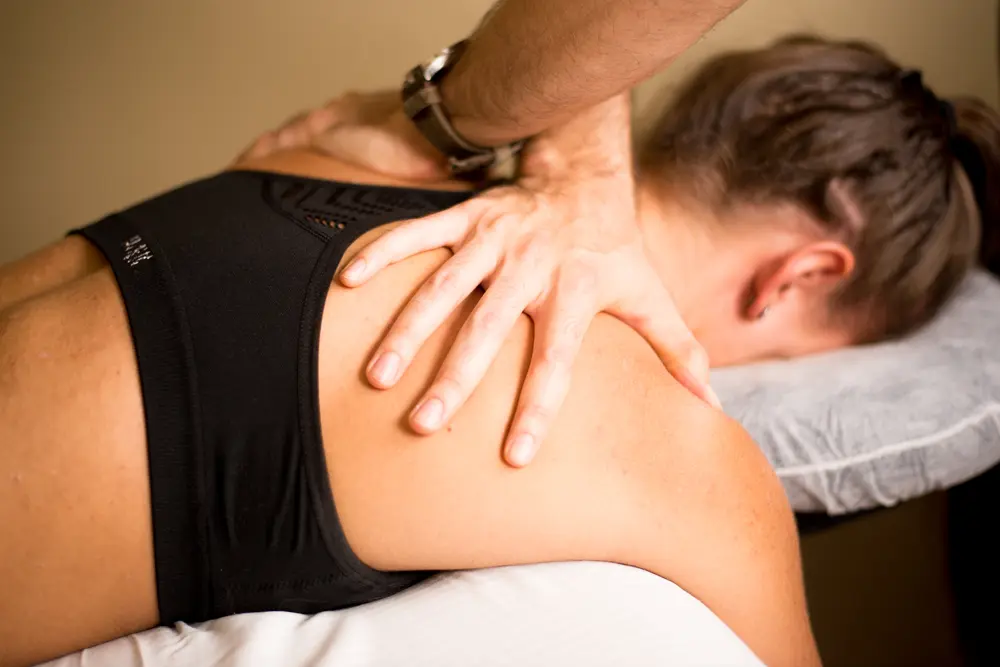
What Conditions Acupressure and Massage Commonly Address
Acupressure is often chosen for:
- Headaches and migraines
- Stress, anxiety, and difficulty sleeping
- Digestive discomfort or nausea
- Menstrual cramps or hormone-related symptoms
- Chronic pain tied to long-standing tension patterns or meridian imbalance
Because it’s gentle and non-invasive, acupressure is also a good fit for people who are needle-averse or sensitive to stronger pressure but still want a structured, therapeutic treatment.
Massage therapy is commonly used for:
- Muscle strain, stiffness, and overuse from work, sports, or daily life
- Back and neck pain related to posture or repetitive stress
- Joint pain made worse by muscle tightness or poor movement patterns
- Recovery support after injuries or orthopedic procedures (when medically appropriate)
- General stress, fatigue, and “whole-body tightness” from sitting or standing all day
Many of our patients in Suffolk County don’t fall neatly into one category. They may have both stress-driven symptoms (like headaches or poor sleep) and clear musculoskeletal issues (like shoulder or low back pain). That’s where a combination of acupressure, acupuncture, and medical massage can offer a more complete plan.
Pain Management: Acupressure vs. Massage
How acupressure helps with pain:
- Targets specific points linked to the area of pain or its root cause
- Stimulates the release of endorphins—your body’s natural pain-relieving chemicals
- Helps “turn down the volume” on overactive pain signals in the nervous system
- Can be especially useful for migraines, tension headaches, jaw tension, and menstrual pain
How massage helps with pain:
- Releases tight muscles that are compressing joints or nerves
- Improves circulation to sore, overworked tissues
- Breaks up adhesions in muscles and fascia that limit movement
- Supports better posture and mechanics, reducing future strain
We often see the best results when pain is addressed from both angles—relieving the physical tension in the muscles and joints, while also calming the nervous system and restoring more balanced patterns through acupressure and acupuncture.

Stress Relief and Emotional Support
Both therapies are excellent for stress, but they work slightly differently:
Acupressure for stress: By stimulating points associated with the heart, lungs, and nervous system, acupressure can help regulate the body’s stress response. Many patients notice a feeling of grounding, warmth, or emotional “unclenching” after sessions. It can be especially helpful if your stress shows up as racing thoughts, shallow breathing, or trouble sleeping.
Massage for stress: Physical relaxation feeds directly into mental calm. As tight areas in the neck, shoulders, and back begin to release, the body shifts from a fight-or-flight state to a more restful, parasympathetic mode. This often leads to deeper sleep, better focus, and a general sense of feeling “more like yourself” again.
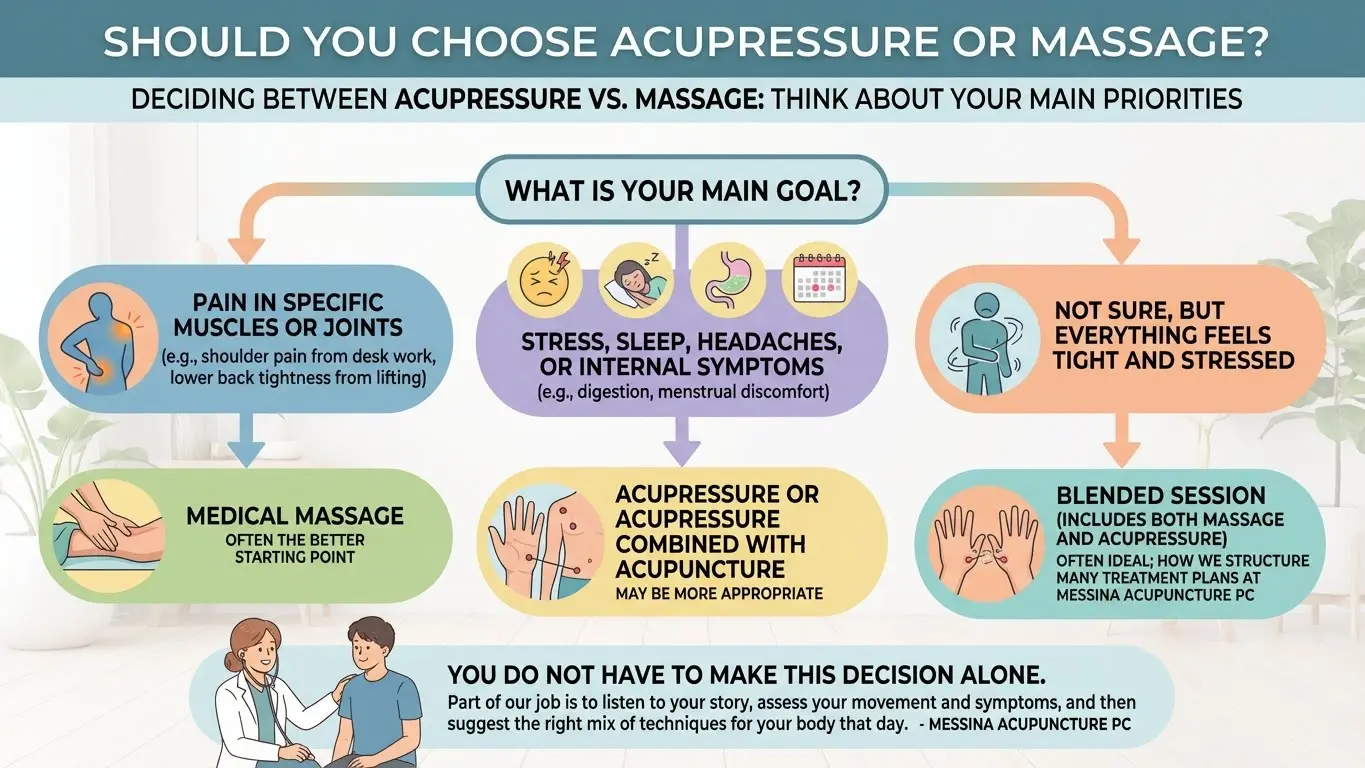
Should You Choose Acupressure or Massage?
If you’re deciding between acupressure vs. massage, it may help to think about your main priorities:
- Your main goal is pain in specific muscles or joints (for example, shoulder pain from working at a desk or lower back tightness from lifting). In this case, medical massage is often the better starting point.
- Your main goal is stress, sleep, headaches, or internal symptoms (like digestion or menstrual discomfort). In that situation, acupressure or acupressure combined with acupuncture may be more appropriate.
- You’re not sure, but everything feels tight and stressed. A blended session that includes both massage and acupressure is often ideal, and that’s exactly how we structure many treatment plans at Messina Acupuncture PC.
You do not have to make this decision alone. Part of our job is to listen to your story, assess your movement and symptoms, and then suggest the right mix of techniques for your body that day.
How We Combine Acupressure and Massage at Messina Acupuncture PC
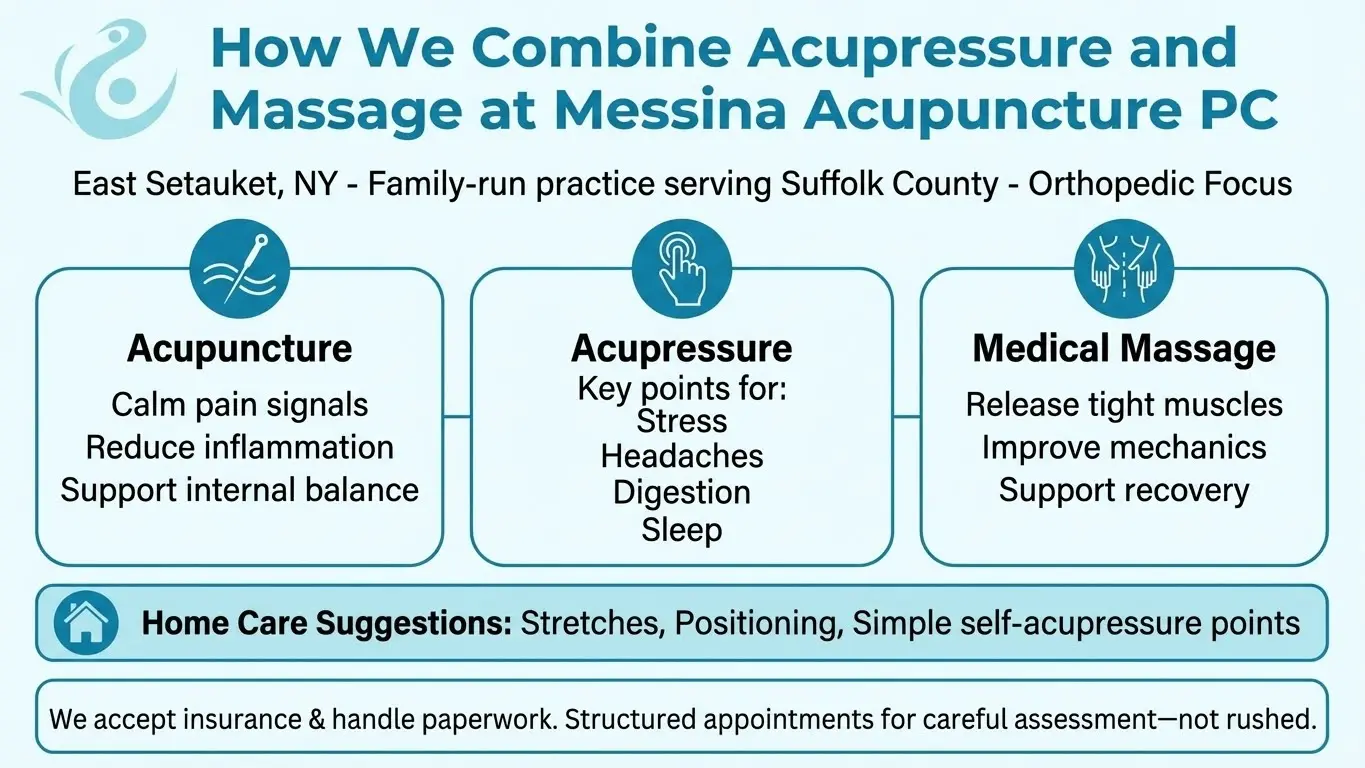
Messina Acupuncture PC is a family-run practice based in East Setauket, New York, serving patients from across Suffolk County. Our clinical focus is on orthopedic issues—back and neck pain, joint pain, sports strain, and tension that affects how you move and function day to day.
While we do not hold a board certification in orthopedics, our training and experience have made orthopedic and musculoskeletal care the center of our work. Depending on your case, your plan may include:
- Acupuncture to calm pain signals, reduce inflammation, and support internal balance
- Acupressure to work on key points for stress, headaches, digestion, or sleep
- Medical massage to release tight muscles, improve mechanics, and support recovery
- Home care suggestions such as stretches, positioning, or simple self-acupressure points
We accept insurance and handle most of the paperwork, because we understand that access to care matters when you’re already dealing with pain or stress. Appointment times are structured to allow for careful assessment—not rushed, assembly-line treatment.
FAQs About Acupressure vs. Massage
Is acupressure painful?
Acupressure is usually not painful, but you may feel a deep, achy, or heavy sensation when a sensitive point is pressed. We always work within your comfort level and adjust pressure based on your feedback. The goal is productive relief—not gritting your teeth through a session.
How many sessions will I need?
The answer depends on how long you’ve had your symptoms and what’s driving them. Some patients notice meaningful changes after just a few treatments. Chronic or long-standing issues usually require a series of visits to create lasting change. During your initial visit at our East Setauket office, we’ll outline a realistic plan based on your goals and schedule.
Can I receive both massage and acupressure in the same visit?
Yes. In many cases, combining the two leads to better outcomes. For example, we may start with medical massage to loosen the muscles, then finish with targeted acupressure or acupuncture points to calm the nervous system and reinforce the changes we’ve made in your tissues.
Is this type of care right for me if I’ve never tried it before?
Most people who are medically cleared for light exercise are also good candidates for acupressure and massage. If you have a complex medical history, are pregnant, or are recovering from recent surgery, we’ll review that with you and adjust techniques as needed. Safety and comfort always come first.
Ready to Talk About Acupressure vs. Massage?
If you live in East Setauket or the surrounding Suffolk County area and are wondering whether acupressure or massage is right for you, we’re happy to help you sort it out. Our goal is simple: match the right techniques to your body, your history, and your goals—so you can move with less pain and more ease.
Contact us today to schedule an appointment or ask a question about treatment options. Whether you’re leaning toward acupressure, massage, or a combination of the two, we’ll help you build a plan that makes sense for where you are right now.